.png)
How to boost dog vitality: a practical, evidence-based guide
- wix mentor

- Apr 30
- 10 min read

TL;DR:
Vitality in dogs can be restored through consistent exercise, proper nutrition, and mental stimulation.
Overweight dogs live shorter lives, emphasizing the importance of body condition and portion control.
Targeted supplements like omega-3s support aging and joint health when combined with foundational care.
Your dog’s vitality shows up in the small moments: the way they spring off the floor when you grab the leash, the brightness in their eyes at mealtime, or the playful nudge they give you after dinner. When those moments start fading, it’s easy to chalk it up to aging. But the truth is, most vitality declines are driven by fixable, everyday factors. This guide gives you a clear, research-backed plan to restore and protect your dog’s energy, strength, and joy, starting today.
Table of Contents
Key Takeaways
Point | Details |
Daily exercise matters | A tailored routine adds up to 1.8 years to your dog’s life. |
Lean weight is longevity | Maintaining ideal body condition keeps dogs active and reduces disease risk. |
Supplements support but don’t replace | Marine-sourced omega-3s help joints and skin, especially for seniors. |
Mind and medical care count | Mental enrichment with regular vet checkups boosts overall vitality. |
Vitality checklist: What every owner needs to begin
Before you make changes, it’s important to understand where your dog stands and what you’ll need for the journey.
Think of this as your starting line. You wouldn’t begin a road trip without knowing your current location, and the same logic applies here. Getting a clear picture of your dog’s current condition takes less than 30 minutes and sets you up for real, measurable progress.
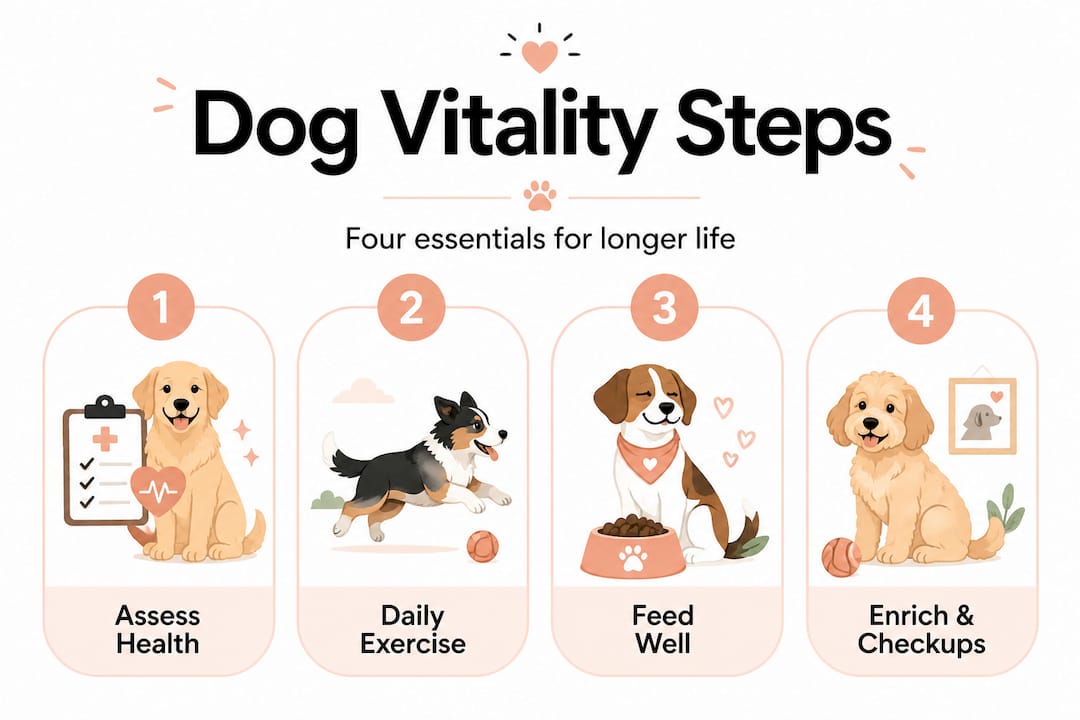
Start with a body condition check. The Body Condition Score (BCS) is a simple tool that helps you assess whether your dog is at a healthy weight. Run your hands along their sides: you should be able to feel their ribs without pressing hard, and you should see a visible waist when looking from above. Overweight dogs live 2.5 years less, which makes this one of the most important checks you can do.
Gather your dog’s health records. Pull together recent vet reports, including weight history, dental records, and any joint assessments. These records reveal trends you might not notice day to day, like slow weight gain over two years or early signs of dental disease.
Know your dog’s profile. Age, breed, and activity level all shape what “optimal vitality” looks like for your specific dog. A two-year-old Border Collie has very different needs than a nine-year-old Basset Hound. Breed characteristics, known health predispositions, and any current restrictions (like a recent injury) should all inform your plan.
Gather your tools. Here’s what you’ll want on hand before you start:
A measuring cup for portioning food accurately
A well-fitted harness for comfortable, safe walks
A food scale for tracking calorie-dense meals
Puzzle toys and enrichment games for mental stimulation
A notebook or app to track progress weekly
You can also use a complete nutrition and lifestyle checklist to make sure you’re covering all the right bases from day one.
Baseline check | What to look for | Tool needed |
Body condition score | Palpable ribs, visible waist | Hands, BCS chart |
Weight | Current vs. ideal breed weight | Scale |
Energy level | Daily activity, enthusiasm | Observation log |
Dental health | Tartar, gum color, breath | Vet records |
Joint mobility | Ease of movement, stiffness | Vet records |
Pro Tip: Take a short video of your dog walking and playing before you start. Reviewing it in six to eight weeks gives you an honest, visual comparison of how much they’ve improved.
Step 1: Optimize daily exercise for longer life
With your tools ready, your first action step is optimizing daily movement, the foundation of every healthy dog.
Exercise is not just about burning calories. It builds lean muscle, keeps joints lubricated, supports cardiovascular health, and even protects brain function as dogs age. The science is clear: daily moderate exercise of 30 to 60 minutes, including walking, trotting, or swimming, builds muscle, protects joints, improves cardiovascular fitness, and reduces obesity risk. A landmark Purina study found that maintaining ideal body condition through exercise and diet adds an average of 1.8 years to a dog’s life. That’s nearly two extra years of tail wags.
Here’s how to build a sustainable exercise plan:
Assess your dog’s current fitness level. A dog who’s been mostly sedentary needs a gradual ramp-up. Start with 15 to 20 minutes of easy walking twice a day and build from there.
Match activity to breed and age. High-energy breeds like Labradors and Australian Shepherds thrive with vigorous daily sessions. Senior dogs and giant breeds like Great Danes do better with shorter, gentler walks to protect their joints.
Mix up the activities. Vary between leash walks, off-leash play, swimming, and light hiking. Variety prevents boredom and works different muscle groups.
Track weekly progress. Log duration, distance, and your dog’s energy level after each session. If they seem exhausted or stiff the next morning, dial it back.
Adjust for weather and health. Hot pavement can damage paw pads, and cold weather affects senior joints. Always prioritize your dog’s comfort and safety over hitting a daily target.
Activity type | Best for | Intensity | Duration |
Leash walking | All ages and breeds | Moderate | 30-60 min/day |
Swimming | Seniors, joint issues | Low impact | 20-30 min |
Fetch/off-leash play | Young, high-energy dogs | Vigorous | 20-40 min |
Gentle sniff walks | Seniors, brachycephalic breeds | Low | 15-30 min |
Pro Tip: For senior or giant-breed dogs, swimming is one of the best exercises available. It builds muscle and improves cardiovascular fitness without putting stress on aging joints.
Explore more natural vitality improvement steps that pair well with a solid exercise routine.
Step 2: Feed for energy and lean muscle
With movement optimized, it’s essential to align your dog’s diet to fuel steady energy, strength, and lean muscle.
Nutrition and exercise work as a team. You can walk your dog every day, but if their diet is loaded with fillers and empty calories, you’re fighting an uphill battle. The goal is to feed for lean body condition, which means a BCS of 3 out of 5 or 5 out of 9, using portion control, high-quality protein, and whole-food ingredients.
Here’s a practical feeding plan to follow:
Measure every meal. Free-feeding (leaving food out all day) is one of the most common causes of gradual weight gain. Use a measuring cup or food scale every single time.
Choose protein-rich, minimally processed food. High-quality animal protein supports lean muscle and keeps dogs feeling satisfied longer. Look for named protein sources like chicken, beef, or salmon as the first ingredient.
Calculate calories based on your dog’s goals. A dog trying to lose weight needs fewer calories than one maintaining an ideal weight. Your vet can help you calculate your dog’s Resting Energy Requirement (RER), which is the baseline calorie need at rest, and adjust from there.
Add nutrient-dense whole foods where appropriate. Blueberries, sweet potatoes, and leafy greens provide antioxidants and fiber that support immune health and digestion.
Reassess every four to six weeks. Body condition changes slowly. Weigh your dog monthly and adjust portions if you notice weight creeping up or dropping unexpectedly.
Excess weight causes real harm beyond just slowing your dog down. Fat tissue actively secretes pro-inflammatory hormones that worsen osteoarthritis (OA), a painful joint condition, and overweight dogs live an average of 2.5 years less than their lean counterparts. This is not a cosmetic issue. It’s a health crisis hiding in plain sight.
Signs of nutritional balance to watch for: a visible waist when viewed from above, ribs you can feel but not see, a shiny coat, bright and alert eyes, consistent energy throughout the day, and firm, well-formed stools.
For a deeper look at how food choices shape your dog’s vitality, the diet for optimal vitality guide covers the specifics in detail. You can also explore premium natural nutrition strategies for ideas on upgrading your dog’s current meals.
Step 3: Use targeted supplements for healthy aging
Once diet is dialed in, science-backed supplements fill key nutrient gaps and further support resilience against aging.
Not all supplements are created equal, and the market is full of products that promise more than they deliver. The good news is that a handful of nutrients have a strong evidence base for supporting dog vitality, especially as dogs enter their senior years.
The most evidence-backed supplements for dogs include:
Marine-sourced omega-3 fatty acids (EPA and DHA): These are the gold standard. Omega-3 supplementation at 50 to 100 mg/kg/day reduces skin itchiness (pruritus) by 41 to 50%, reduces OA pain by 41%, and supports skin, coat, joint, and kidney health.
Beta-glucans: A type of soluble fiber that supports immune function and gut health.
Zinc and selenium: Essential trace minerals that support immune response, skin health, and cellular protection.
B vitamins: Support energy metabolism and neurological function, especially important for senior dogs.
One critical point: focus on EPA and DHA content when choosing an omega-3 product, not the total oil volume. A product can have a large amount of fish oil but very little of the active compounds that actually make a difference.
Plant-based omega-3 sources like flaxseed oil contain ALA (alpha-linolenic acid), which dogs convert to EPA and DHA very inefficiently. Marine EPA/DHA is significantly more effective than plant-based ALA for managing inflammation and supporting joint health in dogs.
It’s also worth setting realistic expectations. Supplements are not miracle workers. No omega-3 supplement has been proven to extend lifespan in otherwise healthy dogs. They work best as an adjunct to a solid diet and exercise routine, particularly for dogs dealing with inflammation, joint discomfort, or skin issues.
Allow four to eight weeks of consistent use before evaluating results, and always confirm dosing with your veterinarian, especially for seniors or breeds with specific health concerns. Learn more about omega-3 benefits for dogs and how omega-3 supports aging dogs specifically.
Step 4: Enrich the mind and schedule regular checkups
Physical health is only one piece. Mind and medical care complete the vitality picture.

A dog who is physically fit but mentally bored is not truly thriving. Mental stimulation is as important to vitality as exercise and nutrition. Puzzles, training, and scent games enhance cognitive function, prevent boredom-driven behavior problems, and support overall well-being across a dog’s entire life.
Three simple ways to enrich your dog’s mind daily:
Rotate puzzle toys and food-dispensing games. Feeding meals through a snuffle mat or Kong-style toy turns mealtime into a mentally engaging activity. Rotate toys every few days to keep novelty high.
Practice short training sessions. Even five to ten minutes of basic commands or learning a new trick keeps the brain sharp and strengthens your bond. Training is mentally tiring in the best possible way.
Include scent work. Dogs experience the world primarily through smell. Hide treats around the yard or in the house and let your dog “hunt” for them. This taps into deep instincts and provides genuine satisfaction.
Signs your dog needs more mental stimulation:
Destructive chewing or digging with no physical cause
Excessive barking or whining
Restlessness or inability to settle
Lethargy and disinterest in toys or play
On the medical side, schedule annual checkups for young adult dogs and biannual visits for seniors. Ask your vet to include weight checks, dental assessments, and basic cognitive screening. Catching small problems early, like a few extra pounds or early tartar buildup, prevents them from becoming big, expensive ones. Explore the proven natural vitality guide for more ways to support your dog’s whole-body health.
Why quick fixes fail: Lessons from decades of helping dogs thrive
Here’s something most pet health content won’t tell you directly: the majority of dogs who seem “old before their time” are not suffering from inevitable aging. They’re suffering from accumulated, overlooked lifestyle gaps.
Weight that crept up over three years. Daily walks that shortened from 45 minutes to 10. Mental stimulation that disappeared once puppyhood ended. These are the real drivers of vitality decline, and they’re all reversible. The problem is that quick fixes, a new supplement, a trendy superfood, a single vet visit, feel satisfying but don’t address the underlying pattern.
We’ve seen this play out consistently. A dog starts a high-quality omega-3 supplement and the owner expects transformation within two weeks. When the results are modest, they give up. But the supplement was only ever meant to support a foundation of good exercise, proper feeding, and consistent care. Without that foundation, no single product can carry the full load.
The evidence-backed nutrition principles that genuinely extend a dog’s healthy years are not glamorous. They’re measuring food portions. They’re getting outside for a 40-minute walk even when it’s inconvenient. They’re scheduling the vet visit you’ve been putting off. These habits, repeated daily, are what add years and quality to a dog’s life. Not shortcuts.
The dogs we see thriving at 12 and 13 years old almost always have owners who committed to consistency over intensity. Small, daily investments in movement, nutrition, mental engagement, and medical care compound over time in ways that no single product ever could.
Give your dog the premium nutrition advantage
For those ready to go further, scientifically formulated natural nutrition is the next logical step.
All four steps in this guide work best when the food in your dog’s bowl is genuinely working for them, not against them. Minimally processed, nutrient-dense meals maximize the return on every walk you take and every supplement you add. That’s exactly what we’ve built at Loyal Saints Pets.

Our freeze-dried recipes lock in the nutritional value of whole, human-grade ingredients without fillers, artificial additives, or empty calories. Learn more about the benefits of freeze-dried dog food and why it supports everything from lean muscle to digestive health. When you’re ready to make the switch, browse our full range of premium nutrition products and find the right fit for your dog’s age, size, and health goals. More tail wags are coming.
Frequently asked questions
How quickly will I see results in my dog’s vitality?
You can expect improvements in energy, muscle tone, and engagement within 2 to 8 weeks when consistently applying these steps, with supplement benefits typically appearing toward the end of that window.
What signs show my dog’s vitality is improving?
Look for a slimmer waist, more enthusiasm on walks, playful behavior, and brighter eyes, as visible waist and improved energy are reliable indicators of better overall health.
Should senior dogs follow a different protocol to boost vitality?
Seniors benefit from age-appropriate, lower-impact exercise and may need higher protein and targeted supplements like omega-3 and B vitamins, while avoiding high-impact activities that stress aging joints.
Can I use plant-based omega-3 supplements?
Plant-based ALA sources are far less efficient for dogs, making marine EPA/DHA the better choice for managing inflammation and supporting joint and skin health.
How can I tell if my dog is overweight and at risk?
A healthy dog has palpable ribs and a visible waist; excess body fat increases the risk of arthritis and can shorten your dog’s life by up to 2.5 years.
Recommended
Comments