.png)
Understanding AAFCO standards for premium pet nutrition
- wix mentor

- May 14
- 10 min read

TL;DR:
AAFCO standards set minimum nutritional requirements for pet foods but do not guarantee optimal health or ingredient quality. Many products meet these standards via formulation rather than actual feeding trials, so owners should look beyond labels for ingredient transparency and sourcing practices. Prioritizing high-quality, whole food-based diets with veterinarian involvement can better support a dog’s long-term vitality.
You’ve probably seen “AAFCO approved” on a bag of dog food and assumed it meant the product was a top-tier choice for your pup. That assumption is incredibly common, and it makes sense on the surface. But AAFCO standards are actually about minimum nutritional adequacy, not personalized health outcomes or optimal vitality. Understanding the difference can change how you shop, what you feed your dog, and ultimately how long and well your dog lives.
Table of Contents
Key Takeaways
Point | Details |
AAFCO is baseline | AAFCO sets minimum nutrient standards but does not guarantee optimal health for your pet. |
Label interpretation matters | Understanding AAFCO statements helps you choose food targeted to your dog’s needs. |
Premium is more than AAFCO | True premium pet foods often exceed AAFCO standards with superior ingredients and formulation. |
Personalization is key | Look beyond minimums for foods that are suited to your dog’s age, breed, and medical needs. |
Smart shopping empowers owners | Combining AAFCO compliance with other quality markers helps your dog thrive and stay healthy. |
What are AAFCO standards and why do they matter?
AAFCO stands for the Association of American Feed Control Officials. It’s a voluntary membership organization made up of state and federal officials who work together to develop guidelines for pet food labeling, ingredient definitions, and nutrient profiles. AAFCO doesn’t test or approve individual pet foods directly. Instead, it publishes standards that manufacturers must meet in order to make certain label claims.
The standards themselves are grounded in scientific research. Nutritional experts study what dogs need at different life stages, from puppies to seniors, and set minimum (and sometimes maximum) levels for key nutrients like protein, fat, calcium, phosphorus, and vitamins. These nutrient profiles form the backbone of what AAFCO calls “nutritional adequacy.”
Here’s why this matters to you as a dog owner:
A food bearing an AAFCO compliance statement has met the minimum bar for nutritional completeness for a stated life stage.
It won’t leave your dog severely deficient in essential nutrients.
It provides a baseline level of safety and consistency across commercial pet foods.
It helps you avoid foods that are nutritionally incomplete or imbalanced.
However, as AAFCO’s minimum nutrient adequacy standards explain, meeting those standards does not automatically mean the diet is ideal for every dog’s medical needs. AAFCO is about nutritional adequacy for the stated life stage, not therapeutic outcomes.
“AAFCO compliance is the floor, not the ceiling. It tells you a food won’t harm your dog nutritionally, but it doesn’t tell you the food will optimize your dog’s health.” This is a critical distinction every dog owner should internalize.
When you’re looking at veterinarian-approved pet food, you’re often looking at products that go well beyond AAFCO minimums by prioritizing ingredient quality, bioavailability, and formulation expertise. Understanding AAFCO protein standards is a great first step in seeing where those gaps between minimum and optimal can occur.
Pro Tip: Don’t stop at the AAFCO statement on the label. Flip the bag over and look at the ingredient list. The first three to five ingredients tell you most of what you need to know about where the nutrition is actually coming from.
How pet foods qualify for AAFCO standards
Now that we understand AAFCO’s purpose, it’s important to see how pet foods actually achieve these standards. There are two recognized methods, and knowing which one a food used gives you real insight into how thoroughly it was tested.
The two qualification methods:
Formulation method: The manufacturer calculates nutrient levels based on the ingredients used and compares those levels to AAFCO’s published nutrient profiles. If the recipe meets all the minimums on paper, the product can claim compliance. This method is faster and less expensive but doesn’t involve actual dogs eating the food.
Feeding trial method: The manufacturer feeds the product to real dogs under controlled conditions for a set period, typically six months. Veterinarians monitor the dogs’ health, weight, and bloodwork throughout. Foods that complete these trials can display a stronger AAFCO compliance statement because they’ve been tested in living animals.
Here’s a side-by-side comparison to make this clearer:
Feature | Formulation method | Feeding trial method |
Uses real dogs | No | Yes |
Time to complete | Weeks | Months |
Cost to manufacturer | Lower | Higher |
Confidence level | Moderate | Higher |
Label language | “Formulated to meet…” | “Feeding tests substantiate…” |
As AAFCO standards confirm, adequate nutrition for the stated life stage is guaranteed by both methods, but suitability for specific health concerns is not ensured by either. That’s an important limitation to remember.

When reading dog food labels, the wording on the compliance statement will tell you which method was used. Seeing “Animal feeding tests using AAFCO procedures substantiate that this food provides complete and balanced nutrition” means real dogs were involved. That’s generally a stronger indicator of real-world adequacy.
You may also notice additional label claims like USDA organic standards or animal welfare labels, which layer ethical and sourcing considerations on top of AAFCO compliance. These can help you make a more complete decision about what goes into your dog’s bowl.
A notable statistic: estimates suggest that the vast majority of commercial pet foods in the U.S. use the formulation method rather than feeding trials, simply because it’s faster and cheaper. That means many foods on store shelves have never actually been fed to dogs in a controlled study setting.
AAFCO vs. premium and natural dog foods: What’s the difference?
Let’s put AAFCO standards into perspective by contrasting them with what defines true premium or natural dog foods. This is where the conversation gets really interesting for health-conscious owners like you.
AAFCO compliance tells you a food hits the minimum. Premium and natural dog foods aim to go much further, and here’s how they differ across several key dimensions:
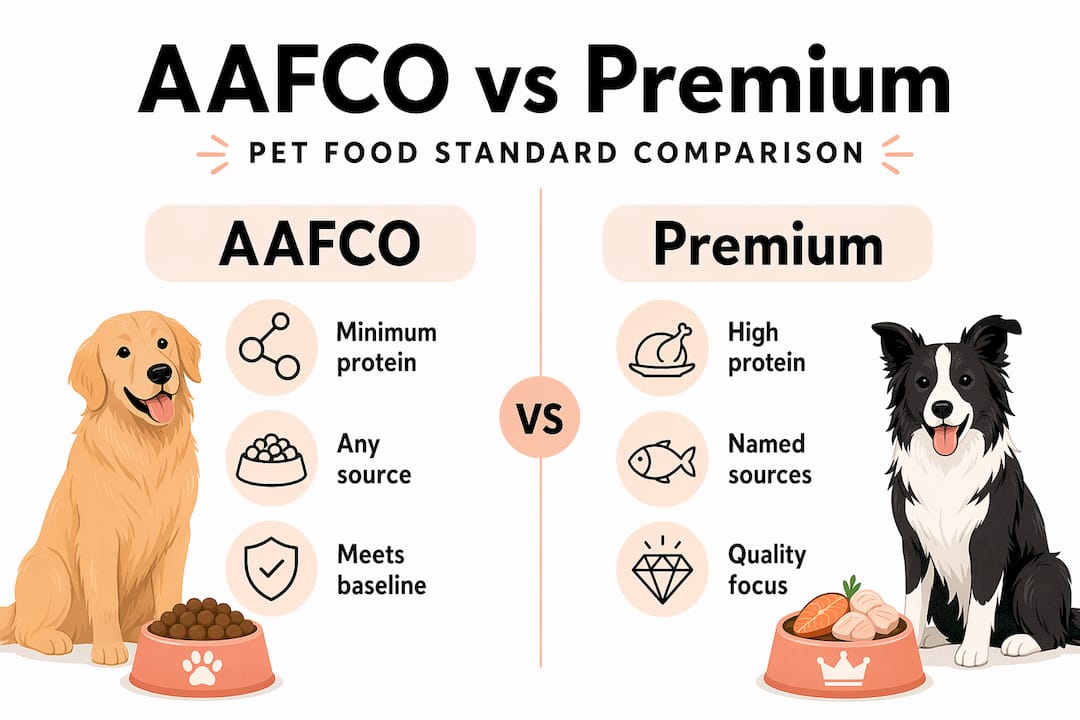
Category | AAFCO minimum standard | Premium/natural standard |
Protein source | Any protein that meets level | Named, whole meat as first ingredient |
Ingredient quality | No requirement for grade | Human-grade or whole-food ingredients |
Processing | No restriction | Minimally processed (freeze-dried, raw) |
Additives | Allowed if safe | Little to none, no artificial preservatives |
Ethical sourcing | Not required | Often certified, traceable |
Veterinarian involvement | Not required | Often formulated with vet expertise |
As research consistently notes, passing AAFCO standards does not always mean a diet is ideal for all dogs, especially those with medical needs. A food could technically pass AAFCO using low-grade by-products and fillers, as long as the nutrient numbers add up on paper.
Premium foods, by contrast, prioritize the source and quality of every ingredient. A premium pet nutrition approach typically includes things like whole muscle meat, organ meat, fresh vegetables, and fruits that deliver nutrients in their most bioavailable forms. Bioavailability means how much of a nutrient your dog can actually absorb and use, not just how much is listed on a label.
Here are some key markers that distinguish truly premium foods from AAFCO minimums:
Whole, named protein sources (chicken, beef, salmon) listed as the first ingredient
No artificial colors, flavors, or chemical preservatives
Absence of fillers like corn syrup, wheat gluten, or unnamed meat by-products
Transparent sourcing with traceable origins for key ingredients
Formulation reviewed or approved by board-certified veterinary nutritionists
Understanding the premium pet food definition helps you set a higher bar when you shop. And if you want veterinarian-approved nutrition that goes beyond labels, look for brands that can point to clinical or expert involvement in their formulations.
Even resources like the elite dog nutrition protocol used by professional dog trainers and handlers emphasize that peak canine performance requires going well beyond standard commercial nutrition. Your dog may not be a protection dog, but every dog deserves that same level of care.
Pro Tip: Look for the phrase “human-grade ingredients” on a label or company website. This term means the ingredients were deemed fit for human consumption, which is a much higher standard than what’s required for AAFCO compliance.
How to interpret AAFCO statements and labels on pet food
Armed with this comparison, now let’s focus on actionable ways to use AAFCO information at the store or online. Reading labels confidently is one of the most powerful skills you can develop as a dog owner.
Step-by-step guide to reading AAFCO compliance statements:
Find the nutritional adequacy statement. It’s usually near the bottom of the back label. Look for the words “Complete and Balanced.”
Identify the life stage. The statement will specify “growth,” “maintenance,” “all life stages,” or “reproduction.” Make sure it matches your dog’s current life stage.
Check the method used. “Formulated to meet” means nutrient calculations only. “Animal feeding tests substantiate” means real dogs were tested.
Review other certifications. Look for organic, welfare-certified, or veterinary-endorsed claims that add context to the AAFCO statement.
Reassess as your dog ages. A food perfect for your puppy may not suit your senior dog. AAFCO compliance statements indicate life stage suitability, so revisit labels as your dog’s needs evolve.
Beyond the compliance statement, pay attention to these label elements:
Guaranteed analysis: Shows minimum crude protein, fat, and maximum fiber and moisture. Useful but incomplete without knowing ingredient quality.
Ingredient list: Ingredients are listed by weight before processing. Whole meats will shrink significantly after cooking, so their position can be misleading in kibble.
Caloric content: Helps you manage portion sizes accurately, especially for weight-sensitive dogs.
Understanding AAFCO protein standards specifically can also help you compare foods side by side. Protein quantity matters, but protein quality and digestibility matter even more. These dog food label reading tips can help you go deeper on every element of what you’re looking at.
Beyond AAFCO: Choosing foods for optimal pet health and vitality
Finally, having decoded AAFCO and premium distinctions, here’s how to ensure your pet gets the best possible diet. The goal isn’t just to avoid harm. It’s to help your dog thrive.
Remember that AAFCO is about nutritional adequacy for the stated life stage, not therapeutic outcomes. For dogs with allergies, joint issues, digestive sensitivities, or age-related conditions, meeting the minimum standard simply isn’t enough. You need to go further.
Here’s a practical checklist for choosing foods that genuinely support your dog’s health:
Choose foods with named, whole protein sources as the primary ingredient
Look for veterinarian involvement in the formulation process
Prioritize minimally processed options like freeze-dried or raw foods that preserve nutrient integrity
Match the food to your dog’s specific life stage, breed size, and activity level
Avoid foods with long lists of synthetic additives, artificial preservatives, or vague ingredient descriptions
Consider foods with added functional ingredients like probiotics, omega-3 fatty acids, and antioxidants
Research consistently supports the idea that dogs fed higher-quality diets show improvements in coat quality, energy levels, digestive regularity, and immune function. A balanced pet nutrition approach that goes beyond AAFCO minimums can contribute meaningfully to a longer, healthier life.
If your dog has specific health concerns, a veterinarian diet guide can help you identify the right nutritional approach. Always consult with your vet when making significant changes to your dog’s diet, particularly if there are underlying health conditions involved.
Studies suggest that nutrition-related health issues, including obesity, dental disease, and digestive disorders, affect a significant portion of the domestic dog population. The right food, chosen with care and knowledge, is one of the most impactful decisions you make for your pet every single day.
Our take: Why AAFCO isn’t enough for real health and what owners should prioritize
We’ll be honest with you: AAFCO compliance is a starting point, not a destination. The standard was designed to prevent nutritional disasters, not to create optimally healthy, vibrant dogs. And while that’s valuable, we think dog owners who treat their pets like family deserve a higher bar.
We’ve seen firsthand how brands lean on “AAFCO approved” as a marketing badge without giving equal attention to ingredient sourcing, processing methods, or real-world dog health outcomes. The label says approved. But approved for what? For survival-level nutrition or for a long, energetic, joyful life? Those are two very different things.
The dog owners we connect with aren’t just looking to avoid deficiency. They want their dogs to run faster, recover better, and live longer. They want fewer vet visits for preventable conditions and more years of tail wags and morning walks. That requires going beyond the minimum.
Our honest advice: use AAFCO compliance as a filter to eliminate clearly substandard products. Then apply a second filter based on ingredient quality, manufacturing transparency, and expert involvement. Look at premium pet nutrition options that lead with whole foods and proven formulations. That’s the combination that actually moves the needle on your dog’s health.
Don’t let a label do your thinking. Read it critically, ask hard questions, and choose foods that treat your dog as the living, breathing family member they are.
Discover better pet nutrition with Loyal Saints
If you’re ready to move beyond checking a box and into genuinely supporting your dog’s long-term health, Loyal Saints is here for you.
At Loyal Saints, every product is formulated to meet AAFCO standards and go well beyond them. Our freeze-dried dog food is made from human-grade, whole ingredients including high-quality proteins, fresh fruits, and nutrient-dense vegetables, with no fillers, artificial preservatives, or mystery by-products. Freeze-drying preserves the natural goodness of each ingredient so your dog gets real nutrition in every bite. Learn more about why freeze-dried food is one of the best nutritional choices you can make, and then shop our premium pet food to find the right option for your dog today.
Frequently asked questions
Are AAFCO standards mandatory for all pet food sold in the US?
AAFCO standards are guidelines, not federal law, but most states reference them as a regulatory baseline for pet food labeling and safety requirements.
Does AAFCO guarantee that a dog food is the healthiest option for my pet?
No. AAFCO ensures minimum nutritional adequacy for a specific life stage, but as AAFCO standards clarify, it is not designed to assess therapeutic outcomes or optimal health for every individual dog.
What should I look for beyond AAFCO on pet food labels?
Check for whole, named protein sources, veterinarian approval, ethical sourcing practices, and whether the food’s ingredient profile matches your dog’s age, breed, and specific health needs.
How are feeding trials different from “formulated to meet AAFCO”?
AAFCO feeding trials involve real dogs eating the food over time under veterinary supervision, while “formulated to meet” means only the nutrient math was checked against AAFCO profiles without testing on actual animals.
Can premium, natural pet foods fail to meet AAFCO standards?
Yes, some boutique or natural diets may not carry an AAFCO compliance statement, and as AAFCO research notes, passing AAFCO does not guarantee a food is premium, so owners should weigh both regulatory compliance and ingredient quality together.
Recommended
Comments