.png)
Why minimally processed pet food means healthier dogs
- wix mentor

- 4 days ago
- 8 min read
TL;DR:
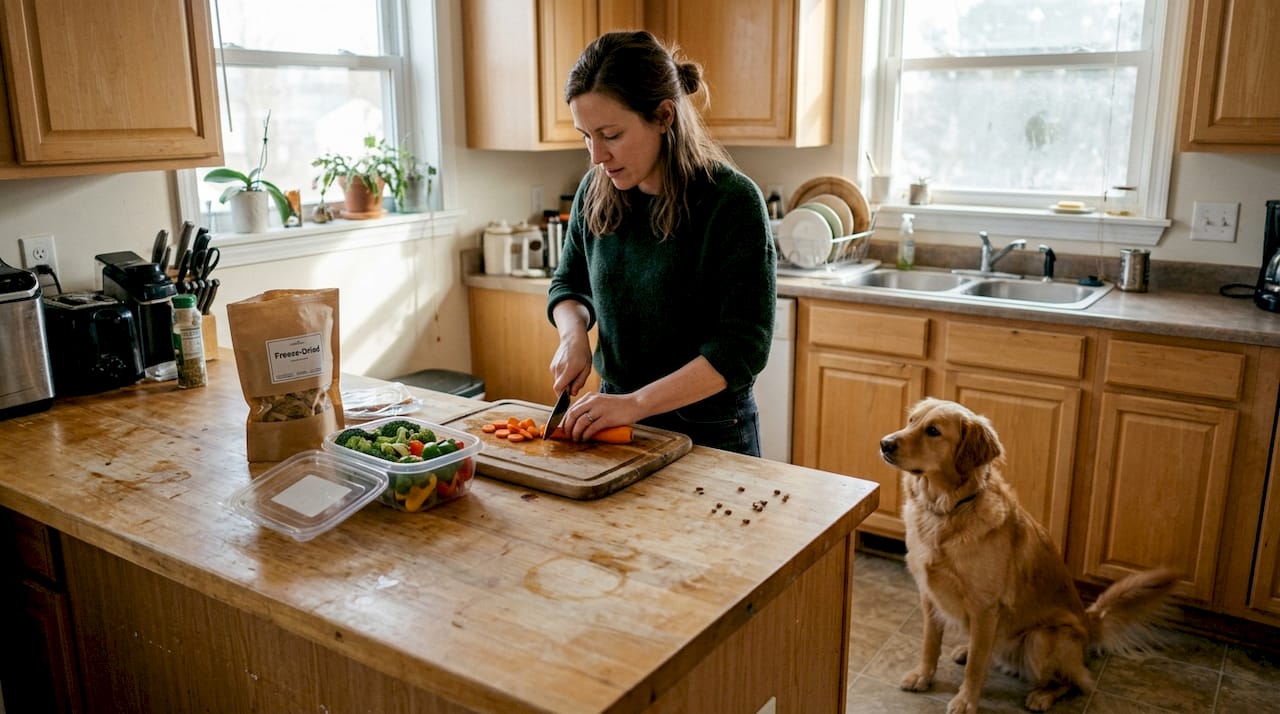
Most commercial dog foods undergo high-heat processing, which destroys nutrients and creates harmful compounds. Minimally processed foods use gentle methods like freeze-drying or raw feeding to preserve natural enzymes and nutrients. Switching to minimally processed diets can improve a dog’s energy, coat, digestion, and overall health.
Many dog owners spend extra money on “premium” kibble, trusting that a higher price tag equals better nutrition. But here’s the uncomfortable reality: most commercial dog foods, even the expensive ones, go through intense heat processing that strips away the very nutrients you’re paying for. Minimally processed foods create fewer harmful AGEs, supporting your dog’s vitality and longevity in ways that heavily processed foods simply can’t match. In this guide, we’ll cover what “minimally processed” actually means, what the science says about health outcomes, which nutrients matter most, and how to spot real improvements in your dog.
Table of Contents
Key Takeaways
Point | Details |
Minimally processed means more nutrients | Low-heat methods like freeze drying preserve enzymes and antioxidants vital for your dog’s health. |
High-heat processing forms harmful AGEs | Extruded kibble creates AGEs that can speed up aging and increase health risks for your dog. |
Switching brings visible results | Dogs fed minimally processed foods often show more energy, shinier coats, and improved digestion within weeks. |
Label reading is essential | Check for low-heat preparation and shorter ingredient lists to ensure you’re getting true minimally processed food. |
What does ‘minimally processed’ really mean for pet food?
The phrase “minimally processed” gets used a lot, but it’s worth understanding what minimally processed means before you start reading labels. At its core, minimal processing refers to food preparation methods that use low or no heat, preserving the natural structure of ingredients as much as possible.
The most common minimally processed techniques include:
Freeze-drying: Raw ingredients are frozen and then moisture is removed in a vacuum chamber, preserving nutrients without heat.
Air-drying: Gentle warm air slowly removes moisture at low temperatures, keeping proteins and vitamins intact.
Raw feeding: Ingredients are served completely uncooked, maximizing enzyme and nutrient content.
Cold pressing: Ingredients are pressed at low temperatures, avoiding the heat damage of traditional extrusion.
Contrast these with standard kibble production, which relies on extrusion, a process where ingredients are cooked under intense pressure and temperatures above 300°F. High-heat extrusion denatures proteins and destroys beneficial nutrients, meaning your dog gets a fraction of what whole ingredients originally offered.
Here’s a side-by-side look at how these two approaches compare:
Feature | Minimally processed | Typical kibble (extruded) |
Processing temperature | Low or none | Above 300°F |
Protein integrity | Preserved | Partially denatured |
Enzyme retention | High | Very low |
Vitamin loss | Minimal | Significant |
Additives/synthetic nutrients | Rarely needed | Commonly added back |
Shelf life method | Freeze-drying, air-drying | High heat, preservatives |
One thing that surprises many owners is that kibble manufacturers often add synthetic vitamins back into food after processing, precisely because the heat destroyed the natural ones. So when you see a long list of added vitamins on a kibble label, that’s not a sign of quality. It’s actually a sign of how much the original food lost during manufacturing.
Minimally processed foods start with whole, recognizable ingredients and keep them that way. What goes in is largely what your dog gets out.
The science: How processing affects health and longevity
With the basics defined, let’s explore the scientific evidence connecting food processing to your dog’s health and lifespan.
One of the most important findings in recent pet nutrition research involves compounds called Advanced Glycation End-products, or AGEs. These form when proteins and sugars react under high heat, and they accumulate in the body over time. AGEs are linked to chronic inflammation, accelerated aging, and organ damage.
A landmark study from The Farmer’s Dog and Cornell University found that senior dogs on fresh food had measurably lower AGE levels and better metabolic markers compared to dogs eating conventional processed diets. The difference wasn’t marginal. Dogs eating minimally processed, human-grade food showed significantly healthier aging profiles across multiple biomarkers.
Here’s how AGE levels compare across diet types:
Diet type | Relative AGE level | Associated health risk |
Raw or freeze-dried | Very low | Minimal inflammation |
Gently cooked/fresh | Low | Reduced aging markers |
Premium kibble | High | Elevated inflammation risk |
Standard kibble | Very high | Faster cellular aging |
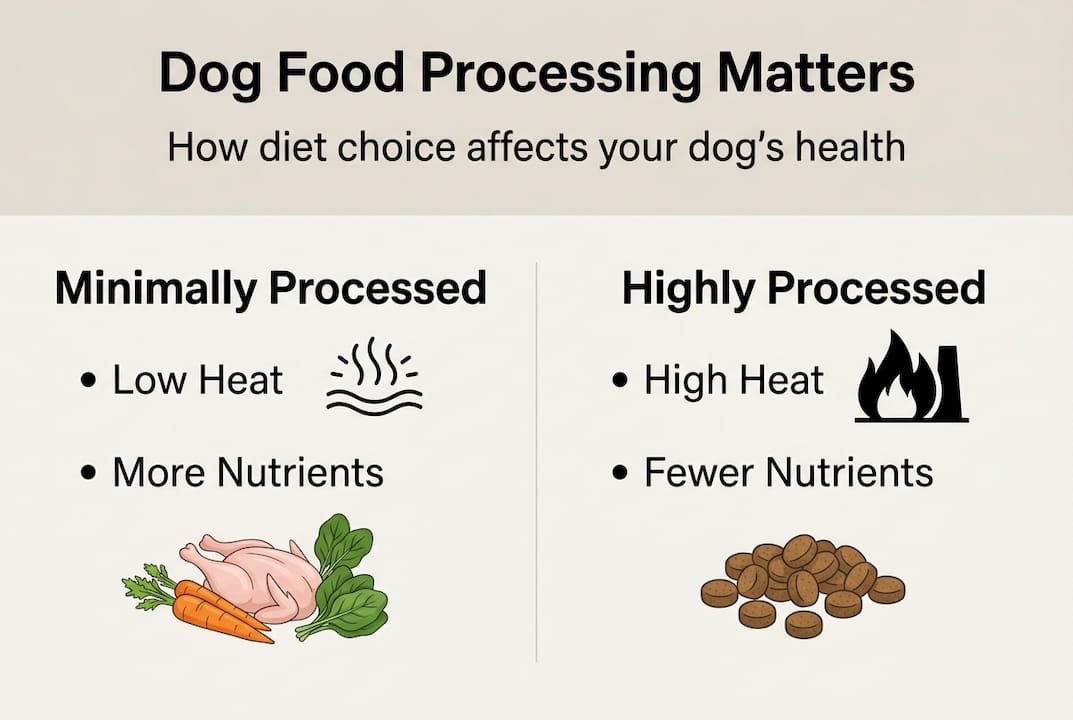
These numbers matter because inflammation is the root of many of the health problems dogs face as they age, including joint issues, digestive disease, and organ decline. The health benefits for dogs eating minimally processed food aren’t just theoretical. They show up in blood work, body condition, and quality of life.
Choosing food for dog food for longevity means thinking beyond the ingredient list and asking how those ingredients were handled before they reached the bag.
Pro Tip: When reading a pet food label, look for a “processing method” statement or words like “gently cooked,” “freeze-dried,” or “raw.” If you only see “natural flavors” and a long vitamin additive list, the food was likely heavily processed and then supplemented artificially.
Nutrients preserved: The real advantage of minimal processing
Beyond just what gets lost, let’s focus on what your dog keeps by choosing minimally processed foods: essential nutrients for vitality.
High-heat extrusion doesn’t just reduce protein quality. It depletes a wide range of nutrients that play critical roles in your dog’s everyday health. Minimal processing preserves natural enzymes and antioxidants that support immunity and nutrient absorption, giving your dog’s body the tools it needs to thrive.
Here’s a breakdown of what’s lost versus preserved:
Lost in high-heat extrusion: Digestive enzymes, heat-sensitive vitamins (B1, B6, C), natural probiotics, omega-3 fatty acids, and antioxidants like vitamin E.
Preserved in minimal processing: Active enzymes that support digestion, intact amino acid profiles, natural probiotics for gut health, fat-soluble vitamins (A, D, E, K), and bioavailable minerals.
Why does enzyme preservation matter so much? Digestive enzymes help your dog break down food efficiently and absorb nutrients at the cellular level. When food is stripped of its natural enzymes, the pancreas has to work harder to compensate. Over time, that extra burden can contribute to digestive strain and nutrient deficiencies even when the food looks balanced on paper.
Probiotics are another big win with minimally processed foods. Beneficial bacteria in raw or freeze-dried foods support a healthy gut microbiome, which is now understood to influence everything from immune response to mood and behavior.
Learn more about nutrient retention in freeze-dried food and why the freeze drying benefits go far beyond convenience.
“When dogs eat whole, minimally processed foods, they receive nutrition the way nature intended, with all the cofactors, enzymes, and synergistic compounds that make nutrients actually work inside the body.” — Dr. Karen Becker, integrative veterinarian
This is the core difference. It’s not just about what’s listed on the label. It’s about whether those nutrients are still active and bioavailable when your dog eats them.
Real-world impact: Visible health changes in dogs
Now that you understand the science and mechanisms, let’s connect it to the visible improvements you’ll notice in your own pet.

Owners who switch their dogs to minimally processed diets consistently report changes they can see and feel within weeks. Visible improvements in energy, coat, and digestion are among the most commonly noted, and they align with what the science predicts.
Here are the most common improvements owners notice, roughly in order of how quickly they tend to appear:
Firmer, more consistent stools within the first one to two weeks, reflecting better digestion and nutrient absorption.
Increased energy and playfulness as the body processes food more efficiently and inflammation begins to decrease.
Shinier coat and healthier skin as omega-3 fatty acids and fat-soluble vitamins reach full bioavailability.
Reduced gas and bloating, a sign that the digestive system is working with less strain.
Healthier weight maintenance because the dog is actually absorbing nutrients rather than passing fillers through.
Improved breath, often a reflection of better gut health and reduced fermentation of undigested material.
Tracking these changes helps you stay objective during the transition. Keep a simple journal noting your dog’s stool quality, energy level, and coat condition each week. It’s easy to forget how things looked before once your dog starts thriving.
Pro Tip: When switching to a new food, transition gradually over seven to ten days by mixing increasing amounts of the new food with the old. This gives your dog’s gut microbiome time to adjust and reduces the risk of loose stools or stomach upset during the change.
For more detail on the science-backed benefits of switching, check out the research we’ve gathered on real outcomes in dogs across different life stages.
Why most dog owners underestimate food processing’s impact
Understanding the proof and benefits is one thing. Navigating pet food marketing with a skeptical eye is another challenge entirely.
The pet food industry has spent decades normalizing heavy processing. Brands invest heavily in packaging that features fresh vegetables, whole meats, and outdoor scenery, even when the actual product inside was cooked at 300°F and reformulated with synthetic additives afterward. “Premium” is a marketing word, not a regulated standard.
Regulators do set baseline safety rules, but they don’t require brands to disclose processing temperatures or methods on labels. That gap gives manufacturers enormous freedom to position highly processed products as health foods. Many owners assume that because a food meets AAFCO standards, it’s optimally nutritious. Meeting minimum standards and delivering maximum nutrition are two very different things.
The real disconnect is between visible quality and actual nutrition. A kibble can look brown and meaty, smell appealing, and list chicken as the first ingredient, while still delivering denatured proteins and minimal bioavailable nutrients. What matters most for your dog’s long-term health isn’t how the food looks or smells. It’s how it was made.
We believe why prioritization matters comes down to one simple truth: your dog can’t read the label. You have to read it for them, and you have to know what to look for beyond the marketing.
Discover minimally processed food options for your pet
If you’re ready to make a real change for your dog’s health, freeze-dried food is one of the easiest and most effective places to start. It delivers the nutritional integrity of raw feeding with the convenience of shelf-stable storage.
At Loyal Saints Pets, every product is crafted from human-grade, whole ingredients using freeze-drying methods that lock in nutrients without heat, fillers, or artificial additives. Your dog gets the enzymes, vitamins, and proteins nature intended, in every single meal. Learn more about why freeze dried food is the gold standard for minimal processing, or browse our full selection when you’re ready to shop freeze-dried foods for your pup. More tail wags are coming.
Frequently asked questions
What are the main downsides of highly processed pet food?
High-heat extrusion creates AGEs, which accumulate in your dog’s body and are linked to chronic inflammation, faster cellular aging, and increased risk of organ damage over time.
How quickly will I see benefits after switching my dog to minimally processed food?
Many owners notice visible improvements in coat, energy, and digestion within just a few weeks of making the switch to a minimally processed diet.
What should I look for on labels when choosing minimally processed pet food?
Look for terms like “freeze-dried,” “air-dried,” or “raw,” and check that freeze drying indicates minimal processing. Avoid foods with long synthetic vitamin additive lists, which often signal heavy heat processing.
Are all ‘premium’ or expensive pet foods minimally processed?
No. Premium pricing does not guarantee minimal processing. Many high-priced brands still use high-heat extrusion, so always check the manufacturing method rather than relying on price or packaging claims.
Recommended
Comments