
TL;DR:
- Allergy-friendly dog food excludes common allergens like beef, chicken, dairy, wheat, egg, lamb, and soy. It relies on novel or hydrolyzed proteins and may include homemade recipes or commercial limited ingredient diets. Proper diagnosis and a strict elimination trial are essential for effective allergy management.
Allergy-friendly dog food is defined as any diet formulated to exclude the most common canine allergens, including beef, chicken, dairy, wheat, egg, lamb, and soy. The best examples of allergy-friendly dog foods fall into three categories: prescription hydrolyzed protein diets, commercial limited ingredient diets featuring novel proteins, and carefully crafted homemade recipes. Brands like Hill’s Prescription Diet, Royal Canin, Purina Pro Plan, and Blue Buffalo Veterinary Diet lead the prescription space, while commercial options from James Wellbeloved and Zignature serve dogs with milder sensitivities. Knowing which category fits your dog’s situation is the first step toward real relief.

1. What makes a dog food allergy-friendly?
Allergy-friendly dog food avoids the proteins and grains that trigger immune reactions in sensitive dogs. The two core approaches are novel proteins and hydrolyzed proteins. Novel proteins are ingredients your dog has never eaten before, such as rabbit, kangaroo, duck, or alligator. Because the immune system has no prior exposure, it does not recognize them as threats.
Common dog food allergens include beef, chicken, dairy, wheat, egg, lamb, and soy. Most allergy-friendly formulas substitute these with single novel proteins and safe carbohydrates like sweet potato or rice. Limited ingredient diets, often called LIDs, take this further by keeping the total ingredient count low to reduce exposure risk.
Omega-3 fatty acids from fish oil or flaxseed are a key addition to many allergy-friendly formulas. Omega-3 supplementation acts as an anti-inflammatory agent that supports skin health in allergic dogs. This matters because many food allergy symptoms show up as itchy, inflamed skin.
Key criteria to look for in an allergy-friendly dog food:
- Single novel protein source (duck, venison, rabbit, kangaroo)
- No beef, chicken, dairy, wheat, egg, soy, or corn
- Short, readable ingredient list
- Added omega-3 fatty acids for skin support
- No artificial preservatives or fillers
- AAFCO-compliant nutritional profile
Pro Tip: Always read the full ingredient list, not just the front label. A bag labeled “duck and potato” can still contain chicken fat or egg as secondary ingredients.
2. Top prescription allergy-friendly dog food examples
Prescription hydrolyzed protein diets are the gold standard for dogs with confirmed food allergies. These formulas break proteins down into tiny peptides that the immune system cannot recognize as allergens. Hydrolyzed diets average a molecular weight of 1.85 kDa, with 98% of peptides falling below 10 kDa. At that size, the immune system essentially cannot detect them.
The four most widely recommended prescription options are Hill’s Prescription Diet z/d, Royal Canin Canine Hydrolyzed Protein HP, Purina Pro Plan HA, and Blue Buffalo Veterinary Diet HF. Each uses a different protein source and hydrolysis method, but all share the same goal: eliminating immune triggers at the molecular level. These diets are also manufactured under strict protocols to prevent cross-contamination, which matters greatly for severely sensitive dogs.
Veterinarians recommend hydrolyzed diets for severe food allergies because their immunogenic risk is lower than novel protein diets alone. They are the preferred choice for elimination diet trials and long-term allergy management.
| Product | Protein Source | Best For |
|---|---|---|
| Hill’s Prescription Diet z/d | Hydrolyzed chicken | Severe confirmed allergies |
| Royal Canin Hydrolyzed HP | Hydrolyzed soy protein | Elimination diet trials |
| Purina Pro Plan HA | Hydrolyzed soy | Multi-allergen sensitivity |
| Blue Buffalo Veterinary Diet HF | Hydrolyzed salmon | Fish-based hydrolyzed option |
Important notes on prescription diets:
- Require a veterinarian’s prescription and guidance
- Should be used exclusively during elimination trials (no treats, table scraps, or supplements unless vet-approved)
- Designed for both short-term diagnosis and long-term feeding
- Manufactured on dedicated lines to minimize cross-contamination risk
3. Commercial novel protein and limited ingredient dog foods
Commercial limited ingredient diets offer a practical, accessible option for dogs with mild to moderate sensitivities. Brands like James Wellbeloved and Zignature provide single animal protein, single grain formulas with minimal additives. These are widely available without a prescription and work well for dogs whose allergies have not been confirmed through a full elimination trial.
Novel protein sources in this category include duck, venison, kangaroo, and bison. Veterinary dermatologists recommend novel proteins like rabbit, kangaroo, or alligator for dogs allergic to common proteins like chicken and beef. The logic is straightforward: a dog cannot react to a protein it has never encountered.
Grain-free versus grain-inclusive is a real debate in this space. Current veterinary guidance leans toward grain-inclusive diets unless a grain allergy is specifically confirmed, partly due to ongoing research into grain-free diets and cardiac health in dogs. If your dog has no confirmed grain sensitivity, a novel protein diet with a simple grain like rice or oats is often the safer choice.
One important caution: cross-contamination risks exist even in limited ingredient commercial foods. Manufacturing on shared lines can introduce trace allergens. For highly sensitive dogs, this means a commercial LID may still trigger reactions, and a prescription or homemade diet becomes necessary.
Pro Tip: Look for brands that disclose their manufacturing practices. Some companies use dedicated allergen-free facilities, which significantly reduces cross-contamination risk.
4. DIY allergy-friendly dog food recipes and treat examples
Homemade allergy-friendly recipes give you full control over every ingredient your dog eats. The key is using a single novel protein, a safe carbohydrate, and a source of healthy fat, with no commercial broths or seasoning blends that might hide allergens. Veterinary nutritionists advise using single-ingredient novel proteins and safe carbohydrates to improve the success of homemade allergy-friendly diets.
Simple homemade recipe examples:
- Duck and sweet potato bowl: Boil or bake ground duck with diced sweet potato and a small amount of fish oil. Serve at room temperature. This covers protein, carbohydrate, and omega-3 needs in one simple meal.
- Venison and rice: Cook ground venison with plain white rice and a handful of steamed green beans. No salt, no garlic, no onion. This is one of the cleanest examples of allergy-friendly pet recipes you can make at home.
- Rabbit and pumpkin: Simmer rabbit meat with plain canned pumpkin (not pie filling) and a small amount of coconut oil. Pumpkin supports digestive health, which often suffers during allergy flares.
For treats, 3-ingredient pumpkin and oat biscuits are a reliable choice. They bake in about 40 minutes, yield 25–35 treats, and can be stored in the refrigerator for up to 7 days or frozen for up to 3 months. They exclude wheat, corn, soy, and the other top canine allergens.
Pro Tip: Always consult a veterinary nutritionist before switching to a fully homemade diet. Home cooking can create nutritional gaps, especially in calcium and trace minerals, if not properly balanced.
The main downside of homemade diets is the time and planning required. The main upside is complete ingredient transparency. For dogs with severe allergies who react even to prescription commercial foods, a vet-supervised homemade diet is often the most reliable path to relief.
5. How to choose the right allergy-friendly dog food for your dog
Choosing the right allergy-friendly option depends on your dog’s allergy severity and whether the allergy has been formally diagnosed. True food allergies are uncommon in dogs, and many owners mistake environmental or flea allergies for food reactions. A proper elimination diet trial lasting 6–8 weeks is the only definitive way to confirm a food allergy.
Matching your dog’s situation to the right diet type:
- Confirmed severe food allergy: Start with a prescription hydrolyzed protein diet from Hill’s, Royal Canin, or Purina. Use it exclusively for the full elimination trial period.
- Mild sensitivity or unconfirmed allergy: A commercial limited ingredient diet with a novel protein like duck or venison is a reasonable starting point.
- Environmental allergies with secondary skin issues: Add omega-3 fatty acids to any base diet. Skin support matters even when food is not the root cause.
- Dogs who react to commercial foods: Consider a vet-supervised homemade diet using a single novel protein and a safe carbohydrate.
During any diet trial, watch for changes in itching, ear infections, paw licking, and digestive upset. These are the most common signs that a food is either helping or still causing problems. Transitioning to a new diet should happen gradually over 7–10 days to avoid digestive upset. Cost is also a real factor: prescription diets cost more than commercial options, but the diagnostic value they provide often saves money on vet visits in the long run. For a deeper look at managing food allergies long-term, a structured approach makes all the difference.
Key takeaways
The most effective allergy-friendly dog food matches the protein type and formulation to your dog’s confirmed allergens, not just a general sensitivity label.
| Point | Details |
|---|---|
| Hydrolyzed proteins work best for severe allergies | Peptides below 10 kDa are undetectable by the immune system, reducing reactions. |
| Novel proteins suit mild or unconfirmed sensitivities | Proteins like duck, venison, and kangaroo avoid common allergens without a prescription. |
| Elimination trials take 6–8 weeks | Only a full diet trial under vet supervision can confirm a true food allergy. |
| Homemade diets need vet oversight | Nutritional gaps in calcium and minerals are common without professional guidance. |
| Cross-contamination is a real risk | Severely sensitive dogs may react to commercial LIDs made on shared manufacturing lines. |
What I’ve learned from years of watching dogs thrive on the right diet
The most common mistake I see dog owners make is switching foods too quickly and too often. They try a novel protein diet for two weeks, see no improvement, and move on to something else. But a proper elimination trial requires 6–8 weeks of strict adherence. That means no treats, no table scraps, and no flavored medications unless your vet approves them. Most owners do not realize how many hidden allergens exist in everyday items like dental chews and pill pockets.
The other thing I have come to believe strongly: prescription hydrolyzed diets are underused. Many owners skip them because of cost or because they assume a “natural” novel protein diet is better. But for a dog with a confirmed, severe food allergy, the molecular precision of a hydrolyzed diet is genuinely different from anything you can buy off the shelf. The science behind the sub-10 kDa peptide threshold is not marketing language. It is the reason these diets work when everything else has failed.
Homemade diets are worth considering, but only with a veterinary nutritionist in your corner. I have seen beautifully intentioned home-cooked meals create calcium deficiencies that caused real skeletal problems over time. The ingredients were clean. The balance was not. Get the recipe reviewed before you commit.
Finally, do not overlook omega-3 fatty acids. Adding fish oil to almost any allergy-friendly diet improves skin outcomes. It is one of the simplest, lowest-risk additions you can make, and the evidence behind it is solid.
— Kristina
Find allergy-friendly options at Loyalsaintspets
If your dog needs a clean, minimal-ingredient protein source to support an allergy diet, Loyalsaintspets offers freeze-dried options made from human-grade, whole ingredients with no fillers or artificial additives.
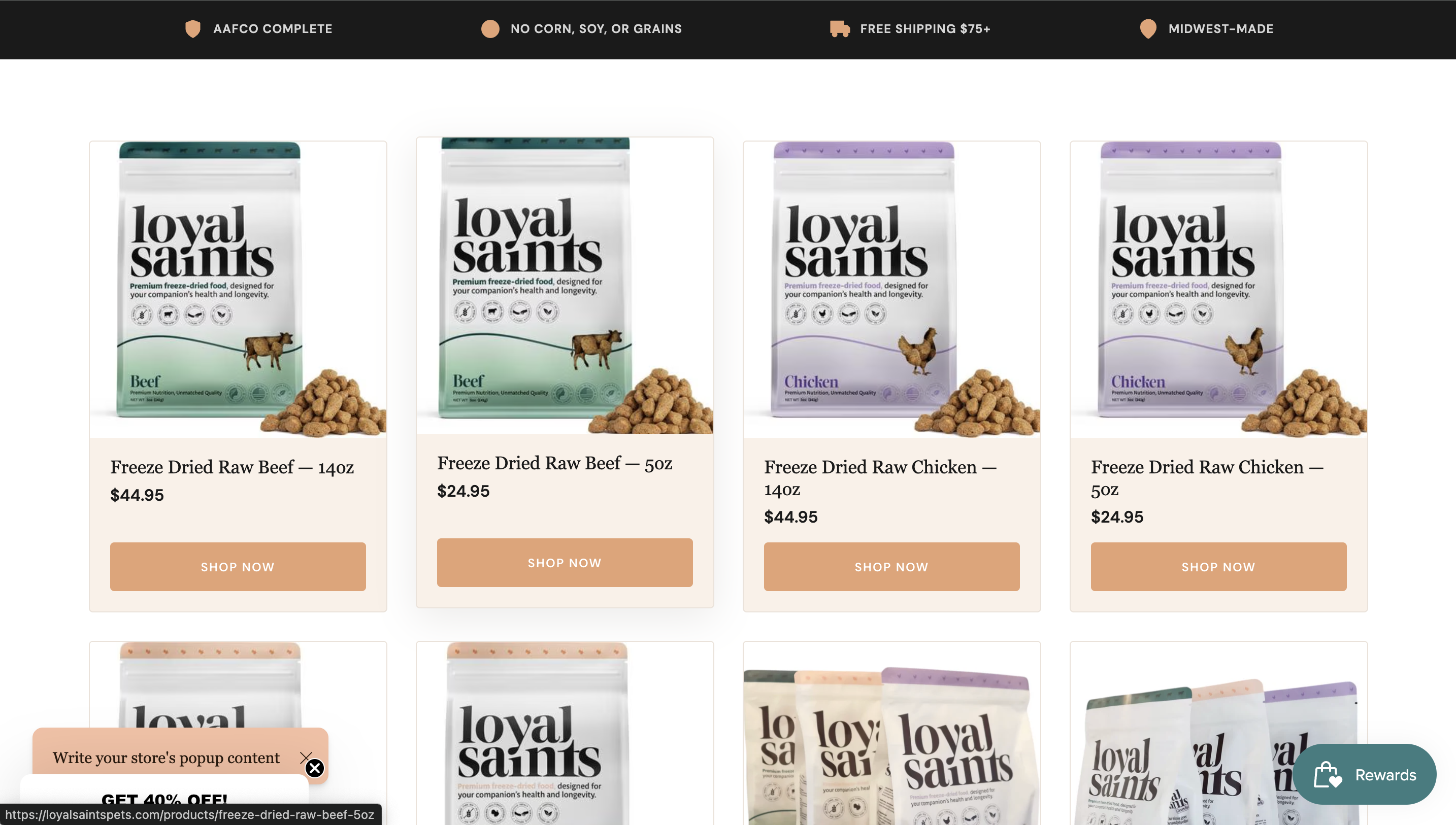
The freeze-dried raw chicken is a single-protein option that works well as a food topper or standalone meal component for dogs on elimination trials. For dogs who do better with red meat, the freeze-dried raw beef provides a minimally processed alternative with full ingredient transparency. Every product meets AAFCO standards and is veterinarian approved, so you know exactly what your dog is eating. Loyalsaintspets ships free on qualifying orders, making it easy to keep your dog’s allergy diet consistent without interruption.
FAQ
What is allergy-friendly dog food?
Allergy-friendly dog food excludes the most common canine allergens, including beef, chicken, dairy, wheat, egg, and soy. It typically uses novel proteins or hydrolyzed proteins to reduce immune reactions in sensitive dogs.
What are the best examples of hypoallergenic dog food brands?
Hill’s Prescription Diet z/d, Royal Canin Canine Hydrolyzed Protein HP, Purina Pro Plan HA, and Blue Buffalo Veterinary Diet HF are the leading prescription options. For commercial diets, James Wellbeloved and Zignature offer accessible novel protein formulas.
Can dogs have allergy-friendly treats?
Yes. Simple treats made from a single novel protein or safe ingredients like pumpkin and oats work well. Pumpkin and oat biscuits, for example, exclude the top seven canine allergens and can be stored refrigerated for up to 7 days.
How long does an elimination diet trial take?
A proper elimination diet trial takes 6–8 weeks under veterinary supervision. This is the only reliable method to confirm a true food allergy versus an environmental or flea allergy.
Are grain-free dog foods better for allergies?
Not necessarily. Grain allergies in dogs are less common than protein allergies. Current veterinary guidance favors grain-inclusive diets unless a specific grain allergy is confirmed, partly due to ongoing research into grain-free diets and heart health.


