
TL;DR:
- Food allergies in dogs are immune responses to specific proteins causing various health issues.
- Elimination diets using novel proteins or hydrolyzed diets are essential for accurate diagnosis.
- Consistent management and vet-approved diets help maintain long-term allergy relief for dogs.
Many dog owners spend months treating itchy skin, chronic ear infections, and upset stomachs before realizing the culprit is hiding in the food bowl. While pollen and fleas get most of the blame, pet food plays a central role in managing chronic allergic conditions through targeted nutrition strategies. The good news is that with the right approach, you can identify your dog’s triggers, eliminate them, and maintain real, lasting relief. This guide walks you through exactly how to do that, from understanding what a food allergy actually is to choosing a premium diet that keeps your dog comfortable and thriving long term.
Table of Contents
- Understanding food allergies in dogs
- How elimination diets pinpoint food allergies
- Hydrolyzed protein vs. novel ingredient diets: Advantages and trade-offs
- Long-term management: Choosing and maintaining the right allergy-safe diet
- Expert perspective: What most guides miss about food allergy management
- Find allergy-safe food solutions with Loyal Saints
- Frequently asked questions
Key Takeaways
| Point | Details |
|---|---|
| Food is central to allergy control | The right diet is the most effective way to identify and manage allergies in dogs. |
| Hydrolyzed and novel diets work best | Hydrolyzed and limited ingredient diets are proven strategies for allergy diagnosis and relief. |
| Strict adherence is essential | Keeping to the recommended diet without treats or errors determines success. |
| Vet guidance is a must | Veterinarian involvement is critical for both diagnosis and safe long-term nutrition. |
Understanding food allergies in dogs
A food allergy is not the same as a food intolerance, and the difference matters a lot when you are trying to help your dog. A food allergy is an immune system response, where the body mistakenly identifies a protein as a threat and launches an attack. A food intolerance is a digestive issue, like trouble breaking down lactose, without any immune involvement. Both can make your dog miserable, but allergies tend to be more persistent and harder to resolve without targeted dietary changes.
The symptoms of food allergies in dogs are easy to confuse with environmental allergies. Your dog may show:
- Itchy skin, especially around the paws, face, armpits, and groin
- Chronic ear infections (otitis externa), which may recur even after treatment
- Red or inflamed skin and recurring hot spots
- Gastrointestinal issues like vomiting, diarrhea, or excessive gas
- Scooting, hair loss, or skin thickening over time
One reason food allergies are so often missed is that they develop slowly, sometimes over months or years of eating the same food. Unlike a bee sting reaction, there is no sudden dramatic event. The symptoms also appear year-round, which makes owners assume environmental allergens like dust mites or grass are the problem.
Statistically, 10-15% of allergic skin disease in dogs is food-driven. That number may sound small, but for dogs with chronic, treatment-resistant skin or ear problems, food is often the missing piece. The most common allergens include beef, dairy, chicken, wheat, lamb, soy, egg, corn, and fish, with beef being the most frequently reported trigger.
If your dog has been on the same protein for years and keeps showing symptoms, exploring allergy-friendly dog food options is a smart next step. Switching proteins alone is not enough, but it is a meaningful starting point toward a proper diagnosis.
How elimination diets pinpoint food allergies
With a clear understanding of allergies, let’s tackle the most reliable way to diagnose food triggers: elimination diets. An elimination diet trial is the gold standard for identifying food allergies in dogs. The concept is straightforward. You feed your dog a single protein and carbohydrate source that they have never eaten before, or a hydrolyzed protein diet, for a set period and watch what happens.
Here is how a proper elimination diet trial works:
- Choose the right food. Select a diet with a single novel protein (like kangaroo or venison) or a hydrolyzed protein formula. Your vet should guide this choice.
- Commit to 8-12 weeks. This is non-negotiable. Immune responses take time to calm, and elimination diet trials require strict adherence for the full duration.
- Eliminate all extras. No treats, flavored medications, chews, or table scraps. Even a tiny exposure to the allergen can reset the clock.
- Track symptoms weekly. Note changes in skin condition, ear health, digestion, and energy. A simple log goes a long way.
- Confirm with a food challenge. After the trial, reintroduce the original food. If symptoms return, you have confirmed a food allergy. This step is what separates a true diagnosis from a guess.
Strict adherence is crucial. Success rates drop below 50% when the protocol is not followed consistently, making discipline the single biggest factor in whether the trial works.
Pro Tip: Keep a weekly symptom journal with photos of your dog’s skin and ears. Visual comparisons over 8-12 weeks make it much easier to see gradual improvement and share progress with your vet.
Common reasons trials fail include accidental allergen exposure, environmental allergies masking food allergy improvement, incomplete hydrolysis in some commercial diets, and reactions to the carbohydrate source rather than the protein. Following a step-by-step allergy guide and working with your vet from the start dramatically improves your chances of a clear result. You can also review a detailed pet food allergy management guide to understand what to expect at each stage.
Hydrolyzed protein vs. novel ingredient diets: Advantages and trade-offs
Understanding the elimination diet process, let’s compare the two primary tools available: hydrolyzed protein diets and novel or limited ingredient diets (LIDs).
| Feature | Hydrolyzed protein diet | Novel/limited ingredient diet (LID) |
|---|---|---|
| How it works | Proteins broken into tiny peptides | Single whole protein, never eaten before |
| Immune response risk | Very low (peptides too small to trigger reaction) | Low if protein is truly novel |
| Purity/contamination risk | Low (prescription grade) | Higher in OTC products |
| Cost | Higher | Moderate to high |
| Best use | Diagnosis phase | Long-term maintenance |
| Availability | Prescription only | Prescription and OTC |
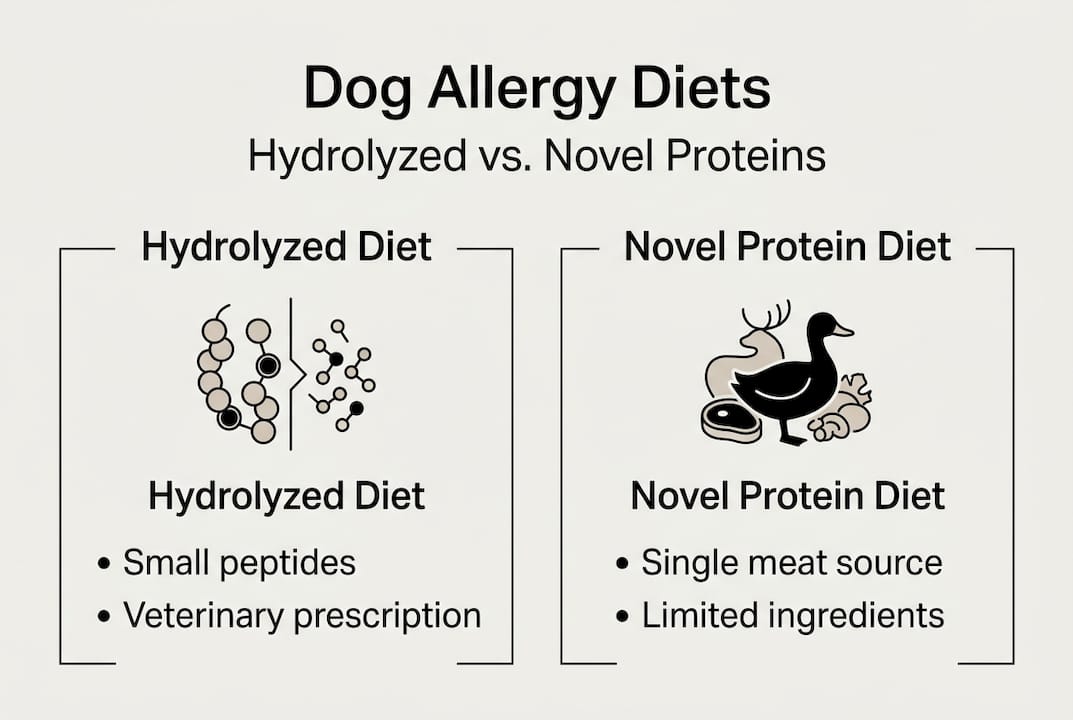
Hydrolyzed protein diets break proteins into small peptides under 10-13 kDa, which are too small to trigger an immune response. This makes them the gold standard for the diagnosis phase, especially when you are not sure which protein your dog has been exposed to. Novel ingredient diets, on the other hand, rely on using a protein your dog has never encountered, so the immune system has no existing reaction to it.

The challenge with over-the-counter LIDs is contamination. OTC LIDs are often contaminated with trace proteins from shared manufacturing equipment, which can silently derail a trial. Prescription hydrolyzed diets are manufactured under stricter controls, making them more reliable for diagnosis.
Here is a simple way to think about when to use each:
- Diagnosis phase: Use a prescription hydrolyzed protein diet for the cleanest, most controlled trial.
- Maintenance phase: Once triggers are confirmed, a premium LID with a single, clearly labeled protein can work well long term.
- Budget considerations: Hydrolyzed diets cost more, but a failed trial costs more in vet visits and prolonged suffering.
Pro Tip: Never switch between hydrolyzed and novel protein diets mid-trial without consulting your vet. Doing so can invalidate your results and extend the process unnecessarily.
Understanding what limited ingredient dog food means and exploring the LID advantages for sensitive dogs can help you make a more informed choice when the time comes.
Long-term management: Choosing and maintaining the right allergy-safe diet
With your options compared, here is how to maintain results and keep your dog comfortable for the long term. Once you have confirmed your dog’s food triggers, the goal shifts from diagnosis to sustainable management. That means choosing a premium diet that avoids the identified allergens, supports overall health, and is nutritionally complete for lifelong feeding.
Research confirms that therapeutic diets reduce otitis externa incidence significantly, and hydrolyzed diets help dogs with chronic enteropathy even after prior treatment failures. This is encouraging news for owners who feel like they have already tried everything.
| Outcome measure | Therapeutic diet group | Standard diet group |
|---|---|---|
| Ear infection recurrence | Significantly reduced | Unchanged or worsened |
| Skin symptom improvement | Marked improvement at 12 weeks | Minimal change |
| GI symptom resolution | Improved in chronic cases | Variable |
When choosing a long-term maintenance diet, look for these features:
- Single, clearly identified protein source with no hidden blends
- Transparent labeling with a short, recognizable ingredient list
- Veterinarian reviewed and AAFCO compliant to ensure nutritional completeness
- No artificial additives, fillers, or by-products
- Freeze-dried or minimally processed to preserve ingredient integrity
Veterinary approval is essential for any premium or natural diet you plan to feed long term. Not all OTC foods marketed as natural are nutritionally complete or free from contamination. Ongoing monitoring matters too. Schedule regular vet check-ins every 3-6 months, keep tracking symptoms, and avoid mixing in new proteins without a controlled reintroduction.
For dogs with mixed allergies (both food and environmental), you may see only partial improvement on diet alone. That is normal and worth discussing with your vet. Exploring natural allergy solutions and understanding seasonal diet adjustments can help you manage the full picture, not just one piece of it.
Expert perspective: What most guides miss about food allergy management
Here is something most allergy guides will not tell you directly: the food itself is rarely the only problem. The bigger challenge is human behavior. Owners follow the elimination diet perfectly for three weeks, then give one small treat at a birthday party, and the entire trial is compromised. That is not a failure of the diet. It is a failure of the protocol.
Less than half of food trials meet quality standards due to inconsistent adherence. That statistic should stop you in your tracks. It means most dogs never get a fair shot at a real diagnosis because the humans around them could not maintain the discipline required.
We also see owners assume that a label saying “premium” or “natural” means the food is safe for their allergic dog. It does not. A premium ingredient can still be a known allergen. A natural formula can still be manufactured on shared equipment with cross-contaminating proteins. Reading labels carefully and working with your vet on nutrition for allergy-prone dogs is the only way to know for sure.
True, lasting relief is absolutely possible. But it requires treating the management plan like medicine, not just a food swap. The owners who see the best results are the ones who stay consistent, communicate regularly with their vet, and resist the urge to improvise.
Find allergy-safe food solutions with Loyal Saints
Ready to take the first step toward lasting comfort for your dog? At Loyal Saints Pets, we offer freeze-dried dog food made from human-grade, whole ingredients with clear, honest labeling that allergy-conscious owners can trust.

Our recipes are veterinarian-reviewed and formulated with sensitive dogs in mind, featuring single proteins and no fillers, artificial additives, or hidden ingredients. If you are navigating food allergies and want a premium, minimally processed option for long-term maintenance, we are here to help. Learn more about why freeze dried food preserves ingredient integrity, or browse allergy-friendly options to find the right fit for your dog’s needs. Your dog deserves real food and real relief, and we are proud to support that journey.
Frequently asked questions
What is the best pet food for dogs with allergies?
Hydrolyzed protein or novel/limited ingredient diets are the gold standard for identifying and managing food allergies, and your vet can help determine which is right for your dog’s specific situation.
How long does it take to see improvement on an elimination diet?
Most dogs show measurable improvement within 8-12 weeks when the diet is followed strictly, with absolutely no treats, flavored medications, or extras introduced during the trial.
Can I buy allergy-friendly dog food without a prescription?
Over-the-counter options exist, but many OTC diets are contaminated with trace proteins, making them unreliable for allergy trials; always consult your veterinarian before choosing a diet for allergy management.
What if my dog’s symptoms only partially improve on a special diet?
Partial improvement often points to mixed allergies, meaning your dog may react to both food and environmental triggers, and further veterinary testing can help clarify the full picture.
Are natural or premium ingredients always safer for allergic dogs?
Not always. Veterinary approval is essential because premium or natural labels do not guarantee allergy safety or nutritional completeness, and vet oversight remains the most reliable safeguard.


