
TL;DR:
- Managing dog food allergies in shelters requires strict elimination diet trials and thorough allergen avoidance to accurately diagnose and prevent unnecessary suffering. Hydrolyzed protein diets are recommended for dogs with unknown histories, and environmental controls are vital to prevent trial failures caused by hidden exposures. Long-term success depends on detailed documentation, clear communication with adopters, and a team-wide approach to allergy management.
Managing dog food allergies in shelters means identifying immune-mediated reactions to specific dietary proteins and implementing strict dietary controls to reduce suffering in rescue dogs. Cutaneous adverse food reactions (CAFRs) are the recognized clinical term for what most shelter staff call food allergies, and they affect a meaningful portion of the dogs in your care. Food allergies affect up to 33% of atopic dogs, making them one of the most common and most mismanaged conditions in rescue environments. This guide to managing dog food allergies in shelters walks you through diagnosis, diet selection, allergen avoidance, and long-term care so every dog in your facility gets a real shot at comfort and a healthy home.
How can shelter staff accurately diagnose food allergies in dogs?
The only validated diagnostic method for food allergies in dogs is an 8 to 12 week elimination diet trial followed by a provocation challenge. Blood tests and skin prick tests are not reliable for food allergies in dogs. Diagnosis requires patience and discipline, but the process is straightforward when you follow each step carefully.
Here is how to run a proper elimination diet trial in a shelter setting:
- Select an appropriate diet. Choose either a novel protein diet (a protein the dog has never eaten before) or a hydrolyzed protein diet. For shelter dogs with unknown histories, hydrolyzed protein formulas are the safer starting point because unknown dietary backgrounds make novel protein selection risky.
- Feed exclusively for 8 to 12 weeks. The dog eats only the trial diet and water. No treats, no flavored medications, no table scraps. Clinical improvement is defined by a 50% or greater reduction in itching (pruritus).
- Run the provocation challenge. After the trial period, reintroduce the original diet for two weeks. If symptoms return, food allergy is confirmed. This step is non-negotiable for an accurate diagnosis.
- Control all hidden allergen sources. Flavored medications, treats, and toys are among the most common reasons elimination trials fail. Switch to unflavored medications and eliminate all extras.
- Involve your veterinarian. A vet should supervise the trial, especially when symptoms are severe. Short-term anti-inflammatory medications like prednisolone or oclacitinib can reduce the trial timeline from 8 weeks to 4 to 6 weeks in some cases, which matters in a busy shelter.
Pro Tip: Label each allergic dog’s kennel with a bright, laminated feeding card listing the exact diet, prohibited items, and the trial start date. This single step prevents most accidental allergen exposures from well-meaning volunteers.
You can also follow a detailed elimination diet protocol to support your team through each phase of the trial.

What are the best diet options for managing food allergies in shelter dogs?
Two primary diet strategies exist for allergic dogs: novel protein diets and hydrolyzed protein diets. Each has real advantages and real limitations in a shelter context.
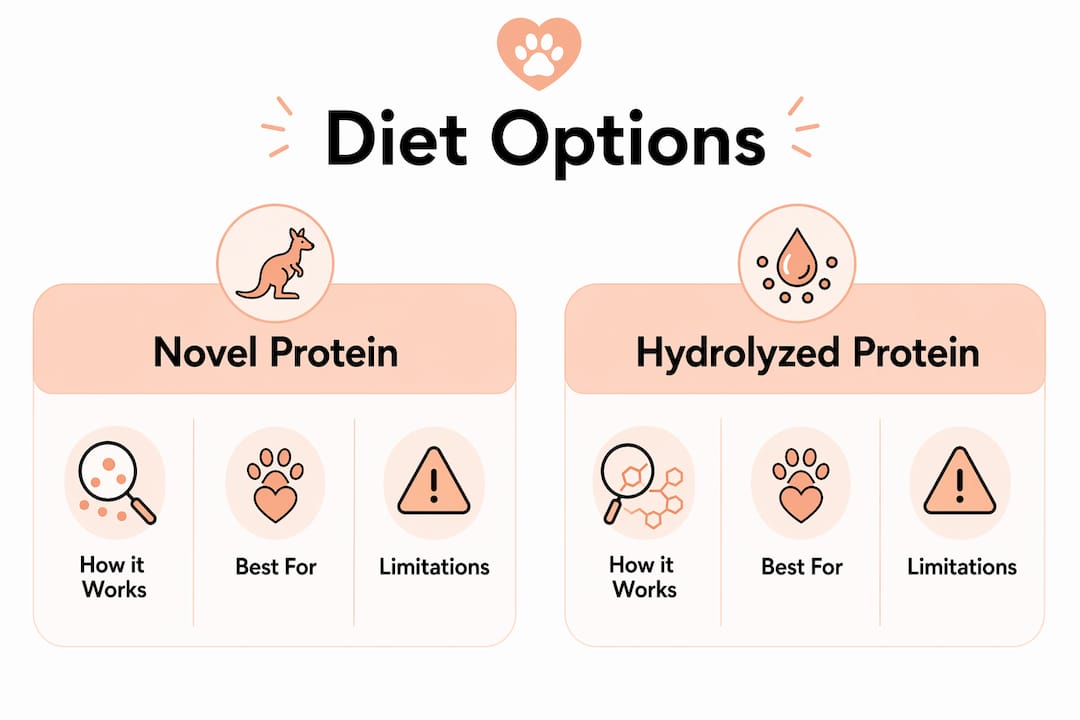
| Diet Type | How it works | Best for | Limitations |
|---|---|---|---|
| Novel protein diet | Uses a protein the dog has never eaten (e.g., kangaroo, venison, duck) | Dogs with known diet histories | Unreliable for dogs with unknown backgrounds |
| Hydrolyzed protein diet | Proteins broken below 5 kilodaltons to prevent immune response | Dogs with unknown histories or multiple sensitivities | Higher cost; palatability varies |
| Limited ingredient diet (commercial) | Minimal ingredients to reduce allergen exposure | Maintenance after diagnosis | Not always strict enough for the trial phase |
| Homemade diet | Full control over ingredients | Dogs with complex multi-allergen profiles | Requires veterinary nutritionist oversight for balance |
Hydrolyzed protein diets work by presenting proteins below 5 kilodaltons, which prevents IgE cross-linking and eliminates the immune trigger. Prescription options that meet this standard include Royal Canin Ultamino®, Purina Elemental®, and Farmina VetLife Derma HF®. These are the most reliable choices for the diagnostic phase.
Key feeding practices to maintain during and after the trial:
- Feed measured portions at consistent times each day to track intake and spot appetite changes early.
- Store trial diet separately from general shelter food stock to prevent cross-contamination.
- Use dedicated bowls and feeding utensils for allergic dogs, washed separately.
- Document every meal, including the amount offered and consumed, in the dog’s medical record.
After diagnosis, limited ingredient diets work well for long-term maintenance. They simplify ingredient lists without the cost of prescription formulas, provided the confirmed allergen is absent.
How to implement allergen avoidance and supportive care for allergic dogs in rescues
Allergen avoidance extends well beyond the food bowl. Dealing with dog allergies in shelters requires a whole-environment approach because hidden exposures routinely undermine even the best dietary protocols.
Practical allergen avoidance steps for your team:
- Replace all flavored chews, treats, and rawhides with unflavored alternatives or none at all during the trial period.
- Switch flavored heartworm and flea preventatives to unflavored tablet or topical versions. Non-food allergen exposures from flavored preventatives are a leading cause of trial failure.
- Inspect toys for food-based coatings or stuffings, especially those scented with chicken or beef.
- Wipe dogs down after outdoor time using a damp cloth to reduce environmental allergen load on the coat and skin.
Supportive care makes a measurable difference in comfort and recovery speed. A multimodal approach combining omega-3 fatty acid supplementation, barrier-supporting baths, and topical therapies improves skin health and reduces total allergen load. Use hypoallergenic shampoos weekly for dogs with active skin symptoms, and consider fish oil supplementation under veterinary guidance.
Stress is a factor that shelter staff often underestimate. Shelter environments are inherently stressful, and stress mimics many allergy symptoms including itching and digestive upset. Stable routines, quiet kennel placement, and enrichment activities reduce stress-driven symptom flares that can confuse your diagnostic picture.
Pro Tip: Create a simple one-page allergy management sheet for each dog and post it at the kennel entrance. Include the dog’s confirmed or suspected allergens, current diet, medications, and a “do not feed” list. Volunteers who rotate through your shelter will thank you, and the dog’s health will reflect it.
Staff and volunteer training is non-negotiable. Run a short monthly briefing covering why strict feeding protocols matter and what accidental exposure looks like. One uninformed volunteer offering a chicken-flavored treat can set a trial back by weeks.
What common challenges arise when managing dog food allergies in shelters?
Shelter allergy management is harder than clinic-based management for several concrete reasons. Knowing the pitfalls in advance helps you troubleshoot faster.
- Unknown dietary histories. Most rescue dogs arrive without records. This makes novel protein selection unreliable because you cannot confirm what proteins they have already been exposed to. Default to hydrolyzed protein diets in these cases.
- Volunteer and staff compliance. High staff turnover and rotating volunteers create real risk of protocol breaks. Assign one staff member as the allergy management lead for each dog and make that person the single point of contact for feeding decisions.
- Incomplete responses to the elimination diet. If a dog shows less than 50% improvement after 8 weeks, consider whether hidden allergens are still present, whether the diagnosis is correct, or whether environmental allergens or secondary infections are contributing. Pruritus and recurring ear infections can result from food allergies but also from environmental allergens and secondary infections, so a comprehensive evaluation is needed before assuming the diet has failed.
- Cross-feeding errors. In a busy shelter, dogs in adjacent kennels can eat each other’s food during feeding time. Use physical barriers or stagger feeding times for allergic dogs to prevent this.
- Overlapping allergy types. Some dogs have both food allergies and environmental allergies simultaneously. When symptoms persist despite a clean elimination trial, consult your veterinarian about environmental allergy testing. Immunotherapy improves 60 to 80% of pets with environmental allergies, though shelters should prioritize immediate management techniques given resource constraints.
For a broader look at practical allergy management strategies tailored to rescue settings, your team can reference additional step-by-step guidance to reinforce these protocols.
How to maintain long-term nutrition and health for shelter dogs with food allergies
A confirmed diagnosis is not the finish line. Sustaining dietary management through the rest of a dog’s shelter stay and into their adoptive home requires planning and clear communication.
Key strategies for long-term allergy management:
- Document everything. Maintain a written allergy management plan for each dog that includes confirmed allergens, the diet used during the trial, current maintenance diet, and any medications. This document travels with the dog to their new home.
- Communicate with adopters clearly. Adopters need to understand that a food-allergic dog requires a specific diet for life, not just until symptoms clear. Provide a written handout listing safe foods, prohibited ingredients, and signs of a flare.
- Prioritize nutritional balance. Long-term restricted diets can create nutritional gaps if not properly formulated. Work with a veterinary nutritionist to confirm that the maintenance diet meets AAFCO standards for the dog’s life stage.
- Plan diet transitions carefully. When moving a dog to a new home, transition the diet gradually over 7 to 10 days to avoid digestive upset on top of any allergy management concerns.
- Schedule follow-up check-ins. Encourage adopters to contact the shelter or their vet if symptoms return within the first 60 days. Early intervention prevents a minor flare from becoming a full relapse.
Choosing healthy food for shelter dogs with known formula with no wheat, corn or soytions reduces vet visits and supports smoother transitions to permanent homes. Nutrition for allergic dogs does not have to be complicated once the allergen is identified and the right diet is in place.
Key takeaways
Effective management of food allergies in shelter dogs requires a structured elimination diet trial, strict allergen avoidance across all exposure sources, and clear documentation that follows the dog from shelter to adoptive home.
| Point | Details |
|---|---|
| Elimination diet is the gold standard | Run an 8 to 12 week trial with a provocation challenge to confirm food allergy diagnosis. |
| Hydrolyzed diets suit unknown histories | Dogs without diet records benefit most from hydrolyzed protein formulas like Royal Canin Ultamino®. |
| Hidden allergens derail trials | Flavored medications, treats, and toys must be eliminated alongside dietary changes. |
| Stress mimics allergy symptoms | Stable shelter environments reduce false positives and improve diagnostic accuracy. |
| Documentation supports adopters | A written allergy management plan handed to adopters sustains long-term health outcomes. |
What I have learned from watching shelters manage food allergies
The biggest mistake I see shelters make is treating the elimination diet as a suggestion rather than a protocol. Staff rotate, volunteers mean well, and somewhere in week three a dog gets a chicken-flavored pill pocket. The trial resets, the dog stays uncomfortable longer, and everyone wonders why the diet is not working.
The second biggest mistake is skipping the provocation challenge. Without it, you do not actually know whether food was the problem. You might be managing a dog for a food allergy they do not have while missing an environmental trigger that is genuinely driving their symptoms.
What works is simple: one designated person per dog, a laminated feeding card on every kennel, and a five-minute onboarding conversation with every new volunteer. Shelters that treat allergy management as a team-wide responsibility rather than a veterinary-only concern see dramatically better outcomes. The dogs are calmer, their skin clears faster, and they are far more adoptable.
Patience is the skill no one talks about enough. Eight weeks feels like a long time in a shelter environment. But a dog that leaves your care with a confirmed diagnosis and a written management plan is a dog whose adopter can actually keep healthy. That is the goal worth working toward.
— Eyo
Support shelter dogs with Loyalsaintspets freeze-dried nutrition

Loyalsaintspets formulates freeze-dried dog food from human-grade, whole ingredients with no fillers, no artificial additives, and no hidden proteins that could trigger a reaction in sensitive dogs. For shelter staff managing food allergies in rescue dogs, that ingredient transparency matters. Every batch is crafted to meet AAFCO nutritional standards, making it a practical and trustworthy option for dogs in the maintenance phase of allergy management. Explore the benefits of freeze-dried food for sensitive dogs, or browse the full Loyalsaintspets shop to find the right formula for the dogs in your care. More tail wags are coming.
FAQ
What is the best way to diagnose food allergies in shelter dogs?
The only validated method is an 8 to 12 week elimination diet trial followed by a two-week provocation challenge. Blood and skin tests are not reliable for diagnosing food allergies in dogs.
How long does an elimination diet trial take in a shelter setting?
The standard trial runs 8 to 12 weeks. With veterinary supervision and short-term anti-inflammatory support, some dogs show a 50% reduction in symptoms in as few as 4 to 6 weeks.
What diet should I use for a rescue dog with an unknown food history?
Hydrolyzed protein diets are the safest choice because they break proteins below 5 kilodaltons, preventing immune reactions regardless of prior dietary exposure. Royal Canin Ultamino® and Purina Elemental® are two prescription options that meet this standard.
Can stress cause symptoms that look like food allergies in shelter dogs?
Yes. Stress commonly mimics food allergy symptoms including itching and digestive upset. Stable routines, quiet kennel placement, and enrichment activities help reduce stress-driven flares that can complicate diagnosis.
What information should shelters give adopters of food-allergic dogs?
Provide a written allergy management plan listing confirmed allergens, the current maintenance diet, prohibited ingredients, and early warning signs of a flare. Clear communication at adoption is the most reliable way to prevent relapse in the new home.


