
TL;DR:
- Unopened freeze-dried dog food remains safe and nutritious for 1 to 5 years, depending on packaging and storage conditions. Once opened, it typically stays fresh for 30 days to 3 months if properly resealed and stored in a cool, dark, airtight environment. Proper storage practices, such as using the bag-in-bin method and avoiding heat and humidity, are crucial to maintaining its shelf life and nutritional quality.
Freeze dried dog food shelf life is defined as the period during which the food retains safe, nutritionally complete quality, and it ranges from 1 to 5 years unopened depending on brand and packaging integrity. The freeze-drying process removes up to 98% of moisture from raw ingredients, which is what makes this format so shelf-stable compared to wet or kibble options. Brands like Loyalsaintspets formulate their freeze-dried recipes with human-grade proteins, fruits, and vegetables, and the preservation method locks in those nutrients without artificial additives. Understanding how long freeze-dried dog food lasts, and what affects that window, helps you feed your dog with confidence and avoid wasting a premium product.
How long does freeze-dried dog food last unopened vs. opened?
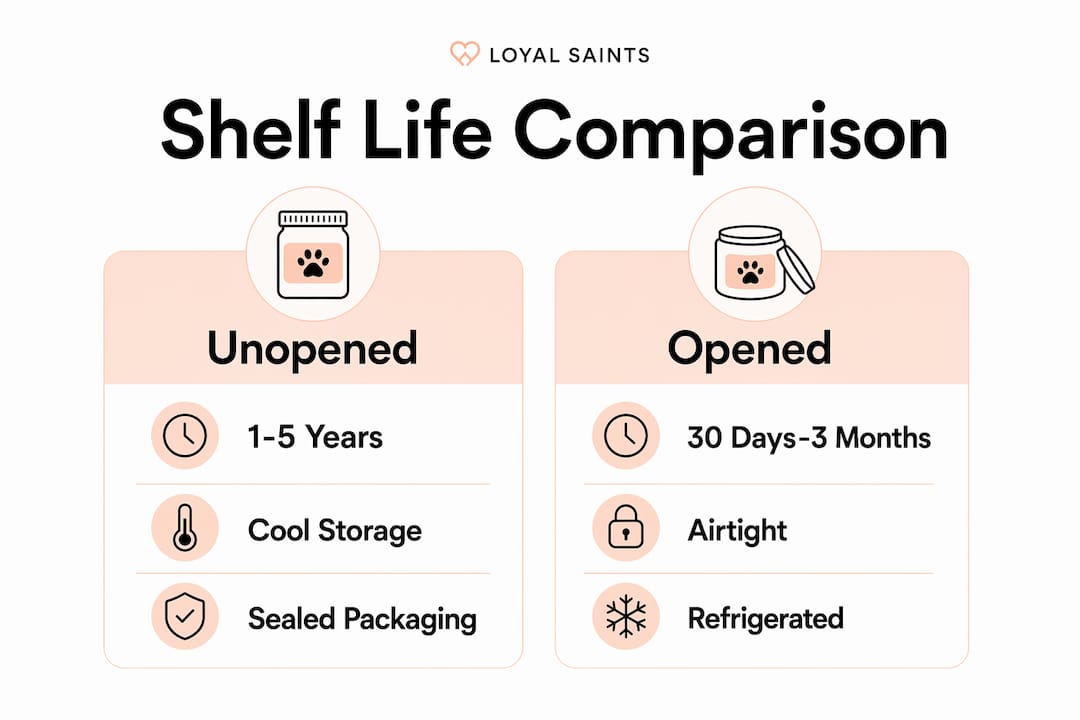
Unopened freeze-dried dog food lasts between 1 and 5 years depending on the brand, packaging quality, and storage conditions. Premium brands that use nitrogen-flushed, multi-layer barrier bags tend to sit at the higher end of that range. This is one of the biggest advantages freeze-dried food holds over fresh or refrigerated raw diets, which spoil within days.
Once you open the bag, the clock moves much faster. Opened freeze-dried food stays fresh for 30 days to 3 months under ideal conditions, meaning cool temperatures, low humidity, and an airtight seal after every use. Most manufacturers print a “best by” date on the packaging, and veterinary nutritionists confirm that this date is the most reliable indicator of nutrient integrity. Fat oxidation beyond that date significantly reduces nutritional benefits, particularly for fat-soluble vitamins like A, D, E, and K.
Here is a quick reference for freeze dried dog food longevity at a glance:
| Storage State | Typical Shelf Life | Key Condition |
|---|---|---|
| Unopened, pantry stored | 1 to 5 years | Cool, dark, dry location |
| Opened, airtight container | 30 days to 3 months | Sealed after every use |
| Rehydrated, refrigerated | Up to 48 hours | Covered container, below 40°F |
| Rehydrated, room temperature | 1 to 2 hours | Discard after this window |
Pro Tip: Write the date you opened the bag directly on the packaging with a permanent marker. This one habit prevents you from guessing how long the food has been open and helps you catch spoilage before it reaches your dog’s bowl.
What factors affect freeze-dried dog food shelf life?
Four environmental forces work against freeze-dried pet food storage: moisture, oxygen, heat, and light. Each one triggers a different type of degradation, and they often work together to shorten shelf life faster than any single factor would alone.
- Moisture is the most immediate threat. Freeze-dried food is shelf-stable precisely because moisture has been removed. When humidity creeps back in, mold risk rises and the food loses its characteristic crispness. Humidity above 60% can degrade food quality noticeably, which is why pantry storage in a dry climate outperforms garage storage in a humid one.
- Oxygen triggers fat oxidation. Once the bag is opened and air enters, fats in the food begin breaking down. This process reduces vitamins A, D, E, and K and creates the rancid smell that signals the food is past its prime.
- Heat accelerates both oxidation and rancidity. Temperatures above 80°F promote rancidity, and even brief temperature spikes, such as a bag left in a hot car or near an oven, can shorten shelf life significantly. The ideal storage range is 50°F to 70°F.
- Sunlight compounds heat exposure and can degrade packaging over time, allowing more oxygen and moisture to penetrate.
Packaging quality matters just as much as environment. Bags with oxygen absorbers, nitrogen flushing, and resealable zippers preserve freshness far longer than basic poly bags. If the seal on your bag feels loose or the zipper no longer clicks shut cleanly, transfer the food to an airtight container immediately.
Stat to know: Environmental heat exposure is one of the biggest threats to freeze-dried dog food quality, because temperature spikes accelerate rancidity and nutrient degradation faster than any other single factor. This means garage storage in summer, even for a few weeks, can meaningfully shorten the life of an otherwise well-sealed bag.
Best practices for storing freeze-dried dog food
Good dog food storage tips come down to one principle: limit the food’s exposure to air, moisture, heat, and light after every single use. The following steps give you the most protection with the least effort.
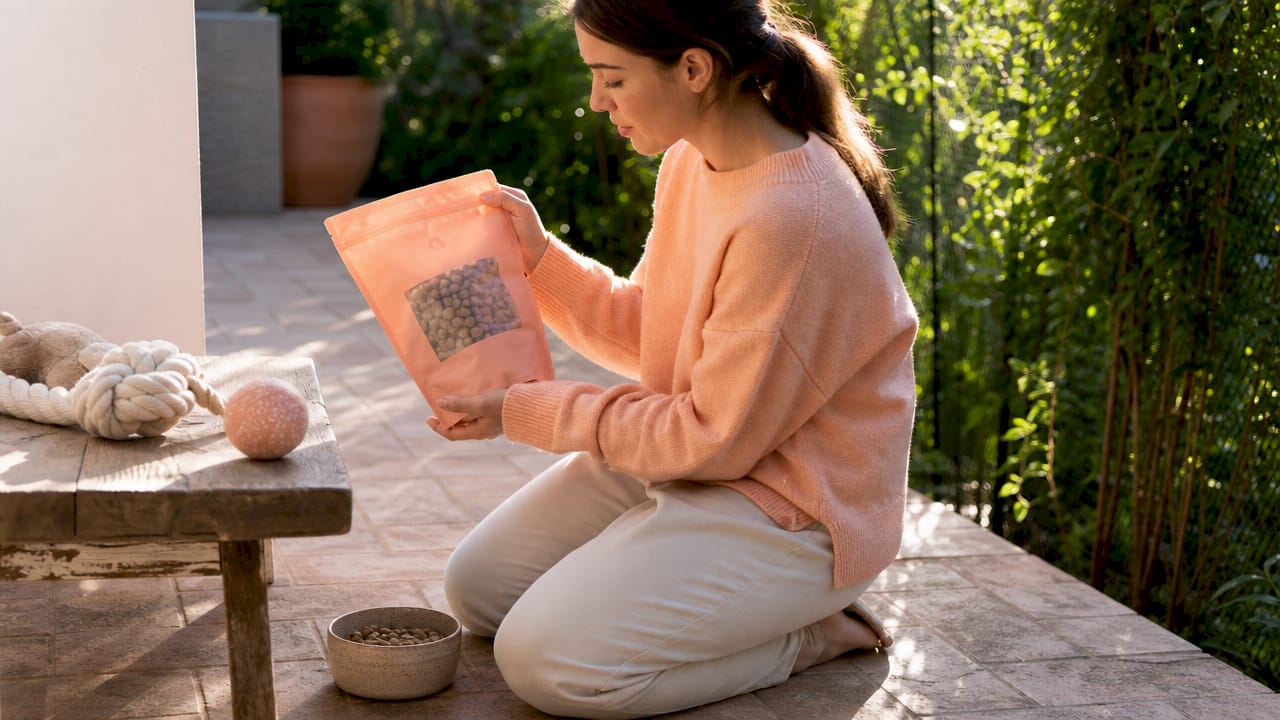
- Use the bag-in-bin method. Place the original manufacturer bag, resealed, inside a hard-sided airtight container. Experts consider this the most effective storage method because the original bag provides the specialized oxygen and moisture barrier it was designed for, while the outer container adds protection against pests, humidity, and accidental spills.
- Seal the bag after every scoop. Press out excess air before closing the zipper or fold the top of the bag down tightly and clip it. Oxygen exposure compounds with every opening, so a quick seal each time adds up to meaningful freshness over weeks.
- Store in a cool, dark pantry. A kitchen pantry away from the stove and oven is ideal. Avoid garages, laundry rooms, or any space that experiences temperature swings or high humidity.
- Clean your storage container between refills. Residual oils from old food accelerate rancidity in new food. Wash the container with warm soapy water and let it dry completely before adding a fresh bag.
- Add food-safe dehumidifier packs in humid climates. If you live in a region where summer humidity regularly exceeds 60%, placing dehumidifier packs inside the container prevents moisture accumulation and keeps the food crisp longer.
- Buy the right bag size. Choose a bag your dog will finish within 4 to 6 weeks of opening. A large bag that sits open for three months will lose quality even with perfect storage habits.
Pro Tip: If you buy in bulk, portion the food into smaller airtight bags and freeze them. Freezing in small portions slows oxidation and can add months of freshness, as long as you thaw each portion in the refrigerator overnight to avoid condensation forming on the food.
For a deeper look at preserving dog food freshness at home, the natural storage guide from Loyalsaintspets walks through climate-specific strategies worth bookmarking.
How to handle rehydrated freeze-dried dog food safely
Rehydrated freeze-dried dog food is no longer shelf-stable. The moment you add water, the food becomes perishable and must be treated exactly like fresh or wet food.
- Serve within 1 to 2 hours at room temperature. Rehydrated food left out beyond this window enters the bacterial danger zone and should be discarded, not saved for the next meal.
- Refrigerate leftovers immediately. Cover the bowl or transfer the food to a sealed container and refrigerate it. Rehydrated freeze-dried food stays safe for up to 48 hours in the refrigerator at or below 40°F.
- Never refreeze rehydrated food. Refreezing introduces moisture and temperature cycling that degrades both texture and nutritional quality.
- Watch for off smells or color changes. Even within the 48-hour window, trust your nose. A sour or rancid smell means the food should go in the trash, not the bowl.
- Rehydrate only what your dog will eat in one sitting. This is the simplest way to avoid waste and eliminate any safety risk entirely.
If you are new to adding water to freeze-dried meals, the rehydration guide from Loyalsaintspets covers water ratios and timing for different protein types.
Key takeaways
Freeze-dried dog food stays nutritionally sound for years unopened, but proper storage after opening is what separates a fresh, high-quality meal from a rancid one your dog will refuse.
| Point | Details |
|---|---|
| Unopened shelf life | Ranges from 1 to 5 years depending on brand, packaging, and storage conditions. |
| Opened shelf life | Use within 30 days to 3 months; seal airtight after every scoop. |
| Biggest shelf life threats | Moisture, oxygen, heat above 80°F, and direct sunlight all accelerate spoilage. |
| Best storage method | Bag-in-bin: original sealed bag inside a hard-sided airtight container. |
| Rehydrated food rules | Treat like fresh food; discard after 2 hours at room temp or 48 hours refrigerated. |
What I’ve learned after years of watching owners store food wrong
Most dog owners I talk to are surprised to learn that the bag itself is doing most of the preservation work before opening. The multi-layer barrier packaging that premium brands use is genuinely engineered for long-term storage, and the moment you transfer the food to a decorative ceramic canister on the counter, you lose that protection entirely. I have seen owners spend real money on high-quality freeze-dried food and then store it in a clear glass jar next to a sunny window. The food was rancid within three weeks.
The bag-in-bin method feels like extra effort until you realize it takes about ten seconds and extends your food’s freshness by weeks. The original bag is the barrier. The container is the armor. You need both.
I also want to push back on the idea that the “best by” date is a suggestion. It is the manufacturer’s tested guarantee of nutritional completeness. Beyond that date, fat oxidation has likely reduced the vitamin content in ways you cannot see or smell. Your dog may still eat the food, but they are not getting what the label promises. For a dog you consider family, that matters.
One more thing: buy the size your dog will finish in a month. I know the large bag feels like better value, but a fresh small bag beats a stale large one every time. More tail wags, fewer wasted scoops.
— Eyo
Why Loyalsaintspets freeze-dried food is built for lasting freshness
If you want freeze-dried food that earns its shelf life claims, Loyalsaintspets delivers recipes made from human-grade proteins, whole fruits, and vegetables with no fillers or artificial preservatives. Every bag is formulated to AAFCO standards and designed to stay fresh from the moment it ships to the moment your dog finishes the last scoop.
Loyalsaintspets freeze-dried meals are packaged with freshness barriers that support the bag-in-bin storage method perfectly. Whether you are stocking up for a multi-dog household or buying your first bag, the shop page has options sized for real-world feeding schedules. Want to understand why freeze-drying outperforms every other preservation method? The why freeze-dried page breaks it down clearly, from nutrient retention to dog food shelf stability.
FAQ
How long does freeze-dried dog food last once opened?
Once opened, freeze-dried dog food stays fresh for 30 days to 3 months depending on how well it is sealed and stored. Keep it in a cool, dry location inside an airtight container with the original bag for best results.
Can freeze-dried dog food expire?
Yes, freeze-dried dog food does expire. The “best by” date on the packaging marks the point beyond which fat oxidation has likely reduced the food’s vitamin content and palatability, even if it does not look visibly spoiled.
What is the best way to store freeze-dried dog food after opening?
The bag-in-bin method is the most effective approach: reseal the original bag, then place it inside a hard-sided airtight container stored in a cool, dark pantry between 50°F and 70°F.
Is dehydrated dog food shelf life the same as freeze-dried?
No. Dehydrated dog food shelf life is generally shorter, typically 1 to 2 years unopened, because dehydration removes less moisture than freeze-drying. Freeze-drying removes up to 98% of moisture, which is why it achieves a longer shelf-stable window.
How do I know if freeze-dried dog food has gone bad?
Trust your nose first. A rancid, sour, or off smell is the clearest sign of spoilage. Visible mold, unusual color changes, or a soft texture instead of the expected crispness are also reliable indicators that the food should be discarded.


