
The protein percentage on a dog food label does not tell you how much protein your dog can use. What matters is how much protein is absorbed, how strong the amino acid profile is, and how processing affects those amino acids.
If I had to boil this article down to a few points, it would be this:
- Crude protein is just an estimate based on nitrogen, not a direct measure of usable protein.
- Animal proteins like meat, fish, poultry, and eggs often give dogs more usable amino acids than many plant proteins.
- Heat can damage amino acids, especially lysine, which can lower how much protein the body can use.
- Dogs need 10 amino acids from food, and even one gap can affect muscle repair, coat quality, and recovery.
- Senior dogs may need up to 50% more protein than younger adults to help limit age-related muscle loss.
- For active dogs, fat fuels the work, while protein helps with muscle repair, lean mass, and immune support.
- Large or soft stools, poor muscle tone, dull coat, and slow post-exercise recovery can hint that a food is not being used well.
In short: I would not judge a dog food by protein percentage alone. I’d look at the protein source, amino acid profile, processing method, and AAFCO statement first.
| What to check | What I’d want to see | Why it matters |
|---|---|---|
| Protein source | Named animal protein near the top | Often gives dogs more usable amino acids |
| Amino acid support | Complete and balanced formula | Helps cover all 10 amino acids dogs need |
| Processing | Freeze-dried or air-dried | May limit amino acid damage from high heat |
| Dog response | Firm stools, solid muscle tone, healthy coat | Shows the diet may be working well |
If you want the short answer, here it is: usable protein matters more than the number on the bag.
Protein Quality Matters More Than Protein Percentage
What Affects How Well Dogs Use Protein
Animal vs. Plant Protein Bioavailability in Dog Food
Protein Source and Amino Acid Balance
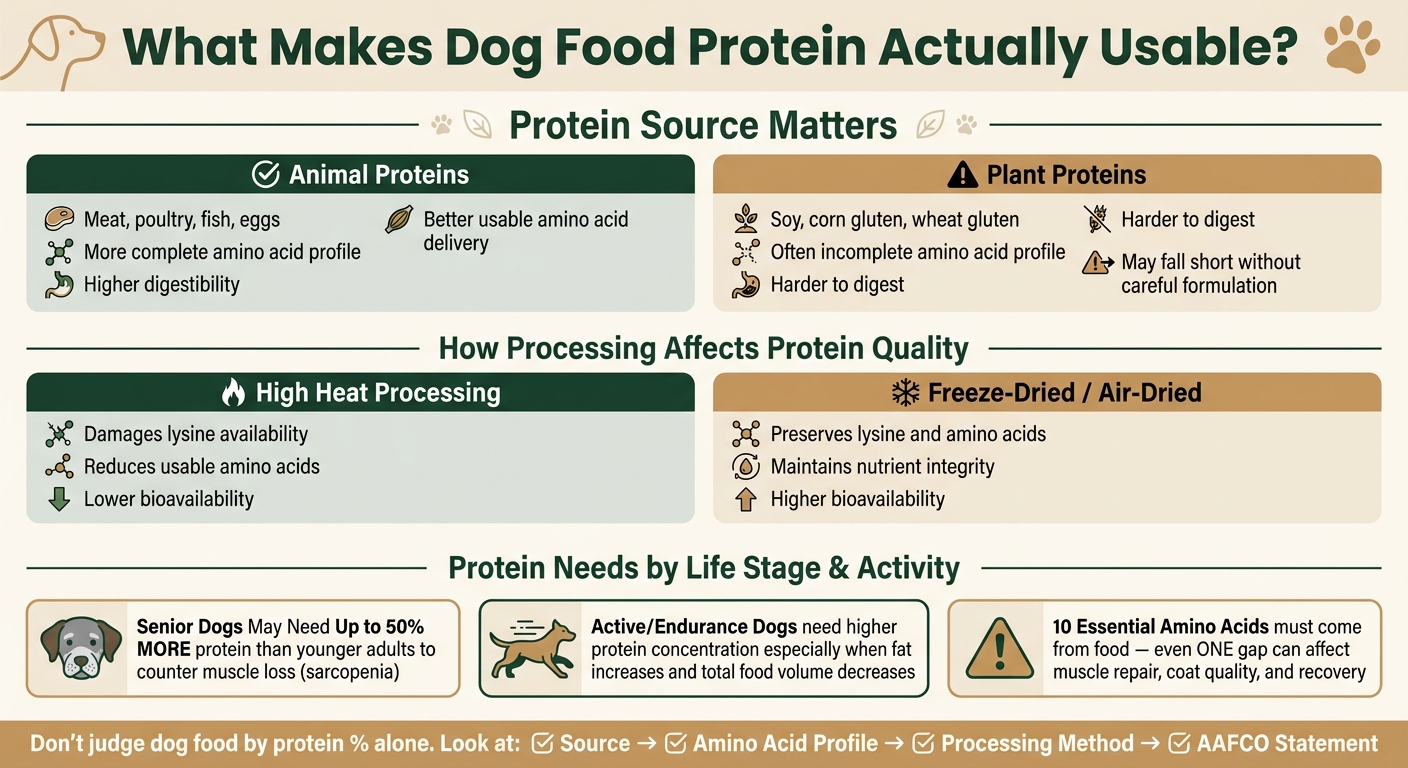
The source of protein changes two things: amino acid balance and how much of that protein a dog’s body can put to work. Animal-based proteins - meat, poultry, fish, and eggs - usually provide a more complete amino acid profile. Plant proteins like soy, corn gluten, or wheat gluten are often harder to digest and may fall short unless the formula is built with care [1].
Even one missing essential amino acid can slow muscle repair and recovery [1]. So the total protein number on the label doesn’t tell the whole story. Amino acid balance matters just as much.
For endurance dogs, that gap can show up in recovery time and lean muscle maintenance.
Processing Methods and Ingredient Quality
How food is made has a direct effect on protein use. High heat can lower lysine availability, while freeze-drying helps keep more of it in place [2][4]. Loyal Saints uses freeze-drying to help preserve nutrient integrity.
That matters even more in performance diets, where preserved amino acids can support faster recovery.
Age, Activity Level, and Health Conditions
Protein needs change with age, activity, and health status. Puppies need much more protein to support fast growth. Adult dogs need less as a baseline, but hitting the minimum still doesn’t mean the amino acid profile is where it should be [6].
Senior dogs may need up to 50% more protein than younger adults to help counter sarcopenia, the gradual muscle loss that comes with age [6]. And for highly active dogs, harder physical work pushes protein needs up even more to support repair and recovery.
Some health issues change the picture too. Dogs with kidney or liver disease need veterinarian-guided protein targets.
Put simply, these factors shape how much of the protein listed on the label a working dog can actually use.
Why Protein Bioavailability Matters for Endurance Performance
Muscle Repair, Recovery, and Lean Body Maintenance
For endurance dogs, the big issue isn't just how much protein is in the bowl. It's how much of that protein the body can actually use after hard work. Long periods of activity put stress on muscle tissue, so the body breaks muscle down and builds it back up at a faster rate. To keep pace, a dog needs a steady flow of absorbable essential amino acids (EAAs) from food [2][6].
Bioavailability shapes how much of that protein goes toward recovery. After a hard effort, recovery depends on how much of the protein on the label makes it to tired muscle and helps with repair.
How Protein and Fat Work Together in Performance Diets
After recovery, the next piece is how protein works alongside fat in a performance diet. Fat is the main fuel for endurance work, while protein helps repair tissue, maintain lean muscle, and support immune function during physical stress [3][1]. Here's where it gets a little tricky: when fat goes up, dogs usually eat less total food. So the protein in that food needs to be more concentrated, or the dog may fall short on daily amino acid intake [6].
It’s a bit like packing for a long trip with less bag space. If there’s less room overall, every item has to earn its spot.
When More Protein Is Not Always Better
A higher protein percentage doesn't always lead to better performance. Big stools can be a clue that protein use is poor, which means a lot of that protein passed through the body instead of getting absorbed and used by muscle [2][5]. Extra undigested protein also adds to nitrogen waste, which may put added strain on the kidneys in dogs that are already predisposed [6].
So when you read a label, the goal isn't just a bigger protein number. The goal is usable protein.
sbb-itb-b2753ee
How to Evaluate Dog Food for Usable Protein
With the basics in place, here’s how to judge whether a dog food offers usable protein, not just a big number on the bag.
What to Look for on the Label and Product Page
The label is your first filter. Start with the ingredient list, because the first few ingredients say a lot. Named animal proteins like "deboned chicken", "beef," or "salmon" near the top usually point to higher-quality, more digestible sources. On the other hand, generic terms like "meat meal" or "animal by-products" are tougher to judge since the species and tissue source aren’t clear.
Next, look for the AAFCO adequacy statement. That tells you the food is complete and balanced for a specific life stage.
It also helps to check how the food is processed. Methods like freeze-drying or air-drying can limit heat damage. For endurance dogs, that matters. Recovery depends on absorbable amino acids, not just the protein percentage printed on the label.
Use this table as a quick way to compare products:
| Label Feature | Indicator of Higher Protein Quality | Why It Matters |
|---|---|---|
| Protein Source | Clearly named (e.g., "Beef", "Deboned Turkey") | Points to muscle meat rather than lower-digestibility by-products |
| AAFCO Statement | "Complete and Balanced" for a specific life stage | Confirms the diet meets minimum nutritional floors |
| Processing | "Freeze-Dried" or "Air-Dried" | Prefer processing methods that limit heat damage |
Signs a Dog May Not Be Using Dietary Protein Well
Sometimes a food looks fine on paper, but the dog tells a different story.
A few signs to watch for are poor muscle tone, a dull or brittle coat, slow recovery after exercise, and low energy. Those can point to problems with lean-mass maintenance and recovery. Large or soft stools can also suggest poor digestibility.
None of these signs proves a protein issue on its own. They can overlap with other health problems, which is why it makes sense to review the dog’s full diet history and talk with a vet before making assumptions. Still, if you’re seeing several of these signs at once, the protein source and processing method in the current food are good places to check first.
Where Loyal Saints Fits Into This Discussion

Loyal Saints matches these label cues. Loyal Saints offers freeze-dried raw dog food made in the USA with human-grade, all-natural ingredients. It’s AAFCO complete and balanced, and made without additives.
Because freeze-drying limits heat damage, it can help more amino acids stay intact, which supports muscle maintenance and recovery.
Conclusion: Usable Protein Matters More Than Protein Percentage
Crude protein matters only if your dog can digest it and put it to work. Amino acid balance, ingredient source, and how the food is processed all shape that. You see the gap most clearly when you compare where the protein comes from.
Animal proteins are often more digestible than plant proteins or heavily processed ingredients. For endurance dogs, that gap matters even more because recovery takes a lot out of them.
For these dogs, highly digestible protein helps support recovery and maintain lean mass, while fat provides the energy they burn on the job. And when a dog eats less total food, protein quality matters even more.
That’s why a lower protein percentage from highly digestible ingredients can give your dog more usable nutrition than a higher percentage from sources the body handles less well. For performance dogs, the target isn’t the biggest protein number on the label. It’s the protein their body can actually use.
FAQs
How can I tell if protein is actually usable?
You can’t tell protein bioavailability from a standard pet food label alone. The guaranteed analysis shows nutrient levels before digestion, so it doesn’t tell you how much protein your pet can actually use.
A better approach is to look for a few practical clues. Smaller, firmer stools can be one sign that more of the food is being digested and used. It also helps to choose foods made with high-quality animal-based proteins, such as fresh, minimally processed meats. And pay attention to how the food is made: gentle manufacturing matters, because too much heat can lower protein quality.
Are plant proteins enough for dogs?
Plant proteins can have a place in a dog’s diet, but they usually aren’t enough by themselves. On their own, they tend to be harder for dogs to digest and may not deliver the full mix of essential amino acids that animal proteins provide.
That doesn’t mean they have no use. They can work as part of a diet, but they need to be paired with other ingredients or supplements with care to help prevent nutrient gaps. Loyal Saints puts the focus on high-quality, animal-derived protein to support overall health and vitality.
Do senior or active dogs need more protein?
It depends on your dog’s life stage and how active they are. Active or working dogs often need more protein to help with muscle repair and recovery after exercise.
Senior dogs may need more protein too. As dogs get older, muscle loss and a lower appetite can make it harder to keep lean mass and support immune function. Some research suggests they may need up to 50% more. Talk with your veterinarian before making changes, especially if your dog has a condition like kidney disease.


