
TL;DR:
- A structured, repeatable dog feeding routine ensures proper food storage, hygiene, and health monitoring. Following age-specific schedules, precise portioning, and consistent observation optimize long-term canine health. Simplifying feeding practices by focusing on fundamentals prevents overcomplication and promotes well-being.
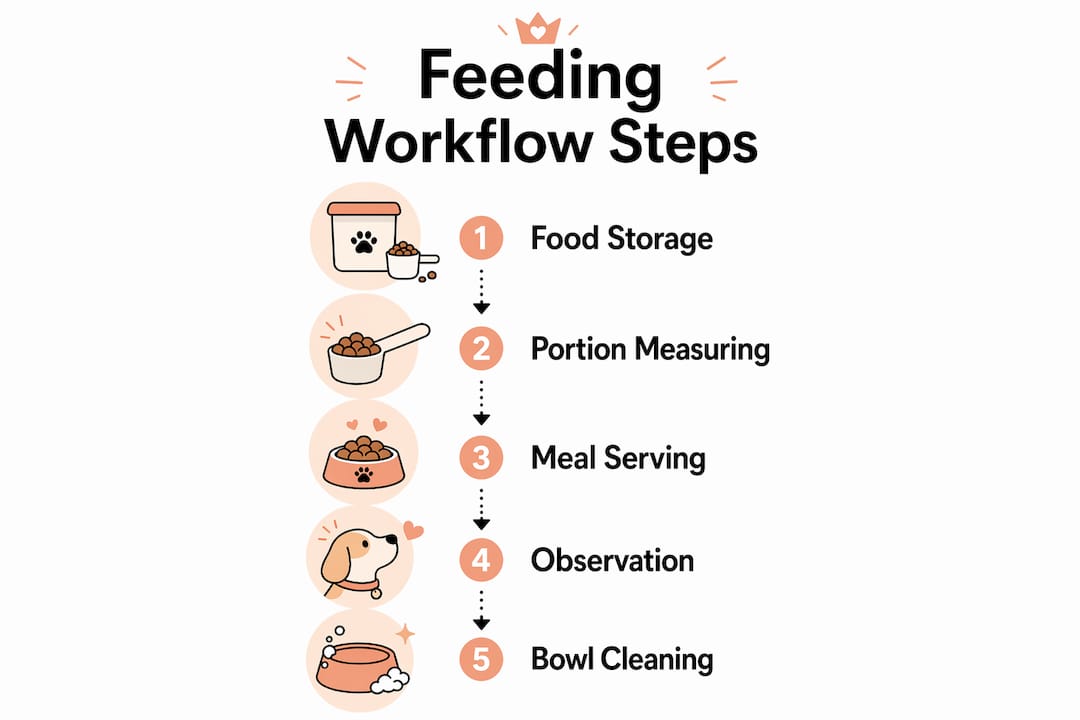
A step by step dog feeding workflow is a structured, repeatable routine that covers everything from food storage and portion measuring to serving, observation, and cleanup. Most dog owners feed their pets on instinct, which leads to inconsistent portions, poor hygiene habits, and missed signs of health changes. A defined workflow fixes all three. This guide walks you through every phase of a healthy feeding routine, from the supplies you need before you start to the monitoring habits that protect your dog’s health for years. Whether you are raising a puppy or managing the diet of a senior dog, the same core principles apply.
What supplies and preparations does an effective feeding workflow need?
The right setup makes every feeding faster, cleaner, and more consistent. Before you establish any routine, gather the tools that support it.
Core supplies every dog owner needs:
- Stainless steel or ceramic food bowls (easier to sanitize than plastic)
- A digital kitchen scale or calibrated measuring cup for accurate portions
- Airtight food storage containers or resealable bags
- A dedicated feeding mat to contain spills
- A cleaning brush and pet-safe dish soap
Food storage is where many owners quietly lose ground. Dry food stored in a cool, dry place below 80°F, ideally in its original bag folded tightly inside a sealed container, retains its nutrient quality and resists bacterial growth. Leaving kibble in an open bag on a warm floor degrades the fats and proteins your dog depends on, often without any visible sign of spoilage.
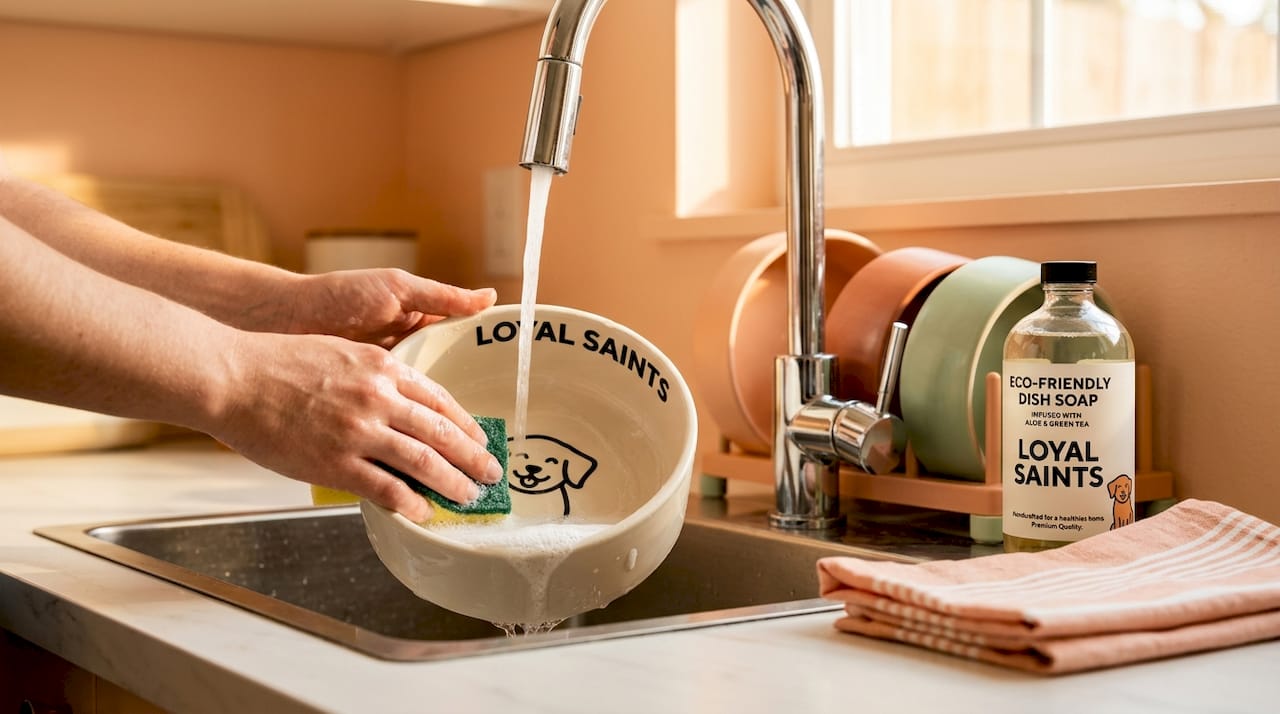
Bowl hygiene is equally non-negotiable. Bacteria like Salmonella and E. coli survive in dirty bowls and cause gastrointestinal illness. Daily washing with hot water and soap, combined with weekly dishwasher sanitization, eliminates that risk entirely. This means bowl cleaning is not optional maintenance. It is a core step in your feeding workflow.
| Supply | Best Practice |
|---|---|
| Food bowl | Wash daily with hot soapy water; sanitize in dishwasher weekly |
| Food storage | Store below 80°F in original bag inside an airtight container |
| Measuring tools | Use a digital scale for accuracy over volume-based cups |
| Feeding mat | Wipe down after each meal to prevent mold and bacteria |
| Food scoop | Rinse after each use; replace if cracked or stained |
Pro Tip: Label your storage container with the food’s open date. Most dry dog food stays fresh for four to six weeks after opening, regardless of the printed expiration date.
How to establish a feeding schedule based on your dog’s age
Feeding frequency is not one-size-fits-all. The right schedule depends on your dog’s life stage, breed size, and health status. Getting this right is one of the most impactful parts of any dog feeding guide.
Recommended feeding frequency by life stage:
- Puppies under 12 weeks: Four meals per day, spaced evenly throughout the day
- Puppies 3 to 6 months: Three meals per day
- Puppies 6 to 12 months: Two meals per day (transition timing varies by breed size)
- Adult dogs (1 to 7 years): Two meals per day, morning and evening
- Senior dogs (7 years and older): Two smaller meals per day, adjusted for lower activity levels
The AKC recommends that puppies eat puppy-formulated diets starting with four meals daily, with large breeds transitioning to dry puppy food around 9 to 10 weeks. This matters because large breed puppies have different calcium-to-phosphorus requirements than small breeds, and the wrong food at the wrong stage can affect bone development. You can explore age-appropriate dog diets for detailed examples at every life stage.
Timing meals around activity also supports digestion. Feed your dog at least 30 minutes before or after vigorous exercise to reduce the risk of bloat, a condition that is particularly dangerous in deep-chested breeds like Great Danes and German Shepherds. Morning and evening meals work well for most adult dogs because they align with natural activity peaks.
Pro Tip: Use a feeding schedule planner to log meal times and amounts. Consistency in timing is as important as consistency in portions.
What are the daily dog meal preparation steps from start to cleanup?
This is the heart of your workflow. Follow these steps at every feeding and you will build a routine that protects your dog’s health and makes feeding feel effortless.
- Wash your hands before handling food or bowls. This prevents cross-contamination between human food bacteria and your dog’s meal.
- Check the bowl for residue or odor before filling. If it smells or looks dirty, wash it before proceeding.
- Measure the portion using your scale or measuring cup. Reference the feeding guide on your food packaging as a starting point, then adjust based on your dog’s body condition.
- Add any supplements or toppers at this stage, not after serving. Mixing them in ensures even distribution.
- Place the bowl in a consistent location. Dogs thrive on spatial routine. The same spot every time reduces anxiety around feeding.
- Set a 15-minute timer once your dog starts eating. Removing food after 15 minutes discourages picky eating and teaches your dog that meals have a defined window.
- Observe your dog while eating. Watch for changes in appetite, chewing behavior, or signs of discomfort. These are early indicators of dental issues or digestive problems.
- Wash the bowl immediately after the meal. Do not leave it sitting with food residue. This is the single most common hygiene failure in daily feeding routines.
- Log the meal. Note the time, portion size, and whether your dog finished the bowl. This data becomes invaluable when you visit the vet.
Pro Tip: If your dog eats too fast, use a slow feeder bowl or place a clean, large rock in the center of a standard bowl. Fast eating increases the risk of bloat and reduces nutrient absorption.
A common mistake is eyeballing portions. Even a 10% daily overestimate compounds into significant weight gain over months. Precision at the measuring step is the easiest way to prevent obesity, which affects more than half of all dogs in the United States.
How to monitor and fine-tune your dog’s diet over time
A feeding workflow is not static. Your dog’s nutritional needs shift with age, activity level, and health status. Monitoring those changes and responding to them is what separates a good feeding routine from a great one.
What to track at each feeding:
- Bowl completion rate (did your dog finish, leave food, or seem disinterested?)
- Body condition score, assessed monthly by feeling the ribs (you should feel them without pressing hard)
- Weight, checked every two to four weeks on a consistent scale
- Stool consistency, which reflects digestive health and food tolerance
- Energy levels and coat quality, both visible indicators of nutritional adequacy
The AKC advises that owners focus on body condition rather than how much food remains in the bowl. A dog that consistently leaves food may need a smaller portion. A dog that finishes quickly and seems unsatisfied may need a slight increase or a more calorie-dense food.
When transitioning between life stages, such as moving from puppy to adult food, do it gradually over seven to ten days. Mix 25% new food with 75% old food for the first two days, then 50/50 for two days, then 75% new food, and finally 100% new food. Abrupt switches cause digestive upset in most dogs.
Veterinarian-approved diets grounded in WSAVA guidelines are the most reliable foundation for long-term health. Evidence-based nutrition strategies supported by WSAVA help manage clinical conditions including gastrointestinal issues and support overall canine health across life stages. If your dog has a chronic condition, skin issues, or unexplained weight changes, a vet consultation should precede any diet adjustment.
Pro Tip: Take a photo of your dog from above and from the side once a month. Visual comparison over time reveals body condition changes that daily observation misses.
What are common feeding challenges and how do you fix them?
Even a well-designed workflow hits friction. Knowing the most common problems and their fixes keeps your routine on track.
Common feeding challenges and solutions:
- Picky eating: Stick to the 15-minute rule. Do not add human food or rotate proteins constantly to coax eating. Consistency in food and schedule resolves most picky behavior within two weeks.
- Skipping meals: One skipped meal in an adult dog is rarely a concern. Two or more in a row warrants a vet call, especially if paired with lethargy or vomiting.
- Digestive upset after a food change: This almost always signals a transition that moved too fast. Return to the previous food ratio and slow the switch.
- Overeating or food guarding: Feed multiple dogs in separate rooms. Food guarding is a behavioral response to perceived competition and disappears when dogs eat without visual contact.
- Schedule disruptions during travel: Pre-measure portions into individual containers before you leave. Keeping the food consistent even when the location changes reduces digestive stress.
Feeding routines that emphasize schedule and portion control shape better eating behavior and reduce picky eating in puppies. This principle applies to adult dogs too. The workflow itself is the solution to most behavioral feeding problems.
“The most effective fix for picky eating is not a new food. It is a more consistent routine.”
For dogs with persistent digestive issues or allergies, tips for feeding picky dogs using vet-approved foods offer a practical starting point before escalating to a specialist visit.
Pro Tip: If your dog suddenly loses interest in a food they previously loved, check the bag’s production date. Palatability drops noticeably as dry food approaches or passes its open-bag freshness window.
Key takeaways
A consistent step by step dog feeding workflow, built on accurate portions, proper storage, daily hygiene, and age-appropriate scheduling, is the most direct path to long-term canine health.
| Point | Details |
|---|---|
| Hygiene is non-negotiable | Wash bowls daily and sanitize weekly to prevent Salmonella and E. coli exposure. |
| Storage protects nutrition | Keep dry food below 80°F in sealed containers to preserve nutrient quality. |
| Schedule by life stage | Puppies need up to four meals daily; adults and seniors do best with two. |
| Measure every portion | Eyeballing leads to overfeeding; use a digital scale for accuracy. |
| Monitor body condition | Track weight and body condition monthly, not just bowl completion at each meal. |
Why I think most dog owners overcomplicate feeding
I have worked with dog owners across every experience level, from first-time puppy parents to people managing multi-dog households with complex dietary needs. The pattern I see most often is not neglect. It is overthinking.
People spend hours researching exotic protein sources and trending supplements while skipping the basics: a clean bowl, a consistent schedule, and an accurate portion. Those three things, done every single day, deliver more measurable health benefit than any premium ingredient added inconsistently to a dirty bowl at random times.
The other thing I have learned is that the workflow has to fit your life, not an idealized version of it. If you travel frequently, build portioned meal packs into your routine before you leave. If you have a senior dog with a slower metabolism, reduce portions by 10 to 15% and monitor body condition monthly rather than waiting for the vet to flag weight gain. Small, consistent adjustments made early are far easier than correcting a health problem that built up over two years of unmeasured meals.
The dogs I have seen thrive longest are not always eating the most expensive food. They are eating the right amount of good food, at the same time every day, from a clean bowl. That is the whole workflow. Everything else is refinement.
— Eyo
Feed your dog better starting today with Loyalsaintspets
Loyalsaintspets makes it easier to put a great feeding workflow into practice. Their freeze-dried dog food is made from human-grade, whole ingredients with no fillers or artificial additives, and it meets AAFCO nutritional standards. That means every measured portion delivers the protein, vitamins, and minerals your dog actually needs. Freeze-drying locks in freshness without refrigeration, which also simplifies safe food storage as part of your daily routine. If you are ready to upgrade what goes in the bowl, explore why freeze-dried food is one of the cleanest choices you can make for your dog’s long-term health. Browse the full range at the Loyalsaintspets shop and find the right fit for your dog’s age and needs.
FAQ
What is a dog feeding workflow?
A dog feeding workflow is a structured, repeatable set of steps covering food storage, portion measuring, serving, observation, and cleanup performed at every meal. It creates consistency that improves nutrition, behavior, and health monitoring.
How many times a day should I feed my dog?
Puppies under 12 weeks need four meals daily, while adult dogs do well with two meals per day. Senior dogs also benefit from two smaller meals adjusted for lower activity and caloric needs.
How do I stop my dog from being a picky eater?
Serve measured portions at consistent times and remove the bowl after 15 minutes whether your dog finishes or not. This schedule-based approach resolves most picky eating within two weeks without changing the food.
How should I store dry dog food to keep it fresh?
Store dry food in its original bag, folded tightly and placed inside an airtight container, in a cool and dry location below 80°F. This preserves nutrient quality and prevents bacterial growth.
When should I switch my puppy to adult dog food?
Most puppies transition to adult food between 12 and 18 months, though large breeds may wait until 18 to 24 months. Make the switch gradually over seven to ten days to avoid digestive upset.


