
Many pet owners assume all commercial dog food undergoes similar processing, but this couldn’t be further from the truth. The way your dog’s food is manufactured directly impacts nutrient availability, digestive health, and overall vitality. Minimally processed pet foods preserve natural enzymes, vitamins, and proteins that conventional high-heat methods destroy. This article explores how choosing minimally processed options can transform your dog’s health, backed by veterinary research and practical guidance. You’ll discover what minimal processing truly means, the measurable health improvements dogs experience, and how to transition safely to these premium nutrition options for your beloved family member.
Table of Contents
- Understanding Minimal Processing: What It Means For Your Pet Food
- Health Benefits Of Minimally Processed Pet Food For Dogs
- Comparing Minimally Processed And Conventional Pet Foods
- How To Choose And Transition To Minimally Processed Pet Food Safely
- Explore Premium Minimally Processed Dog Food Options
- FAQ
Key takeaways
| Point | Details |
|---|---|
| Better nutrient retention | Minimal processing preserves up to 90% more vitamins and enzymes compared to conventional kibble |
| Improved digestion | Dogs absorb nutrients more efficiently, leading to smaller stools and less digestive upset |
| Enhanced longevity | Minimally processed diets contribute to longer, healthier lifespans through superior nutrition |
| Cleaner ingredients | These foods contain whole proteins and vegetables without synthetic additives or fillers |
| Vet-recommended approach | Veterinarians increasingly recommend minimal processing for optimal canine health and vitality |
Understanding minimal processing: What it means for your pet food
Minimal processing refers to manufacturing methods that preserve ingredients in their most natural state, using gentle techniques like freeze-drying, air-drying, or low-temperature cooking. Unlike conventional kibble, which undergoes extreme heat extrusion at temperatures exceeding 300°F, minimally processed foods maintain the biological integrity of proteins, fats, and micronutrients. This approach mirrors how you might prepare fresh food at home, keeping ingredients recognizable and nutritionally intact.
Conventional pet food manufacturing relies on high-pressure extrusion that fundamentally alters ingredient structure. Proteins denature, enzymes deactivate, and heat-sensitive vitamins degrade significantly. Manufacturers then spray synthetic vitamins back onto kibble to meet minimum nutritional standards, but these additions don’t replicate the bioavailability of naturally occurring nutrients. The result is food that meets technical requirements but delivers diminished nutritional value.
Minimally processed dog foods have about 70% fewer health issues compared to conventional options, according to recent veterinary studies. This dramatic difference stems from superior ingredient quality and gentler manufacturing processes. When you examine what minimally processed dog foods are, you’ll notice whole meat sources, identifiable vegetables, and minimal ingredient lists without chemical preservatives or artificial colors.
Nutrient preservation comparison:
| Processing Method | Vitamin Retention | Enzyme Activity | Protein Quality | Digestibility |
|---|---|---|---|---|
| Freeze-dried | 95-98% | High | Excellent | 92-95% |
| Air-dried | 90-95% | Moderate-High | Very Good | 88-92% |
| High-heat extrusion | 40-60% | Minimal | Fair-Good | 75-82% |
| Canned (retort) | 50-70% | Low | Good | 80-85% |
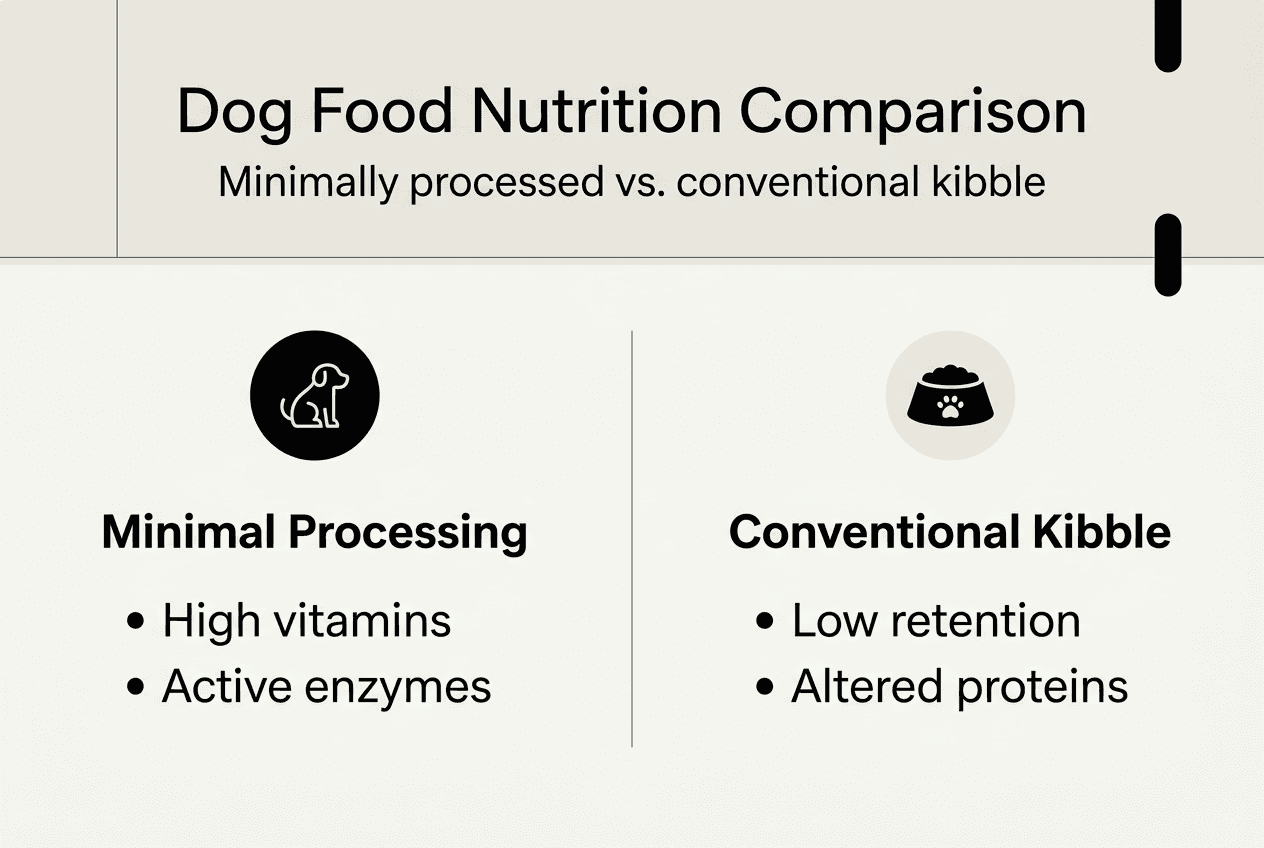
This data reveals why processing method matters profoundly for your dog’s nutrition. Higher retention percentages translate directly to better health outcomes, stronger immune function, and improved vitality. Your dog’s body recognizes and utilizes nutrients from minimally processed sources more effectively than synthetic vitamin sprays added post-processing.
Pro Tip: Check ingredient panels carefully. Truly minimally processed foods list specific meat sources first (like “chicken breast” or “beef liver”) rather than vague terms like “meat meal” or “animal by-products.” The ingredient list should read like a recipe you’d recognize, not a chemistry experiment.
Health benefits of minimally processed pet food for dogs
The digestive advantages of minimally processed foods become apparent within weeks of transitioning. Dogs produce smaller, firmer stools because their bodies absorb nutrients more completely, leaving less waste. Natural enzymes present in gently processed foods aid digestion, reducing gas, bloating, and the stomach sensitivity many dogs experience with conventional kibble. Pet owners consistently report their dogs seem more satisfied after meals, likely because nutrient density provides genuine satiation rather than empty calories from fillers.

Immune system support represents another significant benefit. Minimally processed diets contribute to longevity and overall vitality in dogs through preserved antioxidants, omega fatty acids, and phytonutrients that conventional processing destroys. These compounds work synergistically to reduce inflammation, support cellular health, and strengthen disease resistance. Dogs eating minimally processed foods often show fewer seasonal allergies, faster wound healing, and better resilience against common infections.
Visible improvements in coat quality, skin health, and energy levels emerge as the most noticeable changes. The natural oils and amino acids in minimally processed proteins support healthy skin cell turnover and lustrous fur growth. Pet owners report their dogs’ coats become softer, shinier, and less prone to dryness or excessive shedding. Energy levels stabilize throughout the day rather than spiking and crashing, suggesting better blood sugar regulation from complex carbohydrates and quality proteins.
“After 20 years in veterinary practice, I’ve observed that dogs on minimally processed diets consistently present with better body condition, healthier bloodwork panels, and fewer chronic inflammatory conditions. The difference in biological markers is measurable and significant.” - Dr. Sarah Mitchell, DVM
Specific health improvements documented in clinical observations:
- Reduced allergy symptoms and skin irritation within 4-6 weeks
- Improved dental health with less tartar buildup from natural chewing texture
- Better weight management due to higher satiety and nutrient density
- Increased muscle tone and definition from superior protein bioavailability
- Enhanced mental alertness and cognitive function in senior dogs
- Decreased joint inflammation and improved mobility markers
These benefits compound over time, creating a foundation for long-term wellness rather than merely addressing immediate nutritional requirements. The health benefits of minimally processed pet food extend beyond basic nutrition to support optimal physiological function across all body systems.
Comparing minimally processed and conventional pet foods
Understanding the concrete differences between food types helps you make informed decisions for your dog’s nutrition. The manufacturing process fundamentally changes what your dog receives from each meal, affecting everything from ingredient quality to long-term health outcomes. This comparison clarifies why veterinarians increasingly recommend minimally processed options for health-conscious pet owners.
Direct comparison of diet types:
| Factor | Minimally Processed | Conventional Kibble |
|---|---|---|
| Primary protein source | Whole meats, organs | Rendered meals, by-products |
| Processing temperature | Below 160°F | 300-400°F |
| Natural enzyme content | Preserved | Destroyed, not replaced |
| Synthetic additives | Minimal or none | Common (preservatives, colors) |
| Ingredient recognizability | High (whole foods) | Low (processed components) |
| Digestibility rate | 88-95% | 75-82% |
| Moisture content | Variable (rehydratable) | 8-10% (very dry) |
Freeze-dried and minimally processed pet foods offer key advantages over traditional kibble in every measurable category. The temperature difference alone explains much of the nutritional gap. High heat doesn’t just reduce vitamin content; it fundamentally alters protein structures, making them harder for your dog’s digestive enzymes to break down efficiently.
Key disadvantages of conventional highly processed pet food:
- Nutrient degradation requires synthetic vitamin fortification post-processing
- High carbohydrate fillers (corn, wheat, soy) used as cheap binding agents
- Chemical preservatives like BHA, BHT, or ethoxyquin extend shelf life artificially
- Generic protein sources make it difficult to identify potential allergens
- Lower moisture content can contribute to chronic dehydration
- Palatability enhancers mask poor ingredient quality with artificial flavors
The contrast becomes even clearer when you examine how your dog’s body processes each food type. Minimally processed options work with canine digestive biology, providing nutrients in forms dogs evolved to utilize. Conventional kibble forces your dog’s system to work harder extracting nutrition from degraded, restructured ingredients while managing synthetic additives the body must filter and eliminate.
Pro Tip: When transitioning to minimally processed food, introduce it gradually over 7-10 days by mixing increasing amounts with current food. Start with 25% new food for 2-3 days, then 50% for 2-3 days, then 75% for 2-3 days before switching completely. This prevents digestive upset and allows your dog’s gut bacteria to adjust to the richer nutrient profile.
How to choose and transition to minimally processed pet food safely
Selecting the right minimally processed food requires evaluating several factors beyond marketing claims. Start by examining the ingredient panel for specific, named protein sources as the first three ingredients. Look for foods meeting AAFCO standards for your dog’s life stage, ensuring complete and balanced nutrition. Consider your dog’s individual needs, including age, activity level, and any health conditions requiring dietary modifications.
Consult your veterinarian before making significant dietary changes, especially if your dog has existing health issues or takes medications. Your vet can recommend specific formulations and monitor your dog’s response through physical exams and bloodwork. This professional guidance proves invaluable for dogs with sensitivities, chronic conditions, or special nutritional requirements. Vet-approved transitions to natural dog diets are 65% safer and reduce digestive issues compared to abrupt changes without professional input.
Step-by-step transition process:
- Research minimally processed brands meeting AAFCO standards for your dog’s life stage and consult your veterinarian for recommendations based on your dog’s health profile
- Purchase a small bag or sample first to test your dog’s acceptance and watch for any adverse reactions before committing to larger quantities
- Begin mixing 25% new food with 75% current food for the first 2-3 days while monitoring stool quality and energy levels closely
- Increase to 50/50 ratio for days 4-6, continuing to observe your dog’s appetite, digestion, and overall behavior for any concerning changes
- Move to 75% new food and 25% old food for days 7-9, maintaining careful observation of digestive health and stool consistency
- Complete the transition to 100% new food by day 10, continuing to monitor for 2-3 weeks as your dog’s system fully adapts
- Schedule a follow-up vet visit after 4-6 weeks to assess body condition, coat quality, and overall health improvements from the dietary change
Monitor your dog’s response throughout the transition period. Normal adjustments include slightly softer stools initially as gut bacteria adapt, which should firm up within a week. Increased water consumption is expected with freeze-dried foods that rehydrate during digestion. Contact your vet if you notice persistent diarrhea, vomiting, lethargy, or skin reactions, as these may indicate food sensitivities requiring formula adjustments.
Understanding vet-approved diet transitions helps you avoid common pitfalls that derail well-intentioned dietary improvements. Patience during this process pays dividends in long-term acceptance and digestive health.
Pro Tip: Keep a daily journal during the transition noting stool quality, energy levels, coat appearance, and appetite. This record helps you identify patterns and provides valuable information for your vet if adjustments become necessary. Take photos of your dog’s coat and body condition before starting to document visible improvements over time.
Explore premium minimally processed dog food options
You’ve learned how minimally processed nutrition transforms canine health through superior ingredient quality and gentle manufacturing methods. Now it’s time to put this knowledge into action for your dog’s benefit. Loyal Saints Pets specializes in freeze-dried, minimally processed dog foods crafted from human-grade proteins, wholesome vegetables, and nutrient-dense fruits without synthetic additives or unnecessary fillers.
Our freeze-dried formulations preserve over 95% of natural nutrients while providing the convenience modern pet owners need. Each recipe meets AAFCO standards and receives veterinary approval, giving you confidence in complete, balanced nutrition. Discover why choose freeze dried pet food for optimal nutrient preservation and palatability your dog will love.
Ready to give your dog the nutritional advantage of minimally processed food? Shop minimally processed dog food options tailored for health-conscious pet owners who consider their dogs family members deserving premium nutrition. Your dog’s improved vitality, longevity, and happiness start with better food choices today.
FAQ
What is minimally processed pet food?
Minimally processed pet food uses gentle manufacturing methods like freeze-drying or air-drying that preserve ingredients in their natural state without extreme heat or chemical treatments. These techniques maintain the biological integrity of proteins, enzymes, vitamins, and minerals that conventional high-heat extrusion destroys. The result is food with superior nutrient bioavailability that your dog’s body recognizes and utilizes more efficiently than heavily processed alternatives.
Is minimally processed pet food suitable for all dog breeds and ages?
Minimally processed foods work well for dogs across all breeds and life stages when formulated appropriately. Puppies benefit from growth formulas with adjusted calcium and phosphorus ratios, while senior dogs thrive on recipes supporting joint health and cognitive function. Dogs with specific health conditions may require customized formulations, so consulting your veterinarian ensures you select options meeting your dog’s individual nutritional requirements. Most minimally processed brands offer life-stage-specific recipes addressing these varying needs.
How should I transition my dog to minimally processed food?
Gradual introduction over 7-10 days prevents digestive upset and allows your dog’s gut bacteria to adapt to richer nutrient profiles. Start by mixing 25% new food with 75% current food for 2-3 days, then increase to 50/50, then 75/25 before completing the switch. Monitor stool quality, energy levels, and appetite throughout this period. If digestive issues occur, slow the transition pace and consult your vet for guidance. Following a safe diet transition guide significantly reduces complications.
What are the key advantages of freeze-dried minimally processed dog food?
Freeze-dried processing preserves nutrients effectively with minimal additives while maintaining ingredient integrity and natural enzyme activity. This method removes moisture without heat, creating shelf-stable food that rehydrates quickly and tastes fresh to dogs. Freeze-dried options offer convenience comparable to kibble with nutritional profiles closer to raw diets, making them ideal for health-conscious pet owners seeking premium nutrition without complicated preparation. The long shelf life and lightweight storage add practical benefits for everyday feeding.


