
TL;DR:
- Providing an appropriate, balanced diet for each reproductive stage improves a breeding female’s health, litter size, and puppy viability. Monitoring body condition score and avoiding unnecessary supplements help prevent reproductive issues, while structured diet transitions maximize nutrient absorption and success. Using high-quality, regulated diets and veterinary guidance ensures optimal reproductive outcomes.
Dog breeder nutrition best practices are defined as providing complete, balanced, life-stage appropriate diets that meet the heightened energy and nutrient demands of pregnancy, lactation, and puppy development. The industry term for this approach is reproductive nutrition management, and it covers everything from AAFCO label selection to body condition scoring (BCS) and feeding schedule adjustments. Getting this right directly affects litter size, puppy viability, and the long-term health of your breeding females. Every stage of the reproductive cycle calls for a different nutritional strategy, and the gap between a good outcome and a poor one often comes down to timing and diet quality.
1. What dietary labels and nutrients matter most for breeding dogs?
Selecting the right food starts with reading the AAFCO nutritional adequacy statement on the label. AAFCO “Growth and reproduction” diets are formulated for higher nutrient demands than adult maintenance diets. “All life stages” foods must also meet these elevated requirements, making either label a valid choice for breeding females and growing puppies.
The key nutrients to verify in any breeding diet include:
- Protein: Supports fetal tissue development and maternal muscle maintenance. Target foods with named animal proteins (chicken, beef, salmon) listed first.
- Fat: Provides concentrated energy. Breeding diets typically contain around 20% fat on a dry matter basis.
- Calcium and phosphorus: The ideal Ca:P ratio is 1:1 to 2:1. Imbalances cause skeletal and reproductive problems.
- Vitamins A, D, and E: Support immune function, bone development, and reproductive health.
- DHA (docosahexaenoic acid): Supports brain and eye development in puppies.
Pro Tip: Read the feeding guidelines on the bag as a starting point only. Adjust portions based on your dog’s body condition score, not just her weight.
All-life-stage label claims can mislead breeders who assume any amount of a qualifying food is appropriate. Overweight dogs eating all-life-stage diets can still develop nutrient imbalances or excess body fat if portions are not managed. Understanding AAFCO protein standards helps you match the right formula to the right stage with confidence.

2. How should feeding change across pregnancy, lactation, and weaning?
Feeding transitions aligned to physiological changes maximize nutrient uptake and health outcomes in breeding dogs. A single diet fed at a fixed amount throughout the entire reproductive cycle is one of the most common and costly mistakes breeders make.
- Pre-breeding (maintenance phase): Feed an adult maintenance diet. Confirm your female is at BCS 5/9 before breeding. Females that are overweight or underweight at conception face higher reproductive risks.
- Early pregnancy (weeks 1–4): Energy needs do not increase significantly in early gestation. Continue the adult maintenance diet at normal portions. Avoid unnecessary supplements at this stage.
- Late pregnancy (weeks 5–9): Switch to a growth diet during the last trimester. Target a diet with roughly 22–30% protein and 20% fat on a dry matter basis. Increase meal frequency from 2 meals per day to 3–4 smaller meals as the uterus expands and stomach capacity decreases.
- Whelping: Offer food freely around whelping. Some females go off food briefly, which is normal. Keep fresh water available at all times.
- Early lactation (weeks 1–3 postpartum): Caloric demand peaks during lactation, often reaching 2–4 times the female’s normal maintenance requirement depending on litter size. Ad libitum feeding during lactation supports sufficient milk production. Restricting intake at this stage can cause a milk production crash and put the litter at risk.
- Peak lactation (weeks 3–4): Monitor body condition closely. A female losing weight rapidly despite free-choice feeding may need a higher calorie density food or additional meals.
- Weaning (weeks 4–8): Begin introducing puppy-appropriate food to the litter at around 3–4 weeks. Gradually reduce the dam’s food intake as puppies nurse less. Transition her back to a maintenance diet over 7–10 days after weaning is complete.
Pro Tip: Use a 7 to 10 day transition when switching between diets at any stage. Abrupt changes cause digestive upset, which is the last thing a pregnant or nursing female needs.
3. What is body condition scoring and why does it matter for breeders?
Body condition scoring (BCS) is the most reliable tool for assessing whether your breeding female is getting the right amount of food. The standard 9-point BCS scale rates dogs from 1 (emaciated) to 9 (obese), with 5/9 as the ideal target for breeding females.
BCS 5/9 for breeding females improves ovulation rates, fertilization success, and milk production. Deviating in either direction carries real consequences:
- Overweight (BCS 6–9): Reduces ovulation and fertilization rates. Increases the risk of dystocia (difficult birth) and lowers milk production postpartum.
- Underweight (BCS 1–4): Compromises fertility, reduces litter size, and lowers puppy birth weights and viability.
- BCS 5/9: Supports consistent reproductive cycles, healthy fetal development, and strong milk supply.
Check BCS at breeding, at each pregnancy stage, and weekly during lactation. Use your hands, not just your eyes. You should feel the ribs easily without pressing hard, and the waist should be visible from above.
Pro Tip: Weigh your female at the same time each week and record it alongside her BCS. The combination of both numbers gives you a far more complete picture than weight alone.
4. Why is calcium supplementation during pregnancy often a mistake?
Calcium supplementation during pregnancy is contraindicated for most breeding dogs. This surprises many breeders who assume more calcium means stronger puppies and fewer whelping complications. The reality is the opposite.
“Routine oral calcium supplementation during pregnancy downregulates the body’s own calcium regulation mechanisms, predisposing the female to periparturient hypocalcemia (eclampsia) after whelping.” — Clinical guidelines on reproductive nutrition, petfoodmedia.com
Calcium supplementation before lactation suppresses the parathyroid hormone pathway that mobilizes calcium from bone. When lactation begins and calcium demand spikes, the body cannot respond quickly enough. The result is eclampsia, a life-threatening condition causing muscle tremors, seizures, and collapse.
The Ca:P ratio in a complete, balanced diet handles mineral needs safely. Feeding a verified AAFCO “growth and reproduction” diet eliminates the need for additional calcium in most cases. Large breed dogs have specific calcium requirements that differ from small and medium breeds. Always consult your veterinarian before adding any mineral supplement to a pregnant female’s diet.
5. What advanced nutrition strategies have scientific support for improving fertility?
The most effective advanced approach is structured, dosed supplementation rather than random additions. A kennel case study demonstrated that a fertility mix given at 0.8 g/kg^0.75 (liquid phase) and 0.4 g/kg^0.75 (powder phase) by body weight showed excellent acceptance and improved reproductive outcomes. That result came from a planned, phased protocol, not a general supplement added to the food bowl.
Evidence-backed strategies used in professional kennel settings include:
- Omega-3 fatty acids (DHA/EPA): Support sperm quality in males and fetal brain development in females. Fish oil from verified sources is the most bioavailable form.
- Vitamin E: An antioxidant that supports reproductive cell integrity. Effective when included in a complete diet rather than added separately.
- Folic acid: Supports early fetal development and reduces the risk of neural tube defects. Most quality growth diets include adequate amounts.
- Probiotics: Support gut health and immune function in pregnant and lactating females. Strain-specific products with documented efficacy are preferred over generic blends.
Pro Tip: Before adding any supplement, complete a full nutrition assessment of your current diet. Most gaps are better filled by switching to a higher quality base food than by stacking supplements on top of a mediocre one.
Iterative assessment of animal condition and diet history by a veterinary professional gives you the best foundation for any nutrition plan. The American College of Veterinary Nutrition recommends this approach over guesswork or trend-based supplementation. Non-regulated supplements vary widely in quality and dosing accuracy, so veterinary guidance is not optional when fertility outcomes are at stake.
6. How do you build a practical dog breeder feeding schedule?
A practical feeding schedule ties together diet selection, portion control, and BCS monitoring into a repeatable system. Feeding transitions aligned to physiological changes produce the best results when they follow a clear timeline rather than reactive adjustments.
The core of a reliable schedule looks like this: feed adult maintenance pre-breeding, transition to a growth diet at week 5 of pregnancy, shift to 3–4 small meals daily by week 7, move to free-choice feeding at whelping, and maintain ad libitum access through peak lactation. After weaning, reduce portions gradually over 7–10 days and return to a maintenance diet. Record every transition, portion change, and BCS reading. That log becomes your most valuable tool for improving outcomes in future litters.
A step-by-step nutrition guide built around your specific breed’s energy requirements makes this process much easier to manage consistently. Larger breeds have different caloric needs than toy breeds, and litter size affects lactation demand significantly.
Key Takeaways
Dog breeder nutrition best practices require life-stage appropriate diets, consistent body condition monitoring, and structured feeding transitions to protect both the breeding female and her puppies.
| Point | Details |
|---|---|
| Choose the right AAFCO label | Select “growth and reproduction” or “all life stages” diets for breeding and lactating females. |
| Match feeding to reproductive stage | Transition to energy-dense diets in late pregnancy and feed free-choice during peak lactation. |
| Monitor BCS, not just weight | Target BCS 5/9 throughout the reproductive cycle to support fertility and milk production. |
| Avoid unsupervised calcium supplements | Calcium supplementation during pregnancy raises eclampsia risk and should only be used with vet guidance. |
| Use structured supplementation | Dosed, phased supplement protocols produce better reproductive results than random additions. |
What I’ve learned from watching breeders get nutrition wrong
Most of the nutrition mistakes I see in breeding programs come from good intentions applied at the wrong time. Breeders add calcium because they want strong puppies. They restrict food during late lactation because they worry about weight gain. They keep feeding the same adult maintenance diet through all nine weeks of pregnancy because the dog “seems fine.” These decisions feel logical, but the physiology does not support them.
The breeders who consistently produce healthy litters with strong, well-developed puppies share one habit: they treat nutrition as a managed protocol, not a background task. They record BCS at every stage. They transition diets on a schedule, not when they remember. They call their vet before adding supplements, not after a problem appears.
The other thing I have noticed is that food quality matters more than most breeders realize. A diet that technically meets AAFCO minimums on paper can still underperform if the ingredients are low quality or poorly digestible. Nutrient bioavailability, not just nutrient content, determines what your dog actually absorbs. That is why minimally processed, whole-ingredient diets consistently outperform heavily processed alternatives in reproductive settings.
If you take one thing from this, let it be this: assessment before action. Know your dog’s condition, know your diet’s nutrient profile, and make changes based on data. That approach produces results that guessing never will.
— Kristina
Premium nutrition for breeding dogs and growing puppies
Loyalsaintspets offers freeze-dried raw diets made from human-grade, whole ingredients that meet AAFCO standards for growth and reproduction. These products are minimally processed to retain natural nutrient density, making them a practical choice for breeders who want a high-quality base diet without fillers or artificial additives.
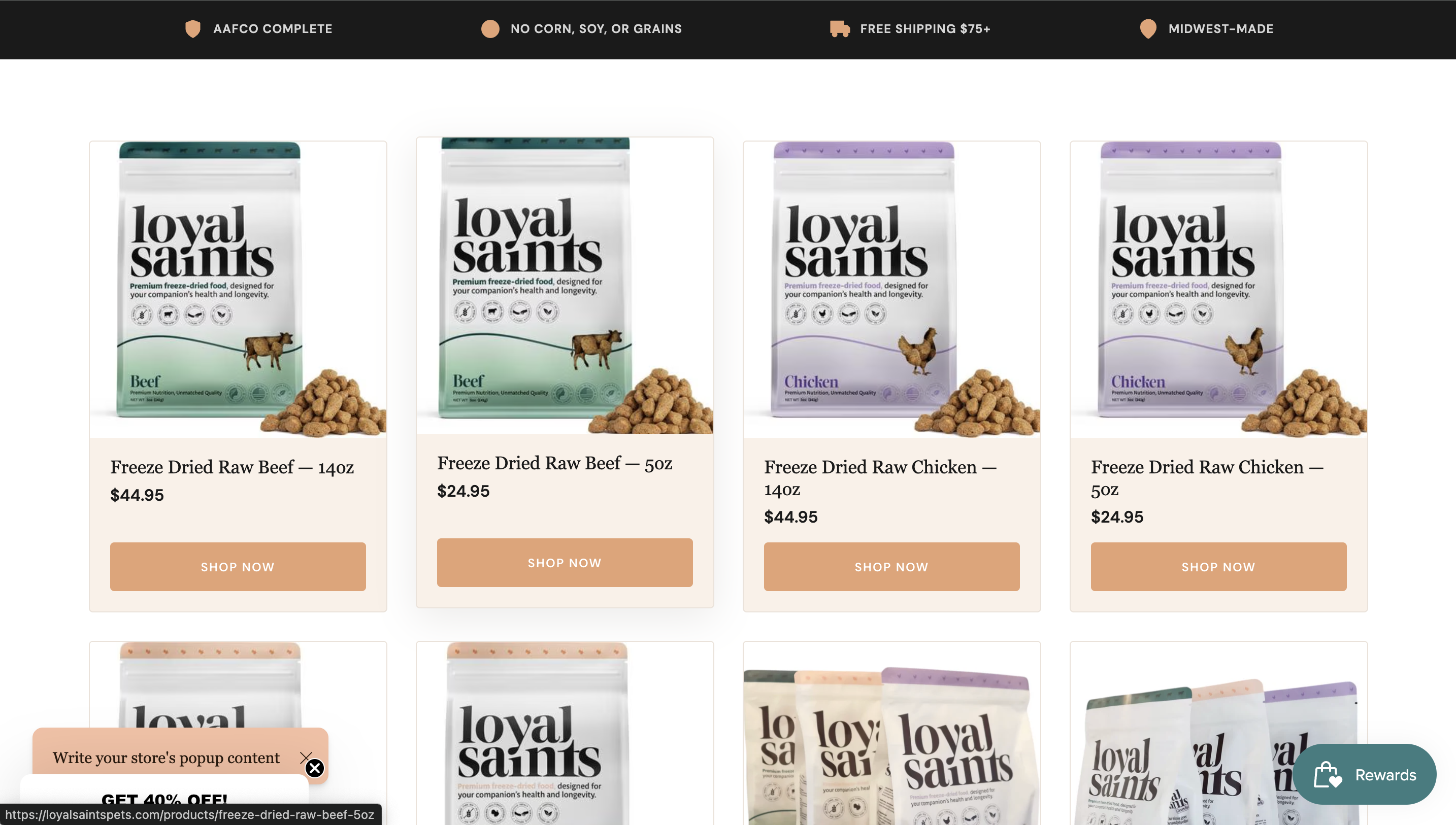
The Freeze Dried Raw Chicken 14oz delivers concentrated protein and fat from a single, clean source, ideal for late pregnancy and lactation feeding schedules. The Freeze Dried Raw Beef 14oz offers a complementary protein rotation to support nutrient variety across reproductive stages. Both products are veterinarian approved and free of additives, giving your breeding females and puppies the clean nutrition they need at every stage. Free shipping is available on qualifying orders.
FAQ
What is the best dog food for breeding females?
The best dog food for breeding females carries an AAFCO “growth and reproduction” or “all life stages” nutritional adequacy statement. These diets meet the elevated protein, fat, and mineral demands of pregnancy and lactation.
When should I switch a pregnant dog to a growth diet?
Switch to a growth diet at the start of the last trimester, around week 5 of pregnancy. Increase meal frequency to 3–4 smaller meals per day by week 7 as stomach capacity decreases.
Should I give calcium supplements to my pregnant dog?
Calcium supplementation during pregnancy is not recommended without veterinary guidance. Routine supplementation suppresses the body’s calcium regulation and raises the risk of eclampsia after whelping.
What are the puppy nutrition guidelines for the first eight weeks?
Puppies rely entirely on the dam’s milk for the first 3–4 weeks. Introduce a softened, puppy-appropriate food at week 3–4 and complete the transition to solid food by week 7–8.
How do I know if my breeding female is at the right weight?
Use the 9-point body condition score rather than weight alone. A BCS of 5/9 is the target for breeding females. You should feel the ribs easily without pressing and see a visible waist from above.


