
If your dog has joint pain, food can help with one big thing: weight. Even small weight loss can lower joint strain, and one study found that a 6.1% drop in body weight reduced lameness in dogs with osteoarthritis. In older dogs, that matters a lot, especially since about 80% of dogs over age 8 are affected by osteoarthritis.
Here’s the short version:
- Freeze-dried food won’t fix arthritis, but it may help with portion control, lean muscle support, and easier eating
- Lower body weight = less pressure on sore joints
- Named animal proteins and omega-3 sources are worth looking for
- Check for an AAFCO “complete and balanced” statement so the food can be fed as a full diet
- Rehydrating meals with warm water can help older dogs with dental wear or low appetite
- A topper is not the same as a complete meal
- Any diet change should support your vet’s plan, not replace it
If I were choosing a freeze-dried food for a dog with joint pain, I’d focus on three things first: healthy weight, high protein, and easy daily feeding. From there, I’d check the label, set portions by ideal weight, and track movement, energy, and body condition over the next 4–6 weeks.
How a Freeze-Dried Diet May Help Dogs With Joint Pain
Freeze-dried food won't cure arthritis. But it can help support mobility in three simple ways: it often cuts filler calories, makes portioning easier, and can be softened for dogs that struggle to chew.
Fewer Fillers and More Nutrient-Dense Meals
A lot of standard kibble formulas put corn, wheat, or soy near the top of the ingredient list. Those ingredients can add calories without doing much for muscle or joint support. Freeze-dried foods often take a different route. They usually start with named animal proteins like beef, chicken, or turkey, and use far fewer starchy fillers.
There’s another plus here. Freeze-drying helps keep more of the food’s original nutrients in place, so each serving delivers more nutrition for the same amount of food. [2]
Weight Control to Reduce Pressure on Joints
This matters most when body weight is adding stress to sore joints. Even a small drop in weight can make a difference. Research found that a body-weight loss of just 6.1% was enough to produce a significant drop in lameness in dogs with osteoarthritis. [4]
Because freeze-dried food is more nutrient-dense, portion control can feel a bit more straightforward. A simple rule of thumb is to base daily portions on your dog’s ideal weight, not their current weight. Then make small changes every two to four weeks, depending on how their body condition and mobility look.
Softer Meals for Older Dogs With Dental Wear
Joint support isn't only about what’s in the bowl. It also depends on whether an older dog can finish the meal without discomfort.
Freeze-dried food can be served dry, or you can add warm water to soften it. A 1:1 ratio works well for many products. Let it sit for 10–15 minutes, and the meal becomes easier to chew and often more tempting for senior dogs dealing with dental wear or a lower appetite linked to chronic pain. [2]
Rehydrated meals can be easier on the mouth, but there’s a tradeoff. They don’t give the same teeth-cleaning abrasion as dry food, so dental care still needs attention.
sbb-itb-b2753ee
What to Look for in a Freeze-Dried Food for Joint Support
The label matters because not every freeze-dried food is meant to be a full-time diet. Some are complete meals. Others are just toppers. For a dog with joint pain, that difference matters a lot.
You want a food that helps with three things at once: weight control, muscle support, and simple daily feeding.
Key Nutrients and Label Features to Check
Start with the AAFCO statement. This is the first thing to check on the bag. If it says "complete and balanced," the food can be used as a full meal. If it doesn’t, it’s a topper or mixer, not a stand-alone diet. [3]
Then look a little closer at the rest of the label.
- Clearly named meats on the ingredient list - Look for ingredients like Beef, Turkey, or Salmon, not vague terms such as "meat meal" or "animal by-products." Named proteins help support muscle maintenance, which can help stabilize arthritic joints. [5]
- No fillers or artificial additives - Ingredients like corn, wheat, soy, and artificial additives can add calories without doing much for the dog. [2]
- Omega-3 sources - Ingredients such as salmon oil supply EPA and DHA, which can help manage inflammation. [3]
- HPP - This is a safety step used in raw formulas to help lower pathogen risk. [3]
Protein matters too. A high-protein guaranteed analysis can help support muscle, which is a big deal for dogs dealing with sore joints. And for older dogs with kidney concerns, phosphorus levels between 0.4% and 0.6% on a dry matter basis are worth checking. [2]
How Loyal Saints Fits These Needs

A complete, high-protein formula makes this much easier. Instead of piecing things together, you can build a daily feeding plan around one food that checks the right boxes.
Loyal Saints lines up with the main label checks. Their freeze-dried raw food is made in the USA with human-grade, all-natural ingredients in USDA-inspected facilities. [1] Every formula is AAFCO-complete, which means it can serve as your dog's sole diet, not just a supplement. For dogs with joint pain, that high-protein, filler-free setup can help support lean muscle and make weight control a little easier.
Daily Joint Problems and How a Freeze-Dried Diet May Help
These label details aren’t just bag copy. They connect to the daily issues dogs with joint pain often deal with. In day-to-day life, the right freeze-dried formula may help support weight management, muscle maintenance, and more comfortable eating.
Building a Daily Meal Plan for an Older Dog With Joint Pain
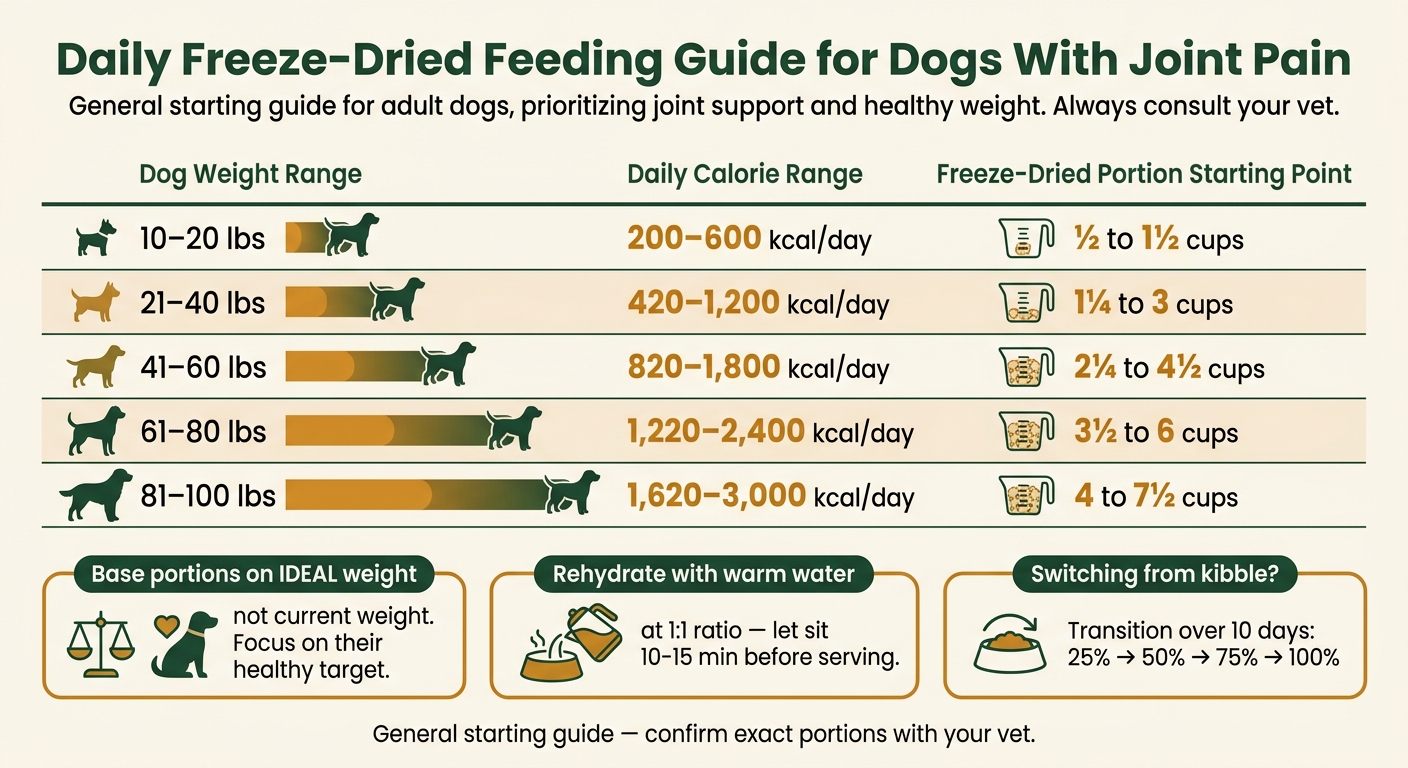
Daily Freeze-Dried Feeding Guide for Dogs With Joint Pain by Weight
Set Portions Based on Ideal Weight and Activity Level
Start with your dog’s ideal body weight, not their current weight. If your dog is overweight, using their current weight to set portions can keep overfeeding going.
Your vet can help you figure out your dog’s ideal weight. From there, use that number as your baseline. Once that part is dialed in, daily feeding gets a lot easier to manage.
For the best accuracy, weigh each meal on a kitchen scale.
Rehydrate Meals and Keep a Consistent Feeding Schedule
Portion size matters, but comfort matters too. Rehydrate meals to soften the texture and bring out the smell, which can help older dogs with worn teeth or a lower appetite.
Warm water works best. Skip hot water, since it can affect nutrients. Feeding twice a day also helps keep meals and medications on a steady routine.
Example Daily Feeding Planning Guide
Use the food label to turn calories into cups. This is a starting point, not a final prescription, so check the label and confirm exact portions with your vet.
| Dog Weight Range | General Daily Calorie Range | Example Freeze-Dried Portion Starting Point |
|---|---|---|
| 10–20 lbs | 200–600 kcal | 1/2 to 1 1/2 cups |
| 21–40 lbs | 420–1,200 kcal | 1 1/4 to 3 cups |
| 41–60 lbs | 820–1,800 kcal | 2 1/4 to 4 1/2 cups |
| 61–80 lbs | 1,220–2,400 kcal | 3 1/2 to 6 cups |
| 81–100 lbs | 1,620–3,000 kcal | 4 to 7 1/2 cups |
General starting guide for U.S. owners; confirm exact portions with your vet.
If you’re moving over from kibble, follow a 7-day transition guide or make the switch over 10 days: 25%, 50%, 75%, then 100%.
Conclusion: A Straightforward Diet Approach to Support Mobility
Once portions are set and meals are rehydrated, feeding gets a lot easier. Joint pain can affect how a dog moves, rests, and gets through the day, and diet is one of the most practical tools owners can use to help support mobility.
Weight control is still the biggest factor. A freeze-dried diet with no fillers and high protein can give your dog nutrient-dense meals, make portion control simpler, and help cut extra strain on sore joints. [2]
Rehydrated meals can also be easier for older dogs to eat, especially if they have dental wear or a lower appetite. That may help them eat more consistently.
When choosing a freeze-dried food, look for an AAFCO "complete and balanced" statement, no artificial additives or fillers, and a formula that fits your dog's life stage. Loyal Saints offers AAFCO-complete freeze-dried raw food made in the USA with human-grade, all-natural ingredients.
Talk with your vet about your dog's ideal weight, set portions, and watch mobility and energy over the next 4–6 weeks. Small, steady feeding changes can help support better movement over time.
FAQs
Can freeze-dried food help my dog lose weight safely?
Yes. Freeze-dried food can help with safe weight loss because it packs a lot of nutrition into a smaller serving and often skips the fillers common in kibble. That means dogs may be able to eat less while still getting the nutrients they need.
It’s also often lower in starch and sugar, which may reduce glycemic impact and support a healthy weight.
Should I choose a complete meal or a topper?
It comes down to your goals and what your dog needs.
Loyal Saints freeze-dried food can work as a complete diet, giving your dog balanced nutrition. That may help with weight management and cut back on fillers, which can support joint health.
If your dog isn't eating much or you’d rather make the switch slowly, you can also use it as a topper.
Check the AAFCO statement on the package to see whether your product is labeled as a complete diet.
How do I know if freeze-dried food is right for my senior dog?
Freeze-dried food can be a solid pick for senior dogs, especially if they have a low appetite, a sensitive stomach, or trouble getting around. Because this type of food keeps many nutrients and enzymes intact, it may help with digestion and immune function.
If your dog deals with joint discomfort, ingredients such as omega-3 fatty acids may help support mobility. Look for a complete and balanced diet that meets AAFCO standards, and check with your veterinarian to make sure it matches your dog’s health needs.


