
TL;DR:
- Freeze-dried dog food offers higher protein and better nutrient retention than kibble but comes at a significantly higher cost.
- Using freeze-dried as a topper provides a nutritional boost, improving digestibility and palatability without the full expense of a sole diet.
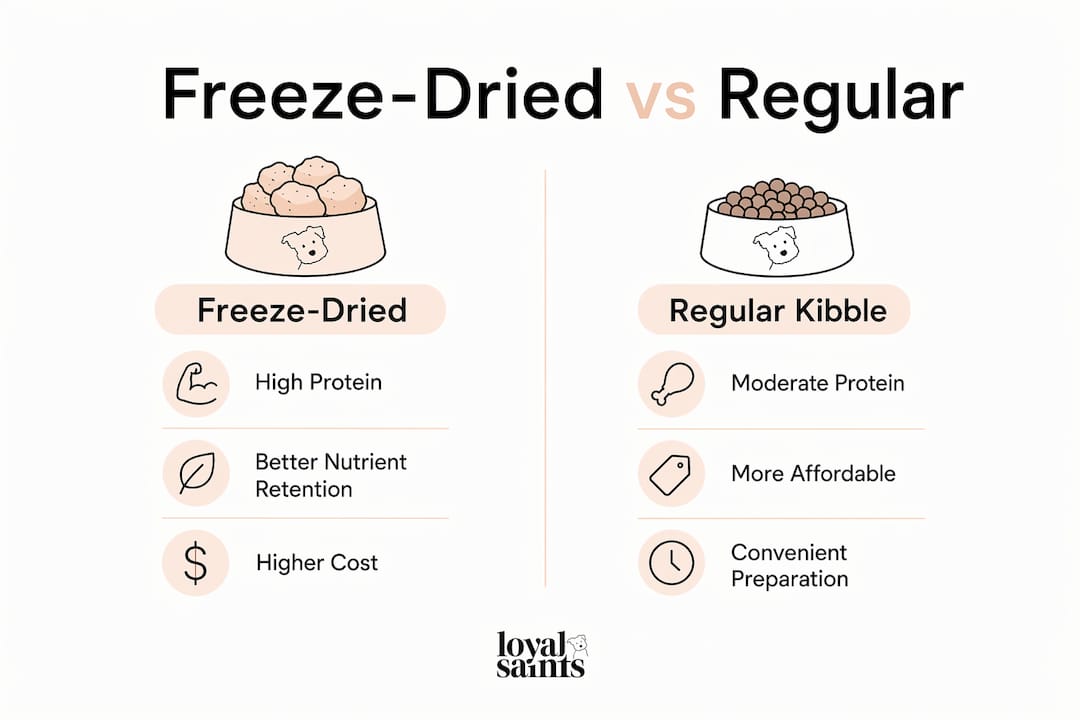
Freeze-dried dog food is defined as a minimally processed diet where raw ingredients have their moisture removed through a low-temperature vacuum process, preserving the original nutrient profile without cooking. Regular dog food, most commonly kibble, is produced through high-heat extrusion that extends shelf life but degrades heat-sensitive vitamins, enzymes, and amino acids. The freeze-dried vs. regular dog food debate matters because the two formats differ significantly in protein concentration, nutrient bioavailability, cost, and storage needs. Understanding those differences helps you feed your dog with confidence, whether you are managing a tight budget or prioritizing peak nutrition for an active breed. Both formats can meet AAFCO protein standards for complete and balanced diets, but they do not deliver the same nutritional experience.
What are the nutritional differences between freeze-dried and regular dog food?
Freeze-dried dog food delivers measurably higher protein concentration than kibble. Freeze-dried diets reach 40–50% protein on a dry-matter basis, compared to 30–40% for most dry kibble formulas. That gap matters most for active dogs, working breeds, and seniors trying to maintain muscle mass. A high-protein diet supports muscle repair, immune function, and sustained energy in ways that lower-protein kibble simply cannot match at the same feeding volume.
The reason freeze-dried food wins on protein is the process itself. Kibble is extruded at temperatures that can exceed 300°F, which destroys heat-sensitive B vitamins, natural enzymes, and some amino acids. Freeze-drying removes moisture at temperatures below freezing, so the nutrient structure stays largely intact. Freeze-dried food retains natural enzymes and heat-sensitive nutrients that high-heat processing eliminates. That is a meaningful difference for dogs with digestive sensitivity or compromised immune systems.
Bioavailability is the next layer. A University of Illinois peer-reviewed study found that freeze-dried food shows higher amino acid digestibility and metabolizable energy compared to fresh and kibble formats. Higher digestibility means your dog absorbs more nutrition per gram of food consumed. That is why freeze-dried portions look surprisingly small compared to a scoop of kibble.
| Nutritional Factor | Freeze-Dried | Regular Kibble |
|---|---|---|
| Protein (dry-matter basis) | 40–50% | 30–40% |
| Heat-sensitive nutrients | Largely retained | Significantly reduced |
| Amino acid digestibility | Higher | Moderate |
| Natural enzymes | Preserved | Destroyed by heat |
| Moisture content | Very low (3–5%) | Low (8–10%) |
Pro Tip: When comparing labels, always convert to dry-matter basis before comparing protein percentages. A food with 10% moisture and 30% protein on the label has a very different actual protein level than one with 75% moisture and the same label claim.
How do freeze-dried and regular dog foods compare in cost and convenience?
Cost is where freeze-dried food loses ground fast. Freeze-dried diets cost $8–$18 per day for a 50 lb dog, while regular kibble runs $1–$4 per day for the same dog. That is a three to five times price difference that adds up to hundreds of dollars annually. For most pet owners, that gap is the single biggest factor in the decision.

Convenience cuts both ways. Kibble wins on simplicity: scoop, serve, done. Freeze-dried food requires rehydration with water for best results, though many owners serve it dry. Both formats are shelf-stable unopened, but freeze-dried food stays fresh for 12–24 months unopened versus 12–18 months for most kibble. That longer shelf life makes freeze-dried a practical choice for travel, emergencies, or rural households where restocking is infrequent.
Here is where many owners find a practical middle ground:
- Use freeze-dried as a topper. Adding freeze-dried as a supplement to a kibble base boosts nutrition and palatability without the full cost of a freeze-dried-only diet.
- Portion by weight, not volume. Freeze-dried food is calorie-dense, so a small amount goes further than it looks.
- Store opened bags carefully. Airtight containers preserve quality and slow fat oxidation after opening.
- Plan for travel. Freeze-dried packs light and needs no refrigeration, making it ideal for road trips or camping with your dog.
The topper approach is genuinely smart for budget-conscious owners. You get the enzyme and amino acid benefits of freeze-dried food on top of a cost-effective kibble base, without paying premium prices for every meal.
What are the practical drawbacks of freeze-dried dog food?
Cost is the obvious barrier, but it is not the only one. Freeze-dried food is made from raw ingredients, and it lacks third-party Clean Label certification due to potential pathogen risk. Kibble is cooked, which kills bacteria. Freeze-drying does not. Households with immunocompromised members, infants, or elderly adults should weigh that risk carefully before switching to a raw-based diet.
Fat oxidation is a less-discussed problem. Once you open a bag, fat in freeze-dried food oxidizes rapidly and should be used within 30–45 days. Leaving it loosely sealed on a shelf degrades both palatability and nutritional quality. This is not a dealbreaker, but it requires more attention than tossing a kibble bag in the pantry.
Overfeeding is a real risk with freeze-dried food because the serving size looks deceptively small. Owners should use a digital scale rather than measuring cups to portion freeze-dried food accurately. A cup of freeze-dried food contains far more calories than a cup of kibble, so eyeballing portions leads to consistent overfeeding over time.
Transitioning between formats also requires patience. Dogs switching from kibble to freeze-dried, or vice versa, can experience digestive upset if the change happens too quickly. A gradual digestive health transition over 7–10 days reduces the risk of loose stools and stomach discomfort.
Pro Tip: Mix 25% new food with 75% old food for the first three days, then 50/50 for three more days, then 75% new food for three days before completing the switch. This timeline works for both directions of the transition.
How do you choose the best dog food for your dog’s needs?
The right food format depends on your dog’s health, your household, and your budget. No single format is perfect for every dog. Veterinarians confirm that AAFCO compliance, budget, and individual dog tolerance matter more than the format itself. A well-formulated kibble beats a poorly formulated freeze-dried product every time.
Use this framework to make your decision:
- Confirm AAFCO compliance first. Any food you choose, kibble or freeze-dried, should carry an AAFCO statement for complete and balanced nutrition. That label means the food meets minimum nutrient requirements for your dog’s life stage.
- Match protein level to activity. Active breeds, working dogs, and puppies benefit most from the higher protein concentration in freeze-dried food. Senior dogs with kidney concerns may need lower protein, so check with your vet.
- Assess your household safety. If anyone in your home is immunocompromised, pregnant, or very young, the pathogen risk of raw-based freeze-dried food warrants a conversation with your doctor and your vet before switching.
- Calculate the real monthly cost. Run the numbers for your dog’s weight before committing. A freeze-dried-only diet for a large breed can cost $400–$500 per month. A topper approach cuts that to $50–$100 while still delivering benefits.
- Watch your dog’s response. Coat quality, energy level, stool consistency, and body weight are the most reliable indicators that a food is working. Give any new diet at least 6–8 weeks before evaluating results.
Veterinarians emphasize that the best food is one your dog tolerates well, you can afford consistently, and that meets complete nutrition standards. Consistency matters more than perfection. A dog eating the same quality food every day does better than one whose diet changes constantly because the owner keeps chasing the “best” option.
Key Takeaways
Freeze-dried dog food delivers higher protein concentration and better nutrient retention than regular kibble, but cost, storage discipline, and pathogen awareness determine whether it is the right fit for your dog and household.
| Point | Details |
|---|---|
| Protein advantage | Freeze-dried food provides 40–50% protein on a dry-matter basis versus 30–40% for kibble. |
| Nutrient retention | Freeze-drying preserves heat-sensitive enzymes and vitamins that high-heat extrusion destroys. |
| Cost difference | Freeze-dried costs $8–$18 per day for a 50 lb dog compared to $1–$4 for kibble. |
| Storage discipline | Opened freeze-dried bags must be sealed and used within 30–45 days to prevent fat oxidation. |
| AAFCO compliance | Format matters less than whether the food meets AAFCO standards for complete, balanced nutrition. |
What I’ve learned from watching dogs eat both
The biggest misconception I see is that freeze-dried food is automatically “better” for every dog. It is not. I have watched dogs thrive on quality kibble and struggle on poorly sourced freeze-dried products. The format is not the whole story.
What I have found consistently is that the topper approach works well for most owners. You get the palatability boost, the enzyme benefits, and the higher amino acid availability without the full financial commitment. Dogs that were previously picky about kibble often eat with more enthusiasm when freeze-dried food is mixed in. That alone can solve a feeding problem that has frustrated owners for months.
The pathogen risk is real and underreported. Most freeze-dried food articles gloss over it. If you have young children or anyone with a compromised immune system at home, that risk deserves serious weight in your decision. Cooked kibble does not carry that concern.
My honest recommendation: prioritize AAFCO compliance and ingredient quality over format. Then factor in your budget and your household’s specific needs. A complete and balanced diet your dog eats consistently will always outperform the theoretically perfect food your dog refuses or that you cannot afford to maintain.
— Kristina
Premium freeze-dried options worth feeding your dog
If you have decided that freeze-dried food belongs in your dog’s bowl, Loyalsaintspets makes the decision straightforward. Their products are made from human-grade, whole ingredients with no fillers or artificial additives, and every formula meets AAFCO standards for complete and balanced nutrition.
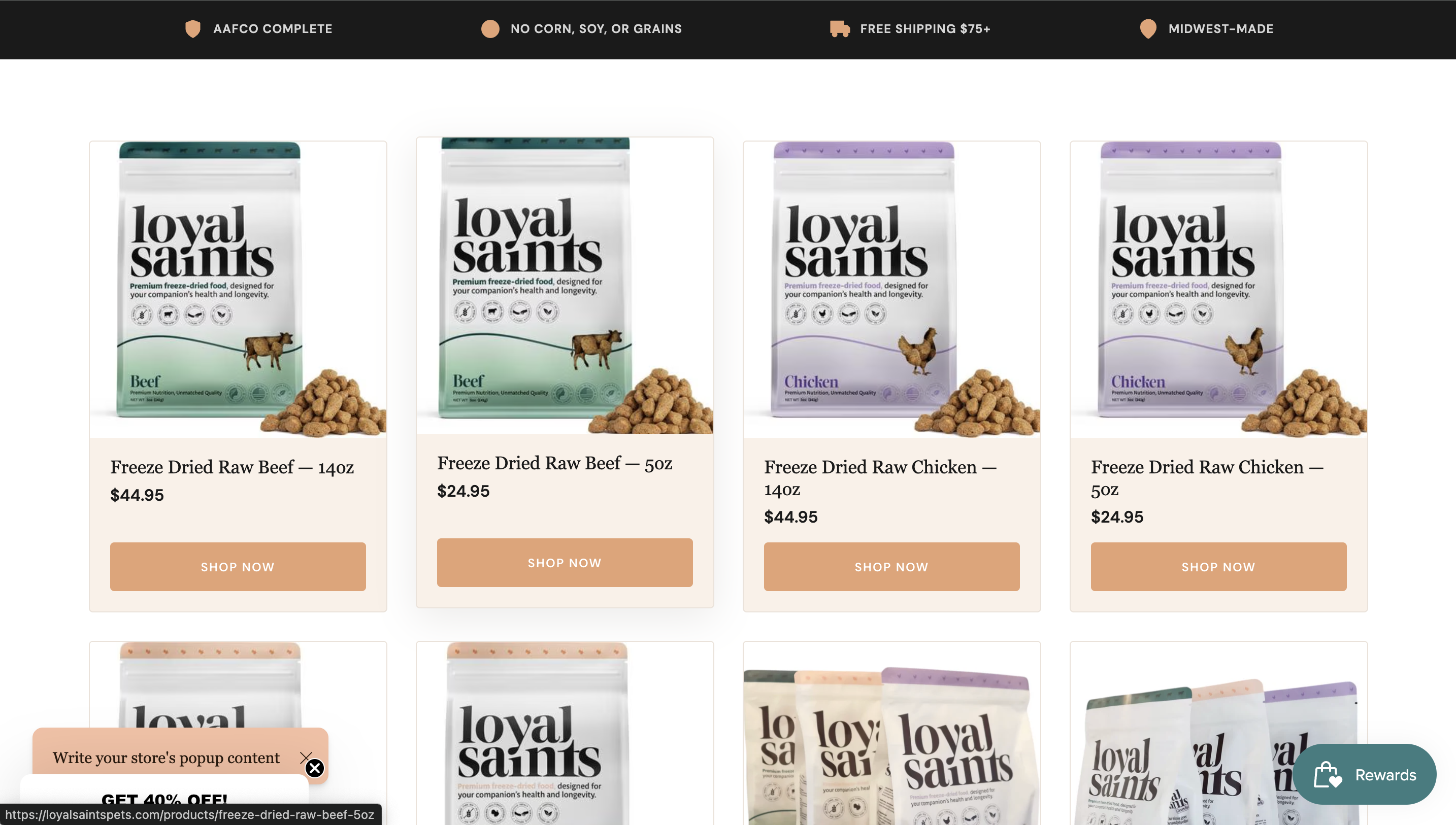
The freeze-dried raw chicken is a strong starting point, available in a 14oz size that works well as a primary diet or a daily topper. For owners who want variety, the freeze-dried raw beef delivers the same minimal processing with a different protein source. Both options are shelf-stable, easy to serve, and built around the nutritional principles covered in this article. Learn more about why freeze-dried works and browse the full range at Loyalsaintspets.
FAQ
Is freeze-dried dog food healthier than regular kibble?
Freeze-dried food retains more heat-sensitive nutrients and delivers higher protein concentration than kibble, making it nutritionally superior in those areas. Whether it is “healthier” for your specific dog depends on AAFCO compliance, ingredient quality, and your dog’s individual tolerance.
How long does freeze-dried dog food last after opening?
Opened freeze-dried dog food should be used within 30–45 days and stored in an airtight container to prevent fat oxidation and nutrient degradation.
Can I mix freeze-dried food with regular kibble?
Yes. Using freeze-dried food as a topper on kibble is a practical way to boost nutrition and palatability while keeping daily feeding costs manageable.
What does AAFCO compliance mean for dog food?
AAFCO compliance means the food meets minimum nutrient standards for complete and balanced nutrition at a specific life stage. Both freeze-dried and kibble formats can carry this certification, and it is the most reliable baseline quality check for any dog food.
Should I use a measuring cup or a scale for freeze-dried food?
A digital scale is the correct tool for portioning freeze-dried food. Because freeze-dried food is calorie-dense, measuring by volume with a cup leads to consistent overfeeding compared to the manufacturer’s weight-based serving guidelines.


