
TL;DR:
- Natural dog food does not guarantee better nutrition or health outcomes without proper formulation. Lightly cooked, human-grade foods offer metabolic benefits and fewer safety concerns than raw diets, which carry pathogen and nutrient imbalance risks. Always check the AAFCO nutritional statement and ingredient transparency, regardless of labels like “natural” or “organic.”
Natural dog food is defined by AAFCO as food made from plant, animal, or mined-source ingredients with no chemically synthesized additives, colors, or preservatives. That definition sounds reassuring, but it does not guarantee better nutrition or health outcomes for your dog. If you are asking whether is natural dog food better than conventional options, the honest answer is: it depends entirely on the product’s formulation, not just its label. Understanding what “natural” actually means legally and nutritionally is the first step to making a smart choice for your dog.
Is natural dog food actually better, according to science?
The science on this question is more nuanced than most pet food marketing suggests. No high-quality, long-term evidence proves that natural or raw-meat diets produce better health outcomes compared to complete commercial diets. That finding does not mean natural foods offer zero benefit. It means the label alone tells you very little about what your dog is actually getting.
Research does show some promising signals for minimally processed diets. Lightly cooked, human-grade foods show metabolic benefits compared to heavily processed kibble, including better digestibility and nutrient absorption. The key word is “lightly cooked,” not raw.
Raw diets carry real risks that deserve your attention:
- Pathogen exposure: Raw meat frequently carries Salmonella and E. coli, which your dog can shed in their stool and spread to your household.
- Antibiotic-resistant bacteria: Dogs fed raw diets show higher rates of antimicrobial-resistant E. coli shedding, a genuine public health concern.
- Bone injuries: Whole raw bones cause tooth fractures and intestinal perforations at a rate that concerns most veterinary professionals.
- Nutritional imbalance: Raw diets are frequently deficient in key nutrients unless carefully formulated by a veterinary nutritionist.
“Veterinary and nutrition experts advise against raw-protein natural diets because of risks like bone fractures and pathogen transmission. Lightly cooked human-grade food is the safer natural alternative, offering metabolic benefits without the safety concerns of raw feeding.”
The AAHA and other major veterinary bodies actively discourage raw feeding. Their position is grounded in both safety data and the metabolic health benefits seen in minimally processed cooked options. If you want the benefits of natural dog food without the risks, lightly cooked and freeze-dried formats are the smarter path.
How do “natural,” “organic,” and “raw” labels actually differ?
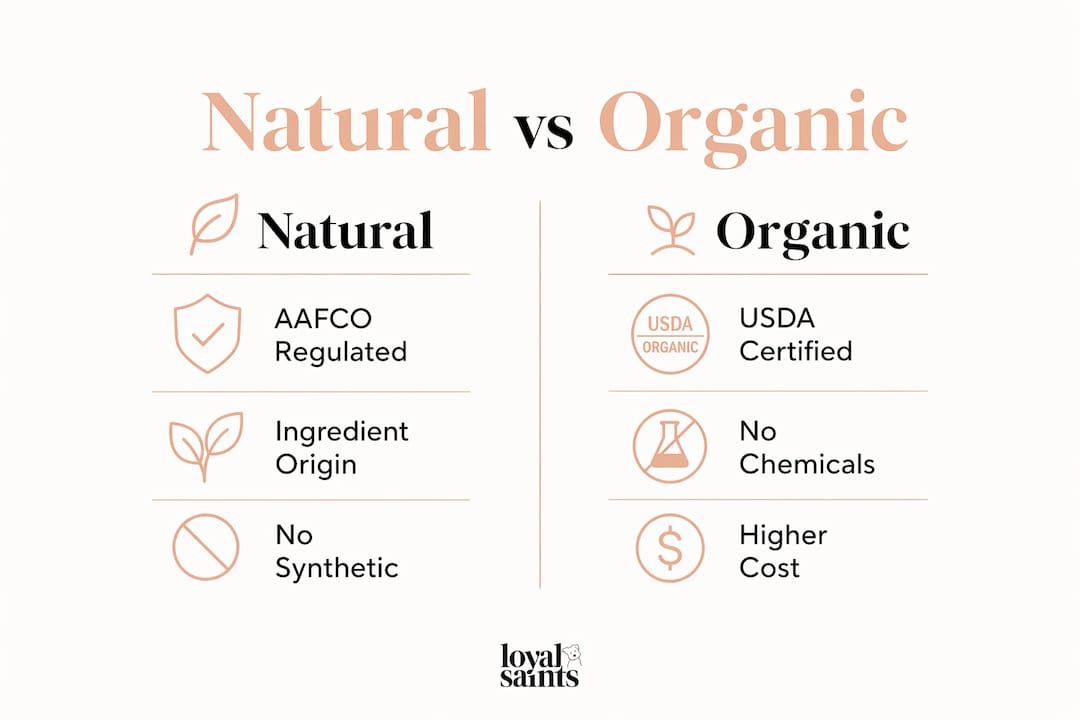
These three terms appear constantly on pet food packaging, and they mean very different things. Conflating them is one of the most common mistakes dog owners make.
| Term | Who Regulates It | What It Guarantees |
|---|---|---|
| Natural | AAFCO | Ingredient origin only; no synthetic additives |
| Organic | USDA certification | No synthetic pesticides; stricter production standards |
| Raw | No federal standard | Uncooked ingredients; no safety or nutrition guarantee |
| Fresh/lightly cooked | No federal standard | Minimally processed; quality varies by brand |
“Natural” is AAFCO regulated without requiring any third-party certification. “Organic” requires USDA certification with documented production controls. Neither label, by itself, guarantees better nutrition or safety. Marketing often blurs these distinctions deliberately, presenting “natural” as equivalent to “organic” or “superior.” It is not.
The term “natural flavor” adds another layer of confusion. When you see “natural flavor” in an ingredient list, it refers to a palatability agent derived from natural sources, not a sign that the whole diet is natural or nutritionally superior. AAFCO rules allow this term without specifying minimum meat content. Many dog owners read “natural flavor” and assume they are buying a whole-food diet. They are not.
Pro Tip: When comparing labels, look past “natural” or “organic” and go straight to the AAFCO nutritional adequacy statement. That statement tells you whether the food actually supports your dog’s life stage, not just where the ingredients came from. You can learn more about USDA organic standards and how they apply to pet food.
What practical factors should you consider when choosing natural dog food?
Choosing the right food for your dog requires reading past the front-of-bag marketing and focusing on a few specific details.
-
Check the AAFCO nutritional adequacy statement. Every bag or can should carry this statement. Feeding-trial-substantiated claims provide stronger assurance than formulation-based claims. A feeding trial means real dogs ate the food and maintained health. A formulation claim means the nutrient profile looks correct on paper, which is a weaker guarantee.
-
Match the life stage claim to your dog. Foods labeled “all life stages” meet AAFCO’s highest growth and reproduction standards. That sounds like a bonus, but it means higher calories and calcium levels that can cause obesity or developmental issues in senior or sedentary dogs.
-
Do not be fooled by “natural flavor.” This ingredient is a palatability agent, not a quality indicator. A food can list “natural flavor” and still be heavily processed with minimal whole-food content.
-
Prioritize ingredient transparency. Look for named protein sources like “chicken” or “beef,” not vague terms like “meat meal” or “animal digest.” Whole, identifiable ingredients are a better sign of quality than a “natural” badge.
-
Consult a veterinary nutritionist for complex needs. If your dog has allergies, a chronic condition, or is a senior, a board-certified veterinary nutritionist can help you find a diet that actually addresses those needs rather than just marketing to them. Loyalsaintspets products are formulated with veterinary input, which takes much of the guesswork out of this step.
Pro Tip: If your dog has skin issues or digestive sensitivities, natural dog food for allergies works best when it features a single, novel protein source and no artificial additives. Freeze-dried formats preserve protein integrity without the need for synthetic preservatives. Read more about choosing healthy dog food with your dog’s specific needs in mind.
How to safely add natural or fresh foods to your dog’s diet
Switching to a more natural diet does not have to be all-or-nothing. Many dog owners successfully incorporate natural or fresh foods alongside a complete commercial diet. The key is doing it safely.
- Avoid raw meat at home unless you have professional guidance. The pathogen risks from Salmonella and E. coli are real for both your dog and your family. Freeze-dried raw options address this concern because the freeze-drying process significantly reduces bacterial load while preserving nutrients.
- Choose lightly cooked or freeze-dried over fully raw. Veterinary professionals consistently recommend lightly cooked human-grade food as the safer path to natural nutrition. Freeze-dried formats offer the nutritional profile of raw with far better safety.
- Do not rely on homemade diets without expert help. 95% of surveyed homemade diets have at least one nutrient deficiency when checked against AAFCO or NRC standards. Calcium and phosphorus imbalances are especially common and can cause serious skeletal problems over time.
- Transition gradually. Switching foods too quickly causes digestive upset. Move from your dog’s current diet to the new food over 7–10 days, increasing the new food by about 25% every two to three days.
- Store natural foods correctly. Freeze-dried foods should be kept sealed and dry. Fresh or lightly cooked foods need refrigeration and should not sit out for more than two hours.
- Monitor your dog’s response. Watch for changes in coat quality, energy, stool consistency, and weight. These are the clearest early signals that a diet is or is not working.
For a deeper look at the benefits and risks of raw feeding, the raw diet guide from Loyalsaintspets covers the topic thoroughly.
Key Takeaways
Natural dog food offers real benefits when it combines ingredient transparency, AAFCO feeding-trial substantiation, and minimal processing, but the “natural” label alone does not guarantee better nutrition or safety for your dog.
| Point | Details |
|---|---|
| “Natural” is a regulated term | AAFCO defines it by ingredient origin, not nutritional quality or safety. |
| Feeding-trial claims matter most | Choose foods with feeding-trial-substantiated AAFCO statements over formulation-only claims. |
| Raw diets carry documented risks | Pathogen shedding and nutrient deficiencies make raw feeding risky without expert guidance. |
| Lightly cooked beats fully raw | Minimally processed cooked or freeze-dried foods offer metabolic benefits with better safety. |
| Homemade diets need expert oversight | 95% of homemade diets have at least one nutrient deficiency without veterinary nutritionist input. |
My honest take on the natural dog food trend in 2026
I understand why so many dog owners are drawn to natural food options. You want to know exactly what your dog is eating, and the idea of whole, recognizable ingredients feels right. That instinct is good. The problem is that the pet food industry has learned to exploit it.
After years of watching this space, I have seen “natural” become one of the most overused and least meaningful words on a pet food bag. A food can be technically natural under AAFCO rules and still be nutritionally mediocre. A food can skip the “natural” label and still be genuinely excellent for your dog.
What I tell every dog owner who asks me about this: stop reading the front of the bag and start reading the back. Find the AAFCO statement. Check whether it is feeding-trial substantiated. Look at the first five ingredients. Those details tell you far more than any marketing claim.
Raw diets concern me specifically because the risks are real and the evidence of superiority over well-formulated commercial diets simply does not exist. Freeze-dried formats are where I see the most promise. They preserve the nutritional integrity of whole ingredients without the pathogen risks of raw feeding. That is a meaningful difference, not a marketing one.
If you are serious about natural nutrition for your dog, prioritize transparency, verified nutritional adequacy, and minimal processing. The label is just the starting point.
— Kristina
What Loyalsaintspets offers for natural feeding goals
Dog owners who want the benefits of natural nutrition without the risks of raw feeding have a clear option worth exploring.
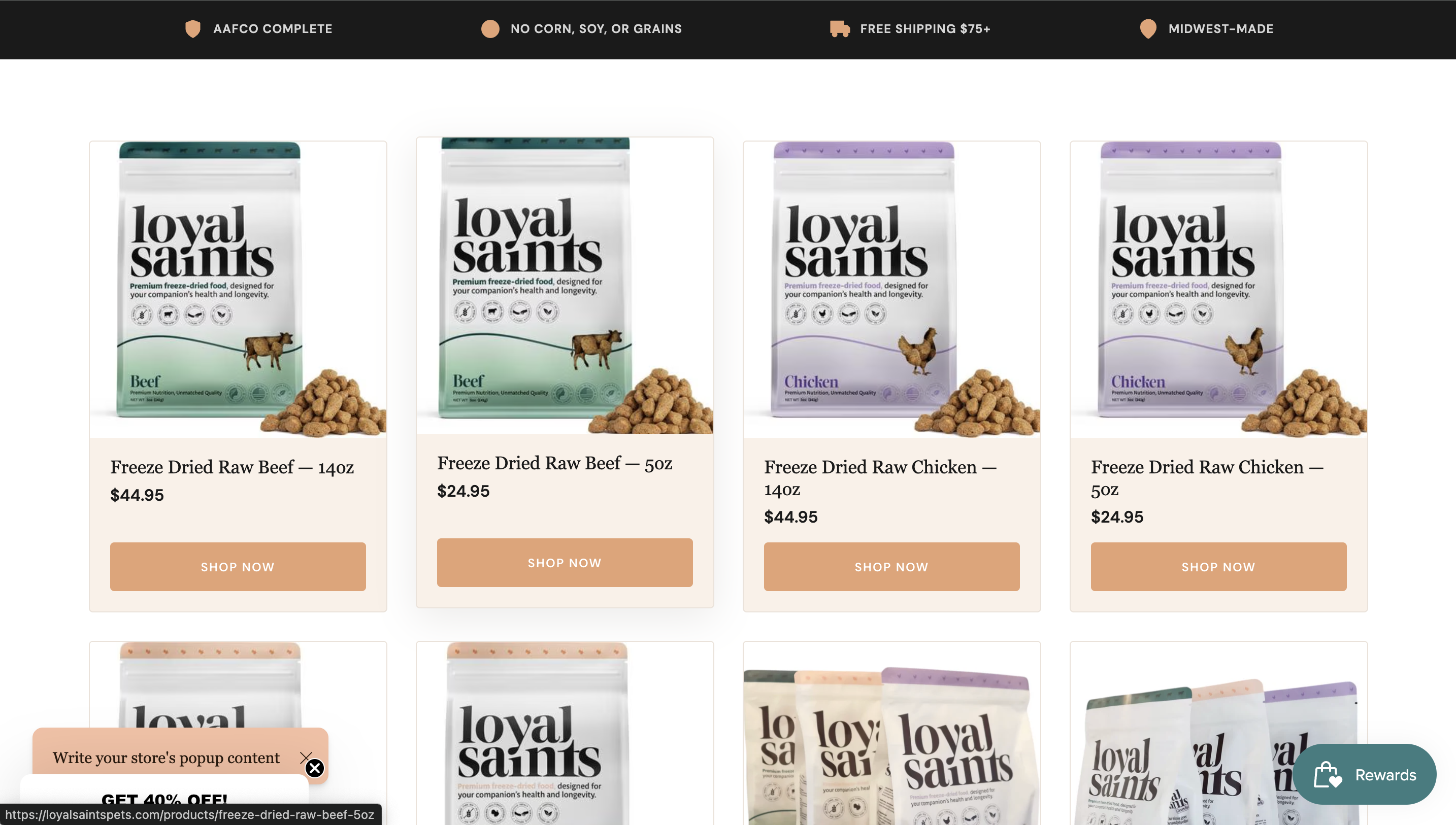
Loyalsaintspets freeze-dried dog food is made from human-grade proteins, whole fruits, and vegetables with no synthetic additives or fillers. Every product meets AAFCO standards and is formulated with veterinary input, so you get the ingredient transparency you are looking for with the nutritional assurance your dog needs. The freeze-dried raw chicken and freeze-dried raw beef options deliver whole-food nutrition in a format that is safe, convenient, and genuinely minimally processed. Free shipping is available on qualifying orders, making it easy to get started. Learn more about why freeze-dried works for dogs who deserve the best.
FAQ
What does “natural” mean on a dog food label?
“Natural” is regulated by AAFCO to mean ingredients derived from plant, animal, or mined sources without chemically synthesized additives. It does not guarantee nutritional quality, digestibility, or safety.
Is raw dog food better than commercial kibble?
No high-quality, long-term evidence shows raw diets produce better health outcomes than complete commercial diets. Raw feeding carries documented risks including pathogen shedding and nutrient deficiencies.
What is the safest way to feed my dog a natural diet?
Lightly cooked or freeze-dried human-grade foods offer the best balance of natural nutrition and safety. Avoid fully raw diets without veterinary nutritionist guidance, and always look for AAFCO feeding-trial substantiation.
Are homemade dog diets nutritionally complete?
95% of homemade dog diets have at least one nutrient deficiency when checked against AAFCO or NRC standards. Always work with a board-certified veterinary nutritionist before switching to a homemade diet.
Is organic dog food healthier than natural dog food?
Organic certification requires USDA oversight and prohibits synthetic pesticides, making it a stricter standard than “natural.” Neither label guarantees better nutrition on its own. The AAFCO nutritional adequacy statement remains the most reliable quality indicator on any pet food label.


