
TL;DR:
- A raw diet for dogs includes uncooked meats, bones, organs, and optional produce, mirroring ancestral diets.
- Structured models like BARF and PMR guide ingredient ratios, emphasizing calcium-phosphorus balance for bone health.
A raw diet for dogs is defined as a feeding regimen of uncooked muscle meat, raw meaty bones, organ meats, and selected produce or supplements designed to mirror a dog’s ancestral nutrition. Formally called a raw meat-based diet (RMBD), this approach has grown steadily in popularity among dog owners who want more control over what goes into their dog’s bowl. The two most recognized feeding frameworks are BARF (Biologically Appropriate Raw Food) and PMR (Prey Model Raw), each with specific ingredient ratios backed by nutritional science. Organizations like the AVMA, RFVS, and AAFCO all weigh in on raw feeding, and their guidance matters when you’re deciding whether this diet is right for your dog.
What are the nutritional frameworks in a raw diet for dogs?
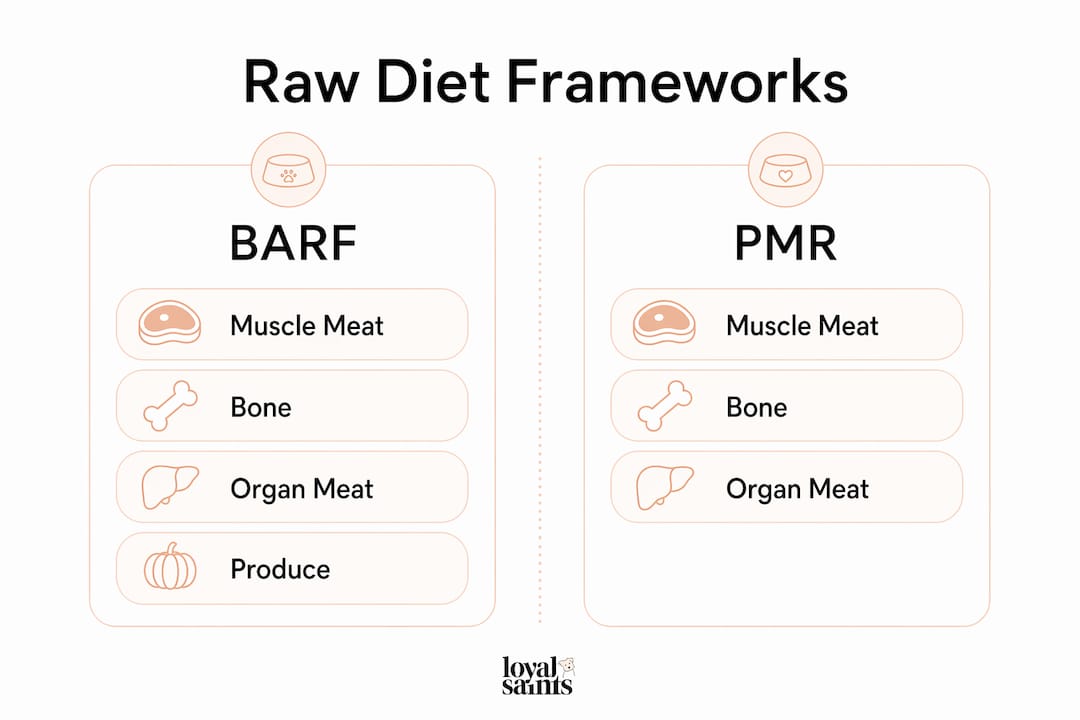
Two structured models guide most raw feeders. The BARF and PMR models differ mainly in whether produce is included.
| Framework | Muscle Meat | Bone | Organ Meat | Produce |
|---|---|---|---|---|
| BARF | 70% | 10% | 10% | 10% |
| PMR | 80% | 10% | 10% | None |
BARF includes fruits and vegetables to supply fiber, antioxidants, and phytonutrients. PMR argues that dogs do not need plant matter and focuses purely on animal-sourced ingredients. Both models agree that organ meats, especially liver, are non-negotiable for supplying fat-soluble vitamins and trace minerals.
One of the most critical and most overlooked numbers in raw feeding is the calcium-to-phosphorus ratio. The calcium-to-phosphorus ratio must fall between approximately 1.1:1 and 1.3:1 for proper bone health and nerve function. Raw meaty bones like chicken necks and turkey backs naturally supply calcium. Without them, a meat-only diet creates a dangerous phosphorus excess that can damage kidneys and weaken bones over time.
Supplementation fills the gaps that whole ingredients cannot always cover. Iodine, zinc, vitamin D, and vitamin E are the most commonly deficient nutrients in homemade raw diets. A veterinary nutritionist can run a recipe through NRC (National Research Council) standards to confirm it meets life-stage requirements before you commit to feeding it daily.
Pro Tip: Start with a pre-formulated raw recipe reviewed by a veterinary nutritionist rather than building one from scratch. This single step prevents the most common micronutrient deficiencies that show up months into raw feeding.
What does science say about the benefits and risks of raw feeding?
The research picture on raw diets is genuinely mixed, and you deserve a straight read of both sides.
On the benefit side, a 2026 BMC Veterinary Research study found that dogs on raw meat-based diets showed lower obesity prevalence compared to dogs on commercial kibble diets. The study followed 104 healthy dogs over 3–5 months, with 51 on raw diets. Lower body condition scores in the raw-fed group suggest that the higher moisture content and protein density of raw food may support healthier weight management.
Owners also report improvements in coat quality, stool volume, and allergy-related skin conditions. The RFVS position statement acknowledges that evidence shows raw diets can reduce allergy and skin disease risk in some dogs. That is a meaningful concession from a veterinary body that otherwise urges caution.
The risks are real and should not be minimized. The AVMA and other veterinary organizations discourage raw diets due to documented bacterial contamination risks. Raw pet foods regularly test positive for:
- Salmonella — transmissible to humans through contact with dog feces or food prep surfaces
- E. coli — a risk for both dogs and human family members, especially children
- Listeria — particularly dangerous for pregnant women and immunocompromised adults
The household risk is not theoretical. Dogs fed raw diets shed more pathogens in their stool, which creates real exposure for everyone in the home. This is why the AVMA’s position focuses as much on human health as on canine health.
“Raw feeding is not suitable for all dogs. Individual risk assessment, strict hygiene, and a nutritionally balanced diet are all required.” — RFVS Position Statement 2026
How to safely transition and feed a raw diet to your dog
A successful transition to raw feeding depends on pace, portion accuracy, and food safety habits. Rushing any of these three creates problems that are easy to avoid.
- Start with a single protein. Choose one meat source, such as chicken, for the first two weeks. This makes it easier to identify any intolerance before adding variety.
- Transition over 7–14 days. Begin by replacing 25% of your dog’s current food with raw, then increase gradually. A 7 to 14 day transition minimizes digestive upset in most dogs.
- Expect transition stool. Loose stools during the first 2–4 days are a normal digestive adjustment, not an allergic reaction. If loose stools persist beyond a week, consult your vet.
- Portion by body weight. Most adult dogs do well on 2%–3% of their ideal body weight per day in raw food. Puppies need 5%–10% of their current body weight, split into three meals daily.
- Handle raw meat safely. Use separate cutting boards, wash hands thoroughly after handling, and clean food bowls after every meal. Freeze raw meat until 24–48 hours before use.
- Monitor weight and coat monthly. Weigh your dog every four weeks and track coat condition, energy, and stool quality. Adjust portions based on what you observe.
Pro Tip: Freeze raw meat for at least 72 hours before feeding to reduce, though not eliminate, pathogen load. This is a simple step that meaningfully lowers bacterial risk without changing nutritional value.
Choosing between homemade and commercial raw formats is also a practical decision. Commercial raw diets meeting AAFCO and FEDIAF standards are lab-tested for micronutrient completeness and are safer than most DIY recipes. Homemade raw diets give you full ingredient control but require a verified recipe and regular nutritional review. For most dog owners starting out, a commercial or pre-formulated option is the lower-risk entry point.
You can also explore age-appropriate feeding plans to match raw diet portions and ingredients to your dog’s life stage, whether you have a growing puppy or a senior dog with joint concerns.
What do veterinarians recommend about raw diets?
Veterinary guidance on raw feeding is not a simple yes or no. It depends heavily on the individual dog, the household, and the quality of the diet being fed.
The RFVS is explicit about which dogs should not be fed raw diets:
- Neonates and very young puppies whose immune systems cannot handle pathogen exposure
- Immunosuppressed dogs receiving chemotherapy or long-term steroids
- Dogs recovering from gastrointestinal surgery where bacterial load must be minimized
- Dogs in households with immunocompromised people, infants, or elderly family members
The AVMA recommends against raw diets for all dogs but acknowledges that dog owners will make their own choices. Their guidance focuses on minimizing risk through strict hygiene, veterinary supervision, and choosing commercially prepared raw foods over homemade versions when possible.
For puppies, seniors, and dogs with chronic health conditions, a step-by-step raw feeding guide reviewed by a veterinary nutritionist is the safest path. Puppies have higher calcium and phosphorus demands than adult dogs, and getting the ratio wrong during growth causes lasting skeletal damage. Seniors may need adjusted fat levels and added joint-supporting nutrients like omega-3 fatty acids from fish.
The role of professional formulation cannot be overstated. A raw diet requires scientifically balanced life-stage planning, not just feeding plain meat. Veterinary nutritionists use NRC and AAFCO standards to build recipes that account for your dog’s weight, age, breed, and health status. That level of precision is what separates a genuinely beneficial raw diet from one that causes slow, hard-to-detect nutritional damage.
Key Takeaways
A raw diet for dogs delivers real potential benefits, but only when it is nutritionally complete, safely handled, and matched to the individual dog’s health status.
| Point | Details |
|---|---|
| Use a recognized framework | BARF or PMR models provide structured ingredient ratios that reduce guesswork. |
| Calcium-to-phosphorus ratio matters | Keep the ratio between 1.1:1 and 1.3:1 to protect bone and kidney health. |
| Transition gradually | A 7–14 day transition minimizes digestive upset and helps identify intolerances early. |
| Commercial raw beats DIY for safety | AAFCO and FEDIAF-compliant products are lab-tested and more reliably balanced. |
| Not every dog is a candidate | Neonates, immunosuppressed dogs, and some households should avoid raw diets entirely. |
My honest take on raw feeding after years of watching it work and fail
Raw feeding works best when dog owners treat it as a nutritional commitment, not a trend. I’ve seen dogs thrive on well-formulated raw diets, with noticeably better coat condition, leaner body weight, and smaller, firmer stools within weeks. I’ve also seen dogs quietly develop calcium deficiencies over months because their owners assumed that “meat plus bones” was automatically balanced.
The biggest misconception I encounter is that raw feeding is inherently natural and therefore inherently safe. Ancestral wolves did not live as long as well-cared-for domestic dogs, and they did not have the same health vulnerabilities. Your dog is not a wolf. A raw diet needs to be designed for your specific dog’s life stage, weight, and health history.
The calcium-to-phosphorus balance is the detail most DIY feeders get wrong. Muscle meat is high in phosphorus and low in calcium. Without enough raw meaty bone or a calcium supplement, you are slowly creating a mineral imbalance that shows up as dental problems, muscle weakness, or worse. This is not a scare tactic. It is the most consistent finding across veterinary nutritionists who review homemade raw diets.
My practical advice: start with a commercially prepared raw or freeze-dried option that meets AAFCO standards. Use it as your baseline. Once you understand how your dog responds, how much they need, and what their coat and weight look like on a balanced diet, you can consider adding homemade components with professional guidance. The benefits of raw dog food are real, but they only show up when the diet is genuinely complete.
— Kristina
Freeze-dried raw from Loyalsaintspets: real food made easy
If you want the nutritional profile of a raw diet without the prep work, freeze-dried raw is the most practical format available.
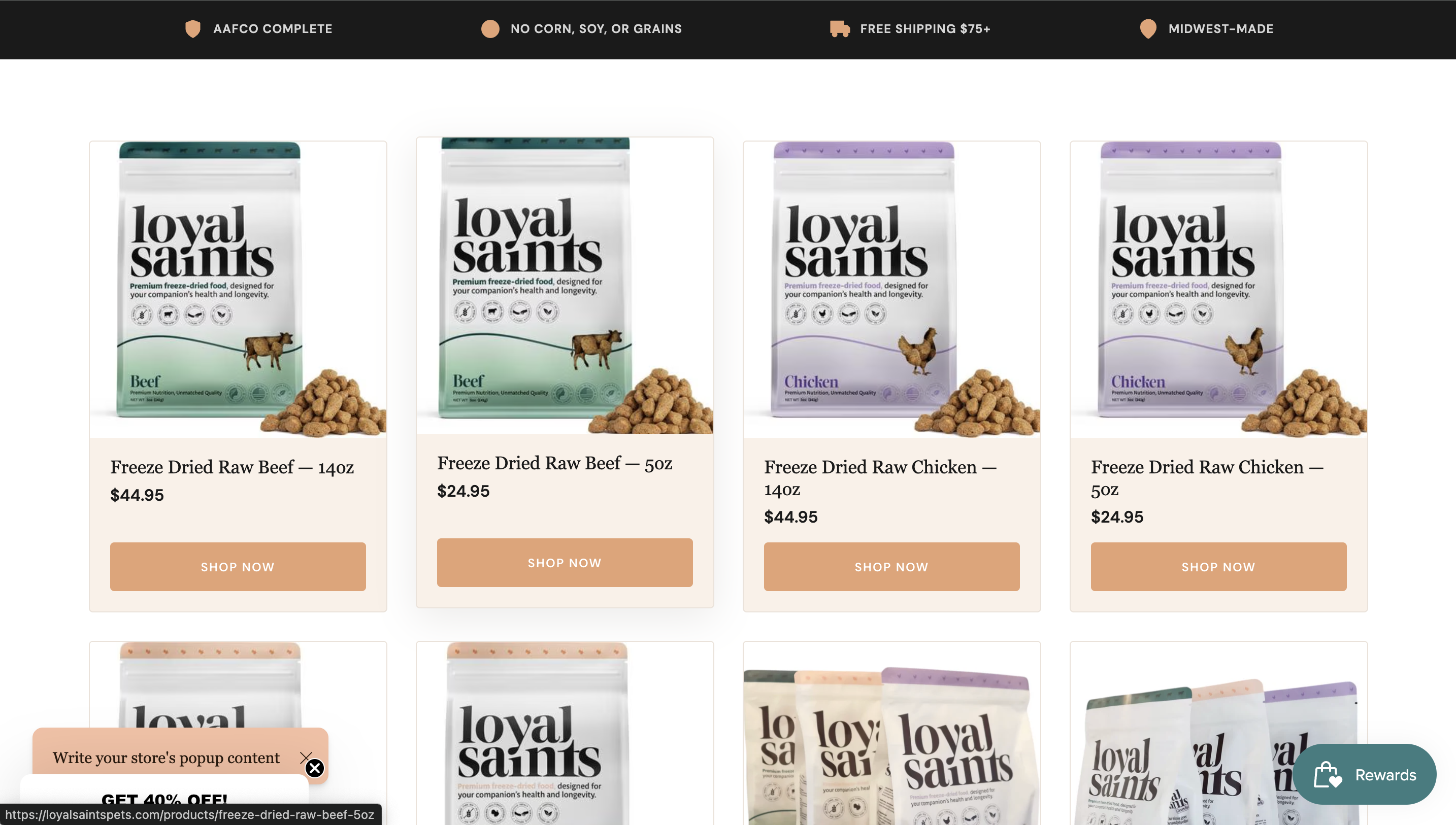
Loyalsaintspets offers freeze-dried raw chicken and freeze-dried raw beef made from human-grade, whole ingredients with no fillers, no additives, and no guesswork. Both products meet AAFCO nutritional standards, which means the calcium-to-phosphorus balance and micronutrient profile are already handled for you. Freeze-drying preserves the nutritional integrity of raw food while eliminating the handling risks of fresh raw meat. You get the benefits of a raw diet in a format that stores easily, portions cleanly, and travels well. For dog owners who want to feed their dog like family without spending hours in the kitchen, Loyalsaintspets makes that possible.
FAQ
What is a raw diet for dogs?
A raw diet for dogs consists of uncooked muscle meat, raw meaty bones, organ meats, and optional produce or supplements. The two main frameworks are BARF and PMR, both designed to meet canine nutritional needs through whole, minimally processed ingredients.
Is raw food safe for dogs?
Raw food carries real bacterial risks, including Salmonella, E. coli, and Listeria, which can affect both dogs and human family members. Commercial raw diets meeting AAFCO standards reduce these risks significantly compared to homemade preparations.
How do I transition my dog to a raw diet?
Transition over 7–14 days by gradually replacing your dog’s current food with raw, starting at 25% and increasing weekly. Expect loose stools for the first 2–4 days as a normal digestive adjustment.
Can puppies eat a raw diet?
Puppies can eat raw diets, but their calcium and phosphorus requirements are higher and more precise than adult dogs. A veterinary nutritionist should review any raw diet fed to a growing puppy to prevent skeletal damage from mineral imbalances.
What is the difference between BARF and PMR?
BARF includes 10% fruits and vegetables alongside meat, bone, and organs. PMR uses only animal-sourced ingredients at 80% muscle meat, 10% bone, and 10% organs, with no plant matter included.


