
TL;DR:
- Freeze drying removes most moisture from pet food without heat, preserving nearly all its nutrients and flavors. It creates shelf-stable, high-quality food that supports canine health and palatability. However, safety depends on ingredient quality and secondary pathogen control like HPP.
Freeze drying, technically known as lyophilization, is a preservation method that removes 95% to 99% of moisture from pet food by converting frozen water directly into vapor under vacuum at low temperatures. That single process preserves nearly the full nutritional profile of raw ingredients without any cooking, additives, or refrigeration. The freeze drying process for pets has become the gold standard in premium raw pet food because it delivers real food nutrition in a shelf-stable, convenient form. If you want your dog to eat closer to nature without the mess of raw feeding, understanding how this works gives you a real advantage.
How does the freeze drying process work for pet food?
The freeze drying process follows four distinct stages, each critical to the final product’s quality.
- Freezing. Raw pet food is frozen solid, typically to temperatures well below zero. This converts all moisture in the food into ice crystals, locking the cellular structure in place.
- Primary drying (sublimation). The frozen food moves into a vacuum chamber. Pressure drops dramatically, and the ice converts directly from solid to vapor without passing through a liquid phase. This is sublimation. No heat is applied, so proteins, enzymes, and vitamins remain intact.
- Secondary drying (desorption). The chamber temperature rises slightly, pulling out any remaining bound moisture. This stage brings total moisture content down to the target level, typically below 3%.
- Sealing. The finished product is sealed immediately in airtight, oxygen-free packaging to prevent moisture from re-entering.
The entire commercial cycle takes several hours per batch. Home freeze drying runs significantly longer. Home freeze drying cycles take 24–48 hours with specialized equipment, and dry ice methods can stretch to three or four weeks with far less reliable results.
One quality check separates properly freeze dried food from food that will spoil in storage. The tackiness test tells you everything: properly dried food snaps cleanly and feels brittle. If it feels soft or tacky, residual moisture remains and spoilage risk is real.
Pro Tip: If you are making freeze dried treats at home, always let the food cool completely before running the tackiness test. Warm food can feel dry when it is not.
What nutritional and flavor benefits does freeze dried pet food offer?
Freeze drying preserves approximately 95% of the original nutrient profile in raw ingredients, including heat-sensitive vitamins like B and C, active digestive enzymes, and amino acids. That number matters because most other preservation methods cannot come close to it.
The comparison with dehydration is where pet owners often get surprised. Dehydration uses heat, typically between 130°F and 165°F, to evaporate moisture. That heat degrades enzymes and reduces vitamin content. Freeze drying operates at sub-zero temperatures throughout the critical drying phase, so biochemical integrity stays intact. You can read a detailed breakdown of how these two methods differ in terms of nutrient retention here.
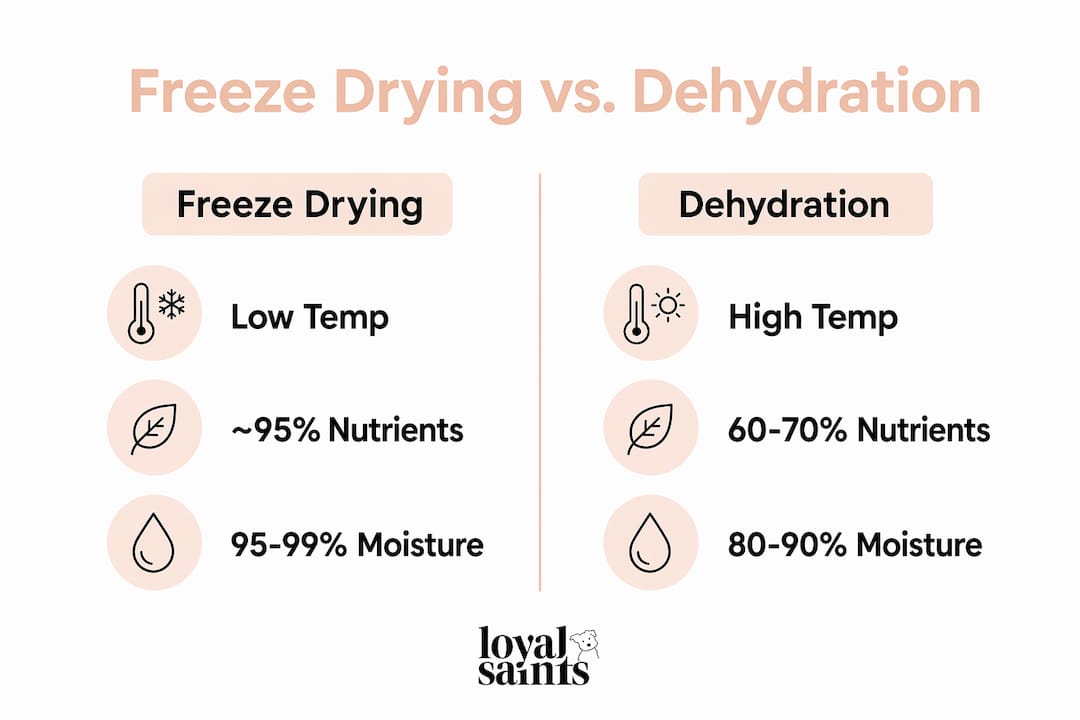
| Preservation method | Temperature used | Nutrient retention | Moisture removed |
|---|---|---|---|
| Freeze drying | Sub-zero to ~70°F | ~95% | 95%–99% |
| Dehydration | 130°F–165°F | Reduced (heat-sensitive loss) | 70%–90% |
| Cooking/canning | 212°F+ | Significantly reduced | Varies |
Flavor concentration is another real advantage. Freeze dried food is approximately 50 times more flavorful than the original raw ingredient because moisture removal concentrates every flavor compound. That is why picky eaters and dogs with reduced appetites often respond so well to freeze dried food. The palatability boost is not a marketing claim. It is a direct result of the chemistry.
Key nutritional advantages at a glance:
- Enzymes that support digestion remain active
- Fat-soluble vitamins (A, D, E, K) are not degraded by heat
- Protein structure stays intact, supporting muscle maintenance
- Natural flavor compounds concentrate, improving palatability
- Texture rehydrates well when water is added before serving
What safety considerations apply to freeze dried pet food?
Freeze drying is a preservation process, not a sterilization process. Pathogens like Salmonella can survive the freeze drying cycle. Moisture removal slows microbial growth significantly, and moisture below 3% prevents bacterial growth during storage, but it does not eliminate bacteria that were present in the raw ingredients before processing.
This is why ingredient quality is the first line of defense. Human-grade, high-quality proteins sourced from reputable suppliers carry a lower pathogen load from the start. Freeze drying then locks that quality in rather than masking poor sourcing.
The second line of defense is High-Pressure Processing, commonly called HPP. HPP applies extreme pressure to inactivate pathogens without using heat, so the nutritional profile stays intact. Many premium freeze dried pet food producers use HPP as a secondary kill step before or after freeze drying.
Key safety points every pet owner should know:
- Freeze drying does not sterilize food. It preserves it.
- Ingredient sourcing quality directly determines pathogen risk.
- HPP is the most effective secondary kill step that does not compromise nutrients.
- Wash your hands after handling raw or freeze dried pet food.
- Consult your veterinarian if your dog is immunocompromised before switching to any raw-based diet.
Pro Tip: When evaluating freeze dried pet food brands, ask whether HPP is part of the production process. Brands that use it are being transparent about safety, and that transparency matters.
How should you store freeze dried pet food for maximum shelf life?
Proper storage is what separates a product that lasts two years from one that spoils in two months. Freeze dried pet food stored in airtight, vacuum-sealed packaging lasts 1 to 2 years without refrigeration. Once you open the package, that protection changes.
Follow these storage practices to protect your investment:
- Keep unopened bags in a cool, dry location away from direct sunlight.
- After opening, reseal the bag tightly or transfer food to an airtight container.
- Avoid storing near heat sources like ovens, dishwashers, or sunny windowsills.
- Never store in a humid environment. Moisture is the primary enemy of freeze dried food.
- Check for the tackiness test before each serving if you have had the bag open for several weeks.
Signs of spoilage include an off smell, visible mold, or a soft and tacky texture instead of the expected crispness. If any of those appear, discard the food. For a full breakdown of best practices, Loyalsaintspets has a detailed guide on safe storage methods worth bookmarking.
The packaging itself matters as much as the environment. Oxygen absorbers and nitrogen flushing inside sealed bags extend shelf life by preventing oxidation. When you buy freeze dried pet food, look for packaging that specifies one or both of those features.
Can pet owners freeze dry their pet’s food at home?
Home freeze drying is possible, but it requires a realistic understanding of the costs and challenges involved. A dedicated home freeze dryer is the minimum requirement. These machines are not cheap, and they consume significant electricity during each cycle.
The process itself demands patience. Home freeze drying takes 24–48 hours per batch under ideal conditions. Dry ice methods, which some pet owners attempt as a lower-cost alternative, can take three to four weeks and produce inconsistent results. Uneven drying is a real risk with both approaches, and unevenly dried food creates pockets of moisture that support bacterial growth.
Safety is the most serious concern with DIY freeze drying. Raw pet food can carry zoonotic pathogens, meaning bacteria that transfer between animals and humans. Without HPP or another validated kill step, home freeze dried food carries a higher safety risk than commercially produced products. If you choose to freeze dry at home, source human-grade ingredients and follow strict hygiene protocols throughout.
Pro Tip: Always weigh your food before and after a home freeze drying cycle. A significant weight loss confirms moisture removal. If the weight drop is lower than expected, run an additional drying cycle before sealing.
Key takeaways
Freeze drying preserves up to 95% of raw nutrients, concentrates flavor, and extends shelf life to 1–2 years, making it the most nutritionally complete preservation method available for pet food.
| Point | Details |
|---|---|
| Nutrient preservation | Freeze drying retains ~95% of raw nutrients, far more than dehydration or cooking. |
| Flavor concentration | Moisture removal concentrates flavor up to 50 times, improving palatability for picky dogs. |
| Safety requires sourcing | Freeze drying does not kill pathogens; ingredient quality and HPP are the real safety controls. |
| Storage is critical | Airtight, vacuum-sealed packaging in a cool, dry place preserves quality for 1–2 years. |
| Home drying has real limits | DIY cycles take 24–48 hours minimum and carry higher safety risks without secondary kill steps. |
Why I think freeze drying is the smartest nutrition choice most pet owners overlook
I have spent years looking at pet food labels, talking to veterinarians, and watching dog owners struggle to find food their dogs actually thrive on. The freeze drying conversation almost always gets oversimplified. People hear “raw food” and think mess, bacteria, and complexity. They hear “freeze dried” and assume it is just a marketing upgrade on kibble.
Neither assumption is right. Freeze drying is genuinely different from every other preservation method because it is the only one that does not trade nutrition for convenience. Cooking destroys enzymes. Dehydration degrades heat-sensitive vitamins. Freeze drying does neither. The advantages of freeze dried dog food go beyond marketing language. They are grounded in the actual chemistry of how the process works.
What I tell pet owners who are on the fence: the safety concern is real but manageable. Buy from brands that use human-grade ingredients and HPP. Store the food correctly. That combination gives you the nutritional upside of raw feeding with a safety profile that is far more controlled than home-prepared raw diets.
The home freeze drying trend is interesting, but I would not recommend it as a primary feeding strategy. The equipment cost, time commitment, and safety variables make it impractical for most households. Commercially produced freeze dried food from a brand you trust is the better call for the vast majority of dog owners.
The one thing I wish more people understood: freeze dried food is not expensive pet food. It is concentrated nutrition. When you account for the nutrient density and the fact that you are feeding less volume per meal, the cost per serving is often closer to premium kibble than it first appears.
— Kristina
Loyalsaintspets freeze dried food worth trying
If you want your dog eating food that actually delivers on the nutritional promise of freeze drying, Loyalsaintspets makes it straightforward.
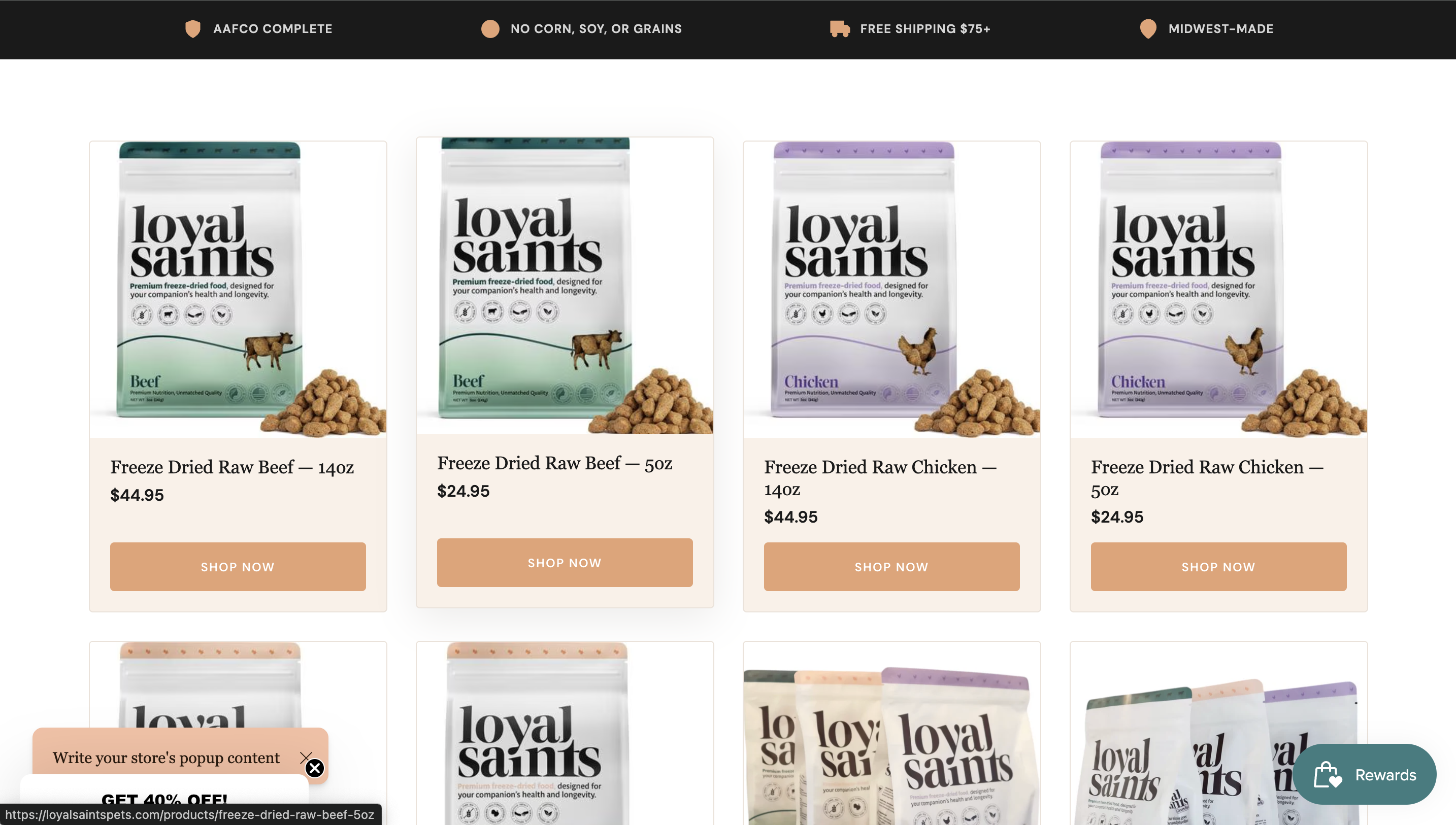
Loyalsaintspets uses human-grade proteins and whole ingredients with no fillers, no artificial additives, and AAFCO-compliant formulations. The freeze dried raw chicken and freeze dried raw beef options give your dog the concentrated nutrition and flavor that freeze drying does best. Both are shelf-stable, easy to serve, and built for dogs whose owners treat them like family. If you want to understand the full reasoning behind why Loyalsaintspets chose this preservation method, the why freeze dried page lays it out clearly. Free shipping is available on qualifying orders.
FAQ
What is the freeze drying process for pet food?
Freeze drying removes 95%–99% of moisture from raw pet food by freezing it solid and then sublimating the ice into vapor under vacuum at low temperatures. No heat is used, so nutrients and enzymes stay intact.
Is freeze dried pet food safe for dogs?
Freeze drying preserves food but does not sterilize it. Brands that source human-grade ingredients and use High-Pressure Processing as a secondary kill step deliver the safest freeze dried products available.
How long does freeze dried pet food last?
Properly stored freeze dried pet food lasts 1 to 2 years unopened in airtight, vacuum-sealed packaging kept in a cool, dry place. Once opened, reseal tightly and use within the timeframe listed on the package.
How is freeze drying different from dehydration?
Dehydration uses heat to evaporate moisture, which degrades heat-sensitive vitamins and enzymes. Freeze drying operates at sub-zero temperatures, preserving approximately 95% of the original nutrient profile.
Can I freeze dry my dog’s food at home?
Yes, but home freeze drying requires specialized equipment, takes 24–48 hours per batch, and carries higher safety risks without a secondary pathogen kill step like HPP. Commercial freeze dried food from a trusted brand is the more reliable option for most pet owners.


