
If your dog needs to lose weight, the research points to one clear pattern: feed fewer calories, but keep protein high enough to protect muscle.
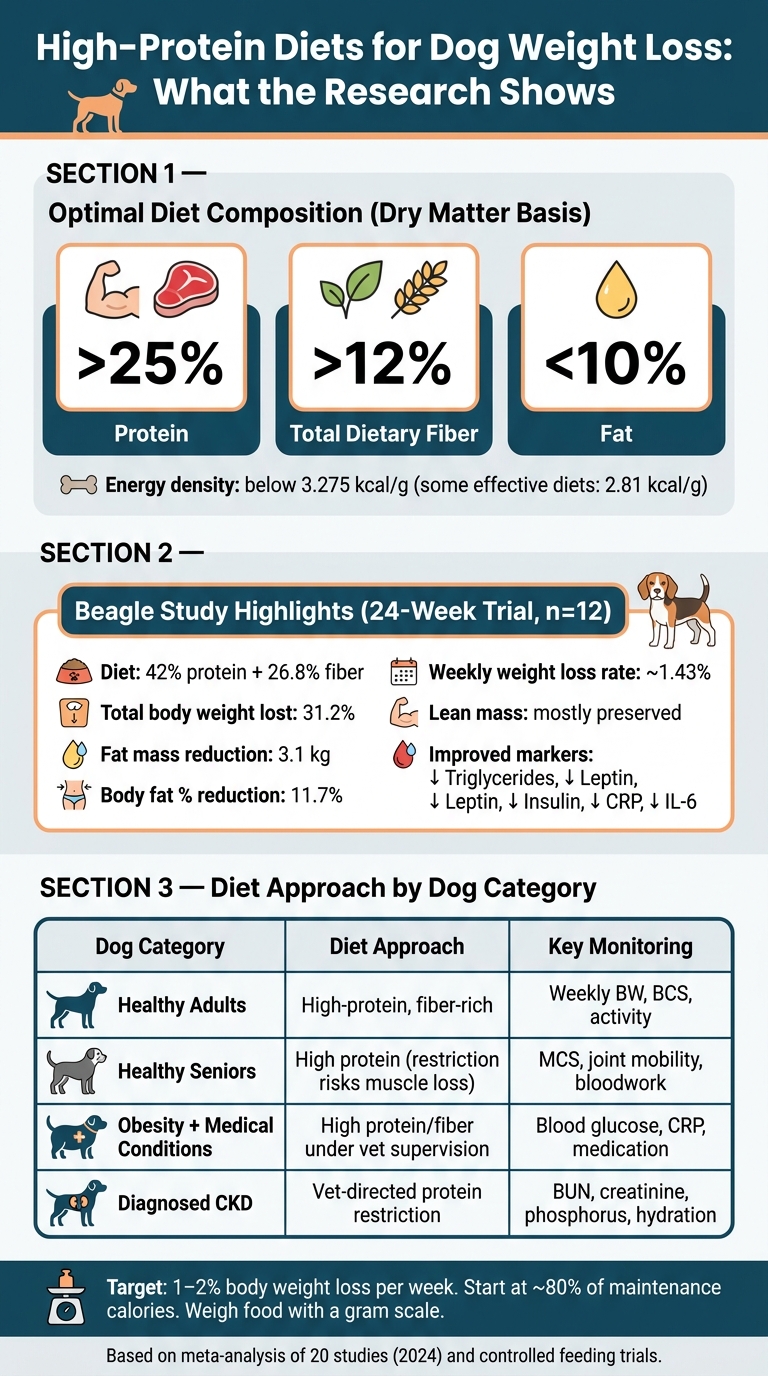
From the studies covered here, the diets that worked best were usually high in protein, high in fiber, low in fat, and lower in calorie density. A 2024 review of 20 studies found the strongest results with diets over 25% protein, over 12% total fiber, and under 10% fat on a dry-matter basis. In practice, the goal is not just lower body weight. It’s more fat loss, less muscle loss, with a pace of about 1% to 2% body-weight loss per week.
Here’s the short version:
- Protein per calorie matters most when food intake drops
- Fiber helps with hunger control between meals
- Low-fat, lower-calorie diets tend to work better for weight loss
- Muscle retention matters because energy use often drops during weight loss
- Healthy senior dogs usually still need good protein intake
- Dogs with kidney disease, diabetes, heart disease, or osteoarthritis need vet input first
- Portion control is what drives results, not protein alone
- Use a complete and balanced diet that meets AAFCO standards
One study in overweight Beagles used a diet with 42% protein and 26.8% fiber for 24 weeks. The dogs lost 31.2% of starting body weight, body fat went down, and lean mass stayed mostly steady. The same study also reported lower triglycerides, leptin, insulin, CRP, and IL-6.
My takeaway: a high-protein plan can help, but only if it is measured, balanced, and matched to your dog’s health status.
What Studies Show About High-Protein Diets in Dogs
High-Protein Dog Weight Loss Diet: Key Numbers & Guidelines
The strongest results come from diets that cut fat while helping dogs keep muscle. And the research lines up on that point.
A 2024 meta-analysis covering 20 studies found that diets with protein above 25% and total dietary fiber above 12% on a dry matter basis worked best for weight loss and lean-mass retention [1].
High-Protein, High-Fiber Diets in Overweight Dogs
That same pattern shows up in controlled feeding trials. In one study, 12 overweight spayed female Beagles were put on a calorie-restricted diet with 42% protein and 26.8% total dietary fiber on a dry matter basis for 24 weeks. By the end, the dogs had lost 31.2% of their starting body weight. Fat mass dropped by 3.1 kg, and body fat percentage fell by 11.7%. Lean mass stayed mostly intact during the study [3].
The same trial also reported drops in inflammatory markers, namely C-reactive protein (CRP) and interleukin-6 (IL-6). Researchers also saw lower serum triglycerides, plus lower leptin and insulin levels. Weekly weight loss stayed steady at about 1.43% [3].
Fiber seems to help in a very practical way too. Dogs eating the high-protein, high-fiber diet consumed about half as much energy after a restricted meal, which may help curb hunger between meals [2].
High-Protein, Low-Carbohydrate Diets and Body Composition
Other trials suggest a similar effect when carbohydrate levels are lower. When researchers compare high-protein, low-carbohydrate (HPLC) diets with higher-carbohydrate options, HPLC diets seem to need fewer calories to maintain body weight. In plain terms, dogs may need less energy on those diets to stay at the same weight [4].
Dogs on these diets also had lower leptin and insulin levels, along with a more favorable leptin-to-ghrelin ratio in a fasted state [4].
The meta-analysis points in the same direction. Diets with protein above 25%, total dietary fiber above 12%, and fat below 10% on a dry matter basis showed the strongest results for weight loss and lean mass preservation across the studies reviewed [1].
Cardiometabolic Findings in Healthy and Clinical Dogs
Across different study designs, from longitudinal feeding trials to randomized crossover trials, the findings tell a pretty consistent story: more protein, more fiber, and less fat led to the most steady improvements in body composition, appetite control, and metabolic markers [1][3][4].
Those results are promising, but diet safety and nutritional balance still matter just as much.
sbb-itb-b2753ee
Why Higher Protein Can Support Weight Loss and Long-Term Health
Higher protein, especially when paired with fiber, can help with weight loss in a few clear ways. It helps hold on to lean mass, can make dogs feel fuller between meals, and may support a healthier gut. Put simply, the research points to three main drivers: muscle preservation, satiety, and gut effects.
Muscle Preservation, Energy Use, and Mobility
When calories drop, low protein can lead to muscle loss. That’s a problem because muscle burns more energy at rest than fat does. So if a dog loses too much lean mass during a weight-loss plan, resting energy use can fall too. That can make progress harder to maintain.
Higher-protein diets give the body the amino acids it needs to maintain lean tissue during a calorie deficit. In plain English: they help steer weight loss more toward fat loss instead of muscle loss. Keeping muscle also supports mobility, which matters a lot when a dog needs to stay active during a weight-loss plan.
Satiety, Metabolic Markers, and Inflammation
Protein and fiber work well together here. They can help dogs stay fuller between meals, which can make a feeding plan easier to stick with. In one study, dogs ate less after the high-protein, high-fiber meal, which supports better adherence to weight-loss plans [2]. That may also help cut down on food-seeking behaviors like begging.
The same high-protein, high-fiber diet was linked with lower triglycerides, leptin, insulin, C-reactive protein (CRP), and interleukin-6 (IL-6), which points to metabolic effects that go beyond the number on the scale [3].
Microbiome and Digestive Effects of Protein Plus Fiber
Protein plus fiber may also shape what happens in the gut. Dogs on this type of diet showed increases in Bifidobacterium and Lachnospira, along with lower fecal ammonia and secondary bile acids [3]. That suggests a better gut setting during weight loss.
Still, this isn’t about protein by itself. These effects depend on a complete, balanced diet with the right mix of nutrients. Long-term use also calls for sound formulation and veterinary monitoring.
Safety, Monitoring, and Choosing a Complete Diet
Once the diet supports fat loss, the next job is making sure it’s safe, nutritionally complete, and a good fit for the dog’s health.
Kidney Health, Senior Dogs, and When to Involve a Veterinarian
Protein concerns are often misunderstood. The issue is diagnosed chronic kidney disease (CKD), not protein itself in healthy dogs. If a dog has CKD, protein restriction needs to be directed by a veterinarian to reduce kidney workload. The main things to track are BUN (blood urea nitrogen), creatinine, phosphorus, and hydration.
For healthy senior dogs, cutting protein can backfire. Older dogs are already at risk for age-related muscle loss, called sarcopenia, and enough protein helps slow that process. If a senior dog does not have a CKD diagnosis, lowering protein may do more harm than good.
A veterinarian should step in before starting a weight-loss plan if a dog has diabetes, osteoarthritis, or heart disease. High-protein weight-loss diets can affect insulin needs and glucose control, so dogs with diabetes need close blood glucose checks and, in some cases, medication changes [3][5].
| Dog Category | Diet Approach | Monitoring Priorities |
|---|---|---|
| Healthy Adults | High-protein, fiber-rich diet; strong candidate for weight loss [1][2] | Weekly body weight (BW), body condition score (BCS), and activity levels |
| Healthy Seniors | High protein is important; restriction risks muscle wasting | Muscle condition score (MCS), joint mobility, and routine bloodwork and body condition scoring |
| Dogs with obesity and medical conditions | High protein/fiber under veterinary supervision | Blood glucose, CRP, and medication dosage adjustments [3] |
| Diagnosed CKD | Veterinary-directed protein restriction required | BUN, creatinine, phosphorus, and hydration [5] |
AAFCO Standards, Balanced Formulation, and Ingredient Quality
After the health check, the next step is formulation. A weight-loss food still has to meet the dog’s full nutrient needs, even when calories drop.
A high-protein diet should be complete and balanced, not just loaded with one nutrient. In the U.S., AAFCO (Association of American Feed Control Officials) sets the standard for what counts as nutritionally complete for a dog’s life stage. Check the label for an AAFCO adequacy statement showing that the food meets adult maintenance requirements. That matters even more during calorie restriction, because the risk of missing key amino acids, vitamins, minerals, and fatty acids goes up.
Calorie density and ingredient quality also matter. Weight-loss diets that work well often have an energy density below 3.275 kcal/g [1]. Some research diets that performed well went as low as 2.81 kcal/g [3]. You’ll also often see add-ins like L-carnitine, fish oil, and antioxidants such as vitamins C and E in better-planned formulas [3]. Pick a food that is complete and balanced for the dog’s life stage.
How to Use a High-Protein Diet in a Measured Weight-Loss Plan
With the right food in place, portion control is what drives the result.
Aim for 1% to 2% body-weight loss per week [3][5]. A common starting point is about 80% of maintenance calories, then adjust based on weekly progress [3]. Use a gram scale to weigh food. Measuring cups are too inconsistent for a weight-loss plan.
Track these each week:
- Body weight
- Body condition score (BCS)
If weight loss stalls for two weeks, reduce the daily portion by 10% [5]. For dogs with osteoarthritis, diabetes, or heart disease, veterinary input matters a lot when setting calorie targets.
Conclusion: What the Evidence Means for Dog Owners
The evidence points in the same direction: restricted diets that were high in protein and fiber helped overweight dogs lose fat while keep lean mass.
Those diets also improved appetite control and several metabolic markers. That matters for day-to-day weight loss, because when a dog feels fuller and its metabolism responds well, sticking with the plan gets easier.
A meta-analysis of 20 studies found that diets with protein above 25%, total dietary fiber above 12%, and energy density below 3.275 kcal/g were linked with good effects on weight loss and body composition [1]. Protein plays a big role, but calorie control and a complete diet matter even more. A veterinarian can help shape the plan, set the right calorie target, and track progress as your dog's weight changes. Keeping lean mass supports mobility and long-term quality of life.
FAQs
How do I know if my dog needs a high-protein weight-loss diet?
Talk with your veterinarian to see whether a high-protein weight-loss diet makes sense for your dog. They can check your dog’s body condition and overall health before recommending a plan.
If your dog needs to lose weight, a high-protein, low-starch diet can help cut excess body fat while helping your dog keep lean muscle. It can also help your dog feel fuller, which may mean less begging between meals.
Can a high-protein diet be unsafe for some dogs?
Yes. High-protein diets can help many dogs manage their weight, but they’re not the right fit for every pet.
For some dogs, they can be unsafe. That includes dogs with liver disease or kidney disease. And there’s another catch: some high-protein foods also pack a lot of calories or fat. If that happens, the diet can work against your goal by leading to weight gain. In dogs that are prone to pancreatitis, higher-fat formulas can also trigger a flare-up.
Dogs with protein allergies need extra attention too. And if you’re changing your dog’s food, go slowly. A gradual switch can help cut down on stomach upset.
What should I look for on a dog food label?
For weight management, look for dog foods with high protein - ideally above 25% - to help preserve lean mass during weight loss. Research also points to formulas with energy density below 3.275 kcal, total dietary fiber above 12%, and fat below 10%.
Loyal Saints makes freeze-dried raw dog food in the USA with human-grade, all-natural ingredients. Its formulas are high in protein and formulated to meet AAFCO All Life Stages profiles.


