
TL;DR:
- Freeze-dried dog food is safe only when manufacturers apply validated pathogen-reduction steps like HPP. Proper handling and storage by owners are essential to prevent contamination and ensure safety.
Freeze-dried dog food is safe for most dogs when it comes from a manufacturer that uses validated pathogen-reduction steps and you follow proper handling practices at home. The freeze-drying process removes moisture to slow bacterial growth, but it does not sterilize the food. Pathogens like Salmonella, E. coli, and Listeria can survive in freeze-dried ingredients. Your dog’s safety depends on three things: the manufacturer’s kill steps, the product’s AAFCO compliance, and how you store and serve the food. Understanding all three puts you firmly in control.
Is freeze-dried dog food safe compared to other pet food types?
Freeze-dried dog food sits in a unique category called freeze-dried raw. It shares the nutritional profile of raw food but has a shelf-stable, dry texture. That combination makes it appealing, but it also means the safety rules are different from those for kibble or canned food.
Kibble is cooked at high temperatures, which kills pathogens. Canned food is heat-sterilized. Freeze-dried raw food skips heat entirely. The freeze-drying process removes 98–99% of moisture through sublimation, which turns ice directly into vapor without passing through a liquid stage. That low moisture level inhibits bacterial growth but does not eliminate bacteria already present in the ingredients.
Here is a quick comparison of common dog food preservation methods:
| Preservation Method | Kills Pathogens? | Nutrient Retention | Shelf Stability |
|---|---|---|---|
| High-heat kibble extrusion | Yes | Moderate | High |
| Canning (retort) | Yes | Low to moderate | Very high |
| Freeze-drying | No (without kill step) | High | High |
| Dehydration | No | Moderate | Moderate |
| Raw frozen | No | High | Low |
The key takeaway from this table is that freeze-drying leads on nutrient retention but trails on pathogen elimination unless an additional kill step is applied. That gap is exactly where your attention as a dog owner should go.
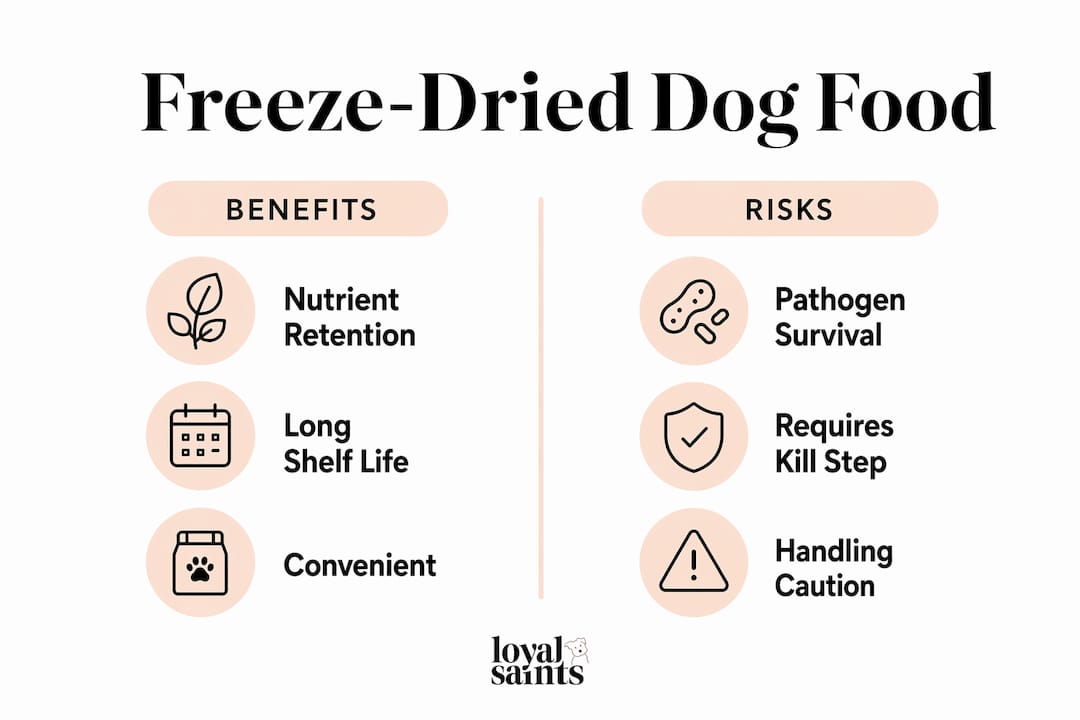
The benefits of freeze-dried dog food are real. Vitamins, enzymes, and amino acids survive the process far better than they do in cooked foods. The problem is that pathogens survive too.
Does freeze-dried dog food eliminate pathogens?
Freeze-drying does not sterilize food. Pathogens like Salmonella, E. coli, and Listeria can survive in freeze-dried raw ingredients because the process reduces water activity without applying heat. Reduced water activity slows microbial growth but does not kill bacteria that were present before processing began.
This is the most misunderstood fact in freeze-dried pet food. Many dog owners assume that because the food is dry and shelf-stable, it must be safe in the same way kibble is. That assumption is incorrect.
“Drying slows microbial growth but doesn’t reliably kill pathogens without additional validated control steps such as HPP.” — KibbleIQ
The solution the industry uses is called a kill step. A kill step is any validated process that reliably reduces pathogen levels to a safe threshold. The most common kill step in freeze-dried pet food is High-Pressure Processing, or HPP. HPP applies extreme pressure to inactivate pathogens like Salmonella and E. coli without using heat, which means it preserves the nutritional quality of the food at the same time.
HPP is not a perfect solution. It does not eliminate all spore-forming bacteria, including Clostridium botulinum. That is why responsible manufacturers combine HPP with careful sourcing, testing, and quality controls rather than relying on it alone.
Real-world recalls show what happens when kill steps are absent or inadequate. Darwin’s Natural Pet Products faced recalls after contaminated lots were linked to E. coli O157:H7. The FDA’s position is clear: freezing and refrigeration do not kill pathogens in raw pet food. The same logic applies to freeze-drying without a validated kill step.
Key pathogen risks to know:
- Salmonella can infect both dogs and humans through contact with contaminated food or surfaces.
- E. coli O157:H7 is particularly dangerous for children and immunocompromised adults in the household.
- Listeria poses serious risk to pregnant women and elderly individuals.
The FDA’s regulatory framework focuses on validated kill steps rather than the preservation method name. A product labeled “freeze-dried” carries no automatic safety guarantee. The manufacturer’s process is what matters.
How to evaluate freeze-dried dog food safety when choosing a product
Choosing a safe freeze-dried dog food comes down to asking the right questions before you buy. Not all products are created equal, and marketing language can obscure the details that actually matter.
-
Ask about kill steps. Look for brands that explicitly state they use HPP or another validated pathogen-reduction process. If a brand’s website or packaging does not mention a kill step, contact them directly. Transparency here is a strong signal of quality.
-
Check for AAFCO compliance. Nutritional safety depends on AAFCO nutrient profiles. A label that says “complete and balanced” means the food meets the minimum nutritional requirements for your dog’s life stage. If the label says “for supplemental feeding only” or “topper,” the product is not designed as a sole diet.
-
Distinguish full diet from topper. Many freeze-dried products are sold as meal toppers or mixers. Using a topper as a full diet creates nutritional gaps over time. Read the label carefully and use the product as directed.
-
Review recall history. The FDA maintains a public database of pet food recalls. A brand with a clean recall history and documented safety protocols is a better choice than one with a history of contamination events.
-
Use a selection checklist. A nutrient-rich food checklist helps you compare products systematically rather than relying on front-of-bag claims.
Pro Tip: Look for the phrase “HPP processed” or “high-pressure processed” on the packaging or the brand’s FAQ page. If you cannot find it, email the company and ask. A reputable manufacturer will answer clearly and quickly.
Watch out for marketing language that overstates safety. Phrases like “natural preservation” or “raw and pure” describe the ingredient philosophy, not the pathogen control process. Those two things are separate.

Safe handling, storage, and feeding practices for freeze-dried dog food
Even a well-made freeze-dried product requires careful handling at home. Contamination risk shifts from the manufacturing stage to your kitchen during rehydration and serving. Treat freeze-dried raw food the same way you would treat raw meat.
Follow these practices every time you prepare and serve freeze-dried food:
- Rehydrate with clean, cold water. Use filtered or tap water. Do not rehydrate with broth that contains onion or garlic, which are toxic to dogs.
- Sanitize all utensils and surfaces immediately. Wash bowls, spoons, and prep surfaces with hot soapy water after every use.
- Avoid cross-contamination. Keep freeze-dried food away from human food prep areas. Use a dedicated bowl and scoop.
- Discard leftovers promptly. Rehydrated food left at room temperature for more than two hours should be thrown away.
- Store dry food correctly. Keep sealed bags in a cool, dry place away from direct sunlight. Proper freeze-dried food storage extends shelf life and prevents moisture reabsorption, which can reactivate microbial growth.
Pro Tip: If you have infants, elderly family members, or anyone who is immunocompromised in your home, pathogen shedding from dogs can pose a health risk even when the dog appears healthy. Use gloves during food prep and wash hands thoroughly after handling the food or your dog’s bowl.
The AVMA and most veterinary organizations do not recommend raw diets, including freeze-dried raw, for routine feeding without careful risk assessment. That does not mean freeze-dried food is off the table. It means you should make an informed choice and manage the risks actively.
Key Takeaways
Freeze-dried dog food is safe when manufacturers use validated kill steps like HPP and dog owners follow raw-handling hygiene practices at home.
| Point | Details |
|---|---|
| Freeze-drying does not sterilize | Pathogens like Salmonella and E. coli can survive; a kill step like HPP is required for reliable safety. |
| HPP is the gold standard | High-Pressure Processing reduces bacterial loads without heat, preserving nutrients and improving safety. |
| AAFCO compliance is non-negotiable | Only products labeled “complete and balanced” qualify as a full diet; toppers are supplements, not meals. |
| Handling is a critical risk point | Rehydration and serving are the most common contamination points; treat prep like raw meat handling. |
| Vulnerable households need extra care | Households with infants, elderly, or immunocompromised members should apply stricter hygiene protocols. |
My honest take on freeze-dried dog food safety in 2026
After spending years watching the freeze-dried pet food category grow, I have one consistent observation: the safety gap between brands is enormous, and most dog owners never see it because it is buried in manufacturing documentation rather than on the label.
The freeze-dried format genuinely delivers on nutrient retention. Dogs eating high-quality freeze-dried food often show better coat condition, improved digestion, and more energy. Those results are real. But I have seen too many dog owners assume that “natural” and “raw” automatically mean “safe.” They do not.
The brands I trust are the ones that publish their kill-step process without being asked. If a company uses HPP, they should say so clearly. If they use another validated method, they should explain it. Silence on this point is a red flag, not a neutral signal.
My practical advice: start with a small bag from any new brand, check their recall history on the FDA website, and ask them directly about their pathogen control process before committing to a larger purchase. For households with young children or anyone with a compromised immune system, I recommend discussing the choice with your veterinarian before switching to a freeze-dried raw diet. The food can be a great fit. The decision just deserves more than a glance at the front of the bag.
— Kristina
Premium freeze-dried options worth trying at Loyalsaintspets
Dog owners who want the nutritional benefits of raw food without the freezer hassle have good options at Loyalsaintspets.
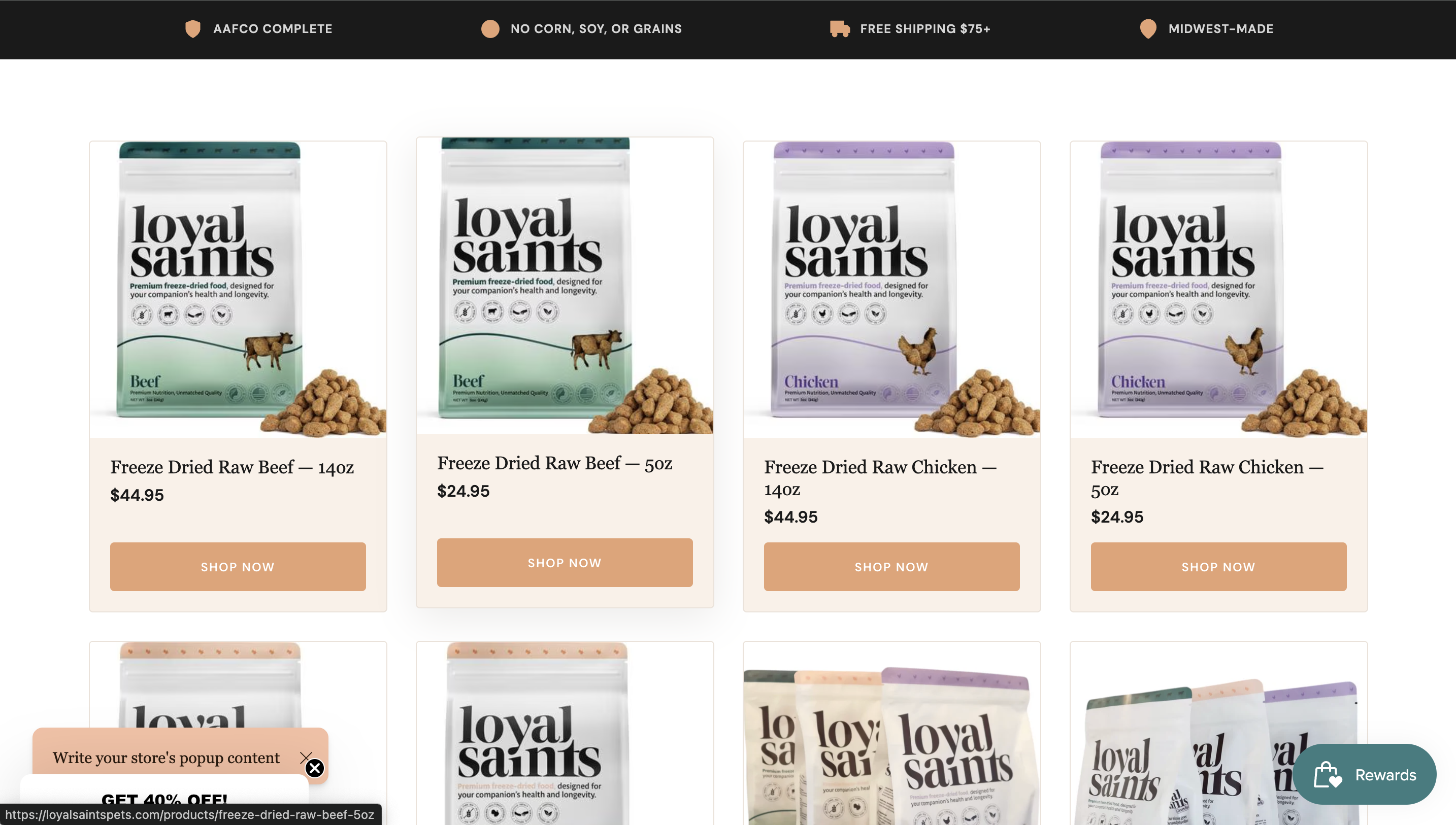
Loyalsaintspets offers freeze-dried raw chicken and freeze-dried raw beef made from human-grade, whole ingredients with no fillers or artificial additives. Every product is formulated to meet AAFCO standards for complete and balanced nutrition. The chicken option comes in both a 14oz bag for regular feeding and a 5oz trial size if you want to test it with your dog first. Free shipping is available on qualifying orders, so stocking up is straightforward. If you want to understand the full process before buying, the why freeze-dried page walks through the science and sourcing behind every product.
FAQ
Does freeze-drying kill bacteria in dog food?
Freeze-drying removes moisture but does not kill pathogens like Salmonella or E. coli. A validated kill step such as High-Pressure Processing is required to reliably reduce bacterial loads.
What does AAFCO complete and balanced mean on dog food?
AAFCO complete and balanced means the food meets minimum nutritional requirements for a specific life stage. Products without this label should only be used as toppers or supplements, not as a full diet.
How safe is freeze-dried dog food for puppies?
Freeze-dried raw food carries the same pathogen risks for puppies as for adult dogs, and puppies have less developed immune systems. Choose a product with a documented kill step and consult your veterinarian before feeding freeze-dried raw to a puppy.
Can freeze-dried dog food make humans sick?
Yes. Pathogens in freeze-dried raw food can spread to humans through contact with the food, the dog’s bowl, or the dog itself. Households with infants, elderly members, or immunocompromised individuals should take extra hygiene precautions.
How should I store freeze-dried dog food after opening?
Store opened bags in a cool, dry place with the bag sealed tightly. Keep the food away from moisture and direct sunlight. Rehydrated portions should be refrigerated and used within 24 hours or discarded.


