
TL;DR:
- Natural dog food uses minimally processed ingredients that improve nutrient absorption and overall health.
- It retains more vitamins, fats, and proteins than conventional kibble, supporting a shinier coat, better digestion, and steadier energy.
Natural dog food is defined as food made from whole, minimally processed ingredients that closely match what a dog’s body is built to use. The core benefit of natural dog food is simple: your dog absorbs more of what it eats. Whole proteins, intact fats, and unprocessed fiber reach the gut in a form the body recognizes. That means better digestion, a healthier coat, more stable energy, and fewer inflammatory responses. If you’ve been wondering why choose natural dog food over conventional kibble, the answer starts with what happens to nutrients before they ever reach your dog’s bowl.
What makes natural dog food different from conventional options?
The most important difference between natural and conventional dog food is nutrient bioavailability. Conventional kibble goes through high-heat extrusion, which degrades heat-sensitive vitamins, denatures proteins, and destroys beneficial fatty acids. Natural dog food, especially freeze-dried or minimally processed formats, retains far more of these nutrients in their original form.
Ingredient quality is the second major distinction. Premium natural dog foods feature over 90% protein from animal sources and include prebiotics and postbiotics to support gut health. Ingredients like inulin (a prebiotic fiber) and yeast culture (a postbiotic) actively feed beneficial gut bacteria. That kind of functional ingredient list is rare in standard processed kibble.
Here is what sets quality natural dog food apart at the ingredient level:
- Named animal proteins (chicken, beef, salmon) as the first ingredient, not “meat meal” or “animal by-products”
- Omega-3 and omega-6 fatty acids from whole fish, flaxseed, or animal fat, not synthetic oil blends
- Prebiotic fiber from sources like inulin or chicory root to feed good gut bacteria
- Postbiotics such as yeast culture to support immune function and digestion
- No artificial flavors, colors, or preservatives that add nothing nutritional
- Low or no high-glycemic fillers like corn syrup, white rice, or potato starch
Conventional kibble often uses these fillers to hit calorie targets cheaply. They spike blood sugar, contribute to weight gain, and offer no meaningful nutrition. Natural dog food skips them entirely.
How does natural dog food benefit your dog’s health?
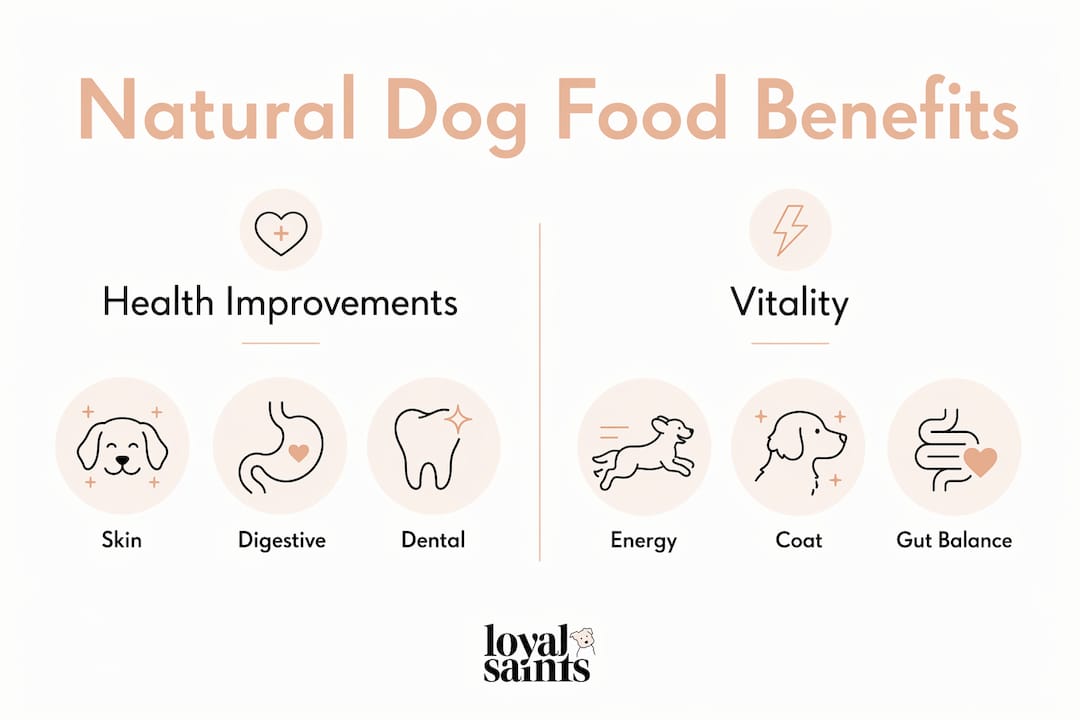
The health benefits of a natural dog diet show up in ways you can actually see and measure. Owners report improved skin and coat condition within weeks after switching to whole ingredient diets rich in omega fatty acids. That improvement is not cosmetic. It reflects better fat metabolism and reduced systemic inflammation.

Skin and coat improvement
Omega-3 and omega-6 fatty acids are the primary drivers of skin and coat health in dogs. Natural diets retain these fatty acids because they are not exposed to the high temperatures that destroy them in kibble processing. A dog eating a diet rich in intact omega fats produces less dander, sheds less, and develops a visibly shinier coat. Dogs prone to dry, flaky skin often see the most dramatic improvement.
Digestive health and gut balance
Prebiotics and probiotics in natural dog food support a balanced gut microbiome. A balanced gut means better stool consistency, less gas, and more efficient nutrient absorption. Dogs with sensitive stomachs or chronic loose stools frequently respond well to natural diets because the ingredients are easier to break down and the fiber profile supports healthy gut motility.
Pro Tip: When switching your dog to a natural diet, transition over 7–10 days by mixing increasing amounts of the new food with the old. A sudden switch can cause temporary digestive upset even with a higher-quality food.
Energy and vitality
Natural diets may result in dogs appearing more energetic and younger due to stable blood sugar and better nutrient bioavailability compared to kibble. High-glycemic fillers in conventional food cause blood sugar spikes and crashes. Natural food with quality protein and low-glycemic carbohydrates keeps energy levels steady throughout the day. Many owners describe their dogs as “acting like puppies again” within a month of switching. That is not marketing language. It reflects what stable blood sugar and better protein utilization actually feel like in a living animal.
Dental health
Raw bones in natural diets help reduce tartar buildup and support dental health when given with supervision. Chewing raw bones mechanically scrapes plaque from tooth surfaces. This is a benefit that no processed kibble can replicate, regardless of its shape or texture claims.
Higher bioavailability of nutrients in natural foods leads to better energy, less inflammation, and improved vitality in dogs. That single fact explains why so many owners notice changes they did not expect, including calmer behavior, better weight management, and reduced allergy symptoms.
What are the common misconceptions about natural dog food?
“Natural” on a dog food label does not mean complete, balanced, or superior. This is the most important thing to understand before buying any product with that word on the bag. Consumers often misunderstand “natural” on labels. Under AAFCO guidelines, “natural” refers only to the source of ingredients, not to how they are processed or whether synthetic vitamins were added.
Natural is not synonymous with “perfect” or universally healthier. A food can be labeled natural and still lack the calcium, phosphorus, or amino acids your dog needs. Ingredient list and nutritional adequacy statements matter far more than the word “natural” alone.
| Label claim | What it actually means | What it does not guarantee |
|---|---|---|
| “Natural” | Ingredients come from plant, animal, or mineral sources | Complete nutrition, no synthetic additives, or balanced ratios |
| “Grain-free” | No grains like wheat or corn | Higher protein, lower carbs, or better health outcomes |
| “Organic” | Ingredients grown without synthetic pesticides | AAFCO nutritional completeness or balanced amino acids |
| “Holistic” | No regulated definition | Anything specific about ingredient quality or nutrition |
| “Human-grade” | Ingredients meet human food standards | Balanced nutrition for dogs specifically |
Many natural foods include essential synthetic vitamins and minerals to meet nutritional standards. That is not a flaw. It is a sign the manufacturer is prioritizing your dog’s actual health over label optics. A food that uses natural ingredients AND adds the vitamins needed for completeness is a better product than one that avoids synthetics at the cost of nutritional gaps.
The biggest risk in feeding natural diets is lack of balance, causing potential health issues in puppies and seniors if calcium/phosphorus ratios or amino acids are imbalanced. Growing dogs and older dogs have specific nutritional requirements that a generic “natural” diet may not meet without careful formulation.
How to select a natural dog food that truly benefits your dog
Choosing the right natural dog food requires looking past the marketing and into the actual formulation. Veterinary experts prioritize complete and balanced nutrition appropriate for the dog’s life stage and warn against unbalanced natural diets. Use these criteria when evaluating any product:
- Check for an AAFCO nutritional adequacy statement. It should say “complete and balanced” for your dog’s life stage (puppy, adult, or senior).
- Look for a named animal protein as the first ingredient. “Chicken,” “beef,” or “salmon” is specific. “Meat meal” is not.
- Verify the calcium to phosphorus ratio is appropriate. This matters most for puppies and seniors. A vet or the manufacturer can confirm this.
- Avoid products with vague “natural flavor” listings. This phrase can mask low-quality ingredients.
- Confirm the protein percentage reflects animal sources, not plant proteins inflating the total number.
- Choose a life-stage appropriate formula. Puppies need more calories and specific mineral ratios. Seniors need fewer calories and joint-supporting nutrients.
Pro Tip: Ask your vet to review the ingredient list and AAFCO statement before committing to a new food, especially if your dog has a health condition, is a puppy, or is over seven years old.
Natural dog food is only one element in nutrition. Owners must integrate ingredient quality, nutritional adequacy, and dog-specific needs for the best results. A food with excellent natural ingredients but poor formulation will still fall short. The goal is a product that delivers both. You can learn more about why protein quality matters and how it connects to your dog’s long-term health.
Veterinarians emphasize life stage and complete nutrition over marketing labels and encourage consulting veterinary nutritionists for diet changes. That advice is worth taking seriously, especially when switching from a long-term diet.
Key takeaways
Natural dog food delivers real, measurable health benefits when it is formulated correctly and matched to your dog’s specific needs.
| Point | Details |
|---|---|
| Bioavailability drives results | Minimally processed natural food retains more nutrients your dog can actually absorb and use. |
| Skin and coat improve first | Omega-3 and omega-6 retention in natural diets produces visible coat improvement within weeks. |
| “Natural” is not enough alone | Always check for an AAFCO complete and balanced statement, not just a natural label. |
| Life stage matters | Puppies and seniors need specific nutrient ratios that a generic natural diet may not provide. |
| Transition gradually | A 7–10 day transition prevents digestive upset when switching to a higher-quality food. |
What I’ve learned from watching dogs thrive on real food
I’ve spent years watching dog owners make the same mistake: they switch to a food labeled “natural” and expect results without checking whether it is actually complete. The coat improvement and energy boost are real. I’ve seen them happen consistently. But they only happen when the food is properly formulated, not just well-marketed.
The dogs that benefit most from natural diets are the ones whose owners pay attention. They notice the coat getting shinier around week three. They see the dog finishing meals with more enthusiasm. They catch the reduction in scratching before they even think to connect it to the food change. That attentiveness is what makes the diet work, because it means you will also notice if something is off.
My honest caution is this: do not let the word “natural” do all the thinking for you. Read the AAFCO statement. Look at the protein source. Ask your vet. The balanced nutrition your dog needs comes from a combination of ingredient quality and nutritional completeness, not from one word on a bag.
The dogs I’ve seen thrive the longest are eating foods that are minimally processed, protein-forward, and formulated to meet their life stage. That combination is what natural dog food should mean. When it does, the results speak for themselves.
— Kristina
Loyalsaintspets freeze-dried food: natural nutrition done right
If you want the benefits of a natural diet without the guesswork of raw feeding, Loyalsaintspets freeze-dried products deliver exactly that.
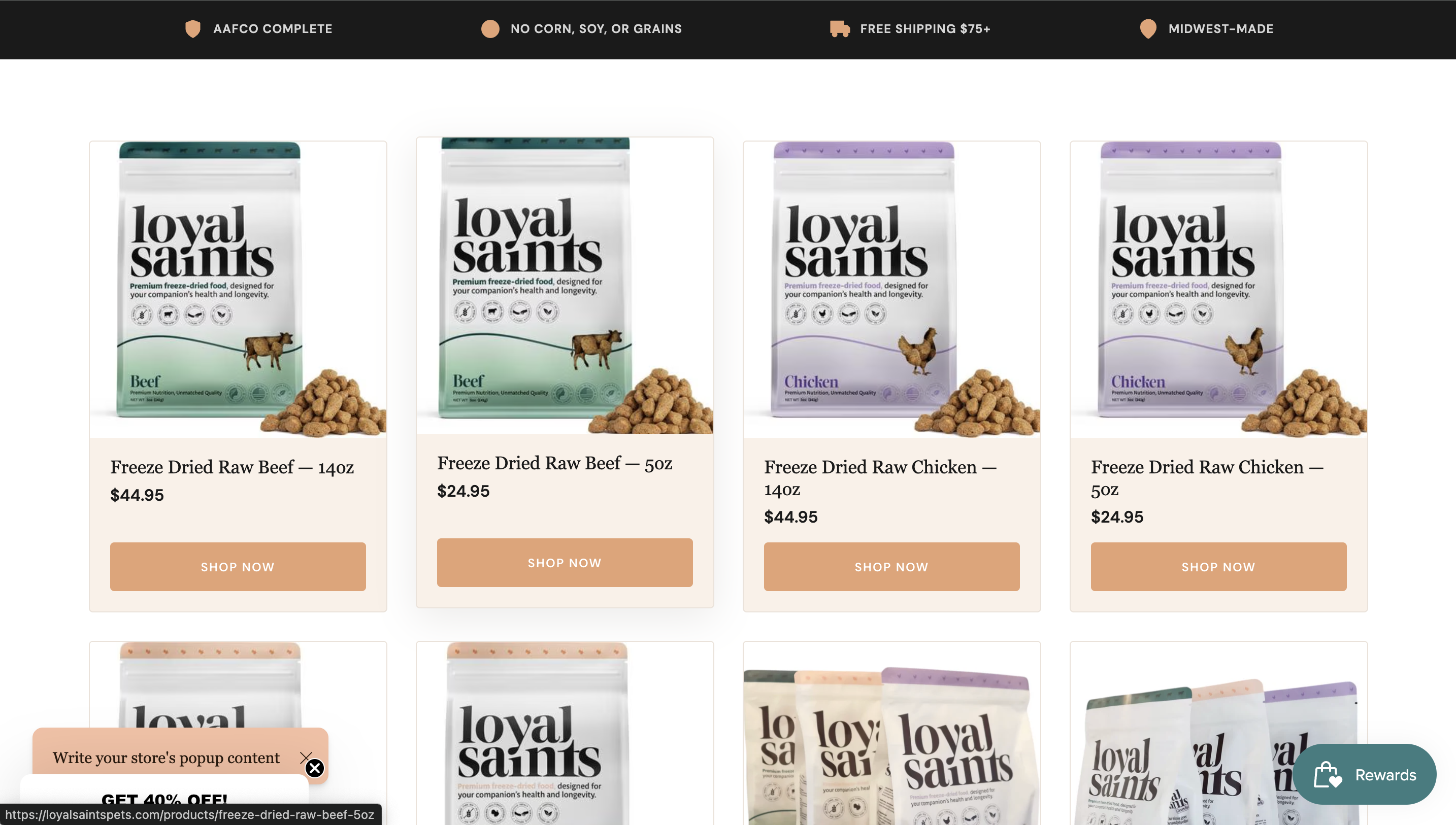
Freeze drying preserves nutrients that cooking destroys, locking in protein, omega fatty acids, and natural enzymes at their peak. Loyalsaintspets sources human-grade chicken and beef with no fillers, no artificial additives, and no compromises. The freeze-dried raw chicken 14oz and freeze-dried raw beef 14oz options give your dog the natural diet advantages covered in this article, backed by AAFCO-compliant formulation. Not sure where to start? The 5oz chicken option is a great way to try it first. Learn more about why freeze drying works and browse the full selection at the Loyalsaintspets shop.
FAQ
What is the main benefit of natural dog food?
Natural dog food provides higher nutrient bioavailability because it uses whole, minimally processed ingredients. Your dog absorbs more protein, fat, and vitamins from each meal compared to heavily processed kibble.
Does natural dog food help with allergies?
Natural diets with limited, named ingredients reduce exposure to common allergens like artificial additives and low-quality fillers. Dogs with food sensitivities often show fewer symptoms when switched to a clean, whole-ingredient formula.
Is natural dog food safe for puppies?
Natural dog food is safe for puppies only when it carries an AAFCO “complete and balanced” statement for growth or all life stages. Unbalanced natural diets can cause serious developmental issues due to incorrect calcium and phosphorus ratios.
How long does it take to see results from a natural diet?
Most owners report visible coat and skin improvement within 3–4 weeks of switching. Energy and digestion improvements often appear sooner, within the first 1–2 weeks after a full transition.
Is freeze-dried dog food considered natural?
Freeze-dried dog food is one of the most natural formats available because freeze drying removes moisture without heat, preserving the original nutrient profile of raw ingredients. It retains proteins, fats, and enzymes that high-heat processing destroys.


