
Finding the right balance for your dog’s protein needs can feel confusing, especially with so many nutrition options lining store shelves in cities across the United States. For health-conscious owners who view mealtime as a vital act of care, understanding the difference between protein types and their impact on your dog’s wellness is key. This guide breaks down the science behind protein quality and digestibility, helping you make confident choices for your companion’s vitality and longevity.
Table of Contents
- Defining Protein Needs In Dogs
- Types And Quality Of Dog Food Proteins
- Protein’s Impact On Muscle And Health
- Risks Of Protein Deficiency Or Excess
- Choosing High-Quality Protein Foods
Key Takeaways
| Point | Details |
|---|---|
| Dynamic Protein Needs | A dog’s protein requirements vary based on life stage, activity level, and health status, necessitating personalized nutrition plans. |
| Quality Over Quantity | The quality and digestibility of protein sources are vital; high-quality proteins provide complete amino acid profiles essential for health. |
| Risks of Imbalance | Both protein deficiency and excess pose significant health risks, including muscle loss, weakened immunity, and kidney strain. |
| Select Quality Sources | Choose dog foods with whole animal proteins as primary ingredients, ensuring they meet AAFCO standards for optimal nutrition. |
Defining Protein Needs in Dogs
Understanding protein requirements for dogs is far more complex than simply measuring quantity. Protein isn’t just another dietary component—it’s a critical building block for canine health, playing a vital role in muscle maintenance, immune function, and overall vitality. Comprehensive nutrition guidelines emphasize that protein needs are dynamic and change throughout a dog’s life stages.
Dogs require specific amino acids that cannot be produced internally, making dietary protein intake essential. These proteins support multiple physiological functions, including:
- Muscle development and repair
- Enzyme and hormone production
- Immune system support
- Energy metabolism
- Skin and coat health
- Tissue regeneration
The quality and digestibility of protein matter as much as the total quantity. Not all protein sources are created equal. High-quality proteins contain a complete amino acid profile that matches a dog’s metabolic requirements. National Research Council recommendations highlight that protein needs vary significantly based on breed, size, age, and individual health status.
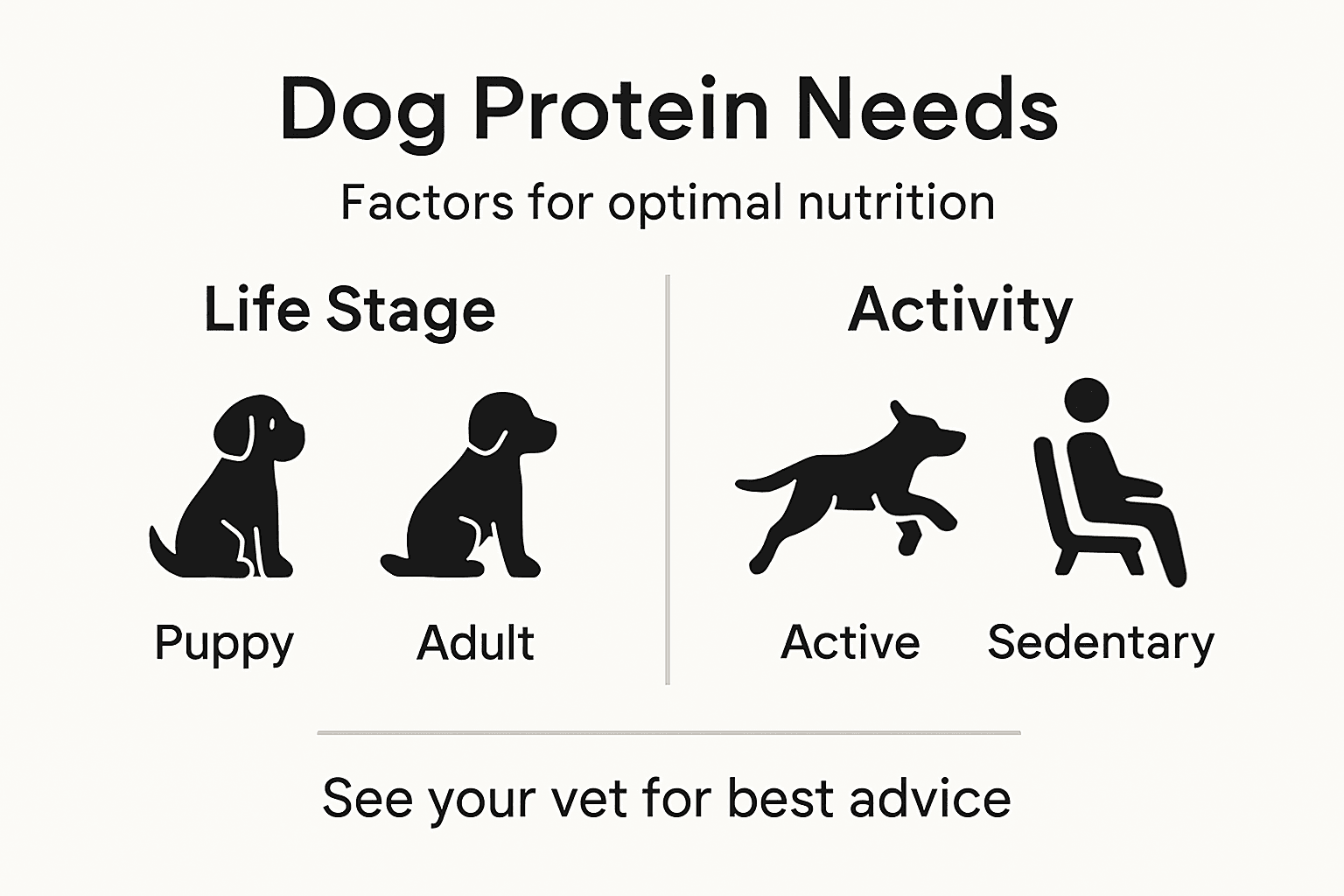
Factors influencing protein requirements include a dog’s life stage, activity level, and overall health condition. Puppies, active adult dogs, pregnant females, and senior dogs have distinctly different protein needs. Working dogs, for instance, require higher protein intake to support muscle maintenance and energy expenditure compared to sedentary companions.
Pro tip: Consult with a veterinary nutritionist to develop a personalized protein plan tailored to your dog’s unique metabolic profile and lifestyle needs.
The table below summarizes how protein needs change throughout a dog’s life stages:
| Life Stage | Protein Requirement | Key Considerations |
|---|---|---|
| Puppy | Highest | Needed for rapid growth and organ development |
| Adult (Active) | High | Supports muscle repair, performance |
| Adult (Sedentary) | Moderate | Maintains muscle, prevents excess weight |
| Senior | Moderate to slightly elevated | Helps prevent muscle loss with age |
| Pregnant/Nursing | Elevated | Supports fetal and milk production needs |
Types and Quality of Dog Food Proteins
Dog food proteins are not created equal, with significant variations in their nutritional value and impact on canine health. Protein sources range from animal to plant-based ingredients, each offering unique amino acid profiles and digestibility characteristics that determine their overall nutritional effectiveness.
The primary protein sources for dogs include:
-
Animal Proteins:
- Beef
- Chicken
- Fish
- Eggs
- Dairy products
-
Plant Proteins:
- Corn
- Soy
- Legumes
- Wheat
Not all proteins provide equal nutritional benefits. Biological value is a critical measure of protein quality, with animal-based proteins typically offering more complete amino acid profiles. These proteins contain essential amino acids that dogs cannot produce independently, making them crucial for muscle development, immune function, and overall metabolic health.
Complex protein formulations require strategic combination of protein sources. Protein quality depends on amino acid composition and digestibility, with high-quality dog foods often blending multiple protein types to create a comprehensive nutritional profile. Plant proteins, while sometimes incomplete, can complement animal proteins when carefully balanced.
Pro tip: Always review the first three ingredients on dog food labels to understand the primary protein sources and their quality.
Here’s a comparison of common dog food protein sources by nutritional profile and digestibility:
| Protein Source | Amino Acid Completeness | Digestibility | Notable Advantages |
|---|---|---|---|
| Chicken | Complete profile | Highly digestible | Supports lean muscle growth |
| Fish | Complete profile | Highly digestible | Rich in omega-3 fats |
| Beef | Complete profile | Very digestible | High in iron and zinc |
| Eggs | Ideal profile | Extremely digestible | Excellent for sensitive dogs |
| Soy | Near-complete | Moderately digestible | Source of plant protein and fiber |
| Corn | Incomplete | Moderately digestible | Energy source, not ideal alone |
| Legumes | Varies | Moderately digestible | Can lower food cost and add fiber |
Protein’s Impact on Muscle and Health
Protein plays a critical role in maintaining and developing canine muscle health, serving as more than just a nutritional component. Muscle protein synthesis requires strategic amino acid intake, with each protein source offering unique benefits for a dog’s physiological performance.
Key physiological functions supported by protein include:
- Muscle tissue repair and growth
- Immune system development
- Enzyme and hormone production
- Metabolic regulation
- Cellular communication
- Energy metabolism
The biological mechanisms of protein in muscle development are complex and multifaceted. Proteins act not just as structural building blocks but also as critical signaling molecules that trigger muscle growth and maintenance. Physical activity combined with appropriate protein intake can significantly enhance muscle strength, improve recovery times, and support overall athletic performance in dogs.

Different life stages and activity levels demand varied protein strategies. Puppies require higher protein percentages for growth, active working dogs need protein for muscle maintenance, and senior dogs benefit from carefully balanced protein intake to prevent muscle degradation. The quality of protein—determined by its amino acid profile and digestibility—matters as much as the total quantity consumed.
Pro tip: Consult with a veterinary nutritionist to design a protein intake plan tailored to your dog’s specific age, breed, and activity level.
Risks of Protein Deficiency or Excess
Protein balance is critical for canine health, with both deficiency and excess carrying significant health risks that can dramatically impact a dog’s overall wellness.
Risks of protein deficiency include:
- Muscle wasting and weakness
- Compromised immune function
- Stunted growth in puppies
- Reduced energy levels
- Poor coat and skin health
- Delayed wound healing
Conversely, excessive protein intake can create its own set of complications. Overfeeding protein strains the kidneys, potentially accelerating existing renal issues and contributing to metabolic imbalances. Metabolic stress occurs when dogs consume protein beyond their body’s processing capabilities, leading to unnecessary physiological burden.
The complexity of protein nutrition demands individualized approaches. Different dogs—based on breed, age, activity level, and health status—require carefully calibrated protein intake. Working dogs, senior pets, and puppies have distinctly different nutritional needs that cannot be addressed through generic feeding strategies.
Pro tip: Schedule annual veterinary nutritional assessments to ensure your dog’s protein intake remains precisely tailored to their evolving health requirements.
Choosing High-Quality Protein Foods
Protein quality in dog nutrition depends on multiple critical factors, extending far beyond simple protein percentage measurements. Understanding how to select optimal protein sources requires careful evaluation of ingredient sourcing, processing, and nutritional completeness.
Key characteristics of high-quality protein sources include:
- Whole animal protein as first ingredient
- Named meat sources (chicken, beef, fish)
- Minimal processing
- Complete amino acid profiles
- AAFCO-complete nutritional standards
- Traceable ingredient origins
- Minimal artificial additives
The biological value of protein matters significantly. Not all protein sources provide equal nutritional benefits. Animal proteins like chicken, beef, and fish typically offer more comprehensive amino acid profiles compared to plant-based alternatives. Premium dog foods prioritize whole-food protein sources that closely mimic a dog’s natural dietary requirements.
Complex protein selection requires understanding individual dog needs. Factors such as breed, age, activity level, and health status dramatically influence ideal protein composition. Senior dogs, active working breeds, and puppies each demand nuanced nutritional strategies that go beyond generic feeding recommendations.
Pro tip: Examine the first three ingredients on dog food labels to quickly assess protein quality and nutritional integrity.
Unlock Optimal Protein Nutrition for Your Dog’s Vitality
The challenge of meeting your dog’s protein needs to support muscle growth, immune health, and long-term vitality is real. Quality and digestibility are vital when selecting the right protein sources. At Loyal Saints Pets, we understand these unique nutritional demands and offer premium, natural freeze-dried dog foods crafted to deliver complete amino acid profiles from whole ingredients. Whether your dog requires high-quality animal protein like Beef | Loyal Saints or a balanced blend designed for all life stages, we provide health-focused solutions free from fillers and additives.
Give your dog the protein nutrition they deserve today by exploring our carefully formulated products at Loyal Saints Pets. Take the next step toward supporting your dog’s muscle strength and overall health with natural, complete and balanced foods tailored for their unique lifestyle and age. Visit now and experience the difference premium protein can make.
Frequently Asked Questions
What are the protein requirements for different life stages of dogs?
Protein requirements vary by life stage: puppies need the highest amount for growth, active adults require high protein for muscle maintenance, sedentary adults need moderate protein, seniors benefit from slightly elevated protein to prevent muscle loss, and pregnant or nursing dogs need elevated protein for fetal and milk production.
How do protein sources affect dog nutrition?
Not all protein sources provide equal nutritional benefits. Animal proteins, like chicken and beef, typically offer complete amino acid profiles and are more digestible than plant proteins. Combining various protein sources can ensure a well-rounded amino acid intake.
What are the risks of protein deficiency in dogs?
Protein deficiency can lead to numerous health issues, including muscle wasting, compromised immune function, stunted growth in puppies, reduced energy levels, poor skin and coat condition, and delayed wound healing.
How can I ensure my dog is getting high-quality protein?
To ensure your dog gets high-quality protein, look for dog foods with whole animal protein listed as the first ingredient, named meat sources, minimal processing, and complete amino acid profiles. Additionally, check if the food meets AAFCO standards for nutritional completeness.


