

Nearly 60 percent of American households have at least one dog, yet many owners remain unaware of what balanced nutrition truly means for their pets. Making sense of all the dietary advice can feel complicated, especially when every bag promises something different. This article breaks down the science behind balanced nutrition for dogs, showing you what nutrients matter most and how they impact your pet’s health and longevity.
Table of Contents
- Defining Balanced Nutrition For Dogs
- Essential Nutrients Every Dog Needs
- Real Impacts Of Poor Nutrition
- Choosing Quality Ingredients And Diet Types
- Common Feeding Mistakes To Avoid
Key Takeaways
| Point | Details |
|---|---|
| Balanced Nutrition is Essential | Dogs require a scientifically crafted diet that includes the right proportions of proteins, carbohydrates, fats, vitamins, and minerals for optimal health. |
| Consult a Veterinarian Regularly | Annual consultations can help assess and adjust your dog’s specific dietary needs, which may change with age, breed, and activity level. |
| Avoid Common Feeding Mistakes | Overfeeding and underfeeding can lead to serious health issues; always consult guidelines and monitor portions properly. |
| Choose Quality Ingredients | Focus on high-quality, whole food sources for nutrition and avoid products with fillers and artificial additives to ensure your dog’s health. |
Defining Balanced Nutrition for Dogs
Balanced nutrition represents a precise, scientifically-crafted dietary approach that ensures dogs receive all essential nutrients in appropriate proportions for optimal health. When veterinary professionals discuss balanced nutrition, they refer to a comprehensive nutritional profile that supports every aspect of a canine’s physiological functioning, from cellular maintenance to systemic performance.
According to the FDA’s guidelines on complete and balanced pet food, a truly balanced diet must include specific proportions of proteins, carbohydrates, fats, vitamins, and minerals that meet established nutritional standards. These standards, defined by the Association of American Feed Control Officials (AAFCO), ensure that commercial dog foods provide comprehensive nutritional support tailored to different life stages and health requirements.
A balanced diet encompasses more than simply providing calories. It requires carefully calculated ratios of macronutrients and micronutrients that support muscle development, immune function, energy metabolism, and overall vitality. Nutritional research from the ASPCA emphasizes that high-quality commercial foods designed to meet these standards can effectively address a dog’s complex nutritional needs, promoting long-term health and preventing potential dietary deficiencies.
Pro Tip for Dog Nutrition: Consult with your veterinarian annually to assess your dog’s specific nutritional requirements, as dietary needs can change with age, breed, activity level, and health status.
Essential Nutrients Every Dog Needs
Dogs require a comprehensive array of nutrients to maintain optimal health, with each nutrient playing a critical role in supporting their physiological functions. Essential nutrient requirements for canines encompass six primary categories: proteins, carbohydrates, fats, vitamins, minerals, and water, each contributing uniquely to a dog’s overall wellness and vitality.
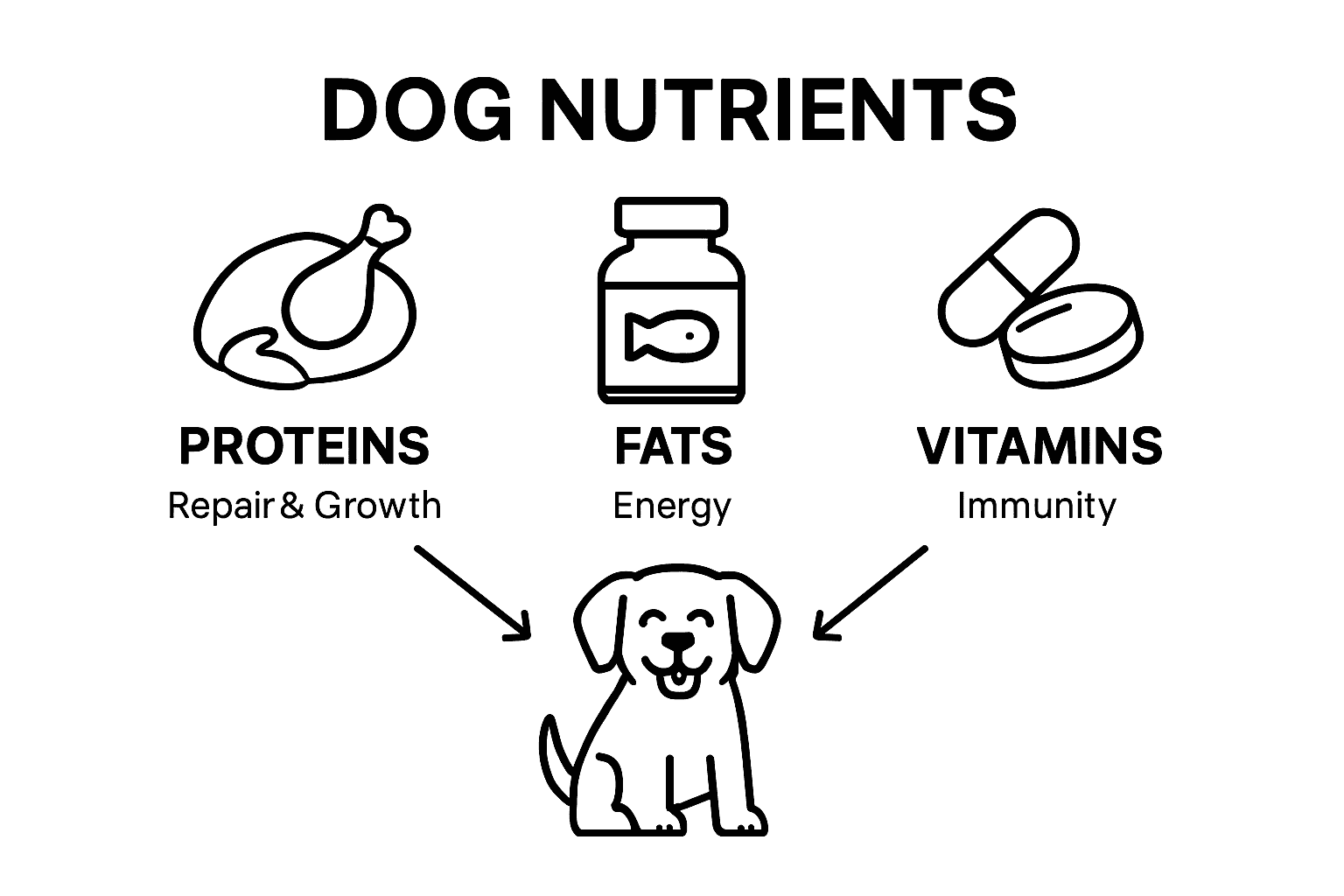
Proteins stand as the foundational building blocks for muscle development, tissue repair, and immune system functionality. High-quality protein sources like lean meats, fish, and eggs provide essential amino acids that dogs cannot produce independently. Carbohydrates serve as an energy source, while fats are crucial for hormone production, cell function, and promoting a healthy coat and skin. Micronutrients such as vitamins and minerals play equally significant roles, supporting everything from bone health to metabolic processes.
Vitamins essential for canine health include fat-soluble vitamins like A, D, E, and K, which support vision, bone metabolism, antioxidant protection, and blood clotting. Water-soluble B-complex vitamins and choline are critical for nervous system function, energy metabolism, and cellular health. Minerals such as calcium, phosphorus, potassium, and sodium regulate numerous bodily functions, including nerve transmission, muscle contraction, and maintaining proper fluid balance.
Here is a quick reference to the six essential nutrient groups for dogs and their primary functions:
| Nutrient Category | Main Role in Dog Health | Key Examples |
|---|---|---|
| Proteins | Build muscles, repair tissues | Chicken, fish, eggs |
| Carbohydrates | Provide energy for daily activity | Rice, oats, sweet potato |
| Fats | Support cells, healthy skin/coat | Fish oil, chicken fat |
| Vitamins | Regulate metabolic processes | Vitamin A, E, B-complex |
| Minerals | Strengthen bones, nerve signaling | Calcium, phosphorus |
| Water | Hydration, organ function | Fresh clean water |
Pro Tip for Nutrient Balance: Work with your veterinarian to develop a personalized nutrition plan that considers your dog’s age, breed, weight, activity level, and specific health requirements.
Real Impacts of Poor Nutrition
Poor nutrition can devastate a dog’s health, creating a cascade of physiological problems that extend far beyond temporary discomfort. Nutritional deficiencies in canines can trigger severe long-term health complications, impacting everything from skeletal development to immune system functionality.

Minerals play a crucial role in preventing serious health issues. Calcium and phosphorus imbalances, for instance, can lead to significant skeletal abnormalities, causing permanent structural damage to a dog’s bone and joint systems. Protein deficiencies are equally dangerous, potentially resulting in compromised immune response, stunted growth, muscle deterioration, and reduced ability to repair tissue damage. These nutritional gaps can create a domino effect of health challenges that become increasingly difficult to reverse.
Comprehensive nutritional research reveals that inadequate nutrition contributes to multiple systemic problems, including obesity, metabolic disorders, and developmental delays. Chronic malnutrition can suppress immune function, reduce metabolic efficiency, and accelerate aging processes. Dogs experiencing prolonged nutritional imbalances may suffer from decreased energy levels, poor coat quality, weakened muscle tone, and increased susceptibility to infections and diseases.
Pro Tip for Nutrition Monitoring: Conduct regular veterinary check-ups and track your dog’s weight, energy levels, and overall health to quickly identify and address potential nutritional deficiencies.
Choosing Quality Ingredients and Diet Types
Selecting the right nutrition for your dog involves understanding key ingredients and diet types that support optimal health and vitality. Essential criteria for high-quality dog food ingredients begin with prioritizing whole, natural protein sources such as lean meats, fish, and poultry as the primary component of a nutritious diet.
Protein quality remains paramount, with whole meat sources providing superior nutritional value compared to meat by-products or processed protein meals. Dogs require diet variations that align with their specific life stages, with puppies, adult dogs, and senior canines having distinctly different nutritional needs. Healthy fats from sources like fish oil, chicken fat, and plant-based oils contribute essential omega fatty acids that support skin health, cognitive function, and overall metabolic processes.
Comprehensive dog nutrition guidelines emphasize the importance of selecting ‘complete and balanced’ diets that meet Association of American Feed Control Officials (AAFCO) standards. These standards ensure that commercial dog foods contain appropriate proportions of proteins, carbohydrates, vitamins, and minerals. Dog owners should avoid foods with excessive fillers, artificial preservatives, and low-quality grain substitutes, instead focusing on nutrient-dense ingredients that provide genuine health benefits.
Pro Tip for Ingredient Selection: Always read pet food ingredient labels from left to right, prioritizing whole protein sources listed first and avoiding foods with multiple unnamed meat by-products or artificial additives.
Common Feeding Mistakes to Avoid
Nutritional guidance for dogs reveals that many pet owners inadvertently compromise their dogs’ health through common feeding mistakes. Overfeeding and underfeeding represent two critical errors that can significantly impact a dog’s long-term wellness, creating potential health complications that extend far beyond immediate nutrition concerns.
One of the most prevalent dietary misconceptions involves supplement usage. Dog owners frequently add vitamins and minerals without professional guidance, potentially creating dangerous nutrient imbalances. Veterinary nutrition experts caution against indiscriminate supplementation, emphasizing that unnecessary additions can disrupt carefully balanced metabolic processes. Unnecessary supplements might interact negatively with existing nutrients, potentially causing more harm than benefit.
Properly measuring food portions remains another critical aspect of responsible dog nutrition. Many pet owners struggle with understanding appropriate serving sizes, often relying on general recommendations instead of considering individual factors like breed, age, activity level, and metabolic rate. Portion control directly impacts weight management, with excess calories leading to obesity and potential secondary health issues such as joint stress, diabetes, and reduced cardiovascular performance. Consistently monitoring your dog’s weight and adjusting food intake accordingly represents a fundamental strategy for maintaining optimal health.
Below is a comparison of common dog feeding mistakes and their long-term health effects:
| Feeding Mistake | Long-Term Risk | Prevention Tip |
|---|---|---|
| Overfeeding | Obesity, joint stress | Portion control, regular weigh-ins |
| Underfeeding | Malnutrition, stunted growth | Vet-guided portion adjustment |
| Unnecessary supplements | Nutrient imbalances, toxicity | Only supplement if vet-approved |
| Inconsistent measurements | Weight fluctuations | Use measuring cup every time |
Pro Tip for Portion Control: Use a standard measuring cup for dog food and consult your veterinarian to determine the precise daily caloric requirements specific to your dog’s unique physiological needs.
Elevate Your Dog’s Health with Balanced Nutrition from Loyal Saints Pets
Achieving balanced nutrition is essential for your dog’s vitality muscle strength and long-lasting health. The article highlights the challenges many pet parents face such as nutritional imbalances and feeding mistakes that can compromise immune function and overall wellness. At Loyal Saints Pets you can find premium freeze-dried options crafted with whole food ingredients that deliver complete and balanced nutrition tailored to your dog’s specific needs. Explore our high-quality proteins like Beef and Chicken that provide pure natural nourishment without fillers or artificial additives.

Give your dog the best chance at a healthier happier life by choosing nutrient-dense meals from Loyal Saints Pets. Take advantage of our thoughtfully formulated bundles to simplify balanced feeding while supporting your dog’s immune system coat quality and energy levels. Shop now and see the difference that real, natural ingredients can make. Your loyal companion deserves nothing less.
Frequently Asked Questions
What is balanced nutrition for dogs?
Balanced nutrition for dogs is a dietary approach that ensures they receive all essential nutrients in appropriate proportions, promoting optimal health and physiological functioning.
Why is balanced nutrition important for my dog’s health?
Balanced nutrition is crucial as it supports muscle development, immune function, energy metabolism, and overall vitality, significantly enhancing your dog’s long-term health and wellness.
What are the essential nutrients every dog needs?
Dogs need six primary nutrient categories for optimal health: proteins, carbohydrates, fats, vitamins, minerals, and water. Each nutrient plays a unique role in supporting physiological functions and overall wellness.
How can poor nutrition affect my dog’s health?
Poor nutrition can lead to serious health issues, including obesity, malnutrition, compromised immune response, and skeletal abnormalities. These complications can adversely affect your dog’s quality of life and longevity.


