
Yes, diet is the biggest lever you have. Switching from extruded kibble to a highly digestible, minimally processed diet, especially a freeze-dried raw formula with a named single protein and no fillers, is the single change most likely to shrink stool volume and firm it up. That said, always transition gradually, ask your vet about any underlying conditions, and follow safe handling practices with raw or freeze-dried food.
TL;DR:
- Using highly digestible, minimally processed diets like freeze-dried raw formulas significantly reduces stool volume and produces firmer, easier-to-clean stools.
- Brands with a single, named protein and minimal fillers typically outperform traditional kibble in digestibility and waste reduction.
- Feed smaller, more nutrient-dense portions based on high-quality proteins and proper processing formats to decrease stool output without relying solely on fiber content.
- Transition slowly over seven to ten days to prevent gastrointestinal upset, especially when switching to raw or freeze-dried diets, and monitor for any health or stool abnormalities.
- Safe handling practices are essential for raw and freeze-dried foods, as they do not reliably eliminate pathogens despite preserving nutrient quality.
Table of Contents
- What Dog Food Reduces Poop, and Why Ingredients Matter So Much
- What the Research Actually Shows About Raw and Freeze-Dried Diets
- How to Switch Diets Without Upsetting Your Dog’s Stomach
- A Quick Checklist for Choosing Nutritional Dog Food That Cuts Down on Waste
- Why We Built Our Approach Around Digestibility, Not Just Ingredients
- The Honest Take: Most “Solve Your Dog’s Poop Problem” Advice Skips the Hard Part
- Do Probiotics and Prebiotics Actually Shrink Stool Volume?
- Do Beet Pulp and Pumpkin Really Change Stool Consistency?
- When Stool Changes Point to a Medical Issue, Not Just Diet
- Try It Yourself: Freeze-Dried Raw Chicken Built for This Exact Goal
- Sources
What Dog Food Reduces Poop, and Why Ingredients Matter So Much
Digestibility is the whole story here. When a diet is highly digestible, more of what your dog eats gets absorbed in the small intestine instead of passing through to the colon undigested. Less undigested material means less bulk arriving at the end of the line, and that translates directly into smaller, firmer stools. This is the mechanism behind every “dog food that reduces poop” recommendation you will find, and it is why some dogs on a bag of premium kibble still produce mountains of waste while others on a smaller volume of fresh food barely leave a trace in the yard.
Processing format plays a bigger role than most owners realize. Extruded kibble goes through high heat and pressure, which can degrade some proteins and starches in ways that lower their digestibility compared to fresh, raw, or freeze-dried options. A 2024 controlled study found dogs fed freeze-dried raw diets produced significantly lower daily fecal output and higher fecal dry matter than dogs fed extruded kibble over a 35-day feeding trial. Higher fecal dry matter means firmer, less mushy stool, exactly the outcome most owners are hoping for.
Macronutrients do not work in isolation, and this is where a lot of dog food for less stool advice oversimplifies things. Research on nutrient interactions shows that protein, fat, and fiber influence stool moisture and firmness together, not as separate levers you can pull one at a time. Fiber alone tends to increase stool firmness, but when it interacts with higher protein or fat levels, that effect can actually reverse. This explains why a food with a big fiber number on the label does not always deliver firmer stool the way owners expect.
A few practical takeaways follow from the research:
- Highly digestible proteins mean less waste, because more of what goes in gets absorbed rather than excreted.
- Fiber percentage alone is a poor predictor of stool firmness. The type of fiber and its interaction with fat and protein matter more.
- Processing format affects nutrient availability, so freeze-dried and raw formats often outperform extruded kibble on this front.
- Fresh, whole-ingredient diets tend to produce smaller, more predictable stools than low-quality kibble loaded with fillers.
Here’s a number worth remembering: in controlled digestibility assays, freeze-dried and raw formats frequently showed higher amino-acid digestibility and metabolizable energy values than extruded diets. That gap in usable energy is a big part of why a nutritionally dense, minimally processed diet can mean feeding a smaller volume for the same energy needs, which shrinks stool output before you even factor in digestibility differences.
The practical implication is straightforward: stop chasing high fiber amounts on the label and start looking at protein quality and fiber type. A named single protein, minimal processing, and a thoughtful fiber source will usually beat a kibble bag boasting “high fiber for digestive health” on the ingredient panel alone.
What the Research Actually Shows About Raw and Freeze-Dried Diets
Peer-reviewed evidence backs up what many owners notice anecdotally. The clearest data point comes from that 35-day feeding trial comparing freeze-dried raw diets against extruded kibble, which found lower daily fecal output and higher fecal dry matter in the dogs eating freeze-dried raw food. Lower output plus higher dry matter is the combination every owner searching for a dog diet reducing poop actually wants: less waste, and what comes out is firmer and easier to clean up.
Nutrient interaction research makes clear that stool quality is not determined by any single ingredient. Protein tends to increase moisture and soften stool, fiber tends to firm it up, and the interaction between fat and fiber can shift that balance in either direction depending on the overall diet composition.
That finding matters because it undercuts the common shortcut of just adding fiber to a dog’s bowl and calling it solved. The full nutrient matrix, protein source, fat level, and fiber type together, determines the outcome, which is exactly why formulation quality matters more than any single ingredient claim on a bag.
A separate line of research digs into digestibility mechanics directly. Precision-fed assays comparing processing formats found that freeze-dried and raw diets often produced higher amino-acid digestibility and metabolizable energy than extruded kibble in the same tested samples. That is a mechanical explanation for the fecal output findings above: better amino acid absorption means less nitrogen waste heading to the colon, and higher metabolizable energy means dogs need smaller portions to meet daily calorie needs.
None of this comes without a caveat, and it is one every raw-curious owner needs to hear. Freeze-drying preserves the raw ingredient structure and often boosts protein digestibility, but it does not reliably eliminate pathogens. The Cornell Riney Canine Health Center echoes this caution, advising strict hygiene and handling protocols whenever raw or freeze-dried diets enter the house. That advice applies just as much to a household with young kids or immunocompromised family members as it does to the dog itself.
Key evidence points to keep in mind:
- Freeze-dried raw diets showed lower daily fecal output and higher fecal dry matter versus extruded kibble in a controlled 35-day trial.
- Protein, fat, and fiber interact to shape stool moisture and firmness rather than acting independently.
- Freeze-dried and raw processing formats tend to deliver higher amino-acid digestibility and usable energy than extruded kibble.
- Freeze-drying improves nutrient quality but does not replace safe food handling, and any persistent stool changes deserve a veterinary visit rather than a guess.
How to Switch Diets Without Upsetting Your Dog’s Stomach
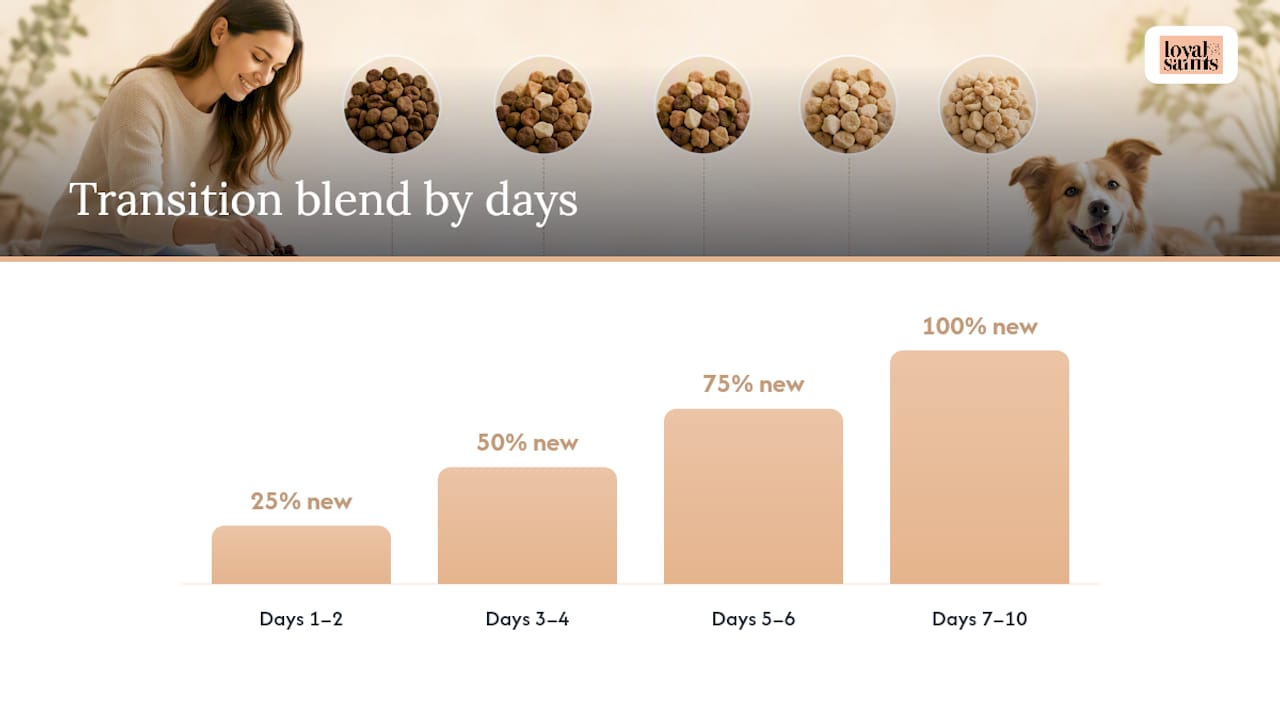
A rushed diet change is the fastest way to turn a good idea into a week of diarrhea, so pace the switch deliberately. Most vets and practitioner guidance recommend a gradual transition over roughly seven to ten days, giving the gut microbiome time to adjust to new protein sources and fiber types.
- Days 1 to 2: Mix about 25% new food with 75% of the current diet, watching for any immediate rejection or upset.
- Days 3 to 4: Move to a 50/50 blend, and start logging stool consistency once a day.
- Days 5 to 6: Shift to roughly 75% new food and 25% old food.
- Days 7 to 10: Complete the switch to 100% new food, extending the timeline if you notice loose stool or reluctance to eat.
- Throughout: If stool turns watery, contains blood or mucus, or your dog seems lethargic, slow the transition down or pause it and call your veterinarian.
Overfeeding and abrupt changes remain the two most common reasons stool volume spikes during a diet switch, so resist the urge to just dump the whole bag in the bowl on day one, and keep an eye on total treats and table scraps too, since those often account for more of the problem than the main diet does.
Hygiene deserves the same attention as the transition schedule, especially with raw or freeze-dried formats. These steps matter because freeze-drying reduces but does not eliminate pathogen risk, and Cornell’s veterinary guidance treats that risk as a household concern, not just a pet one.
Pro Tip: Before committing to a full bag, run a five to seven day trial with a small sample size. This lets you confirm your dog tolerates the new protein and fiber profile without wasting a large bag if the fit isn’t right. For a more detailed walkthrough, see this step-by-step transition protocol and general tips on improving digestion naturally.
A Quick Checklist for Choosing Nutritional Dog Food That Cuts Down on Waste
Reading a pet food label at the store is confusing by design, so narrow your focus to a handful of details that actually predict stool outcome. Look for a named single protein, like chicken or salmon, listed first on the ingredient panel rather than a vague term like “meat meal,” which tells you almost nothing about quality or source.
Minimally processed formats, freeze-dried, fresh, or gently cooked, tend to preserve more nutrient bioavailability than heavily extruded kibble, and every bag should carry a clear AAFCO nutritional adequacy statement confirming it meets complete-and-balanced standards for your dog’s life stage. Skip formulas padded with corn, wheat, or soy fillers; they add bulk without adding much digestible nutrition, which is precisely the opposite of what you want if reducing waste is the goal.
Calorie density is worth checking too. A nutrient-dense formula often means you feed a smaller volume to meet the same daily energy needs, and smaller volume in usually means smaller volume out. Fiber type matters as much as fiber quantity. Soluble fiber sources like beet pulp behave differently in the gut than insoluble sources, so look for labels that name the actual fiber source rather than just a fiber percentage.
| Checklist item | What to look for |
|---|---|
| Protein source | Named single protein listed first (e.g., “chicken,” not “meat meal”) |
| Processing format | Freeze-dried, fresh, or gently cooked over heavily extruded kibble |
| AAFCO statement | Clear complete-and-balanced statement for your dog’s life stage |
| Fillers | Minimal or no corn, wheat, or soy bulking agents |
| Fiber source | Named source (beet pulp, pumpkin, etc.), not just a percentage |
| Trial size | Small bag or sample available before committing to a full bag |
When you are unsure, start small. A trial-size bag paired with the gradual transition plan above tells you more in ten days than any label ever will. The selection checklist covers label-reading in more depth if you want a deeper dive before your next purchase.
Why We Built Our Approach Around Digestibility, Not Just Ingredients
I’ve spent years studying pet nutrition labels and watching the gap between marketing claims and what actually shows up in a dog’s stool. My take: the pet food industry talks a lot about “premium” ingredients but rarely explains digestibility, which is the metric that actually determines stool volume.
Our approach focuses on recipes starting with a single named protein and freeze-drying rather than high-heat extrusion, avoiding fillers and vague ingredient listings, and aiming to meet AAFCO nutritional standards.
We are actively gathering feedback and case data from customers who have made the switch, and we will be sharing more of those real-world results as that picture builds out. For now, the checklist above is exactly what our formulas are built to satisfy, not the other way around.
The Honest Take: Most “Solve Your Dog’s Poop Problem” Advice Skips the Hard Part
The conventional wisdom on this topic treats fiber like a magic switch: add more, get firmer stool. The research doesn’t support that as a standalone rule. Fiber’s effect depends on what it’s paired with, and a food that leans on fiber alone while skimping on protein quality can backfire.
Here’s what I think most guides get wrong: they treat “reduce poop” as a fiber problem when it’s really a digestibility problem. The dogs producing less waste in controlled studies weren’t eating more fiber. They were eating diets their bodies could actually absorb, which left less material to pass through undigested.
If you take one thing from this article, prioritize protein quality and processing format before you even glance at the fiber percentage on a label. Fix digestibility first. Fiber type and hydration are the fine-tuning, not the foundation.
— Kristina
Do Probiotics and Prebiotics Actually Shrink Stool Volume?
Probiotics and prebiotics work on a different mechanism than raw digestibility, but the end result points the same direction: less waste, better formed stool. Probiotics introduce beneficial bacteria strains that help balance the gut microbiome, which can improve how efficiently your dog breaks down and absorbs nutrients from food. A gut in better balance tends to produce more consistent, well-formed stool and fewer episodes of loose stool tied to minor dietary shifts.
Prebiotics take a slightly different approach. These are fermentable fibers, think chicory root or inulin, that feed the beneficial bacteria already living in your dog’s gut rather than introducing new strains. Well-fed gut bacteria support a healthier colon environment, which shows up as more predictable bowel movements over time.
The two work best together. A diet that pairs a highly digestible protein base with modest prebiotic fiber support tends to outperform either approach alone, since you’re improving nutrient absorption and gut balance simultaneously rather than picking one lever. If your dog’s stool has been inconsistent for weeks despite a solid diet, a probiotic supplement or a food that includes prebiotic fiber sources is worth discussing with your vet, especially if stress, antibiotics, or a recent diet change may have disrupted the gut microbiome. Read more in this dietary fiber and gut microbiome guide.
Do Beet Pulp and Pumpkin Really Change Stool Consistency?
Beet pulp and pumpkin show up in a lot of dog food formulas specifically because they influence stool consistency, but they work through slightly different mechanisms. Beet pulp is a moderately fermentable fiber source that provides both soluble and insoluble components, which means it can bulk stool slightly while also feeding beneficial gut bacteria as it ferments. That dual action is why it appears in so many gastrointestinal support formulas rather than a single-purpose fiber.
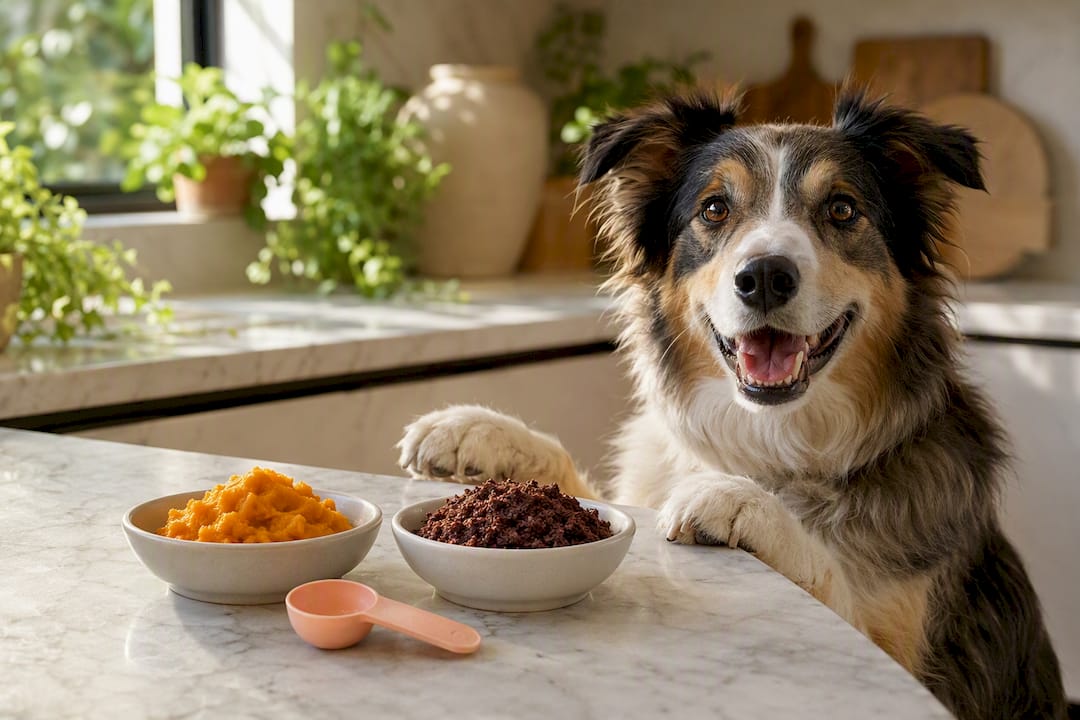
Pumpkin, meanwhile, is mostly soluble fiber and tends to work more directly on stool moisture. It can help firm up loose stool by absorbing excess water in the gut, which is why so many owners reach for a spoonful of plain canned pumpkin during a bout of mild diarrhea.
Neither ingredient is a cure-all, and more is not automatically better. Overdoing fiber additives, even gentle ones like pumpkin, can backfire and cause the opposite problem: constipation or excess gas. The nutrient interaction research on protein, fat, and fiber applies here too. A small amount of a fiber additive layered onto an already well-formulated, highly digestible diet tends to fine-tune stool consistency far more effectively than piling fiber onto a low-quality base diet and hoping it compensates for poor digestibility elsewhere.
When Stool Changes Point to a Medical Issue, Not Just Diet
Diet is a powerful lever, but it is not the only one, and some stool problems have nothing to do with what’s in the bowl. Overfeeding is the most common culprit: even a great diet produces more waste if you’re feeding more volume than your dog’s body needs, so check your portions against your dog’s ideal weight before assuming the food itself is the problem.
Parasites, food intolerances, and abrupt diet changes are also common triggers behind sudden shifts in stool frequency or volume that owners often mistake for a food quality issue. Beyond those everyday causes, a handful of medical conditions can directly affect stool: exocrine pancreatic insufficiency, inflammatory bowel disease, and chronic pancreatitis all interfere with digestion and absorption in ways that no amount of diet tweaking will fully resolve on its own.
Watch for red flags that go beyond simple stool volume. Blood in the stool, persistent mucus, black or tarry stool, sudden weight loss, or stool that stays loose for more than a couple of days despite a stable diet all warrant a call to your veterinarian rather than another food change. Diet adjustments and digestive supplements can meaningfully improve stool quality in healthy dogs, but they are not a substitute for ruling out an underlying medical condition when something looks persistently off.
Try It Yourself: Freeze-Dried Raw Chicken Built for This Exact Goal
Everything in this checklist, single named protein, minimal processing, no fillers, a clear AAFCO statement, is exactly what Loyal Saints Pets formulates around, and our Freeze Dried Raw Chicken lineup is built to prove it in the bowl, not just on the label.
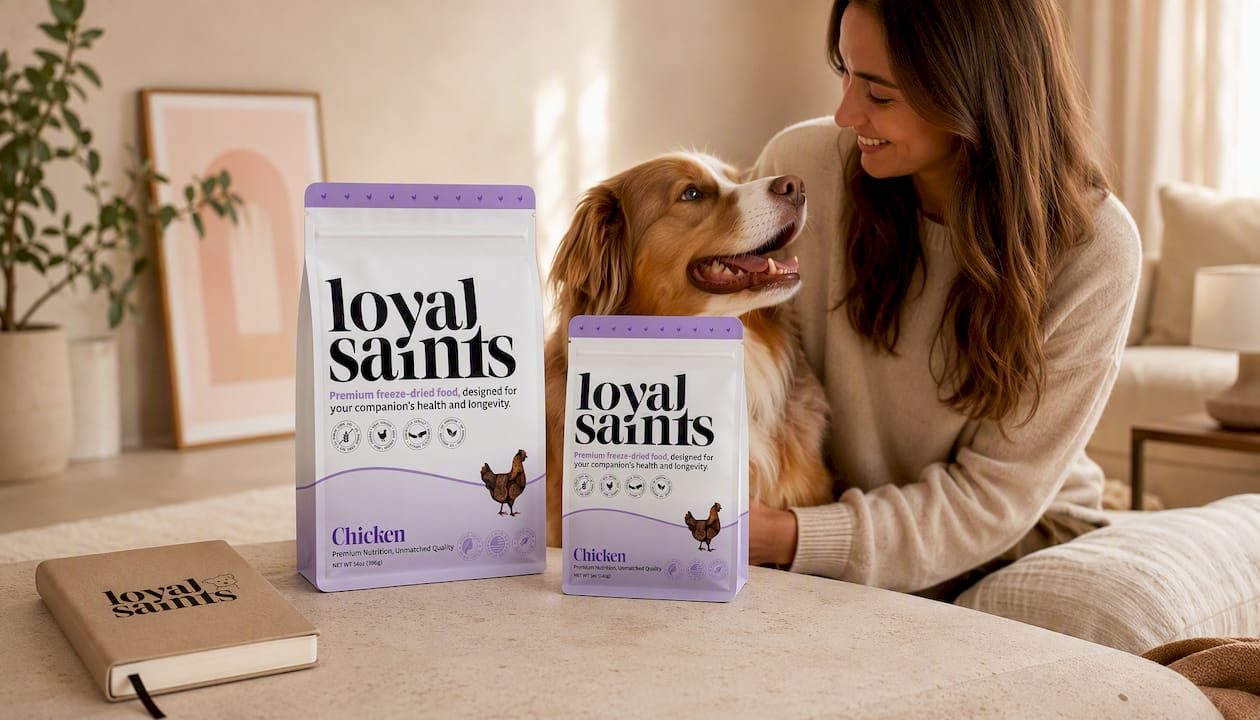
The Freeze Dried Raw Chicken — 5oz is sized exactly for the trial approach covered earlier in this article. It is a low-commitment way to run that five to seven day test before you invest in a larger bag, especially useful for small dogs or households testing a first raw diet. Once your dog tolerates the switch and you’re ready to commit, the Freeze Dried Raw Chicken — 14oz covers a full transition and ongoing feeding without constant reordering.
Both use a single named protein and aim to meet AAFCO complete-and-balanced standards, so nutritional adequacy is addressed while you watch for stool changes. Follow the same hygiene practices covered in the transition section: wash bowls and hands after handling, and store the product per package instructions. Orders over a certain amount ship free, and a membership option provides ongoing savings and shipping benefits for regular customers. Start with the 5oz bag, track stool consistency for a week, and decide from there.
Sources
- Study comparing fecal output between freeze-dried raw and extruded diets (PMC11648562)
- Freeze-dried dog food: pros and cons — PetMD
- Processing format impact on amino-acid digestibility and TMEn (PubMed 37950347)


