
For most dogs, freeze-dried wins on nutrient preservation and closeness to a raw diet, while air-dried wins on convenience, forgiving portioning, and everyday durability. Neither format replaces good judgment: confirm the bag says AAFCO-complete, and check with your veterinarian if your dog has a health condition. The section on which format fits which dog below will help you match the right one to your household.
TL;DR:
- Freeze-dried food preserves more heat-sensitive nutrients due to its sublimation process, but it crumbles easily and requires gentler handling and packaging.
- Air-dried food offers better durability and resistance to crushing, making it more convenient for travel and longer storage but may contain slightly fewer nutrients.
- Both formats should be labeled as AAFCO-complete for health safety, and portioning with a scale is essential to avoid overfeeding, especially with denser air-dried products.
- Freeze-dried food typically costs more per pound and has a longer shelf life when sealed properly, while air-dried is usually cheaper and needs quicker use after opening.
- The best choice depends on the dog’s size, age, dental health, household routines, and handling preferences, rather than one format being strictly superior.
Table of Contents
- Freeze-Dried vs Air-Dried Dog Food: How the Processing Actually Works
- Nutrition and Safety: What AAFCO Completeness and HPP Actually Guarantee
- How Do You Rehydrate and Portion Freeze-Dried and Air-Dried Food?
- Cost, Shelf Life, and Everyday Value Per Feeding
- Which Format Fits Which Dog?
- Why Loyalsaintspets’ Freeze-Dried Approach Fits This Comparison
- What Brands Look Like in Each Category
- Does Freeze-Drying or Air-Drying Cost the Planet More?
- An Editorial Take on the Freeze-Dried vs Air-Dried Debate
- If You’re Ready to Try Freeze-Dried, Here’s Where to Start
- Sources
Freeze-Dried vs Air-Dried Dog Food: How the Processing Actually Works
The difference between these two foods starts long before they hit the bowl. Freeze-drying freezes raw or gently cooked ingredients solid, then pulls them into a vacuum chamber where the ice converts straight to vapor without ever passing through a liquid stage. That process, called sublimation, is why freeze-dried food keeps so much of its original nutrient profile. Air-drying works differently: it uses sustained low heat to slowly evaporate moisture out of the food over many hours, similar to how jerky is made.
That single difference in method explains most of what you notice on the shelf and in the bowl. Freeze-dried pieces come out light, porous, and almost brittle, since removing water by sublimation leaves the cellular structure largely intact but fragile. Air-dried pieces come out denser and chewier, closer to a jerky texture, because evaporation collapses more of that structure as moisture leaves.
The AKC’s breakdown of dry food options that aren’t kibble confirms freeze-drying’s minimal heat exposure preserves more heat-sensitive nutrients, while air-drying’s low-heat evaporation produces a sturdier product.
That trade-off shows up in daily handling:
- Freeze-dried food crumbles easily in a shipping box or a purse-sized snack bag, so it needs sturdier packaging and gentler handling.
- Air-dried food resists crushing and travels well loose in a pocket or glovebox.
- Freeze-dried pieces mix into wet food or broth almost instantly once broken up.
- Air-dried pieces hold their shape longer, which some owners like for slow feeders and puzzle toys.
Nutrition and Safety: What AAFCO Completeness and HPP Actually Guarantee
Neither format is automatically the healthier choice. What matters is whether the bag is labeled complete and balanced under AAFCO standards, which sets the nutritional floor for feeding a food as a dog’s sole diet long-term. A beautifully sourced protein blend that skips this labeling can leave gaps in calcium, taurine, or trace minerals over months of feeding.
Pathogen risk is the other piece owners tend to underestimate. Many raw-format freeze-dried products go through high-pressure processing (HPP), a cold-pressure step that reduces bacterial load without cooking the food. HPP helps, but it does not sterilize the product completely. According to Dogster’s vet-reviewed review of freeze-dried pros and cons, households with immunocompromised members, very young children, or elderly residents should handle any raw-format food, freeze-dried included, with the same caution used for raw meat in the kitchen.
By the Numbers: Freeze-dried products typically hold moisture under 5%, while air-dried products usually sit between 8% and 14%, according to the Whole Dog Journal’s analysis of raw diet formats. That gap drives most of the shelf-life and storage differences between the two.
Before buying either format, confirm three things on the label:
- The guaranteed analysis lists protein, fat, fiber, and moisture percentages, not just “meets AAFCO profiles.”
- A feeding chart tied to your dog’s weight is printed on the bag or available online.
- Storage instructions for after opening are clear, since neither format behaves like sealed kibble once air hits it.
How Do You Rehydrate and Portion Freeze-Dried and Air-Dried Food?
Freeze-dried food’s low moisture is exactly why most brands recommend rehydrating it before serving, especially for puppies and dogs with dental issues. Here’s the basic process:
- Add warm (not hot) water to the freeze-dried patties or nuggets, roughly matching the water to the food by volume, and let it sit.
- Wait about 3 minutes for most freeze-dried products to fully soften, though Dogster notes some denser formulations take longer.
- Check the texture before serving. It should mash easily with a fork; if it’s still firm in the center, give it another minute.
- Feed dry only for dogs who tolerate it well and drink plenty of water on their own, since skipping rehydration shifts more hydration responsibility onto the water bowl.
Air-dried food, by contrast, is meant to be fed as-is straight from the bag, which is part of its convenience appeal.
Portioning is where owners most often go wrong. Because air-dried food is denser, a measuring cup can pack in far more calories than the same cup of kibble. Spot & Tango’s comparison of the two formats found that owners who eyeball portions by volume instead of weight commonly overfeed by a wide margin. A kitchen scale solves this in seconds and is worth the five dollars it costs.
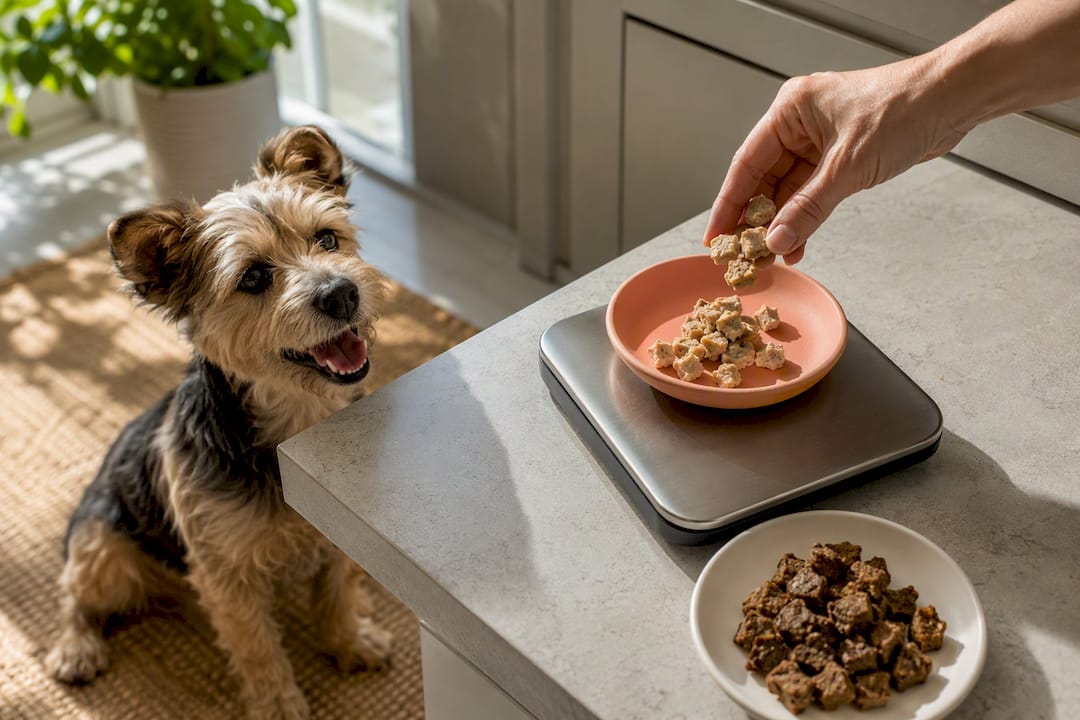
Pro Tip: Weigh a week’s worth of freeze-dried and air-dried portions once, side by side, so you know exactly what a “cup” of each actually weighs for your dog. It only takes a few minutes and it prevents months of subtle overfeeding.
If you’re switching between formats, transition over five to seven days, mixing increasing amounts of the new food into the old one to avoid stomach upset.
Cost, Shelf Life, and Everyday Value Per Feeding
Freeze-dried food usually costs the most per pound on the shelf, and air-dried tends to land in the middle between freeze-dried and standard kibble. That pricing gap makes more sense once you factor in rehydrated weight: a 5oz bag of freeze-dried food expands significantly once water goes back in, so the sticker price isn’t the full story of cost per meal.
Shelf Life Snapshot: Freeze-dried food’s minimal moisture content, generally under 5%, gives it strong shelf stability once opened, provided it stays sealed and dry. Air-dried food’s higher moisture, often between 8% and 14%, means it should be used up faster after opening and stored somewhere cool and airtight.
Where each format earns its price:
- Freeze-dried shines as a topper, training reward, or full diet for small dogs where a little goes a long way.
- Air-dried works well as a steady, no-fuss full meal for owners who want raw-adjacent nutrition without daily rehydrating.
- Both formats cost less per feeding when used as a 20 to 30 percent topper over a base diet rather than a full meal replacement, a ratio recommended by feeding guides for balancing cost and nutrition.
- Travel and camping trips favor freeze-dried for its light weight and air-dried for its crush resistance.
Which Format Fits Which Dog?
Matching the format to the dog matters more than picking a “winner” in the abstract. Freeze-dried tends to fit best for:
- Puppies and small-breed dogs who need nutrient-dense, easily rehydrated meals in small portions.
- Senior dogs or dogs with dental problems, since rehydrating softens the texture considerably.
- Owners transitioning from raw feeding who want a similar nutrient profile without the freezer space.
Air-dried tends to fit best for:
- Active, medium to large dogs who need calorie-dense meals without the bulk of rehydrated freeze-dried food.
- Owners who travel often or want a food that survives a gym bag or glovebox without crumbling.
- Households that prefer a grab-and-serve routine over a rehydration step.
Skip raw-format foods, freeze-dried or otherwise, in households with infants, elderly residents, or immunocompromised family members unless your veterinarian has specifically approved the hygiene setup. A quick decision checklist: confirm AAFCO completeness, weigh (don’t scoop) portions for the first two weeks, and call your vet before switching formats if your dog has kidney, pancreatic, or digestive conditions.
Why Loyalsaintspets’ Freeze-Dried Approach Fits This Comparison
Everything above points toward one conclusion: freeze-dried works best when it’s genuinely AAFCO-complete, clearly labeled, and easy to portion correctly. That’s the standard approach built into every recipe, using single or limited proteins with no fillers or synthetic additives.
For readers who want the mechanics down to the last detail, the rehydration walkthrough covers water ratios and soak times step by step, and the long-term health comparison against kibble digs into nutrient completeness over time.
What actually satisfies the safety checkboxes covered earlier:
- AAFCO-complete labeling on every recipe, not just a subset of the line.
- A printed feeding chart scaled to body weight, so portioning starts accurate instead of guessed.
- Clear storage guidance for after opening, matching the low-moisture handling freeze-dried food requires.
What Brands Look Like in Each Category
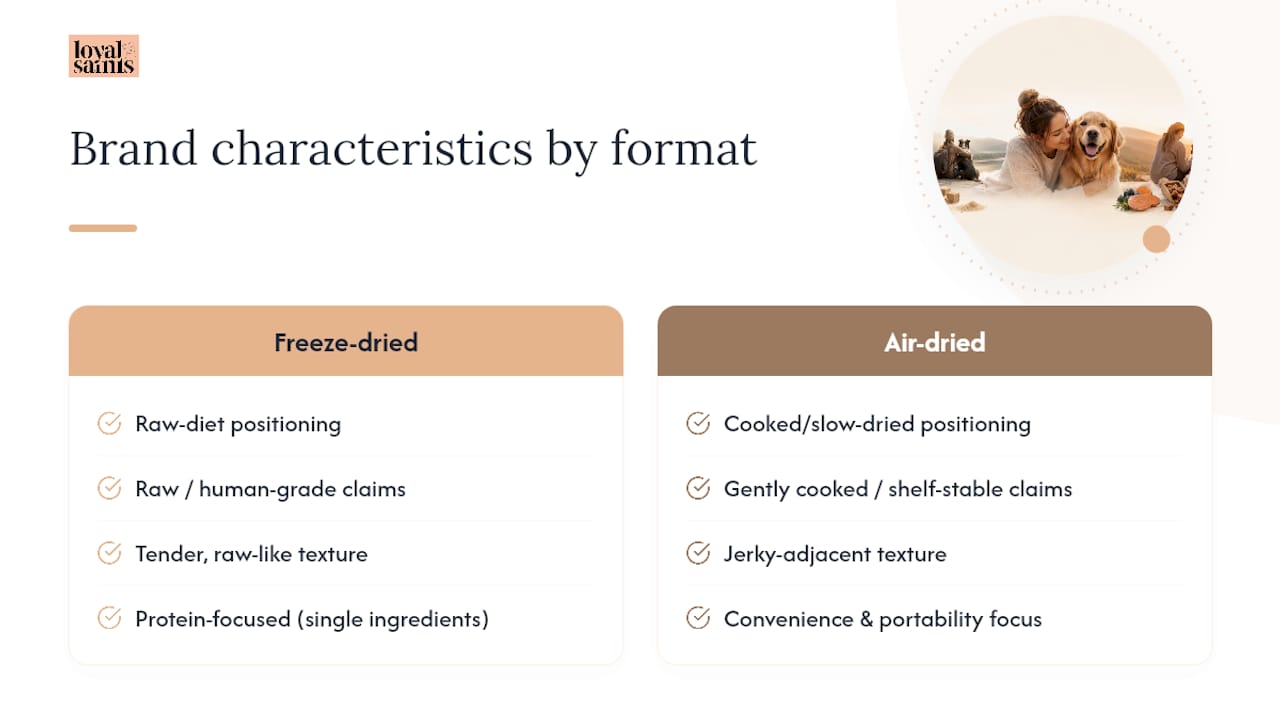
Walk down the raw-adjacent aisle of any well-stocked pet store and you’ll notice the two formats cluster differently. Freeze-dried brands tend to emphasize single-ingredient proteins and raw-diet positioning, often selling both complete meals and simple freeze-dried treats like liver or chicken pieces. Packaging usually highlights “raw,” “human-grade,” or “minimally processed,” since freeze-drying’s whole appeal is staying as close to unprocessed meat as possible.
Air-dried brands, by contrast, often lean into the jerky-adjacent texture and market themselves around convenience and shelf stability rather than raw positioning. You’ll see phrases like “gently cooked” or “slow-dried” more often than “raw” on these labels, since the low-heat process typically involves at least some cooking rather than freezing raw ingredients outright.
Life-stage formulation matters in both categories, and it’s worth checking that a brand’s puppy-specific or all-breed formulas actually account for growth-stage nutrient needs rather than just shrinking an adult recipe. Partner resources like Optimeal’s puppy nutrition line illustrate how life-stage-specific formulation gets handled outside the raw-format category, which is a useful comparison point when you’re evaluating any brand’s puppy claims.
Within this lineup, the choice comes down to protein and portion size rather than processing method, since every recipe follows a freeze-dried, AAFCO-complete approach.
Does Freeze-Drying or Air-Drying Cost the Planet More?
Freeze-drying is an energy-intensive process. Running a vacuum chamber cold enough to sublimate ice takes considerably more electricity than air-drying’s low-heat evaporation, which is one of the trade-offs behind freeze-dried food’s higher shelf price. Air-drying’s lower energy draw is part of why it typically lands cheaper per pound, since the manufacturing cost gets passed straight through to the bag.
Packaging tells a more complicated story. Freeze-dried food’s fragility means it often ships in sturdier, sometimes multi-layer packaging to prevent crumbling in transit, which can mean more material per bag. Air-dried food’s denser structure tolerates simpler packaging, though its higher moisture content sometimes calls for more robust moisture barriers to prevent spoilage.
Neither format is inherently the sustainable choice once you weigh energy input against packaging and shelf life together. What actually moves the needle is sourcing: proteins raised without excess feed or water waste, and recipes that use whole cuts instead of high-waste byproducts, tend to have a bigger environmental footprint impact than the drying method itself. If sustainability matters to you as a buyer, look past the “freeze-dried” or “air-dried” label and check whether the brand discloses its sourcing practices and packaging materials directly, since that’s where the real difference in footprint usually lives.
An Editorial Take on the Freeze-Dried vs Air-Dried Debate
The conventional advice on this topic treats freeze-dried and air-dried like a beauty contest, one crowned “best” and the other quietly filed under “runner-up.” That framing misses the point. The research here supports a different conclusion: the right format depends entirely on how a specific dog eats, how careful the household is with portioning, and whether anyone at home has a compromised immune system.
What’s overrated in most comparisons is the obsession with nutrient preservation percentages, as if a slightly higher retained-vitamin number automatically makes one food correct for your dog. What’s underrated is portioning discipline. An owner who weighs food and follows a feeding chart gets more real-world benefit from a “good enough” formula than an owner who eyeballs a “perfect” one.
If you take one thing from this comparison, prioritize the boring stuff first: AAFCO-complete labeling, a kitchen scale, and a five-minute call to your vet before switching. The processing method matters less than most marketing suggests once those basics are locked in.
— Kristina
If You’re Ready to Try Freeze-Dried, Here’s Where to Start
Loyalsaintspets gives you a way to test freeze-dried feeding without committing to a full-diet overhaul on day one, since every recipe is sized for a specific use case rather than a one-size-fits-all bag.
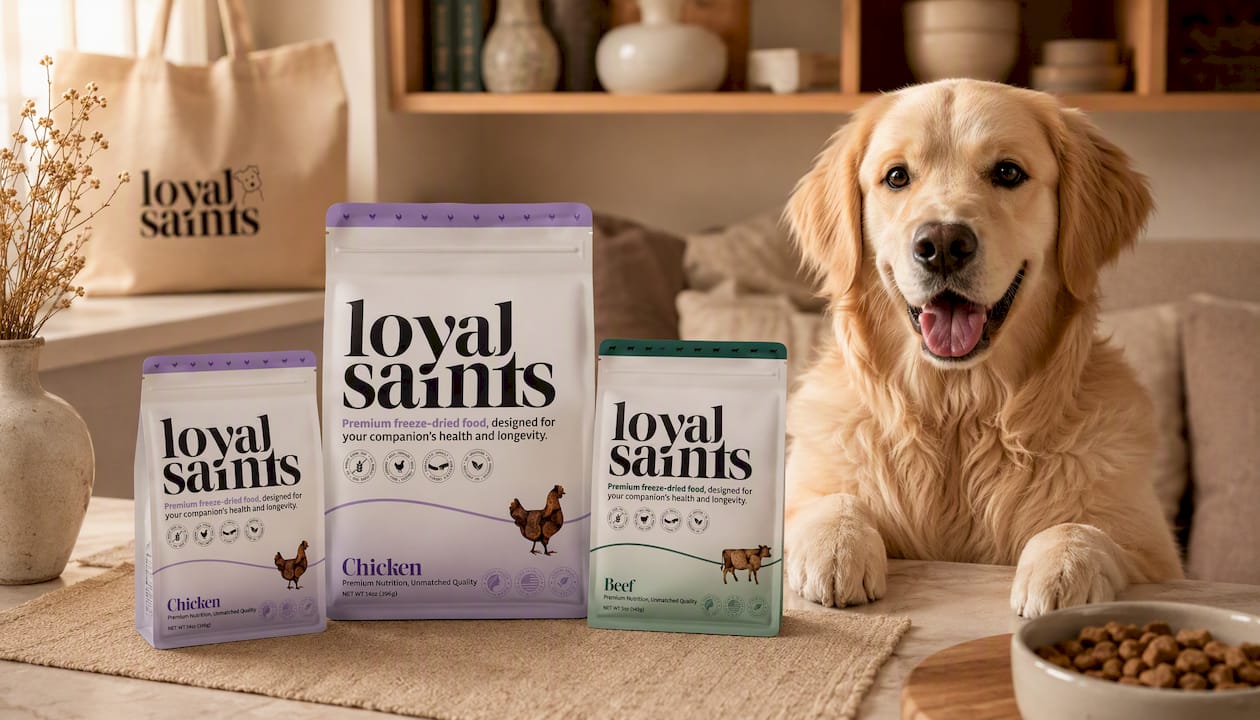
If you want to test the rehydration process, palatability, or simply reward good behavior without derailing a diet, the Freeze Dried Raw Chicken, 5oz is built for exactly that trial-sized use. Once your dog is on board, the Freeze Dried Raw Chicken, 14oz covers short-term full feeding for a small dog or several days of consistent topping without repeat ordering. Dogs who do better on a different protein, or owners who want variety in rotation, can look at the Freeze Dried Raw Beef, 5oz as a straightforward swap.
Whichever SKU you start with, follow the feeding chart printed on the bag, store it exactly as directed, and check with your veterinarian first if your dog has an existing health condition. From there, pick the size that matches your dog’s weight and your household’s routine, and place your order.
Sources
- Dry dog food options aren’t kibble — AKC expert advice
- Freeze-Dried Dog Food: 8 Vet-Verified Pros & Cons — Dogster


