
Healthy senior dogs generally need at least as much high-quality protein as younger adults, and often more, to protect against age-related muscle loss. The exception is a dog with diagnosed kidney or liver disease, whose plan needs a veterinarian’s input, not a guess based on age alone.
TL;DR:
- Senior dogs typically need 28-32% crude protein on a dry-matter basis to support muscle maintenance, which is nearly double the regulatory minimum.
- Protein quality and digestibility are key, with named animal proteins and lower fiber levels ensuring better amino acid absorption.
- Muscle loss can occur without weight change, so owners should monitor muscle condition score and seek vet advice if signs appear.
- Converting label percentages to dry-matter basis helps accurately compare protein content across different dog foods.
- Boosting protein through high-quality, concentrated toppers can support recovery, picky eating, or increased muscle preservation without overfeeding.
Table of Contents
- Senior Dog Protein Needs: What the Veterinary Evidence Says
- Why Protein Quality and Digestibility Matter More Than the Percentage Alone
- How to Tell If Your Dog Actually Needs More Protein
- Reading the Label: Turning Percentages Into Real Answers
- Calculating Grams of Protein Per Day: Two Worked Examples
- When Protein Restriction Actually Makes Sense
- How Loyal Saints Pets’ Freeze-Dried Proteins Fit Into a Senior Feeding Plan
- The Other Nutrients That Make or Break Protein Metabolism
- Transitioning to a Higher-Protein Diet Without Upsetting Your Dog’s System
- Protein’s Role Beyond the Kidneys: Diabetes and Arthritis
- A Checklist to Bring to Your Next Vet Visit
- Where to Verify the Evidence Yourself
- A Practical Next Step for Boosting Your Senior Dog’s Protein Intake
- Sources
Senior Dog Protein Needs: What the Veterinary Evidence Says
Aging changes what a dog burns for fuel, but it doesn’t change what a dog needs to hold onto muscle. A peer-reviewed review on life stage feeding found senior dogs’ calorie needs typically drop by about 25%, while their protein needs stay flat or climb. That gap is the whole story behind senior dog dietary protein guidance: less fuel, same or greater building material.
Cornell’s veterinary nutrition team backs this up with a specific number. Their guidance for choosing food for senior dogs points to protein quality as the marker that matters, not just the percentage on the bag, and it flags low-protein senior diets as a real risk factor for accelerated muscle loss in otherwise healthy older dogs.
Here’s where the confusion usually starts. It exists so a food doesn’t fall below the line that keeps a young, healthy dog alive. It was never designed as a target for muscle preservation in a 12-year-old Labrador losing lean mass.
Statistic Callout: Clinical guidance commonly cites 28-32% crude protein (dry-matter basis) as the target range for healthy senior dogs, according to Vetstreet’s veterinary guide, nearly double the AAFCO adult minimum.
Key distinctions to keep straight:
- AAFCO 18% = regulatory floor, not a health goal
- 28-32% DMB = clinical target most vets recommend for aging bodies
- Energy (calorie) needs fall with age, protein needs do not follow the same curve
- “Senior formula” on a label carries no legal definition, so the percentage still needs checking
Why Protein Quality and Digestibility Matter More Than the Percentage Alone
A bag boasting “32% protein” tells you almost nothing if that protein comes from low-value plant meals your dog can barely absorb. Protein quality refers to how complete the amino acid profile is and how well your dog’s body can actually use it, and named animal proteins (chicken, turkey, salmon, beef) consistently outperform generic “meat meal” or plant-heavy blends on this measure.
Digestibility is the other half of the equation. Research on aging pets shows apparent protein digestibility generally holds steady between young and old dogs, but there’s a catch: soluble fiber can reduce protein digestibility in older dogs specifically. A senior food loaded with fiber for “digestive support” might quietly be undercutting the very protein it’s supposed to deliver.
- Aim for foods listing a named animal protein as the first ingredient
- Watch fiber content in senior-labeled foods; more isn’t automatically better
- High digestibility (roughly 80% or higher apparent digestibility) means more usable amino acids reach the muscle
Pro Tip: A dog recovering from illness or surgery burns through amino acid reserves fast. Prioritizing highly digestible, named-protein sources during recovery periods can shorten the time it takes to rebuild lost muscle.
How to Tell If Your Dog Actually Needs More Protein
Weight alone lies to you. A dog can hold steady on the scale while quietly losing muscle and gaining fat, which is exactly why Cornell recommends the Muscle Condition Score as a separate check from Body Condition Score.
- Run your hands over the thighs and shoulder blades monthly. Muscle feels firm and rounded; wasting feels flat, with bone more prominent under your fingers.
- Watch for red flags together, not in isolation: progressive muscle loss, reduced mobility, slow recovery from minor illness, or a dropping MCS even when body weight stays stable.
- If you notice any of these signs, ask your vet for a renal panel and baseline bloodwork before making major diet changes, since some symptoms overlap with kidney or thyroid issues that require a different approach.
Catching muscle loss early, while it’s still subtle, is far easier to reverse than waiting until it’s visible from across the room.
Reading the Label: Turning Percentages Into Real Answers
The guaranteed analysis on a bag shows protein “as fed,” which includes moisture weight and makes wet foods look artificially low next to dry kibble. Converting to dry-matter basis (DMB) fixes that distortion and lets you compare foods on equal footing.
The math is simple: subtract the moisture percentage from 100 to get the dry matter percentage, then divide the protein percentage by that number and multiply by 100.
Because “senior” carries no legal definition, one senior formula might run lower in protein than a standard adult food, while another runs higher. The label alone won’t tell you which camp a product falls into. You have to do the conversion yourself.
Practical rules worth following at the pet store shelf:
- Look for a named animal protein (not “meat by-product” or “animal digest”) in the first two ingredients
- Recalculate any advertised protein percentage to DMB before comparing products
- Match texture and form to your dog’s dental health; freeze-dried and canned options often suit dogs with worn or missing teeth better than hard kibble
- Skip foods leaning on pea protein, corn gluten, or soy as the primary protein source for a senior dog needing muscle support
Calculating Grams of Protein Per Day: Two Worked Examples
Percentages are useless without translating them into what actually lands in the bowl. The process has three steps, and once you’ve done it once, it takes about two minutes for any dog.
- Estimate daily calorie needs (MER). A common resting energy formula is 30 times body weight in kilograms, plus 70, then multiplied by an activity factor (often 1.2 to 1.4 for a moderately active senior).
- Convert that to a protein target using a protein:energy ratio. Clinical practice frequently uses a benchmark of roughly 60 grams of protein per 1,000 kcal (Mcal) of metabolizable energy as a reference point for healthy seniors.
- Multiply that ratio by your dog’s daily calorie total to get grams of protein per day.
Statistic Callout: Using this protein-to-energy reference, senior dogs of smaller and medium sizes typically need proportional grams of protein daily aligned with their calorie intake.
The critical move happens when calories drop with age but protein grams don’t follow them down proportionally. If a dog’s calorie needs fall 25% but you keep feeding the same lower-protein senior formula at a smaller portion, absolute protein intake falls too, which is precisely how sarcopenia creeps in unnoticed.
When Protein Restriction Actually Makes Sense
Protein restriction is a therapeutic tool for diagnosed, advanced kidney disease or specific liver conditions, not a default precaution for aging dogs. Higher-quality protein has not been shown to cause kidney disease in healthy older dogs, so restricting protein “just in case” typically does more harm than good by accelerating muscle loss.
- Run baseline bloodwork (renal panel) before any major protein reduction
- Work with a veterinarian or board-certified veterinary nutritionist for therapeutic diets, since restriction levels vary by disease stage
- Recheck MCS and lab values on a set schedule after any dietary change, not just once and done
How Loyal Saints Pets’ Freeze-Dried Proteins Fit Into a Senior Feeding Plan
Boosting grams of protein per meal doesn’t always mean overhauling the whole diet. A concentrated, named-animal protein topper can raise digestible protein intake without expanding portion size, which matters for seniors with smaller appetites or slower digestion.
There are freeze-dried options built around this exact use case: products for households wanting a full-size supply, options for trial sizes or picky eaters, and alternative named-protein sources for dogs who need variety or have shown a preference away from poultry.
- Made from quality ingredients without fillers or synthetic additives
- Formulated to meet complete-and-balanced nutrition standards
- Useful for recovery feeding, picky seniors, or simply raising protein density per bite
| Product | Best Use Case | Format |
|---|---|---|
| Freeze Dried Raw Turkey with Salmon — 14oz | Everyday protein boost for larger households | Full size |
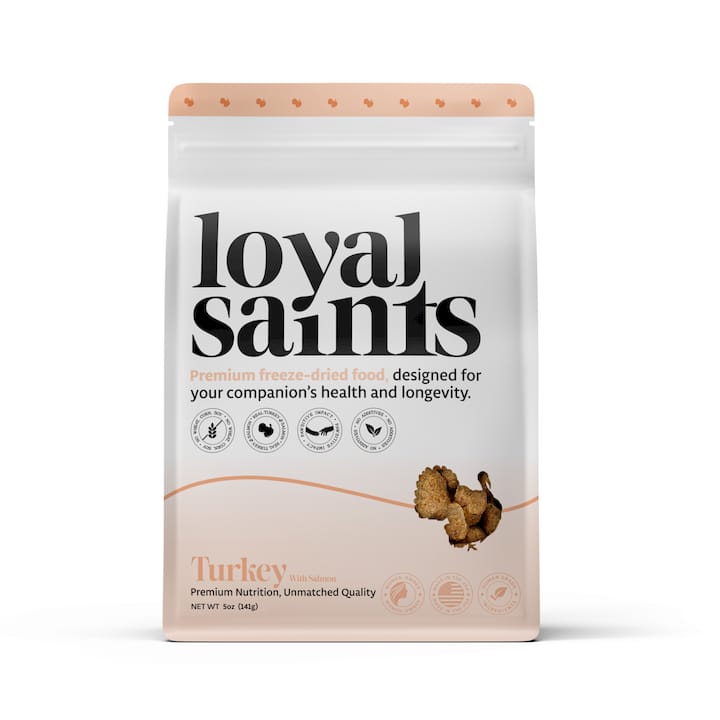
| Freeze Dried Raw Turkey with Salmon — 5oz | Trial size for picky or small dogs | Trial size |
| Freeze Dried Raw Beef — 14oz | Protein variety or poultry-averse dogs | Full size |
The Other Nutrients That Make or Break Protein Metabolism
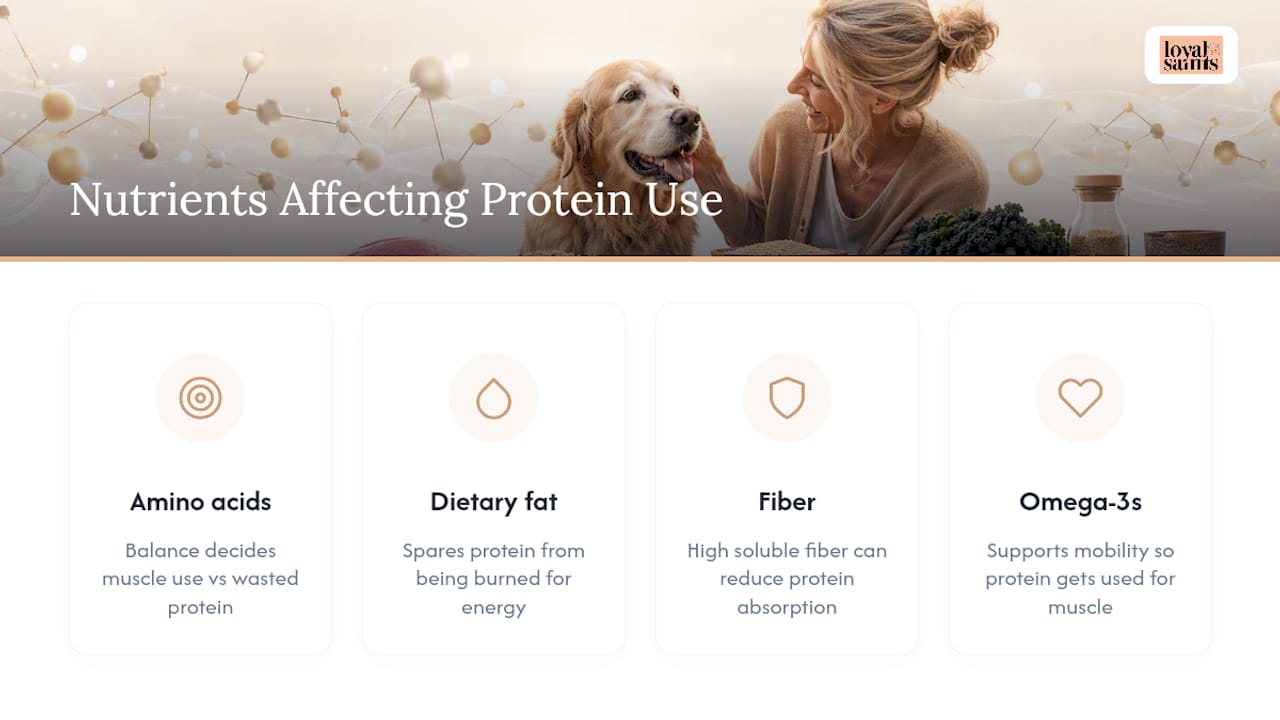
Protein doesn’t work alone. Amino acid balance determines whether the protein your dog eats actually gets used to rebuild muscle or gets wasted because one essential amino acid is in short supply. A diet heavy in a single cheap protein source can fall short here even at a high overall percentage, which is another reason named, varied animal proteins beat single generic meals.
Fat plays a supporting role that’s easy to overlook. Dietary fat spares protein from being burned for energy, letting more of it go toward tissue repair instead of fuel. Cutting fat too aggressively in a senior diet, often done reflexively to manage weight, can push the body to burn dietary protein as calories rather than muscle-building material.
Fiber cuts both ways. Moderate fiber supports gut health and stool quality, both common senior concerns, but as research on aging pets shows, high soluble fiber levels can measurably reduce how much of the protein in a meal actually gets absorbed. Omega-3 fatty acids don’t feed muscle directly, but they support joint comfort and mobility, which in turn keeps a dog active enough to use the protein it’s eating. Losing mobility often precedes losing muscle, so the two are more connected than owners expect. For more on that connection, see how omega-3s support aging dogs more broadly.
The takeaway: a high protein percentage on a bag means little if fat is too low, fiber is too high, or the amino acid profile is incomplete. All four nutrients move together.
Transitioning to a Higher-Protein Diet Without Upsetting Your Dog’s System
Senior digestive systems tend to be less forgiving of sudden change, so the switch to a higher-protein diet needs a slower runway than you’d use with a younger dog. A seven to ten day transition, gradually increasing the new food’s share of the bowl while decreasing the old food, gives the gut time to adjust its enzyme production and gives you time to watch for problems.
Watch stool consistency daily; loose stool that persists past the transition window, rather than settling within a day or two of each ratio change, is a signal to slow down rather than push through.
Reassess Body Condition Score and Muscle Condition Score at the four to eight week mark after the switch is complete, a timeline supported by feeding guidance for aging dogs, and adjust calories if weight climbs while keeping protein grams steady. The goal is more muscle, not more fat, so calorie intake and protein intake need to be managed as two separate dials rather than one combined slider.
Protein’s Role Beyond the Kidneys: Diabetes and Arthritis
Kidney disease dominates the conversation around senior protein, but two other common conditions deserve attention too. In dogs managing diabetes, protein plays a stabilizing role because it doesn’t spike blood glucose the way refined carbohydrates do. A diet with adequate high-quality protein and controlled carbohydrate content can support more predictable glucose patterns, though insulin dosing and monitoring still need to come from your veterinarian.
Arthritis creates a different kind of vicious cycle. Joint pain reduces activity, reduced activity accelerates muscle loss, and muscle loss removes the support structure that joints depend on to stay stable. Adequate protein intake won’t reverse arthritis, but it helps preserve the muscle mass around affected joints, which can meaningfully ease the load those joints carry day to day. This is one more reason activity and nutrition need to move together, not as separate boxes to check.
Neither condition changes the fundamental protein math from earlier sections, but both make it more urgent to get right, since a dog already fighting joint pain or blood sugar swings has less margin for muscle loss than a fully healthy senior does.
A Checklist to Bring to Your Next Vet Visit
A short list beats a long memory when you’re standing in the exam room. Before your next appointment, jot down your dog’s recent weight trend, notes on how the thighs and shoulders feel compared to a few months ago, a photo of the current food label, and a rough daily calorie estimate along with any current supplements or medications.
Ask your vet directly whether renal screening makes sense given your dog’s age and history, what target grams of protein per day they’d recommend, and whether a therapeutic diet is warranted or whether a quality standard senior diet will do the job.
Owners who walk in with numbers instead of impressions tend to walk out with a far more specific plan.
— Kristina
Where to Verify the Evidence Yourself
For readers who want to check the sourcing behind these recommendations directly:
- AAHA’s guidance on when a dog is considered senior, which explains why senior status varies by breed size
- Cornell University’s senior dog feeding guidance, covering MCS assessment and protein quality
- The PMC review on life stage feeding and protein and nutrient considerations in aging pets for the clinical data behind protein:energy ratios
- Loyalsaintspets’ best senior dog food guidance for concentrated protein options
A Practical Next Step for Boosting Your Senior Dog’s Protein Intake
The freeze-dried line addresses the challenge of delivering more digestible, high-quality animal protein into a senior dog without inflating portion sizes or calories past what an aging body needs. Every recipe uses whole ingredients and meets complete-and-balanced nutrition standards, so you’re not guessing whether a topper undermines an otherwise solid diet.

If your dog’s MCS check turned up early signs of muscle loss, or you’re simply looking to raise protein density without overfeeding, the Freeze Dried Raw Turkey with Salmon (5oz) makes an easy trial size to test palatability first. Households ready to commit can move to the 14oz Turkey with Salmon or the Freeze Dried Raw Beef (14oz) for variety. Start with a trial size, watch how your dog responds over one to two weeks, and bring the results to your next vet visit alongside the checklist above.
Sources
- 61 Life Stage Feeding: Is There Path Forward for Senior/Geriatric Nutrient recommendations? | PMC
- Choosing food for your senior dog | Cornell University College of Veterinary Medicine
- How Much Protein Does a Senior Dog Need? Vet Guide | Vetstreet
- Protein and nutrient considerations in aging pets (PMC)


