
Dry kibble and freeze-dried food can be brought in both carry-on and checked bags without TSA quantity limits. Wet or canned food is treated like a liquid, so containers larger than the TSA liquid limit need to go in your checked luggage. Ice packs must be frozen rock-solid at the checkpoint, and the final call on anything questionable always rests with the TSA officer standing in front of you.
TL;DR:
- Freeze-dried dog food is classified as a solid, allowing it to travel in carry-on or checked luggage without quantity limits.
- Wet or canned food counts as a liquid, meaning containers over 3.4 ounces must go in checked baggage and require additional screening.
- All pet food undergoes X-ray screening, and officers may swab containers or request extra inspection if suspicious.
- Proper packaging includes airtight bags for dry kibble and double-bagging or sealing wet cans to prevent leaks during transit.
- Freeze-dried food’s shelf stability and classification as solid make it easier to pass through TSA checkpoints without restrictions.
Table of Contents
- What Are the TSA Rules for Flying With Dog Food?
- How Do You Pack Dry, Freeze-Dried, Wet, and Raw Dog Food for a Flight?
- What Should You Know About Airlines, Baggage, and Cargo Rules?
- What’s a Simple Day-of-Travel Packing Checklist?
- What Common Travel Food Problems Should You Watch For?
- Why Is Freeze-Dried Dog Food Easier to Travel With?
- A Few Honest Words on Packing Smart for Your Dog
- Pack Travel-Ready Freeze-Dried Food From Loyalsaintspets
- Sources
What Are the TSA Rules for Flying With Dog Food?
TSA sorts your dog’s dinner into two very different categories, and knowing which one your food falls into saves you a headache at the checkpoint. Dry or “moist” pet food counts as a solid, which means it travels in carry-on or checked bags with no cap on how much you bring. Freeze-dried food falls into this same solid category, so a full bag of it clears screening the same way a bag of kibble does.
Wet food is a different story. TSA treats canned and pouched dog food as a liquid or gel, which triggers the same 3-1-1 rule that governs your shampoo and toothpaste. That means containers of 3.4 ounces or less can ride in your carry-on quart bag, but anything bigger belongs in checked luggage.
A few things to keep in mind at the checkpoint:
- All food, wet or dry, goes through X-ray screening, and TSA officers can ask you to separate items if they obscure the image.
- Officers may swab containers or request extra screening on anything that looks unusual on the scanner.
- Telling the officer “I have pet food in here” as you approach the bin usually speeds things along.
- TSA sets no quantity cap on dry food, but your airline’s weight and baggage rules still apply.
How Do You Pack Dry, Freeze-Dried, Wet, and Raw Dog Food for a Flight?
Each food type comes with its own packing logic, and getting it wrong is usually what leads to a slow lane or a tossed container.
- Dry kibble. Pack it in clear, airtight bags so the officer can see what it is without opening anything. Portion it out for the trip, then add two extra meals in case your flight gets delayed or your checked bag doesn’t show up on time.
- Freeze-dried food. This counts as dry for screening purposes, so it carries the same no-limit treatment. Its lighter weight and smaller footprint make it easier to stuff into a carry-on than an equivalent amount of kibble, though you’ll need water on hand to rehydrate it once you land.
- Wet, canned, or pouched food. Anything 3.4 ounces or under can ride in your carry-on quart bag. Larger cans and pouches go in checked luggage, and it’s worth double-bagging each one and sealing them inside a small plastic tub to contain any leaks from rough handling.
- Raw or frozen food. Ice packs need to be frozen completely solid when you reach the checkpoint. If they’ve started to soften or turn slushy, officers can treat them as liquids and confiscate them. If your dog is flying in cargo, attach feeding and watering instructions to the kennel before you check in.
Pro Tip: Freeze the ice packs for raw food at least 24 hours before your flight, and don’t open the cooler until you’re through security. A pack that’s been sitting at room temperature for even twenty minutes can soften enough to get flagged.
What Should You Know About Airlines, Baggage, and Cargo Rules?
TSA controls what goes through the checkpoint. Your airline controls how much it weighs and what it costs to bring. Those are two separate sets of rules, and travelers who only check one of them tend to get surprised at the gate.
Before you pack, look up your carrier’s checked-bag weight limit and any pet-related fees, since a bag stuffed with two weeks of kibble can push you over the threshold fast.
- Pad cans and pouches with clothing or towels to keep them from shifting and cracking open mid-flight.
- Double-bag anything wet, and use a sealed rigid container as a backup layer against leaks.
- If your dog travels in the cargo hold, USDA/APHIS requires feeding and watering instructions attached to the kennel, along with confirmation that your dog was offered food and water within four hours of drop-off.
- For international connections or long layovers, shipping food ahead or buying it at your destination is often cheaper than paying overweight baggage fees.
What’s a Simple Day-of-Travel Packing Checklist?
A little structure on travel day keeps you from fumbling through your carry-on while a line forms behind you.
- Pack at least two full meals, or two days’ worth of food, in your carry-on in case checked luggage gets delayed.
- Keep a collapsible bowl and small portion packs in your carry-on; fill a water bottle after you clear security.
- Place pet food in its own clear bag inside your carry-on so it’s easy to pull out, and mention “pet food” to the officer as you enter the lane.
- Keep any airline or destination documentation handy, especially if you’re crossing state or international lines with raw or perishable food.
- Have a backup plan, whether that’s shipping a box ahead to your hotel or scouting a pet store near your destination.
What Common Travel Food Problems Should You Watch For?
Most dog food travel headaches trace back to the same handful of causes, and they’re all avoidable with a little forethought.
- If an officer questions an item, stay cooperative. Offer to move it to your checked bag or mail it home rather than arguing the point.
- Prevent spills by using rigid tubs, doubled zip-top bags, and an absorbent liner underneath cans that ride upright.
- Switch your dog to any new travel food at least two weeks before departure to head off digestive upset from a sudden diet change.
Pro Tip: Freeze-dried packs move through screening with less friction than wet food because they read as solid, not liquid, and their light weight makes them an easy carry-on addition without pushing your bag over the limit.
Why Is Freeze-Dried Dog Food Easier to Travel With?
Freeze-dried food’s biggest travel advantage is simple: it’s shelf-stable and classified as solid, so it skips the 3-1-1 liquid rule entirely until you add water back in. That single fact removes most of the friction wet food creates at the checkpoint.
- A smaller pouch works well for a short weekend trip where carry-on space is tight.
- A larger bag makes more sense for a week away, since it cuts down on how often you’re repacking.
- Test any freeze-dried formula at home before your trip, so rehydration timing and portion size are already dialed in by travel day.
- Pack a collapsible bowl and bottled water so rehydrating on the road takes minutes, not a search for a sink.
A Few Honest Words on Packing Smart for Your Dog
The biggest mistake I see dog owners make isn’t about TSA rules at all. It’s assuming their dog’s regular food will travel as easily as it sits in the pantry at home. Wet food that’s fine on a shelf becomes a liquid the moment it hits a screening belt, and a lot of travelers only learn that the hard way, standing at the checkpoint with a cooler full of confiscated cans.
The fix isn’t complicated. Build your trip around foods that are already travel-friendly instead of trying to force a home routine onto an airport. Freeze-dried and dry options simply create fewer decisions to make under pressure, whether that pressure comes from a TSA line or a canceled connecting flight. Test any new food at home first. Your dog’s stomach won’t care that you were in a hurry when you swapped brands the morning of your flight.
— Kristina
Pack Travel-Ready Freeze-Dried Food From Loyalsaintspets
This freeze-dried lineup addresses the problem this guide walks through: getting real food through security without the liquid-rule headache. Since freeze-dried counts as solid at the checkpoint, these packs skip the 3.4-ounce limit that trips up wet food travelers entirely.
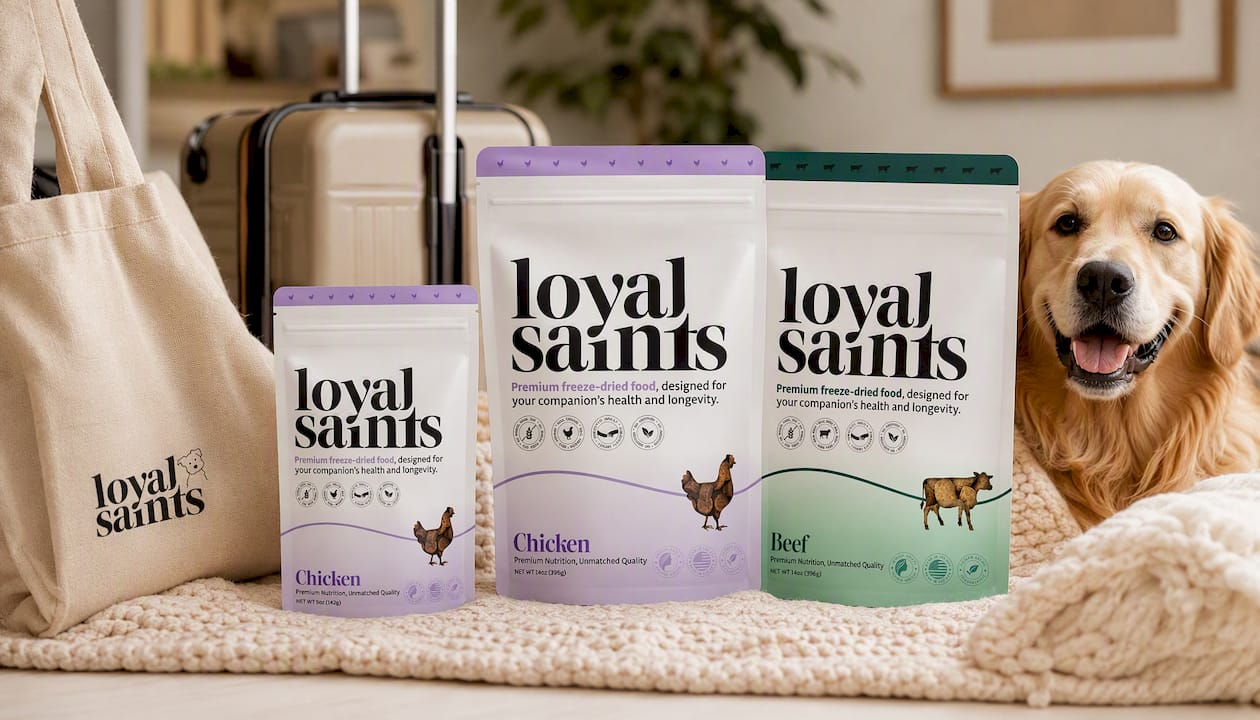
For a weekend trip or a carry-on that’s already tight on space, the 5oz freeze-dried chicken pack fits easily alongside your dog’s leash and travel bowl. Heading out for a week or longer, the 14oz chicken option covers more meals without adding much weight to your bag, and the 14oz beef recipe gives you a second protein if your dog does better rotating flavors. The site offers free shipping on qualifying orders, and a membership option that provides savings and shipping perks for frequent buyers. Check out the full freeze-dried lineup before your next trip and pack a bag that clears security without a second look.


