
Food rotation for dogs means feeding more than one protein or recipe over time, instead of the same bag forever. Done right, it’s safe for most healthy dogs: pick foods that are each AAFCO-complete, rotate protein rather than the whole formula, and transition over 7 to 10 days. Skip rotation, or only do it with your vet’s guidance, if your dog has inflammatory bowel disease, pancreatitis, or is mid-elimination diet.
TL;DR:
- Rotating proteins prevents boredom and can improve appetite and interest, but it offers limited long-term microbiome health benefits.
- Transition between proteins should take place gradually over 7 to 10 days, with no abrupt switches to avoid gastrointestinal upset.
- Rotation is best every 2 to 3 months for healthy dogs, while more frequent changes increase the risk of digestive issues.
- Certain dogs, such as those with inflammatory bowel disease, pancreatitis, or ongoing GI issues, should avoid rotation unless supervised by a vet.
- Using toppers for variety can be safer for sensitive dogs or beginners, but long-term homemade meals require veterinary guidance for proper nutrition.
Table of Contents
- What Are the Real Benefits of Rotating Proteins?
- What Is the Safe Way to Transition Between Proteins?
- How Often Should You Rotate Your Dog’s Food?
- When Should You Not Rotate Your Dog’s Food?
- Are Toppers a Safer Way to Add Variety?
- How Does Loyal Saints Approach Protein Rotation?
- How Do You Keep Nutrition Balanced Across a Rotation?
- What Nutritional Profiles Do Common Proteins Actually Have?
- What Myths About Food Rotation Should You Ignore?
- Can You Mix Homemade Meals Into a Rotation?
- Does Rotation Work Differently for Puppies and Senior Dogs?
- Why We Recommend a Conservative Rotation Schedule
- Start Rotation With Trial Sizes That Protect Your Dog’s Gut
- Sources
What Are the Real Benefits of Rotating Proteins?
The biggest, most reliable benefit of protein rotation is boredom prevention. Dogs that eat the same bowl every day for years sometimes go through phases of picky eating, and introducing a new protein every few weeks tends to bring the enthusiasm back. That’s behavioral, not mystical. It’s the canine version of not wanting chicken breast for the 400th Tuesday in a row.
The microbiome angle gets thrown around a lot in marketing copy, and it deserves a reality check. There is some evidence that gut microbial communities shift when diet changes, but the case for rotation meaningfully diversifying your dog’s microbiome long-term is still thin, and full microbial adaptation to a new food can take three to four weeks. Don’t buy rotation as a health hack. Buy it as a variety strategy with a few real side benefits:
- More consistent appetite and mealtime interest
- Broader micronutrient exposure across different protein sources
- Lower risk of prolonged exposure to one product if it’s ever recalled or reformulated
- Practical cost and freshness advantages from buying variety packs instead of one giant bag
That last point matters more than people expect. A single 30-pound bag of one protein sitting in a bin for two months loses freshness before you’re anywhere close to the bottom. Smaller, rotating bags solve that on their own.
What Is the Safe Way to Transition Between Proteins?
The single biggest mistake owners make with rotation isn’t the rotation itself, it’s the speed. Dumping a new protein into the bowl overnight is the most common cause of the loose stool and vomiting that gets blamed on “sensitive stomachs.” The fix is a slow mix, not a slow protein.
A widely used veterinary schedule starts new food at 20% and old food at 80%, then shifts by roughly 20% every two days until you reach 100% new food around day 8 or 9.
| Day | New protein | Previous food |
|---|---|---|
| 1 to 2 | 20% | 80% |
| 3 to 4 | 40% | 60% |
| 5 to 6 | 60% | 40% |
| 7 to 8 | 80% | 20% |
| 9 | 100% | 0% |
Follow it as a simple sequence:
- Serve the 20/80 mix for two full days and watch stool consistency at each meal.
- Move to 40/60 only if stools stayed normal; if they loosened, hold at the same ratio for another day or two.
- Continue advancing by 20% every two days through 60/40 and 80/20.
- Reach 100% new protein by day 8 or 9 and keep monitoring for another few days after.
If you see soft stool or mild gas, don’t panic and don’t quit. Pause at the current ratio for an extra day or two before advancing. But if loose stools persist past 48 hours, or you see vomiting, blood in stool, or lethargy, stop the transition, go back to the last food that worked, and call your vet. Our guide on transitioning dogs with sensitive stomachs walks through slower variations for dogs prone to GI upset.
How Often Should You Rotate Your Dog’s Food?
There’s no single correct rhythm. It depends on your dog’s tolerance, your budget, and how much you enjoy meal planning for a creature that would eat a sock if you let it. Here are the four rotation rhythms that actually work in practice:
- Every 2 to 4 weeks. Best for dogs with iron-clad stomachs who get bored fast. Requires the most attention to transitions since you’re doing them monthly at minimum.
- Monthly. A comfortable middle ground for most healthy adult dogs, giving enough time to confirm the new protein agrees with them before switching again.
- Every 2 to 3 months. The conservative choice, and the one we’d steer most owners toward, especially anyone new to rotation.
- Seasonal. Four proteins a year, timed loosely to seasons. Low effort, low risk, still delivers the variety benefit.
A sample 8 to 12 week plan might look like: weeks 1 through 4 on a chicken-based kibble with occasional freeze-dried chicken mixed in as a topper, weeks 5 through 8 transitioned to a beef-based diet using the 7 to 10 day mixing schedule, and weeks 9 through 12 moved to a turkey and salmon formula.
A few practical notes on keeping this manageable:
- Buy smaller bags rather than bulk sizes so you’re never rotating out food that’s gone stale.
- Keep one protein “in reserve” in your freezer or pantry in case you need to revert during a rough transition.
- Track opened-bag dates; freeze-dried and kibble both lose nutritional punch faster once the bag is open.
When Should You Not Rotate Your Dog’s Food?
Rotation is not the right move for every dog, and pushing it on the wrong one can do real damage to both their gut and your ability to diagnose what’s actually wrong with them. Veterinarians are consistent on this: rotation is not one-size-fits-all, and several categories of dogs should stay off it entirely, or only attempt it with direct veterinary supervision.
- Dogs currently on a prescribed elimination diet for suspected food allergies. Rotation defeats the entire purpose of an elimination trial by reintroducing variables your vet is trying to isolate.
- Dogs diagnosed with inflammatory bowel disease (IBD), where gut inflammation makes any dietary change a gamble.
- Dogs with a history of pancreatitis, where fat content shifts between proteins (think beef versus chicken) can trigger a flare.
- Dogs with chronic, unexplained vomiting or diarrhea that hasn’t been worked up by a vet yet.
If your dog has any of these, rotating proteins can mask or mimic allergy symptoms and muddy the diagnostic picture for months.
Pro Tip: Keep a simple feeding log with dates, brands, proteins, and stool notes before your vet visit. It turns a vague “she’s been having tummy issues” into a data set your vet can actually use.
Are Toppers a Safer Way to Add Variety?
If you like the idea of variety but your dog has a sensitive gut, or you’re simply new to rotation and not ready to commit, toppers solve most of the problem with almost none of the risk. You keep a single AAFCO-complete base diet as the nutritional foundation and rotate small additions on top.
Safe, commonly used toppers include cooked egg, canned sardines packed in water, cooked sweet potato, and small amounts of plain yogurt, each added in modest portions so they don’t unbalance the base diet’s nutrient profile.
| Week | Topper | Approx. portion (medium dog) |
|---|---|---|
| 1 | Cooked egg | Half an egg, 2 to 3 times per week |
| 2 | Canned sardines (in water) | 1 small sardine, 2 times per week |
| 3 | Cooked sweet potato | 1 to 2 tablespoons daily |
| 4 | Plain yogurt | 1 teaspoon daily |
This is often the right call for sensitive dogs, seniors, and anyone easing into rotation for the first time. Our piece on balanced nutrition for dogs covers how to keep a base diet’s nutrition intact while layering in variety this way.
How Does Loyal Saints Approach Protein Rotation?
Loyal Saints builds its transition guidance around the same 7 to 10 day mixing window vets recommend, applied specifically to moving dogs onto freeze-dried formulas. Every recipe is single-protein or limited-ingredient and formulated to meet AAFCO completeness standards, which means you’re never guessing whether a rotation food covers the nutritional basics.
For owners testing a new protein for the first time, we recommend:
- Starting with a 5oz trial size in chicken, beef, or turkey with salmon before committing to a full-size bag
- Using the 14oz variety pack if you want to test multiple proteins without overbuying any single one
- Following our 7 to 10 day transition guide for the exact mixing ratios
If your dog is moving from kibble specifically, our kibble versus freeze-dried digestive health comparison covers what changes in the gut during that switch.
How Do You Keep Nutrition Balanced Across a Rotation?
The nutritional risk in rotation isn’t any single meal, it’s what happens over months if you’re not paying attention to the whole picture. Every food in your rotation needs to independently meet AAFCO complete-and-balanced standards for your dog’s life stage. Stacking three “complete” diets doesn’t guarantee balance if each one is complete in a slightly different way, with different calcium-to-phosphorus ratios or fat percentages.
Fat content is the variable that trips up the most owners. Beef and salmon run richer in fat than chicken or turkey, and swapping between them without adjusting portions can quietly push calorie intake up or down more than you’d expect. Weigh your dog periodically during a rotation cycle, not just when you remember to.
Changing only the protein while keeping the overall formulation consistent, meaning the same brand line or a similar diet type, reduces the odds of sudden shifts in fat, fiber, or calorie density. That’s a meaningfully lower-risk version of rotation than jumping between wildly different formulas from different manufacturers every few weeks.
Life stage matters here too. A rotation plan built around adult maintenance formulas isn’t appropriate for a growing puppy or a senior dog with different calorie and mineral needs, so check that every food in your rotation is formulated for the correct life stage, not just the correct protein.
What Nutritional Profiles Do Common Proteins Actually Have?
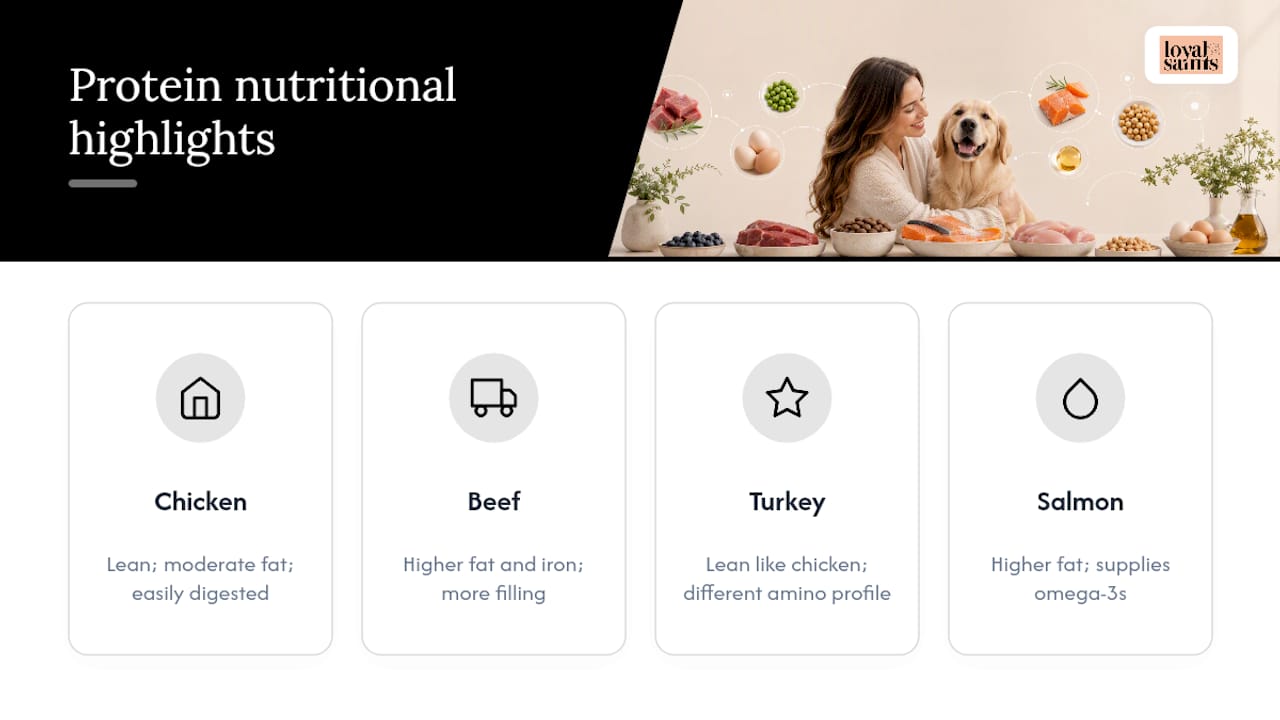
Chicken is the default starting protein for a reason: it’s lean, generally easy to digest, and widely tolerated, making it a sensible baseline before introducing richer options. It’s moderate in fat and a reliable source of complete amino acids.
Beef runs higher in fat and iron than chicken, and some dogs find it more satisfying at the same portion size, but that added fat is exactly why dogs with a pancreatitis history need to approach beef rotations carefully.
Turkey sits closer to chicken in leanness but brings a slightly different amino acid and mineral profile, which is part of the point of rotating in the first place. Pairing turkey with salmon, as in Loyal Saints’ turkey with salmon formula, adds omega-3 fatty acids that chicken and plain beef don’t provide in meaningful amounts, which matters for skin and coat condition over time.
Fish proteins like salmon also bring more fat than chicken or turkey alone, so portion awareness applies here just as it does with beef. No single protein is nutritionally superior across the board. The value of rotation comes from combining their different strengths, not from finding one perfect protein and sticking to it forever.
What Myths About Food Rotation Should You Ignore?
The biggest myth is that rotation prevents food allergies. It doesn’t, and there’s no definitive clinical evidence supporting that claim, even though it gets repeated constantly in pet food marketing. What rotation may do is reduce your dog’s cumulative exposure to any single product, which matters if that product ever gets recalled or reformulated, but that’s a risk-management benefit, not an allergy cure.
A second myth: that rotating food automatically upsets a dog’s stomach. It’s the speed of the switch that causes GI upset, not the fact of switching. A properly paced 7 to 10 day transition avoids the vast majority of the digestive complaints people blame on rotation itself.
Third myth: more variety is always better. There’s a point of diminishing returns where rotating too fast, say, every single week, gives your dog’s gut no time to settle into anything, and you lose the ability to tell which food is causing which symptom if something does go wrong.
Last one: that rotation means chaos, with no plan and no structure. The opposite is true. The rotations that actually work are boring and repeatable: same handful of proteins, same transition timeline, same monitoring habits, cycling in a predictable loop.
Can You Mix Homemade Meals Into a Rotation?
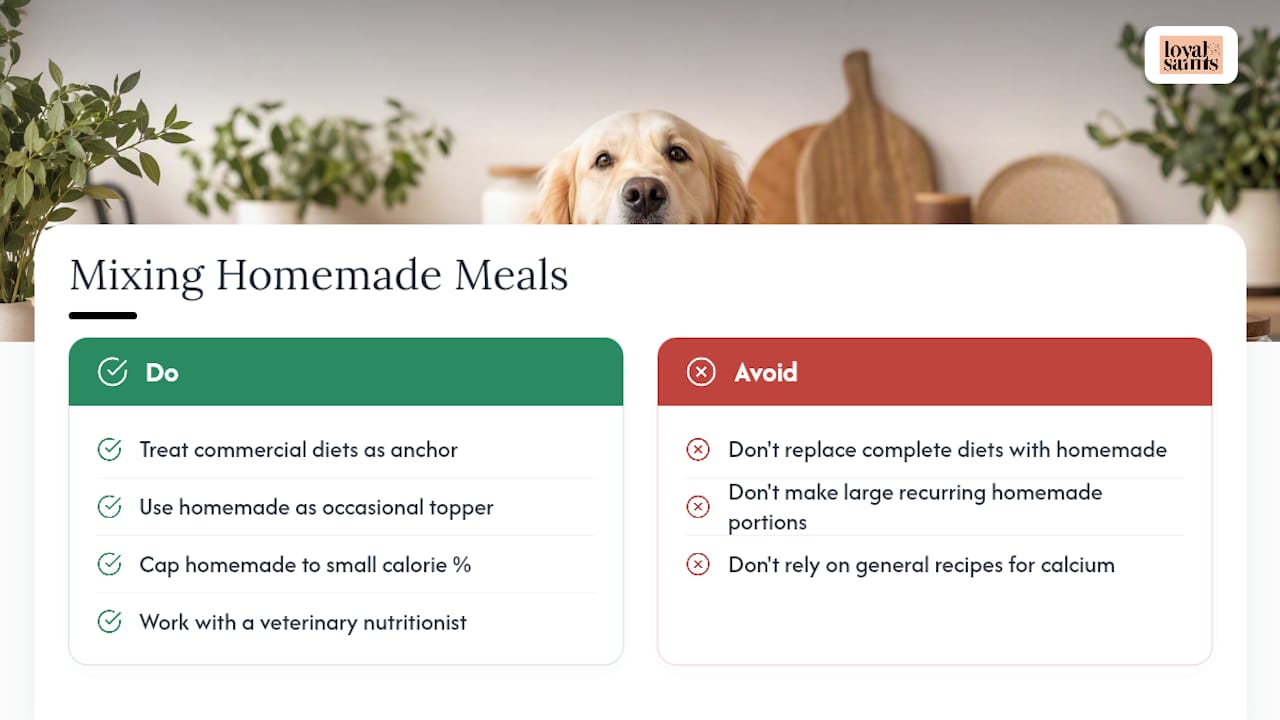
Homemade additions can absolutely fit into a rotation plan, but they change the math. A commercial food carries an AAFCO nutritional adequacy statement you can trust at face value. A homemade meal doesn’t, unless it was formulated by a veterinary nutritionist against a specific recipe, which means an occasional homemade addition should function more like a topper than a full meal replacement, especially over the long term.
The safest way to blend homemade cooking into rotation is to treat commercial, complete diets as your anchor and homemade meals as an occasional variation layered on top, capped at a small percentage of daily calories, similar to how you’d treat any other topper. This keeps the overall diet’s macro and micronutrient math intact even if the homemade portion isn’t independently balanced.
If you want homemade meals to be a larger, recurring part of the rotation rather than an occasional addition, work with a veterinary nutritionist to build a formulated recipe rather than improvising portions based on what looks reasonable. Recipes pulled from general cooking sites or forums routinely fall short on calcium, and that gap compounds over months even if a single meal looks harmless.
Combining commercial freeze-dried proteins with occasional homemade additions is a reasonable middle ground. Rotate the commercial base among proteins on your normal schedule, and treat homemade cooking as a garnish, not a pillar.
Does Rotation Work Differently for Puppies and Senior Dogs?
Puppies have less digestive margin for error than adult dogs, so rotation should be approached more conservatively, if at all, during the first year. Their gut microbiome is still developing, and frequent diet changes during rapid growth can compound normal puppy GI sensitivity. If you rotate at all during puppyhood, stretch transitions closer to the full 10 days and stick to a single life-stage-appropriate formula family.
Senior dogs bring a different set of considerations. Aging digestive systems are often less forgiving of abrupt changes, and many seniors carry undiagnosed low-grade GI or kidney issues that make novel proteins riskier than they’d be in a younger dog. Rotation can still work well for healthy seniors, but slower transitions and closer stool monitoring matter more here than at any other life stage.
Dogs managing a diagnosed health condition, whether that’s kidney disease, diabetes, or a food allergy under active investigation, need their vet involved before any rotation begins, not after you’ve already started. What’s safe for a healthy five-year-old Labrador is not automatically safe for a twelve-year-old dog with early kidney values or a dog whose allergist is mid-elimination trial. Age and health status change the entire risk calculation, and no generic rotation schedule accounts for that on its own.
Why We Recommend a Conservative Rotation Schedule
Most of the enthusiasm around food rotation outpaces the actual evidence, and that gap is worth being honest about. Rotating every 2 to 3 months, or simply rotating toppers, gives most dogs the palatability and variety benefits without the GI roulette of frequent full diet swaps. Keep a simple log of what you feed and how your dog’s stool and energy respond. If your dog has any chronic condition, loop your vet in before you start, not after something goes wrong.
— Kristina
Start Rotation With Trial Sizes That Protect Your Dog’s Gut
Loyal Saints makes cautious rotation easier because you’re not committing to a 30-pound bag to find out if turkey agrees with your dog. Every recipe is single-protein, human-grade, and AAFCO-complete, so you can rotate with confidence instead of crossing your fingers over an ingredient panel.
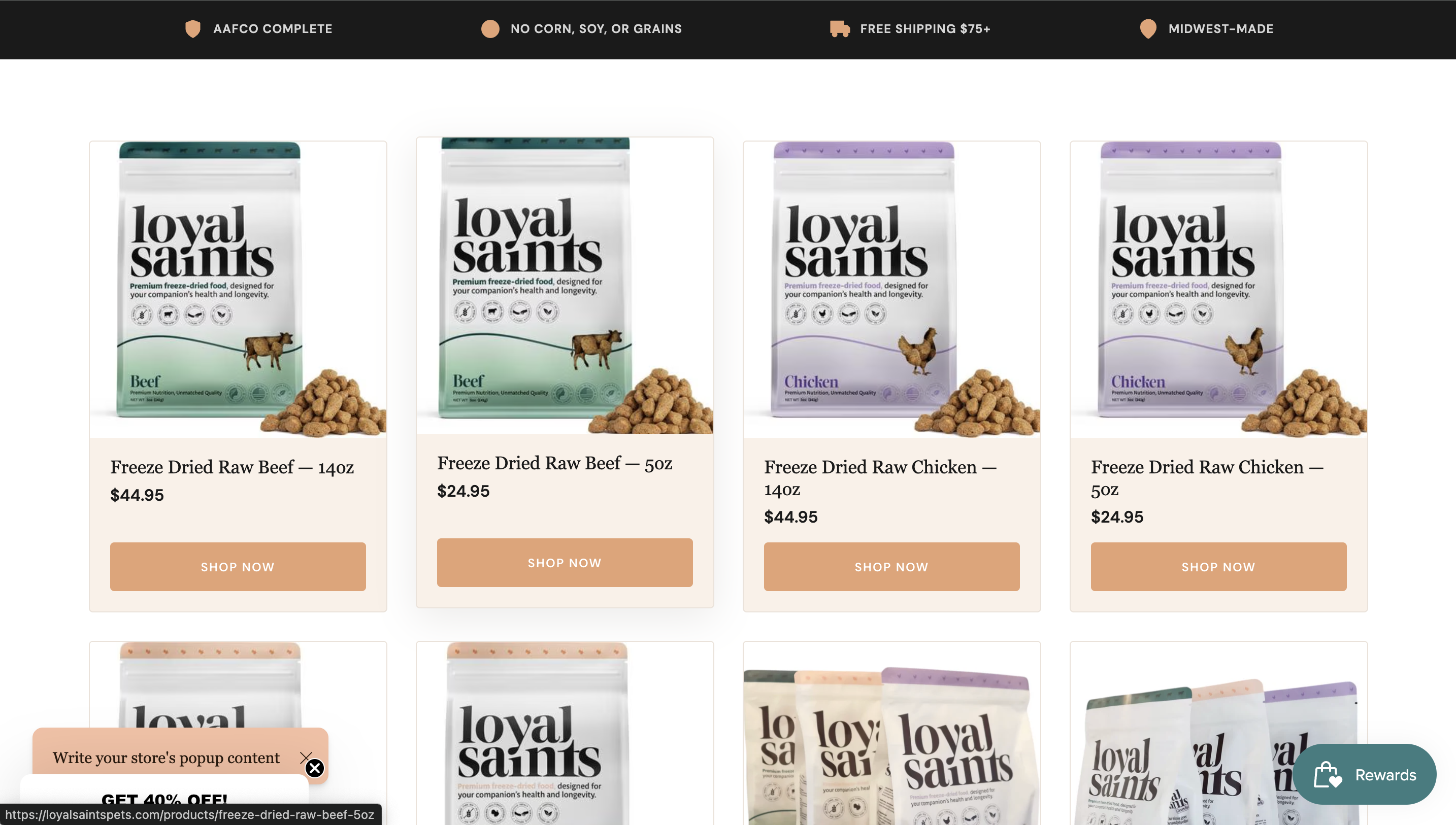
Start with a 5oz trial size in a new protein before committing to a full bag, or grab the 14oz variety pack to test chicken, beef, and turkey with salmon side by side without overbuying any one of them. Curious what makes freeze-dried worth the switch in the first place? Read why freeze-dried matters for freshness and nutrient retention. And if your dog ends up loving the rotation, Halo Club membership keeps fresh proteins arriving on a schedule with ongoing savings and free shipping, so you’re never stuck reordering manually mid-rotation.
Sources
- Rotational Feeding for Dogs: Should You Change Proteins or Stick to One? | Ask A Vet
- AAFCO
- Diet Rotation for Dogs | Dog Food Advisor
- Food rotation & dietary variety for dogs | Puppy Longevity


