
Expect to spend a varying amount each month on DIY raw, frozen commercial raw, or freeze-dried dog food depending on your dog’s size, with small dogs costing less and giant breeds costing more. Size and sourcing decide almost everything else. For most households, a partial-raw approach, mixing a freeze-dried topper into a base diet, delivers most of the benefit without the full price tag.
TL;DR:
- The monthly raw dog food cost varies widely based on the dog’s size, with giant breeds often exceeding $600 for freeze-dried options.
- Storage space and regional meat prices significantly impact the total budget, with freezer costs and local meat prices adding to expenses.
- DIY raw feeding is cheapest per pound but requires time, bulk buying, and careful formulation to avoid nutritional imbalances.
- Freeze-dried raw offers convenience and stability at a higher price, suitable for travel, small dogs, or limited freezer space.
- Many owners prefer a hybrid approach, combining raw, freeze-dried, and commercial diets to balance cost, convenience, and nutritional benefits.
Table of Contents
- How Much Does Raw Dog Food Cost Per Month By Size?
- How Do You Calculate Your Dog’s Monthly Raw Cost?
- What Actually Drives Your Monthly Raw Food Bill Up?
- DIY Raw vs Frozen Commercial vs Freeze-Dried: Which Fits Your Budget?
- What Hidden Costs and Safety Concerns Should You Budget For?
- What I’ve Learned Watching U.S. Owners Budget for Raw
- How To Budget For Loyal Saints Freeze-Dried In Your Monthly Plan
- Where To Run Your Own Numbers
- Sources
How Much Does Raw Dog Food Cost Per Month By Size?
The two variables that decide your raw dog food cost per month are your dog’s ideal body weight and which format you buy. Every reputable raw diet cost calculator starts with the same feeding rule: dogs eat roughly 2 to 3% of their ideal body weight per day in raw food, with more active dogs and puppies trending toward the higher end.
Run that math across DIY, frozen commercial, and freeze-dried pricing, and the gaps get wide fast.
- Small dogs (10-20 lbs): $30-$70/month DIY, $70-$130/month frozen commercial, $90-$180/month freeze-dried.
- Medium dogs (21-50 lbs): $60-$150/month DIY, $150-$250/month frozen commercial, $200-$350/month freeze-dried.
- Large dogs (51-90 lbs): $120-$220/month DIY, $250-$400/month frozen commercial, $350-$600/month freeze-dried.
- Giant dogs (90+ lbs): $200-$350+/month DIY, $400-$600+/month frozen commercial, $600+/month freeze-dried.
A 50-pound dog on frozen commercial raw can run close to $1,460 a year on an auto-ship plan, and freeze-dried at that same weight can climb into the several-thousand-dollar range annually. That’s the breakpoint most owners hit around the 50 to 60 pound mark: raw stops being a modest premium over kibble and starts becoming a real line item in the household budget. A published budget guide for raw dog food cost per month confirms this pattern using owner-reported data across hundreds of U.S. households, and it’s a big reason so many large-dog owners land on a partial-raw compromise instead of feeding raw exclusively.
How Do You Calculate Your Dog’s Monthly Raw Cost?
You don’t need a spreadsheet degree to run this yourself. Here’s the formula the industry actually uses, broken into steps you can do on your phone in under a minute.
- Find your dog’s ideal weight (not necessarily their current weight if they need to lose or gain a few pounds).
- Multiply by 2 to 2.5% to get daily food in pounds (a 40-lb dog at 2.5% eats 1 lb/day).
- Multiply by 30 to get monthly pounds needed.
- Multiply by your $/lb price for DIY (~$3.50/lb), frozen commercial (~$4-7/lb), or freeze-dried (often $10+/lb once rehydrated volume is accounted for).
Two quick examples:
- 15-lb small dog: 0.375 lbs/day × 30 = 11.25 lbs/month. At $3.50/lb DIY, that’s about $39/month. At $6.50/lb commercial, about $73/month.
- 70-lb large dog: 1.75 lbs/day × 30 = 52.5 lbs/month. At $3.50/lb DIY, roughly $184/month. At $6.50/lb commercial, roughly $341/month.
Add extras before you finalize a budget: multimineral or calcium supplements for DIY mixes, some cost allocated for freezer use, and possible shipping fees if ordering frozen or freeze-dried online.
What Actually Drives Your Monthly Raw Food Bill Up?
The sticker price per pound tells only part of the story. Freezer space is the quiet cost nobody budgets for. A 40-lb dog eating raw needs roughly 30 to 40 lbs of monthly storage space. This usually means a dedicated chest freezer, not a shelf in your kitchen fridge. That’s a $150-$400 upfront purchase most calculators never mention.
Regional butcher pricing swings hard too. A whole chicken carcass or bulk beef organ pack can cost 30% less in a rural meat-processing region than in a major coastal city, so your actual DIY cost depends heavily on your zip code.
Then there’s the time tax. Batch-prepping raw meals, portioning, and cleaning takes hours most owners underestimate until they’ve done it twice.
Ways to trim the bill without cutting corners on nutrition:
- Buy proteins in bulk from a local butcher or warehouse club instead of small retail packs.
- Rotate alternate-day feeding between raw and a quality kibble or freeze-dried topper.
- Time purchases around seasonal meat sales, especially around holidays when whole poultry and beef roasts drop in price.
- Use a subscription program for recurring discounts and predictable shipping costs.
Pro Tip: *Batch-prep once a month and freeze in daily portions.
DIY Raw vs Frozen Commercial vs Freeze-Dried: Which Fits Your Budget?
Each format solves a different problem, and the right one usually comes down to your freezer space, your schedule, and your dog’s size.
DIY raw is the cheapest per pound but only stays that way if you commit to bulk buying and batch prep. Grab small packs at the grocery store each week and the savings evaporate fast. It also carries the highest risk of nutritional imbalance without careful supplementation.
Frozen commercial raw removes the formulation guesswork since it’s typically AAFCO-complete out of the bag, but it demands consistent freezer space and still needs to be thawed and handled safely.
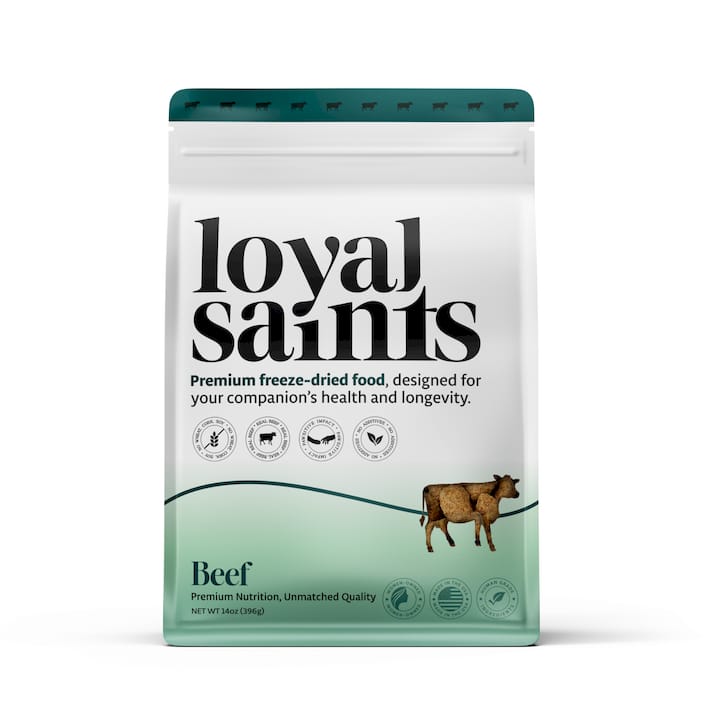
Freeze-dried raw costs more per pound because you’re paying for the convenience of shelf stability and zero freezer logistics.
- Choose freeze-dried for travel, small dogs, apartments with limited freezer space, or as a topper over a base diet.
- Choose frozen commercial if you have freezer capacity and want AAFCO assurance without the DIY learning curve.
- Choose DIY only if you’re willing to batch prep, buy in bulk, and work with your vet on supplementation.
If you’re leaning toward full-time DIY, talk to your vet or a veterinary nutritionist first. Formulation mistakes are the single biggest hidden risk in home-prepped raw diets, and they’re also the easiest to prevent with one consultation.
What Hidden Costs and Safety Concerns Should You Budget For?
Raw feeding carries real safety considerations beyond price. Bacterial contamination risk during handling and storage is well documented, and nutritional imbalance in DIY mixes, especially calcium-to-phosphorus ratios, is a common formulation error without veterinary guidance.
Budget for these often-missed monthly costs:
- Multimineral or calcium supplements for homemade recipes ($10-$25/month).
- Freezer electricity and amortized freezer cost.
- Occasional vet or nutritionist consults to check your formulation.
- Higher grocery bills during price spikes on specific proteins.
Loyal Saints formulates every freeze-dried recipe to meet AAFCO standards using human-grade proteins, removing the calcium-ratio guesswork that trips up many DIY owners.
What I’ve Learned Watching U.S. Owners Budget for Raw
Most owners don’t settle on all-DIY or all-commercial. They land on a hybrid: a freeze-dried topper a few days a week, or scheduled DIY batches supplemented with a trusted commercial base. That compromise usually delivers 80% of the benefit at half the cost and headache. If you’re set on full-time DIY, loop in your vet before you commit your freezer space.
— Kristina
How To Budget For Loyal Saints Freeze-Dried In Your Monthly Plan
Loyal Saints makes the freeze-dried side of your budget predictable instead of a guessing game. If you’re feeding a 15-lb dog a full freeze-dried diet, a couple of bags of Freeze Dried Raw Beef — 14oz per month covers it comfortably; for a topper approach on a larger dog, the Freeze Dried Raw Beef — 5oz works well for portion control and travel without opening a full-size bag.

Want variety without juggling three separate bags in your freezer, er, pantry? The Variety Pack — 14oz | Beef, Chicken & Turkey with Salmon rotates proteins for you, which matters if your dog needs ingredient diversity for allergy management or you just want to avoid feeding the same protein every single day. Every recipe is AAFCO-complete, human-grade, and shelf-stable, so there’s no freezer amortization or thaw time to factor into your monthly math. Join the Halo Club membership for recurring discounts and free shipping on qualifying orders, and check Loyalsaintspets to build a subscription that matches your dog’s actual monthly pound requirement.
Where To Run Your Own Numbers
- Raw Diet Cost Calculator: plug in your dog’s weight to get instant $/lb comparisons.
- Raw dog food budget guide: cross-check U.S. owner-reported monthly ranges.
- Homemade dog food recipe guide: review balanced ratios before committing to DIY.
Sources
- Raw Diet Cost Calculator | Pet Calculators | Pet Calculators
- Raw Dog Food Cost Per Month: Complete Budget Guide (2026)
- Kibble vs Fresh vs Raw — cost and comparisons
- Raw Dog Food Cost Calculator Guide 2026: Is It Really Worth It? - Frenchie Nova


