
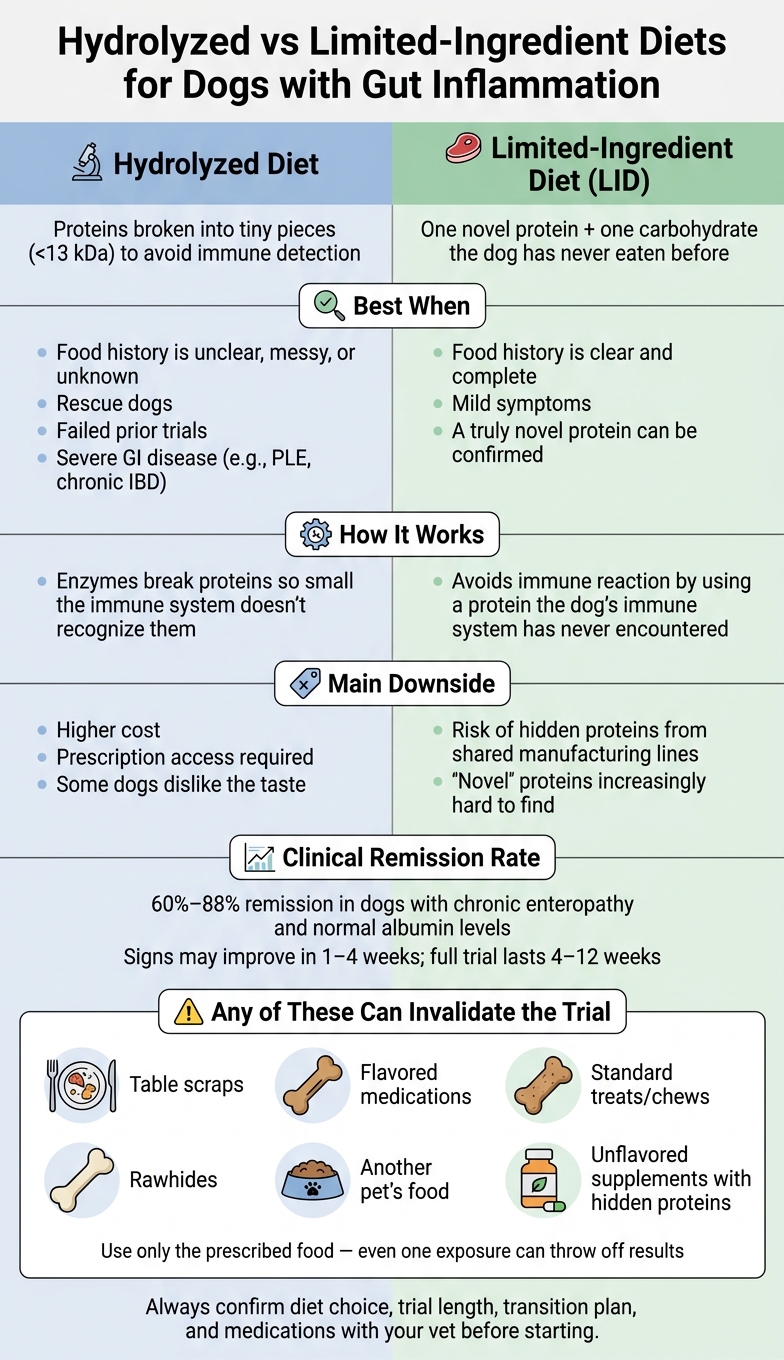
If I want the shortest answer: hydrolyzed diets fit best when a dog’s food history is unclear, and limited-ingredient diets fit best when I know exactly what the dog has eaten.
For dogs with chronic diarrhea, vomiting, gas, or weight loss, a diet trial is often one of the first steps. Studies in the article report clinical remission in 60% to 88% of dogs with chronic enteropathy and normal albumin levels when fed a hydrolyzed or novel-protein limited diet. In many dogs, gut signs can start to improve in 1 to 4 weeks, though trials often last 4 to 12 weeks.
Here’s the whole point in plain English:
- Hydrolyzed diets use proteins broken into very small pieces, so the immune system is less likely to react.
- Limited-ingredient diets use one protein and one carb, usually with a protein the dog has not eaten before.
- Hydrolyzed is often the better pick when the dog has had many foods, is a rescue, has failed a past trial, or has more severe gut disease.
- Limited-ingredient can work well when I have a clean food history and can pick a protein that is new to the dog.
- The trial fails if the dog eats anything else: treats, table scraps, chews, flavored meds, or another pet’s food.
The big risk with limited diets is hidden proteins. Store-bought foods labeled “limited ingredient” may still contain undeclared proteins from shared production lines. The big downsides with hydrolyzed diets are cost, taste, and access, since many are prescription foods.
Hydrolyzed vs Limited-Ingredient Dog Diets: Which Is Right for Your Dog?
Novel vs. Hydrolyzed Protein for Itchy Dogs & Vomiting Cats
sbb-itb-b2753ee
Quick Comparison
| Diet Type | How it works | Best when | Main downside |
|---|---|---|---|
| Hydrolyzed | Protein is broken into tiny pieces to lower immune reaction | Food history is unclear, case is more severe, or a past trial failed | Higher cost, prescription access, some dogs dislike it |
| Limited-Ingredient | Uses one protein and one carb, often with a new protein | Food history is clear and I can avoid all past proteins | Hidden proteins, cross-contact, and “new” proteins are harder to find |
Before starting, I’d confirm 5 things with my vet:
- Which diet to use
- How long to feed it
- How to switch foods
- Which meds or supplements can break the trial
- What the long-term plan is if the dog improves
That’s the article in one view: pick the diet based on the dog’s history, run the trial with zero extras, and track stool, vomiting, appetite, energy, and weight so the vet can judge the result.
Hydrolyzed Diets: How They Work and When Vets Use Them
Hydrolyzed diets are therapeutic formulas made by breaking proteins like soy, chicken, or fish into very small peptides with enzymes, usually under 13 kDa [1]. The big idea is simple: these tiny protein pieces are less likely to be recognized by immune cells. That can help when the goal is to calm gut inflammation [1].
This is where hydrolyzed diets differ from limited-ingredient diets. A limited-ingredient diet depends on finding a protein your dog hasn’t eaten before. A hydrolyzed diet doesn’t rely on that. That can make a big difference when your dog’s food history is long, messy, or hard to pin down.
That extra control matters most when ingredient avoidance gets tricky. If a dog has already eaten many protein sources, finding a new one can turn into guesswork. In that situation, hydrolyzed diets can reduce some of that uncertainty during a diet trial [7].
When Hydrolyzed Diets Are the Right Fit
Vets often use hydrolyzed diets for suspected food-responsive enteropathy, IBD, or dogs that have both skin and digestive signs [1][2]. They may also help dogs with protein-losing enteropathy [3].
Costs, Limits, and Label Reading for Hydrolyzed Diets
Once a hydrolyzed diet is on the table, the next issue is whether it works for day-to-day life. The main limits are cost, taste, and access. Prescription formulas can be hard to get, and that can disrupt a diet trial [1]. Many are made only for adult maintenance, so puppies need closer review [1].
When reading the label, check for "hydrolyzed protein" or "hydrolysate." Also make sure the diet is complete and balanced for your dog’s life stage. If the food is mislabeled or not nutritionally complete, it can muddy the results and slow down diagnosis [1].
Hydrolyzed diets can still miss the mark if trace proteins remain. When that happens, vets may try a second hydrolyzed formula before moving to a different plan [1][2]. At that point, the tradeoff becomes pretty clear: tighter dietary control, but with a higher price tag and stricter formula needs than a limited-ingredient diet.
Limited-Ingredient Diets: Simpler Ingredient Lists and How They Work
An LID keeps the recipe narrow: one protein and one carbohydrate. The idea is simple. Fewer ingredients mean fewer chances for your dog to run into a trigger.
But there’s a catch: this only works if the protein is actually new to your dog.
Most LIDs use a novel protein, meaning a protein your dog has never eaten before, such as rabbit or kangaroo. If the protein is new, the immune system is less likely to react [7]. That’s the big difference between an LID and a hydrolyzed diet. An LID depends on the protein being new to the dog.
When a Limited-Ingredient Diet Makes Sense
LIDs make the most sense when you and your vet have a clear, dependable record of everything your dog has eaten. That includes every protein source, every treat, and even flavored medications.
Why does that matter? Because the whole plan hinges on finding a protein that is truly novel. If your dog has already had that protein before, even in a small amount, the trial may not tell you much. Without a full food history, it’s hard to know whether the chosen protein is new to your dog’s immune system.
Hidden Proteins, Cross-Contamination, and Label Reading
This is where LIDs can get messy.
Even foods labeled “single protein” may contain hidden animal proteins in places you might not expect, like broths, natural flavorings, animal fats, and binders. And during a diet trial, one slip can throw the whole thing off. A single hidden exposure may be enough to invalidate the trial. So yes, label reading matters just as much as the main ingredient list.
Store-bought “limited ingredient” foods can be risky for this reason. Studies have found that many include undeclared proteins, often chicken or beef, because of shared manufacturing lines [8][7]. For a diagnostic trial, pet food allergy management often requires veterinary-exclusive LIDs with tighter quality control. Hidden proteins can also show up through treats, chews, flavored meds, and supplements. Any one of those can break the trial.
When you read a label, check for:
- One clearly named animal protein
- An AAFCO “complete and balanced” statement for your dog’s life stage [8]
Also watch for vague terms like “natural flavors” or “animal fat.” Those phrases can hide extra protein sources that never appear clearly on the front of the bag.
Finding a protein that is actually novel has also gotten harder. Proteins once seen as exotic, like venison and rabbit, are now common enough that many dogs have already eaten them [8]. Your vet can compare your dog’s food history against the ingredient list and help spot a protein that’s still new. If the trial begins with hidden proteins or the wrong protein choice, the next move is often a stricter diet selected with your vet’s help.
Hydrolyzed vs Limited-Ingredient Diets: How to Choose
Use the comparison below to line up the diet with your dog's food history and how strict the trial needs to be. After that, the choice usually comes down to three things: food history, symptom severity, and how much control you can keep during the trial.
| Diet Type | How It Works | Best Use Cases | Best For |
|---|---|---|---|
| Hydrolyzed | Proteins are enzymatically broken into peptides smaller than 13 kDa to avoid immune detection [1] | Unknown diet history; severe GI disease such as PLE or chronic, non-responsive IBD; failed prior trials; better diagnostic clarity | Rescue dogs; dogs with complex or unknown food histories; chronic non-responsive cases |
| Limited-Ingredient | Uses a single novel protein and carbohydrate source the dog hasn't eaten before | Clear, well-documented diet history; mild cases; palatable long-term maintenance option | Dogs with a clear, well-documented diet history and mild symptoms |
Once the better fit is clear, the next step is setting firm dog food allergy management rules so you can test the diet cleanly.
How Veterinarians Decide Between the Two
When a dog's food history is incomplete, or the case is more severe, vets often start with a hydrolyzed diet. That's often the safer pick for dogs with complicated backgrounds, like rescues, and for dogs that have already failed one or more diet trials. In fact, dogs that fail one trial often respond to a different vet-guided diet [5].
A limited-ingredient diet tends to make more sense when your vet can confirm there's a truly novel protein your dog hasn't had before and the diet history is clear from start to finish. If that piece is missing, the diagnostic value of a limited-ingredient trial drops fast.
Long-Term Nutrition After a Successful Diet Trial
If the trial works, the goal changes. At that point, it moves from diagnosis to maintenance. Your vet may then switch your dog to a maintenance diet built around tolerated ingredients and long-term nutrition goals.
Questions to Ask Your Vet Before Starting a Diet Trial
Once you and your vet pick the diet, the next part is simple in theory and tricky in practice: everyone needs to know how diet shapes allergy management. A diet trial only means something if you know exactly what you're testing and for how long. Before you start, confirm the exact food and the full trial length with your vet. That helps you avoid stopping too soon or reading normal ups and downs as a final answer.
It also helps to ask whether your dog should switch foods all at once or move over gradually. Some vets suggest an abrupt switch for chronic diarrhea cases [4], while others prefer a slower transition to cut down on extra stomach upset [2][9]. There isn't one rule that fits every dog, so your vet's advice should line up with your dog's current symptoms.
What Breaks the Trial
The biggest reason diet trials fail is hidden exposure. For the trial to work, your dog has to eat only the prescribed food. Even small extras can throw things off. That includes treats, chews, supplements, and flavored medications.
Flavored medications are easy to miss. Chewable heartworm preventives and other flavored meds may contain beef, chicken, or pork proteins, and those can interfere with the trial [6][4]. Before day one, ask your vet to go through every medication and supplement your dog gets and point out any unflavored or topical swaps if needed.
Treats need the same level of care. The easiest approved choice is often just using pieces of the trial kibble. You can also bake the canned version of a hydrolyzed diet into small homemade bites. If you have more than one pet, feed them in separate rooms so the dog on the trial can't sneak a mouthful from another bowl.
| What Breaks the Trial | Use Instead |
|---|---|
| Table scraps and human food | None; prescribed diet only |
| Standard dental chews and rawhides | Ask your vet for a compatible dental product |
| Flavored pill pockets | Small amount of canned hydrolyzed diet to hide pills |
| Chewable heartworm or flea preventives | Ask for a non-flavored or topical option |
How to Track Your Dog's Response at Home
A short daily log can make follow-up visits much more useful. It gives your vet something clear to look at instead of relying on memory from a stressful week.
Track:
- Stool consistency and frequency with a fecal scoring chart
- Vomiting frequency
- Appetite
- Energy level
- Body weight
- Any signs of abdominal discomfort
Also write down any slipups. If your dog got into another pet's food or ate something outside the trial, note it. That detail matters when your vet reviews the results, and a home log can make the trial much easier to interpret.
Call your vet before the planned recheck if your dog refuses the diet, has severe vomiting or diarrhea, or shows no clear improvement within 2 weeks.
Conclusion: What to Review With Your Vet Before Changing Your Dog's Food
Hydrolyzed diets make sense when your dog's food history is messy, incomplete, or all over the map. Limited-ingredient diets are a better fit when you have a full history and can pick a protein your dog has never eaten before.
Once you've matched the diet to your dog's history, there's one more thing to sort out: what happens after the trial. Before the trial wraps up, ask your vet whether your dog should stay on the prescription diet or move into a planned protein reintroduction.
Go over these points with your vet before you begin:
| Topic | What to Confirm With Your Vet |
|---|---|
| Diet choice | Hydrolyzed or novel protein, and why it fits your dog's history |
| Trial length | Full trial length and recheck timing |
| Transition plan | How to transition between diets |
| Medications and supplements | Which products must be avoided |
| Long-term plan | Stay on the therapeutic diet, or reintroduce proteins one at a time under veterinary guidance |
A clear plan makes the trial much easier to read.
FAQs
How do I know which diet to start with?
The right diet depends on your dog’s health needs, symptoms, and diet history. Your veterinarian will also look at age, medical conditions, and body condition.
If your dog’s full diet history is unknown, or they’ve eaten a long list of ingredients over time, a hydrolyzed diet is often the better pick. A limited-ingredient diet with a novel protein can also work, but only if you have a complete and accurate record of everything they’ve eaten.
What if my dog won’t eat the trial diet?
If your dog won’t eat the trial diet, talk with your veterinarian about what to do next. If your dog turns down the first diet - or doesn’t get better on it - that does not mean the process has failed.
Many vets suggest trying a second diet trial with a different nutrition plan first. That might mean switching to another protein or carbohydrate source before moving on to other diagnostic steps, such as biopsies or medication trials.
Can my dog stay on the same diet long term?
It depends on your dog’s health needs and on whether the food is complete and balanced.
Some dogs with food-responsive enteropathy can go back to their original diet after 12 to 14 weeks. Others do better with long-term diet support.
Your veterinarian can help you pick a food that fits your dog’s life stage. That matters because not every special diet is meant for long-term feeding, and some aren’t right for growing puppies.


