
TL;DR:
- A dog’s gut microbiome controls digestion, immunity, and behavior, making gut health essential for well-being. Supporting microbial diversity through diet, hygiene, and targeted supplements can prevent systemic health issues, especially in puppies and seniors. Maintaining a balanced gut microbiome helps dogs stay healthy, energetic, and resilient across all life stages.
A dog’s gut health is defined as the balance of microbial communities in the digestive tract that control digestion, immune function, and metabolic stability. This balance, known clinically as the gut microbiome, determines far more than whether your dog digests food well. Veterinary research confirms that gut health is important for dogs at every life stage, shaping immunity, coat quality, energy levels, and even behavior. If your dog struggles with recurring digestive upset, dull fur, or unexplained lethargy, the answer often starts in the gut. Understanding how the canine gut microbiome works gives you a real foundation for keeping your dog healthy for years to come.
Is gut health important for dogs? What the microbiome actually does
The gut microbiome is a community of bacteria, archaea, fungi, and other microorganisms living in your dog’s digestive tract. These microbes are not passive passengers. They actively break down food, produce vitamins, regulate metabolism, and train the immune system every single day.
Research shows that 32.3% of functional genes in the canine gut microbiome are directly involved in carbohydrate, lipid, and amino acid metabolism. That means nearly one in three microbial genes your dog carries exists specifically to process nutrients. Without a healthy microbial community, your dog cannot fully absorb the nutrition in even the best food you provide.
The microbiome also produces short-chain fatty acids (SCFAs) like butyrate, which fuel the cells lining the intestinal wall. A well-fed gut lining stays intact, preventing harmful substances from leaking into the bloodstream. When microbial balance breaks down, that protective lining weakens, and systemic problems follow.
Here is what a healthy gut microbiome handles daily:
- Carbohydrate fermentation: Converts dietary fiber into SCFAs that feed intestinal cells
- Protein metabolism: Breaks down amino acids and supports muscle maintenance
- Lipid processing: Assists in fat digestion and absorption of fat-soluble vitamins
- Vitamin synthesis: Produces B vitamins and vitamin K that your dog cannot make alone
- Pathogen defense: Crowds out harmful bacteria through competitive colonization
Every one of these functions depends on microbial diversity. A dog with a narrow, imbalanced microbiome misses out on all of them simultaneously.
How does gut health affect your dog’s immune system and overall well-being?
The gut is where your dog’s immune system learns what to attack and what to leave alone. 70% of immune cells in dogs reside in gut-associated lymphoid tissue (GALT). That concentration makes the gut the single most important site for immune education in your dog’s body.
When the microbiome is balanced, it continuously signals the immune system to stay calibrated. When that balance breaks down, a condition called dysbiosis occurs. Dysbiosis triggers systemic inflammation and metabolic dysfunction, which can show up as allergies, skin conditions, joint problems, or even heart disease.
“The gut microbiome functions as a gut-systemic axis, not just a digestive engine. It trains the immune system continuously, and disruption of that training has consequences far beyond the digestive tract.”
This gut-systemic axis explains why dogs with chronic gut imbalance often develop problems that seem unrelated to digestion. Skin flare-ups, recurring ear infections, and behavioral changes all trace back to immune dysregulation rooted in the gut.
The gut-skin axis is one of the clearest examples. Postbiotic supplementation has been shown to improve hair cuticle smoothness and keratin amino acid profiles in dogs. Coat quality improves because the gut is producing the right building blocks and keeping inflammation low. Coat improvements typically lag behind digestive symptom resolution by several weeks, which reflects how the gut-skin axis works in real time.
Behavioral changes are another underappreciated sign of gut imbalance. The gut-brain axis, a communication pathway between intestinal microbes and the central nervous system, influences mood, stress response, and cognitive function. Dogs with dysbiosis sometimes show increased anxiety, restlessness, or reduced engagement.
Pro Tip: If your dog’s coat looks dull or they seem more anxious than usual, ask your vet about a stool microbiome panel before assuming the cause is behavioral or dermatological.
How does gut health change across your dog’s life stages?
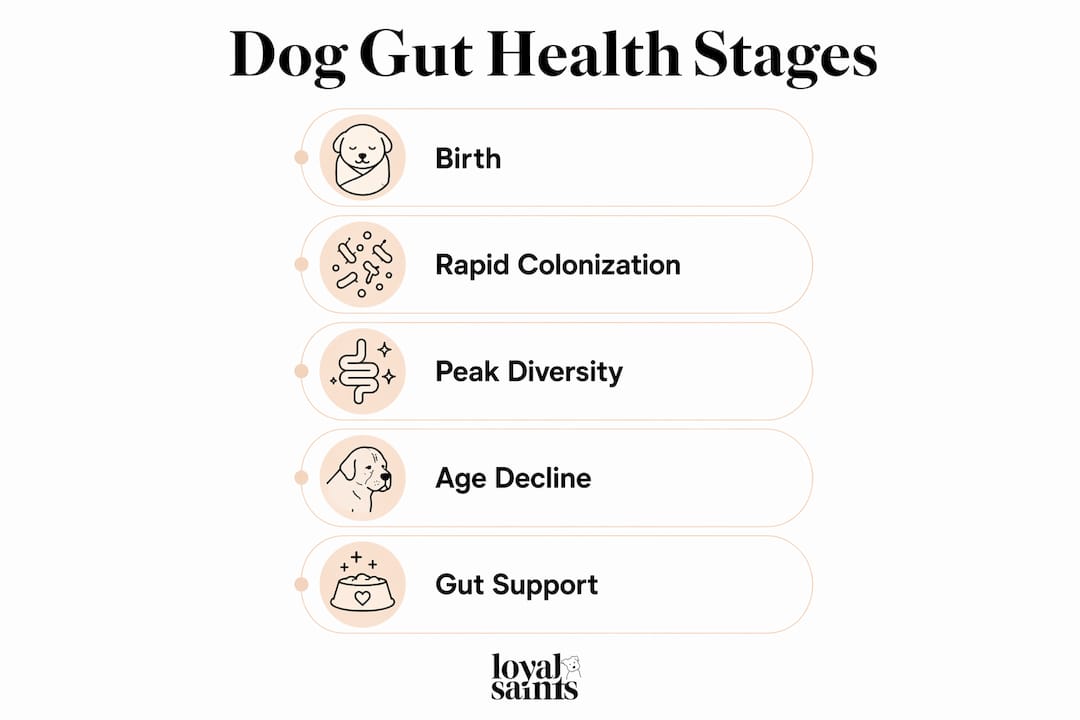
Your dog’s microbiome is not static. It shifts dramatically from birth through old age, and each stage carries specific risks if gut health is not supported.
Neonatal colonization and the puppy window
Puppies receive their first microbial communities from their mother during birth and through colostrum in the first days of nursing. Early-life microbial transmission from the dam is one of the most critical and overlooked factors in a puppy’s long-term health. Disruption of this process, through early weaning, antibiotic exposure, or poor maternal nutrition, raises the risk of immune dysregulation and infection susceptibility that can persist for years.
The first weeks of a puppy’s life represent a window where the microbiome is most malleable. What gets established during this period shapes immune tolerance and metabolic function for the dog’s entire life. Supporting the mother’s gut health during pregnancy and lactation directly benefits the puppy’s microbial foundation.
Age-related microbiome decline in adult and senior dogs
| Life Stage | Microbiome Characteristic | Key Risk |
|---|---|---|
| Puppy (0–6 months) | Rapid colonization, high plasticity | Disruption from antibiotics or early weaning |
| Young adult (1–3 years) | Peak diversity and Lactobacillus abundance | Dietary inconsistency, stress |
| Adult (3–7 years) | Stable but diet-dependent | Gradual diversity loss without fiber support |
| Senior (7+ years) | Declining diversity and stability | Dysbiosis, neuro-metabolic decline |
Microbiome diversity peaks in young dogs and declines steadily with age. Older dogs show reduced Lactobacillus abundance, which correlates with weaker neurological performance and greater metabolic instability. This decline increases competition among microbial species and raises the risk of harmful bacteria gaining ground.
Supporting senior dogs with targeted probiotics, prebiotics, and postbiotics helps slow this decline. Age-related microbiome shifts make gut support supplements especially valuable in dogs over seven years old, where maintaining neuro-metabolic stability becomes a real priority.
Here is a practical sequence for supporting gut health at each life stage:
- Support the mother’s diet during pregnancy and lactation with high-quality protein and fiber to strengthen the entero-mammary pathway.
- Avoid unnecessary antibiotics in puppies during the first colonization window unless medically required.
- Introduce dietary fiber consistently in adult dogs to maintain microbial diversity.
- Add postbiotics or probiotics in senior dogs to compensate for natural diversity decline.
- Schedule regular vet checkups that include stool analysis to catch microbiome shifts early.
What are the signs of poor gut health in dogs and how can you improve it?
Poor gut health in dogs produces clear, recognizable signals. Catching them early gives you the best chance to correct the imbalance before it becomes a systemic problem.
Common signs of poor gut flora in dogs:
- Loose stools, constipation, or alternating between both
- Excessive gas or bloating after meals
- Dull, brittle, or flaky coat
- Persistent skin irritation or recurring hot spots
- Low energy or reluctance to exercise
- Increased anxiety or behavioral changes
- Frequent ear infections or yeast overgrowth
Diet is the most direct lever you have for improving your dog’s gut health. Dietary fiber and fermentable carbohydrates feed beneficial bacteria and increase SCFA production. Minimally processed foods that retain their natural fiber content give the microbiome more to work with than heavily cooked or extruded options.
Freeze-dried raw foods preserve the natural prebiotic fibers and bioavailable nutrients that support microbial diversity. This matters because processing methods that use high heat destroy much of the fiber structure that gut bacteria rely on.
Supplements also play a measurable role. Prebiotic and postbiotic supplementation has been shown to increase fecal butyrate levels and beneficial bacterial populations in healthy dogs. Postbiotics, in particular, offer an advantage over live probiotics because they are stable, standardized, and do not require refrigeration to remain effective. Postbiotics stimulate SCFA production, strengthen the mucosal lining, and regulate inflammation without the variability of live cultures.
One factor most dog owners overlook is feeding bowl hygiene. Pet bowl cleanliness directly affects the microbial environment your dog is exposed to at every meal. Washing bowls daily with hot water and soap removes biofilm buildup that can introduce harmful bacteria into the gut.
Pro Tip: Rotate protein sources every few months to expose your dog’s microbiome to different amino acid profiles and fiber types. Variety supports microbial diversity better than a single protein fed indefinitely.
Microbial profiling is emerging as a practical diagnostic tool. Research shows that Escherichia/Shigella abundance correlates with heart failure severity in dogs, meaning gut analysis can flag systemic illness before other symptoms appear. Ask your vet about stool microbiome testing if your dog shows multiple signs of gut imbalance.
Key Takeaways
A dog’s gut microbiome controls digestion, immune function, coat quality, and behavior, making gut health the single most important factor in your dog’s long-term wellness.
| Point | Details |
|---|---|
| Microbiome drives metabolism | Nearly one-third of canine gut genes handle carbohydrate, lipid, and amino acid processing. |
| Gut trains the immune system | 70% of immune cells live in gut tissue, making dysbiosis a direct trigger for systemic illness. |
| Early colonization is critical | Puppies receive foundational microbes from their mother; disruption raises lifelong health risks. |
| Microbiome declines with age | Senior dogs need targeted probiotic and postbiotic support to maintain neuro-metabolic stability. |
| Diet and hygiene shape gut balance | Fiber-rich, minimally processed food and clean feeding bowls are the two most controllable factors. |
What I’ve learned from watching gut health change everything
By Kristina
After years of watching dog owners chase symptoms, the pattern I see most often is this: the gut problem came first, and everything else followed. A dog with recurring skin flare-ups gets treated with steroids. A dog with anxiety gets behavioral training. A dog with low energy gets a different exercise routine. In many of these cases, the root cause was a microbiome that had been quietly deteriorating for months.
What the research now confirms is what experienced practitioners have observed for years. The gut is not just a digestive organ. It is the command center for immunity, metabolism, and neurological stability. When it is working well, you see it in the coat, the energy, the temperament. When it is not, you see the opposite, and the signs rarely point directly back to the gut.
The most practical shift I would encourage any dog owner to make is to think about gut health before problems appear. Establish a fiber-rich, minimally processed diet early. Support the microbiome through life stage transitions, especially in puppies and seniors. And do not underestimate the basics: clean bowls, consistent feeding, and regular vet monitoring that includes stool analysis. The dogs I see thriving at ten and twelve years old almost always have owners who treated gut health as a daily practice, not a crisis response.
— Kristina
How Loyalsaintspets supports your dog’s gut health every day
Loyalsaintspets builds its formulas around the principle that gut health starts with what goes in the bowl. Every product uses human-grade, whole ingredients that are freeze-dried to preserve their natural prebiotic fibers, highly digestible proteins, and micronutrients without additives or fillers.
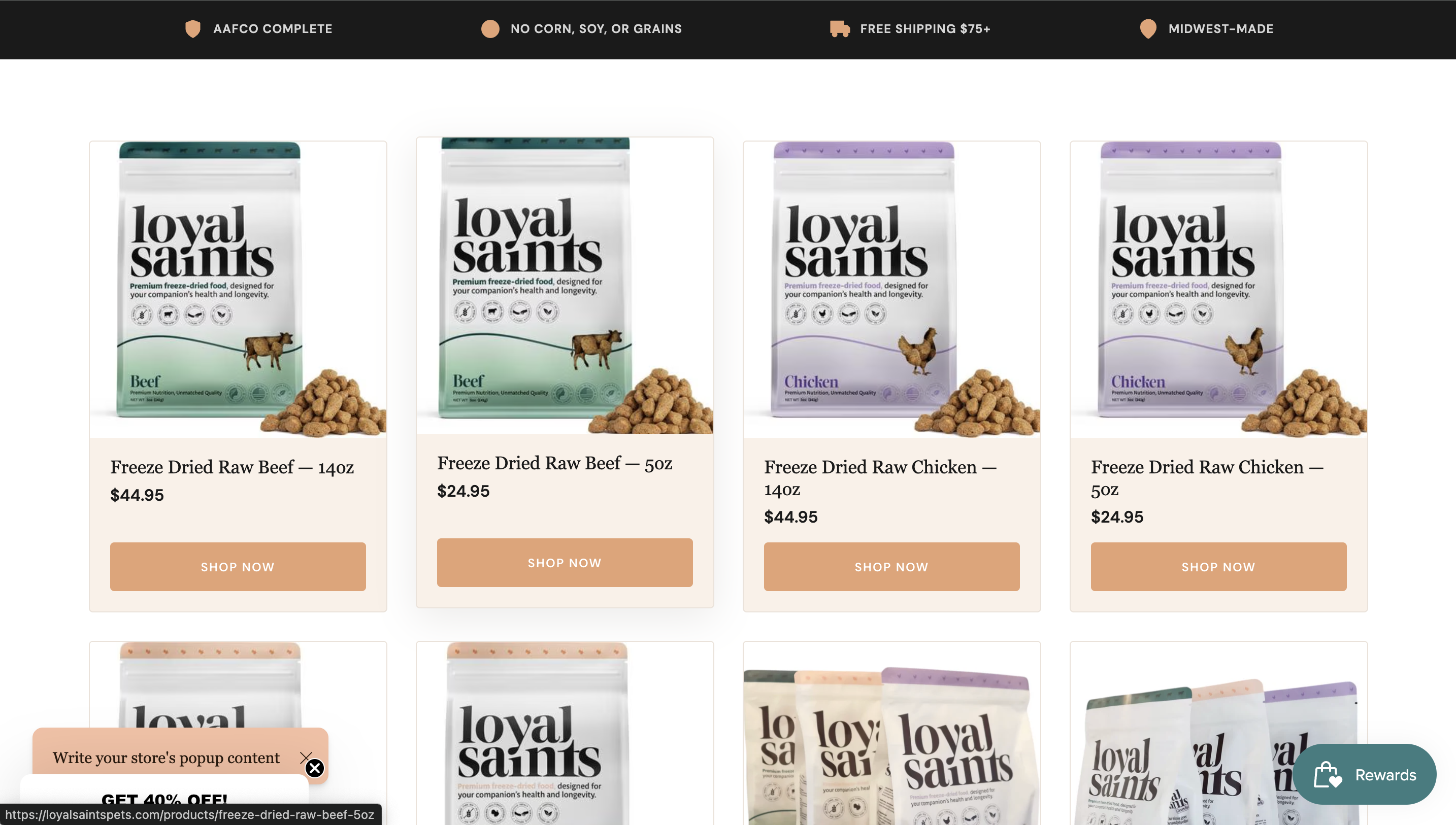
The freeze-dried raw chicken and freeze-dried raw beef formulas deliver high-quality protein alongside the natural fiber structures that beneficial gut bacteria need to thrive. Because freeze-drying uses no high heat, the nutrient integrity that supports microbial diversity stays intact from production to your dog’s bowl. If you want to understand why the freeze-drying method matters for your dog’s digestion, Loyalsaintspets explains why freeze-dried works in detail. Every bag is AAFCO-compliant, so you can feed with confidence.
FAQ
What does gut health mean for a dog?
Gut health refers to the balance of microbial communities in a dog’s digestive tract that regulate digestion, immune function, and metabolism. A balanced microbiome produces SCFAs, synthesizes vitamins, and trains the immune system continuously.
What are the most common signs of poor gut health in dogs?
The most common signs include loose or inconsistent stools, excessive gas, dull coat, recurring skin irritation, low energy, and increased anxiety. Multiple signs appearing together strongly suggest microbiome imbalance.
Can diet alone improve a dog’s gut health?
Diet is the most powerful tool for improving gut health, but it works best alongside clean feeding practices and, when needed, targeted supplementation with prebiotics or postbiotics. Fiber-rich, minimally processed foods produce the most consistent microbiome benefits.
Do puppies need special gut health support?
Puppies receive their foundational microbiome from their mother during birth and nursing. Avoiding unnecessary antibiotics and supporting the mother’s nutrition during pregnancy are the two most important steps for establishing a healthy puppy microbiome.
Are postbiotics better than probiotics for dogs?
Postbiotics offer advantages in stability and standardized dosing because they do not require live cells to work. Research shows postbiotics stimulate SCFA production, strengthen the gut lining, and reduce inflammation, making them a reliable option for dogs at any life stage.


