
The label on the bag matters less than what’s actually inside it. Whether a formula says “grain-free” or “legume-free,” the real health question is whether it’s a complete, properly formulated diet, not which single ingredient category got cut. The FDA’s ongoing investigation found that most reported canine DCM cases involved grain-free diets heavy in peas and lentils, but the agency still hasn’t proven those legumes caused the heart disease.
TL;DR:
- Most grain-free diets in canine DCM cases contain peas and lentils, but formulation quality and ingredient concentration are more critical than ingredient labels.
- Cutting grains often leads to increased legume content, making “grain-free” not necessarily “legume-free,” so ingredient panels must be checked directly.
- Peer-reviewed research shows legumes are not inherently harmful, and formulation differences rather than ingredient categories are likely responsible for health concerns.
- Dogs with sensitivities or cardiac issues benefit from formulas with simpler, limited ingredients, especially high-quality, single-protein options.
- Choosing a complete, balanced diet requires verification of ingredient order and feeding trial backing, not just reliance on front-label buzzwords.
Table of Contents
- Legume-Free vs Grain-Free: What Each Label Actually Means
- What Does the Evidence Actually Show About Legumes and Heart Health?
- Legumes vs. Grains: Weighing the Real Tradeoffs
- How Do You Choose Between Grain-Free and Legume-Free Diets?
- How Loyalsaintspets Approaches Limited-Ingredient Formulation
- Why Formulation Beats Labels Every Time
- Freeze-Dried Options Built Around Fewer, Better Ingredients
- Where This Information Comes From
- Sources
- FAQ
Legume-Free vs Grain-Free: What Each Label Actually Means
These two labels sound similar, but they’re solving different problems. Grain-free means food skips ingredients from the grass family, Poaceae, like corn, wheat, rice, oats, and barley. Legume-free means it skips the Fabaceae family, which includes peas, lentils, chickpeas, and soybeans.
Here’s the wrinkle that trips up a lot of shoppers: cutting grains almost always means adding legumes. Manufacturers need something to replace the carbohydrates and binding starch that grains normally provide, and peas, lentils, and potatoes are the go-to substitutes. So a bag that proudly says “grain-free” is very often legume-heavy, even though the label never uses the word “legume.”
A few label-reading basics worth remembering:
- Grains (Poaceae): corn, wheat, rice, oats, barley, sorghum.
- Legumes/pulses (Fabaceae): peas, lentils, chickpeas, soybeans, black beans.
- Common grain replacements: peas, lentils, chickpea flour, and potatoes or sweet potatoes.
- Chickpeas specifically are legumes, not grains, and they supply both carbohydrate and plant-based protein, which is why chickpeas function as a dual-purpose ingredient in many grain-free formulas.
If you’ve been searching for a diet without legumes specifically, know that “grain-free” is not a reliable proxy for that. You’ll need to check the ingredient panel directly.
What Does the Evidence Actually Show About Legumes and Heart Health?
The numbers behind this debate are striking, and they deserve a clear explanation rather than a headline scare.
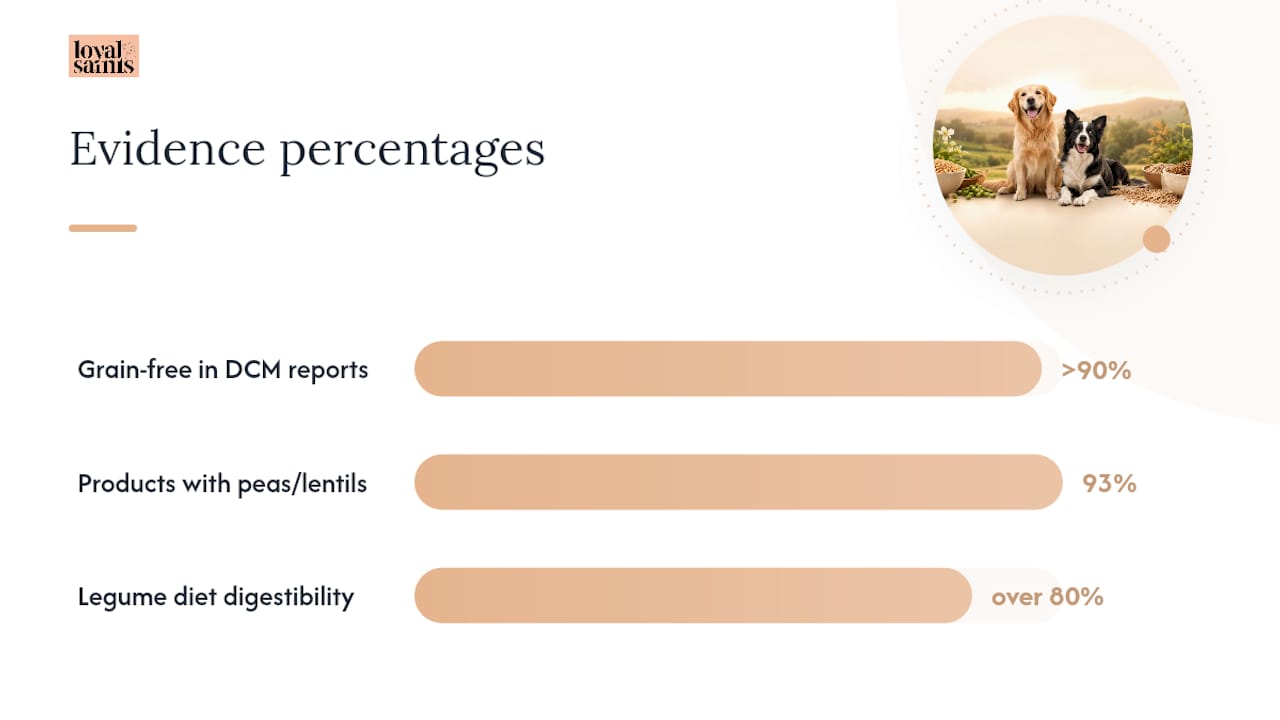
More than 90% of the grain-free diets reported in canine dilated cardiomyopathy (DCM) cases the FDA reviewed between 2014 and 2019 also contained peas and/or lentils in 93% of those products. That’s a strong pattern, and it’s the reason legumes entered the conversation at all.
But pattern isn’t proof. When the FDA’s Veterinary Laboratory Investigation and Response Network (Vet-LIRN) actually tested these diets in a lab, the results were less dramatic than the headlines suggested:
- Average protein, fat, taurine, cystine, and methionine levels were similar between grain-free and grain-containing products.
- Grain-free formulas tended to run higher in total dietary fiber and lower in starch.
- No single missing nutrient explained the difference in outcomes across Vet-LIRN’s comparative testing.
Separately, peer-reviewed feeding research backs up the idea that legumes themselves aren’t inherently the villain. A Frontiers in Veterinary Science study found extruded legume-containing diets reached over 80% macronutrient digestibility, performing close to conventional formulas, though researchers noted some differences in fecal metabolites and fermentation patterns.
Put together, this points to formulation quality and ingredient concentration as the real variables, not a blanket grains-good, legumes-bad rule. The FDA itself has been careful to say it hasn’t established direct causation, and continues to look at sourcing, genetics, and recipe balance as contributing factors.
Legumes vs. Grains: Weighing the Real Tradeoffs
Neither ingredient category is automatically the better choice for your dog. Each comes with its own set of tradeoffs worth understanding before you commit to a bag.
Legumes bring higher fiber and solid plant protein to the table, but they also carry natural anti-nutritional compounds like oligosaccharides. Standard commercial processing, especially extrusion and heat treatment, reduces these anti-nutrients significantly, so a well-processed legume-inclusive food isn’t the same risk as feeding raw, unprocessed pulses.
Grains, on the other hand, generally contain fewer anti-nutrients and offer a different amino-acid balance. They’re not unhealthy by default; they’re just a different nutritional tool.
- Legumes: high fiber, decent plant protein, antinutrients mitigated by processing.
- Grains: lower antinutrient load, different amino-acid contribution, easy digestibility for most dogs.
- Processing quality (extrusion, heat, sourcing) often matters more than which category is on the label.
Dogs with suspected food sensitivities, chronic loose stool, or breeds prone to taurine-related cardiac issues are the ones who typically benefit most from a closer look at formulation, rather than a simple swap between grain-free and diet without legumes.
Pro Tip: Don’t judge a formula by one buzzword on the front of the bag. Flip it over and read the first five ingredients before you decide anything.
How Do You Choose Between Grain-Free and Legume-Free Diets?
Making this decision doesn’t require a nutrition degree, just a short checklist you run through every time you’re comparing bags.
- Confirm the AAFCO statement. Look for language confirming the food is “complete and balanced” for your dog’s life stage, ideally backed by feeding trials, not just formulation on paper.
- Scan the first five ingredients. If peas, lentils, or chickpeas dominate that list, you’re looking at a legume-concentrated recipe, regardless of what the front label emphasizes.
- Check for taurine or sulfur amino acid guarantees. Some formulas now supplement these directly in response to the DCM findings.
- Try a supervised elimination and re-challenge if you suspect a specific allergy. Reintroduce ingredients one at a time under your vet’s guidance to isolate the actual trigger.
- Get a cardiac evaluation if your dog shows lethargy, coughing, or exercise intolerance. These are signs worth ruling out with veterinary testing, not diagnosing from a blog post.
How Loyalsaintspets Approaches Limited-Ingredient Formulation
We built our freeze-dried recipes around a simple idea: fewer variables mean fewer surprises for your dog’s digestive system and heart health alike. Our formulas use single or limited proteins, human-grade ingredients sourced from Midwest farms, and complete AAFCO formulations, so you’re not relying on a heavy legume blend to fill out the nutrition profile.
That single-protein approach naturally reduces dependence on pea- or lentil-based fillers common in many grain-free recipes. It’s also why our products are formulated to meet AAFCO All Life Stages profiles, giving you a formulation-first alternative to guessing between labels.
- Human-grade, whole-food ingredients with no fillers or synthetic additives.
- AAFCO-complete formulations built around one primary protein source.
- Complete and balanced recipes designed for visible results within weeks.
If you want more background on how pulse ingredients specifically interact with canine heart health, our deeper dive on peas, legumes, and canine heart health covers the mechanism in more detail.
Why Formulation Beats Labels Every Time
Owners searching “legume-free vs grain-free” usually want a clean answer, and I understand the appeal of a simple rule. But the honest one is less satisfying: complete formulation and ingredient concentration matter more than which category got excluded. Read the ingredient order and the AAFCO statement before anything else on the bag.
— Kristina
Freeze-Dried Options Built Around Fewer, Better Ingredients
Loyalsaintspets gives you a formulation-first alternative to guessing between grain-free and legume-free labels: single-protein, freeze-dried recipes with human-grade ingredients and no reliance on heavy pea or lentil fillers to round out the nutrition.
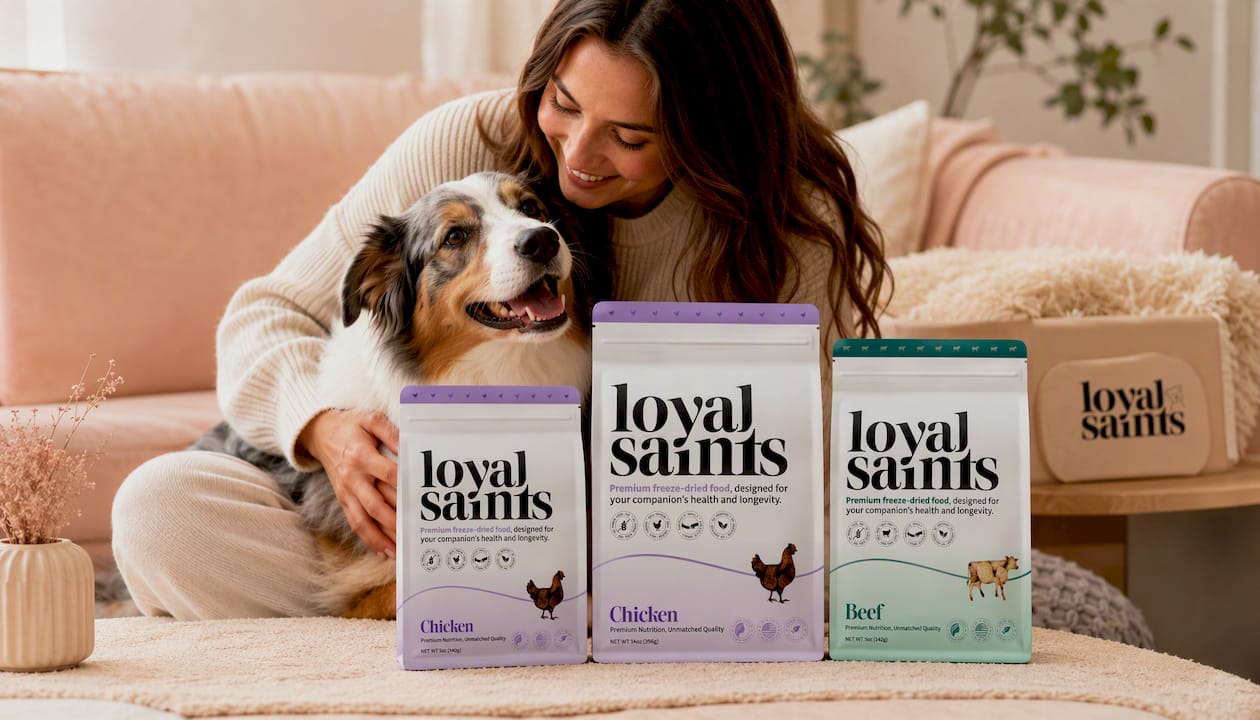
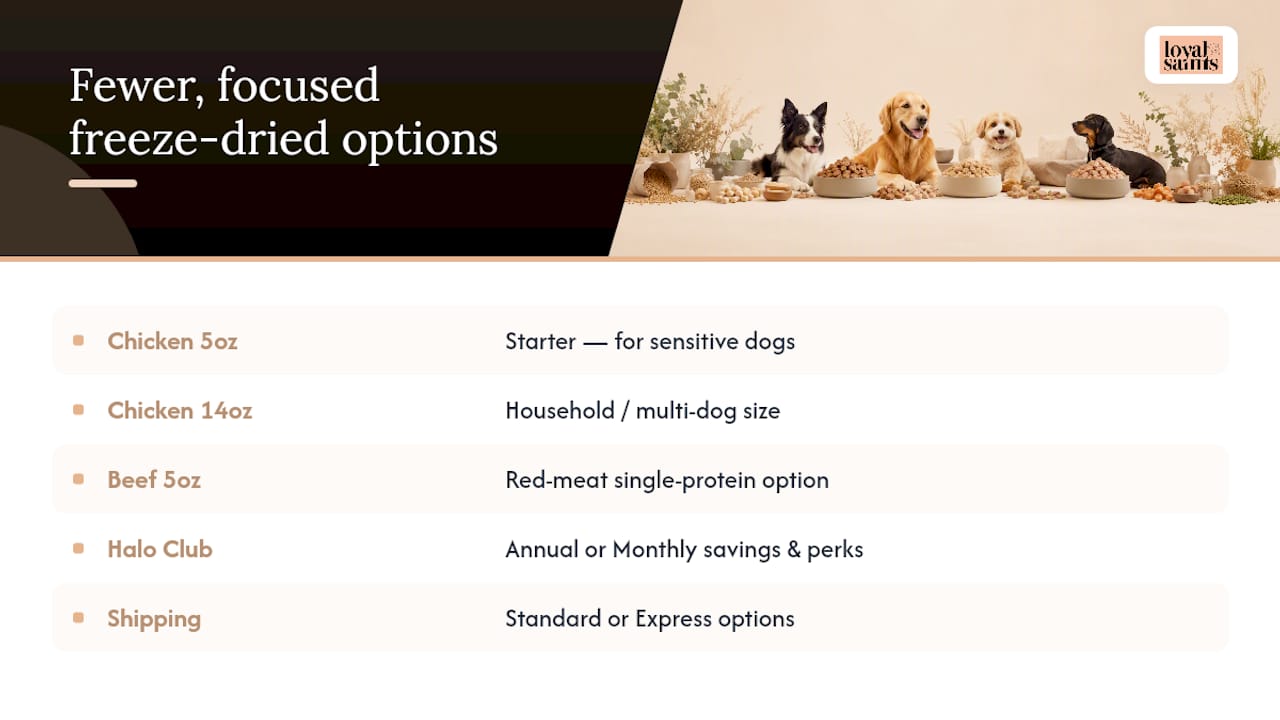
Our Freeze Dried Raw Chicken — 5oz is a practical starting size for owners testing a new protein with a sensitive dog, while the Freeze Dried Raw Chicken — 14oz suits households feeding larger or multiple dogs who want fewer reorders. If your dog does better on red meat, the Freeze Dried Raw Beef — 5oz offers the same limited-ingredient, AAFCO-complete approach in a single-protein beef recipe.
Joining the Halo Club membership gets you ongoing savings and shipping perks, whether you choose the Annual or Monthly plan, and standard or express shipping options mean you’re never stuck waiting on your next order. Visit the Loyalsaintspets product pages to check full ingredient panels and feeding guidance before you switch your dog’s diet.
Where This Information Comes From
This article draws on the FDA’s ongoing DCM investigation, Vet-LIRN’s lab testing data, a peer-reviewed Frontiers in Veterinary Science digestibility study, and Harvard’s Nutrition Source for chickpea nutrition context.
Sources
- FDA: Investigation into potential link between certain diets and canine dilated cardiomyopathy
- Frontiers in Veterinary Science: Effects of extruded diets containing legumes on digestibility and fecal metabolites (2021)
- PMCID review: chickpeas and pulses (nutritional profile and classifications)
FAQ
Why Do Vets Not Recommend Grain-Free Diets?
Many vets are cautious because FDA data linked most reported DCM cases to grain-free diets heavy in peas and lentils, not because grains themselves are essential. Veterinary experts generally agree there’s no physiological need for most dogs to avoid grains, and the caution is really about avoiding unbalanced, legume-heavy formulations.
Are Chickpeas a Grain or a Legume?
Chickpeas are legumes, belonging to the Fabaceae family, not grains. They provide both carbohydrates and plant-based protein, which is why many “grain-free” foods rely on them as a substitute ingredient.
What Four Foods Are Legumes?
Common legumes in dog food include peas, lentils, chickpeas, and soybeans. All four belong to the Fabaceae plant family and are frequently used as grain replacements in commercial pet food.
Is There Any Grain-Free Dog Food That Doesn’t Contain Legumes?
Yes, though it takes label reading to confirm it, since most grain-free formulas substitute legumes for carbohydrates. Loyalsaintspets’ single-protein freeze-dried recipes, including the Freeze Dried Raw Chicken, are built around limited ingredients rather than heavy pea or lentil blends, giving owners a more transparent option.


