
An elimination diet trial, exclusive feeding of one carefully chosen diet followed by a controlled reintroduction, is the only reliable way to diagnose food allergy in dogs. The one nonnegotiable rule: nothing enters your dog’s mouth except the trial diet, for a full 8 to 12 weeks. Gastrointestinal signs often calm down within the first few weeks. Skin signs usually take longer.
TL;DR:
- Hidden exposures such as flavored medications, treats, toys, and scavenging often cause trial failures more than diet choice.
- Most dogs show skin improvement within eight weeks and nearly all respond by twelve weeks, but progress should be objectively tracked.
- Using single-protein freeze-dried formulas simplifies long-term maintenance and ensures consistent, strict adherence after diagnosis.
- A proper rechallenge involves reintroducing the original diet and observing symptoms within two to fourteen days to confirm food allergy.
- Choosing a diet based on the dog’s past eating history and consulting a veterinarian beforehand improves the chances of an accurate diagnosis.
Table of Contents
- What Is an Elimination Diet Trial, and When Should You Start One?
- How Do You Choose the Right Trial Diet?
- How Long Does an Elimination Diet Take to Work?
- What Are the Biggest Pitfalls in an Elimination Diet Trial?
- How Do You Confirm the Diagnosis With a Rechallenge?
- What Happens After You Identify the Trigger Food?
- Why Single-Protein Freeze-Dried Options Make Long-Term Compliance Easier
- Single-Protein Freeze-Dried Options for Trial and Maintenance Feeding
- Sources
What Is an Elimination Diet Trial, and When Should You Start One?
An elimination diet trial is a structured process where you feed your dog one diet, and only that diet, long enough to see whether their symptoms fade. If they do, you have a working diagnosis. It’s slow, unglamorous, and it works better than almost anything else on the market for identifying food allergy in dogs.
You should consider one if your dog has nonseasonal itching (meaning it doesn’t ease up in winter like pollen allergies do), recurring ear infections, or chronic digestive upset. These signs overlap more than most owners realize: a notable percentage of dogs with food allergies also show gastrointestinal symptoms like loose stool, vomiting, or excessive gas alongside the itching. That overlap trips people up constantly, because they assume skin problems and stomach problems must have separate causes.
Here’s what a lot of owners try before an elimination diet, and why it usually wastes time and money:
- Blood or saliva “allergy” test kits, which aren’t considered reliable diagnostic tools by veterinary nutritionists
- Switching brands within the same protein family, which doesn’t remove the actual allergen
- Grain-free formulas, which have nothing to do with the animal proteins that trigger most reactions
- Guessing based on ingredient lists alone, without accounting for cross-contamination
If your dog’s signs are severe, recurring, or paired with weight loss or lethargy, loop in your veterinarian before you start. A trial diagnoses food allergy; it doesn’t rule out infections, parasites, or other skin conditions that can look identical from the outside.
How Do You Choose the Right Trial Diet?
Your choice comes down to four categories, and the right one depends heavily on what your dog has already eaten.
Novel protein, limited ingredient diets use a protein and carbohydrate your dog has (as far as you know) never had. Veterinary therapeutic versions matter here, not the pet store bag labeled “limited ingredient.” Over the counter products frequently contain trace contamination from other proteins processed on the same equipment, which can quietly wreck your results.
Hydrolyzed diets break proteins down into fragments small enough that the immune system usually doesn’t recognize them as a threat. This sidesteps the whole guessing game of “has my dog ever eaten rabbit?” Hydrolyzed and elemental diets are often preferred when a dog’s full diet history is murky, which describes most dogs adopted as adults or ones that have grazed on a dozen different foods over the years.
Elemental diets go a step further, using individual amino acids instead of intact or hydrolyzed proteins. They’re reserved for the trickiest cases.
Home cooked diets give you full control over ingredients, but they carry real nutritional risk. A home cooked plan needs input from a board certified veterinary nutritionist to avoid deficiencies in calcium, essential fatty acids, or trace minerals over a 12 week stretch.
Before you commit, run through this checklist with your vet:
- What proteins, treats, and table scraps has your dog eaten in the past two years?
- Is your dog a puppy or senior with distinct nutritional needs during the trial window?
- Will your dog actually eat this diet, or will you be fighting refusal for 12 weeks?
- Has your veterinarian reviewed the diet’s AAFCO completeness for your dog’s life stage?
Pro Tip: Ask your vet for two acceptable diet options up front, not one. If your dog refuses the first choice after a fair trial period, you won’t lose weeks starting over from scratch.
For background on how limited ingredient formulations actually perform, the evidence on limited ingredient diets is worth reading before you buy anything.
How Long Does an Elimination Diet Take to Work?
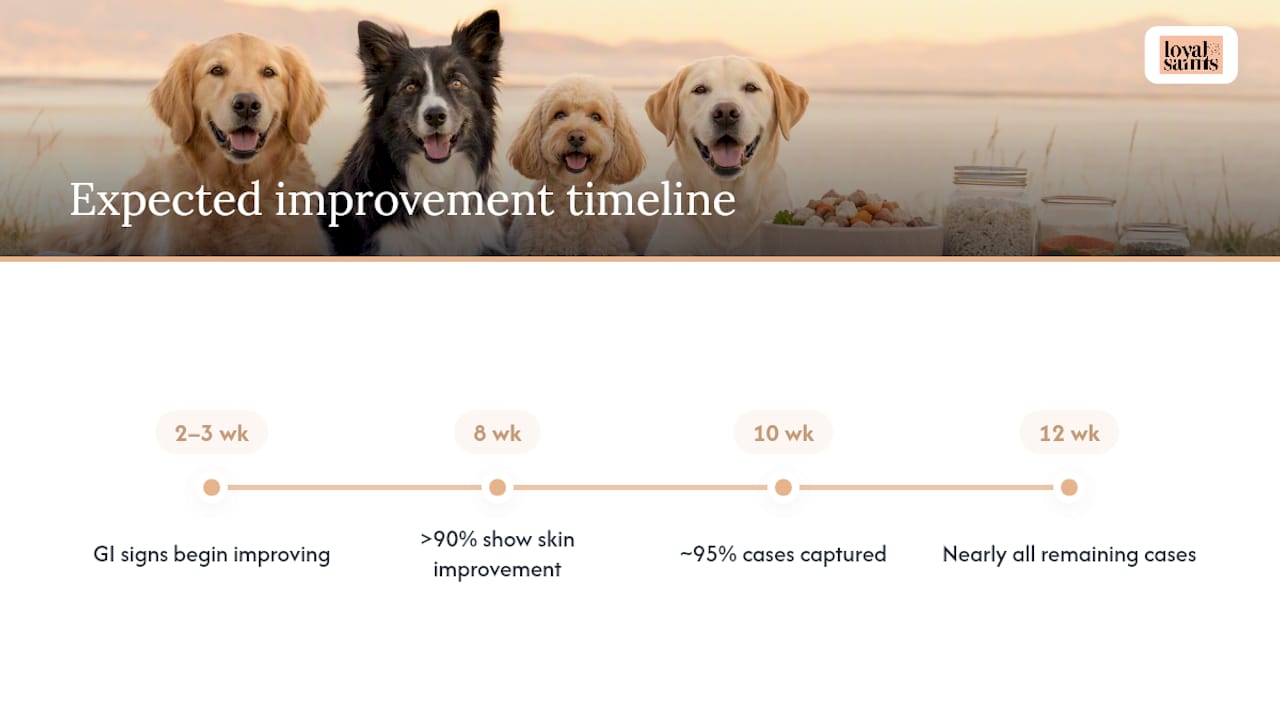
Expect gastrointestinal signs to start improving within 2 to 3 weeks, while skin and ear symptoms move on a slower clock.
By the numbers: Over 90% of food-allergic dogs show significant improvement in skin signs within 8 weeks of strict feeding. A literature review in the Merck Veterinary Manual puts the minimum trial length needed to catch 95% of food-allergic dogs at around 10 weeks, with 12 weeks capturing nearly all remaining cases.
Track progress with something more objective than memory. Use a simple 0 to 10 itch scale, logged daily or every few days. Take dated photos of any irritated skin, ear redness, or paw licking under the same lighting each time. A written log matters more than it sounds like it should, because gradual improvement is genuinely hard to notice day to day when you’re living with the dog full-time.
If you’re at week 8 with zero change, that’s a signal, not a reason to quit outright. Talk to your vet: it might mean environmental allergies are driving the picture, a hidden exposure has slipped into the diet, or the trial simply needs to run the full 12 weeks before judging it a failure. Our step-by-step trial guide walks through what a normal week-by-week trajectory tends to look like.
What Are the Biggest Pitfalls in an Elimination Diet Trial?
Trials fail far more often from hidden exposures than from the wrong diet choice. A single flavored treat or a flea chew with a beef coating can undo six weeks of otherwise perfect compliance, and most owners don’t even realize the source when symptoms flare.
Here’s where allergens sneak in:
- Flavored medications and chewable preventives. Many contain meat-based flavoring. Switch to unflavored or topical parasite preventives for the duration of the trial.
- Treats, dental chews, and rawhide. All food, full stop, unless it’s made from the trial diet itself.
- Supplements and joint chews. Fish oil capsules and glucosamine chews often carry animal-derived flavoring or gelatin.
- Flavored toothpaste. Poultry and malt flavors are common in dog toothpaste and count as exposure.
- Toys and bones with hide or meat coatings. Swap for plain rubber or rope toys during the trial.
- Scavenging. Counter surfing, yard foraging, cat food raids, and the neighbor’s kid feeding chips through the fence.
- Shared households. Every person feeding the dog needs the same instructions, written down, not verbally passed along and forgotten.
Pro Tip: Print the exclusion list and stick it on the refrigerator. Every visiting dog sitter, family member, and kid needs to see it before they’re alone with your dog for even an hour.
If your dog refuses the new diet outright, warm it slightly, add warm water to release aroma, or hand feed the first few meals. Don’t cave and add a topper; that defeats the entire purpose. A brief check-in call with your vet’s technician partway through the trial meaningfully improves the odds of a clean, interpretable result, because someone outside the household can catch compliance slips you might excuse or overlook.
How Do You Confirm the Diagnosis With a Rechallenge?
Improvement alone doesn’t prove food allergy. Dogs can improve for unrelated reasons: weather changes, secondary infections clearing up, or simple coincidence. A rechallenge, deliberately reintroducing the old diet, is what actually confirms the diagnosis.
The protocol runs like this:
- Buy a fresh bag of your dog’s original food rather than reusing an old one; a stale or improperly stored bag can develop storage mite contamination that produces a false positive flare unrelated to the actual protein.
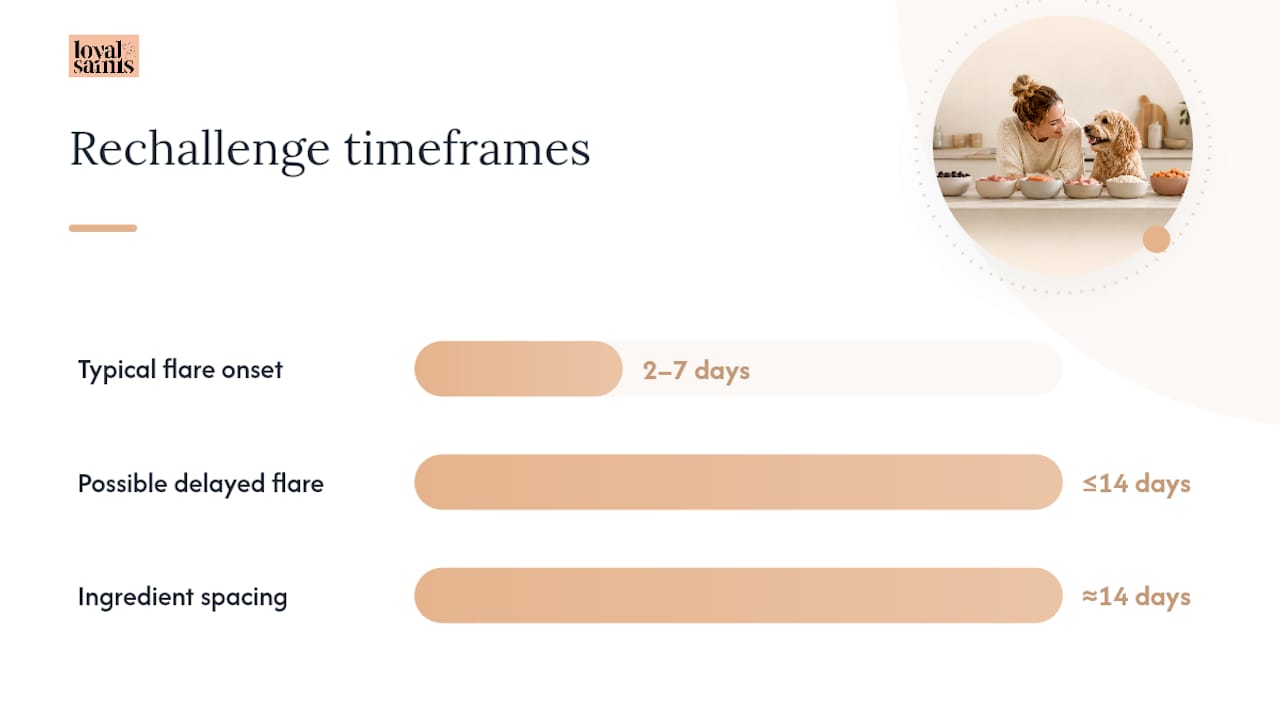
- Reintroduce the original diet fully and watch closely. A genuine flare often shows up within 2 to 7 days, though it can take up to 14.
- If signs return, that confirms food allergy. Go back to the elimination diet immediately and let symptoms settle again.
- Once stable, reintroduce single ingredients one at a time, spacing each new ingredient roughly two weeks apart, so you can attribute any flare to that specific ingredient rather than a pileup of unknowns.
If your dog was on steroids or other anti itch medication during the trial, talk to your vet about timing the rechallenge around the medication’s withdrawal, since masked symptoms will give you a false negative. Partial responses, where things improve but never fully resolve, usually mean more than one thing is going on: a food allergy layered on top of an environmental one, or a secondary skin infection that needs separate treatment before you can read the food trial cleanly.
What Happens After You Identify the Trigger Food?
Once you know the culprit, the job shifts from diagnosis to permanent avoidance, and that’s where a lot of hard-won progress quietly unravels.
Read every label, every time, even on products you’ve bought before. Manufacturers change formulations without much warning, and “chicken flavor” doesn’t always mean chicken is the only animal protein inside. This applies equally to kibble, canned food, dental treats, and supplements.
- Recheck labels on treats and supplements at every repurchase, not just the food bag.
- Keep feeding a complete and balanced diet that meets AAFCO standards for your dog’s life stage.
- If you’re cooking at home long-term, work with a veterinary nutritionist to avoid slow nutritional gaps that take months to show up.
- Keep a running log of any new product you introduce, along with the date and any reaction.
- Reassess if new symptoms appear. Dogs can develop new sensitivities over time, and environmental allergies (pollen, dust mites, fleas) often coexist with food allergy and need their own management plan.
For practical everyday options once you know your dog’s safe proteins, managing dog food allergies for lasting relief covers the shift from trial mode to daily life.
Why Single-Protein Freeze-Dried Options Make Long-Term Compliance Easier
The hardest part of an elimination diet isn’t picking the right food. It’s staying strict for weeks eleven and twelve when your dog gives you those eyes and you’re out of the house without a backup meal. That’s the phase where compliance quietly falls apart, and it’s exactly where the diet format matters as much as the ingredient list.
Single-protein, freeze-dried formulas simplify what you’re checking every time you feed. You’re not parsing a paragraph of sub-ingredients; you’re looking at one protein, minimal processing, and a shelf-stable format that travels well if your dog stays at a sitter’s or comes with you on a trip mid-trial. That consistency matters just as much once you’ve confirmed the trigger and moved into permanent avoidance, since a maintenance diet that’s easy to keep consistent is a maintenance diet you’ll actually stick with. Always confirm any new diet with your veterinarian before switching, especially mid-trial.
— Kristina
Single-Protein Freeze-Dried Options for Trial and Maintenance Feeding
Premium single-protein, freeze-dried formulas make strict feeding easier to stick with, whether you’re deep in a diagnostic trial or maintaining a confirmed protein avoidance for years afterward. Instead of decoding a long ingredient panel every time you shop, you’re feeding one clear protein, minimally processed, in a format that holds up in a pantry or a travel bag without refrigeration.

Three options fit directly into trial and maintenance feeding: Freeze Dried Raw Chicken in the 14oz size for full-household feeding, the 5oz Freeze Dried Raw Chicken for smaller dogs or supervised provocation testing, and Freeze Dried Raw Turkey with Salmon for owners looking for a different limited-protein profile once chicken has been ruled in or out. Every option is formulated to be AAFCO-complete, with a subscription option available for long-term favorites. Check with your veterinarian before switching diets, then browse the full lineup of allergy-friendly options to find the protein that fits your dog’s confirmed trial results.
This article is general information, not a substitute for advice from a qualified doctor. Consult a qualified healthcare professional about your own circumstances before acting on anything here.
Sources
- Elimination diet trials: steps for success and common mistakes (Today’s Veterinary Practice)
- Cutaneous food allergy in animals (Merck Veterinary Manual)
- Adverse food reaction/food allergy — Small and Large Animal Dermatology Handbook (University of Minnesota Open Textbook)
- Think Your Pet has a Food Allergy? Eliminating Mistakes in Elimination Diet Trials (Tufts Cummings School)


