
Yes, prebiotics can genuinely support digestion and immune health in many dogs, and you don’t need a specialty supplement to start. Fermentable fibers like FOS, inulin, and MOS feed the good bacteria already living in your dog’s gut. The safest first step is food: a spoonful of plain pumpkin or ground flaxseed added gradually, watching how your dog’s stool responds along the way.
TL;DR:
- Prebiotics like FOS, inulin, and MOS promote beneficial gut bacteria, short-chain fatty acid production, and help improve stool quality in dogs.
- The research shows consistent effects on microbiota and SCFA levels, but evidence for preventing or treating active GI disease remains limited.
- Natural prebiotic foods such as pumpkin, ground flaxseed, chicory root, mushrooms, and cooked oats can support gut health when introduced gradually.
- Supplements are most useful after antibiotics, for GI conditions under vet supervision, or when feeding low-fiber commercial diets, with attention to labeling specifics.
- Side effects like gas or loose stool are common initially and tend to resolve with gradual introduction; severe symptoms require veterinary consultation.
Table of Contents
- What Are Prebiotics for Dogs and How Do They Work?
- Does the Research Back Up These Digestive Health Claims?
- What Are the Best Natural Prebiotic Foods for Dogs?
- When Should You Use Prebiotic Supplements Instead of Food?
- Which Dogs Benefit Most, and What Are the Warning Signs?
- Why We Lead With Whole Foods Before Supplements
- How a Freeze-Dried Food Brand Fits Into a Prebiotic-Aware Feeding Plan
- Sources
What Are Prebiotics for Dogs and How Do They Work?
Prebiotics are fibers your dog can’t digest on their own but that beneficial gut bacteria can. They travel through the small intestine untouched, then reach the colon, where resident bacteria ferment them. That fermentation produces short-chain fatty acids, mainly butyrate, acetate, and propionate, which feed the cells lining the colon and help regulate immune signaling throughout the gut.
This is the mechanism behind most of the digestive benefits people notice: firmer stool, less gas over time, and a gut environment that favors helpful bacteria over troublesome ones. The ISAPP expert consensus describes prebiotics and probiotics as complementary tools. Prebiotics feed the bacteria that are already there rather than replacing them with new strains.
You’ll see several prebiotic types listed on dog food and supplement labels:
- FOS (fructooligosaccharides): short fermentable chains found in chicory and many commercial pet foods
- Inulin: a longer-chain fructan, also from chicory root, that ferments more slowly through the colon
- GOS (galactooligosaccharides): derived from lactose, often paired with FOS for a broader fermentation effect
- MOS (mannan-oligosaccharides): sourced from yeast cell walls, thought to bind pathogens rather than just feed bacteria
- Beta-glucans: fibers from yeast or oats that support both fermentation and immune activity
Does the Research Back Up These Digestive Health Claims?
The evidence for prebiotics in dogs is real, though it comes with caveats worth understanding before you get too confident about what a supplement will fix.
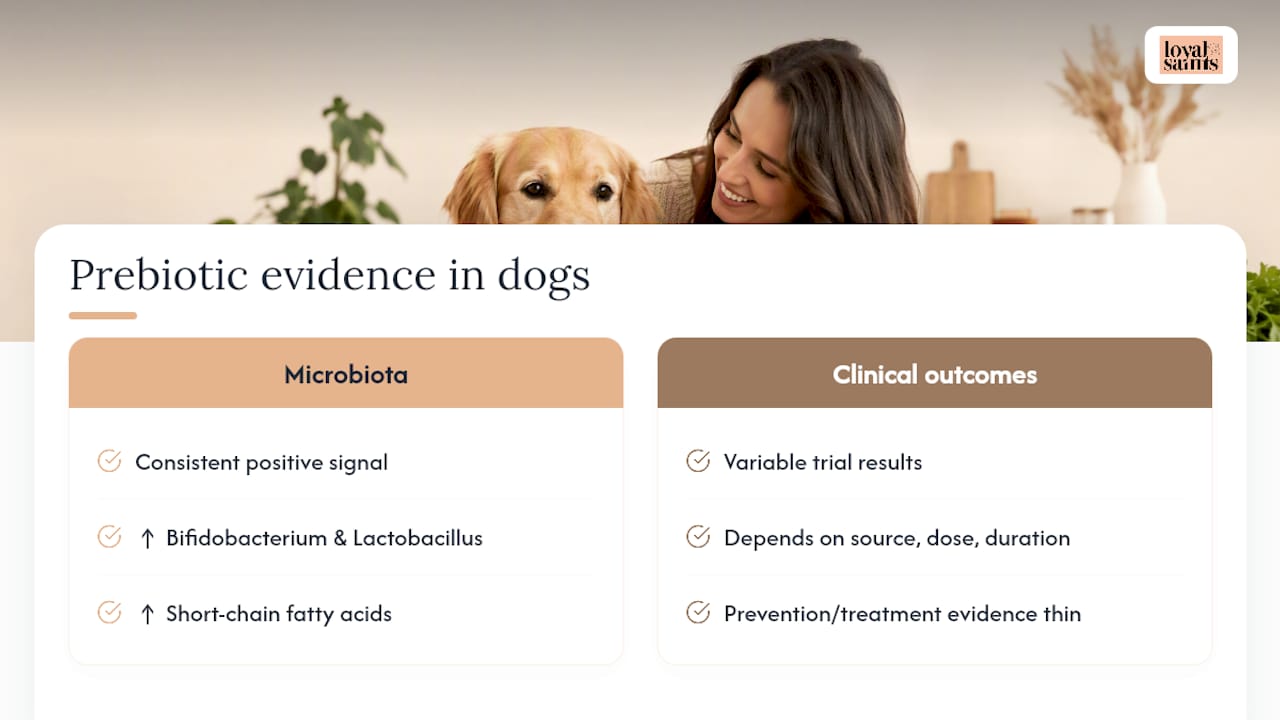
Multiple clinical studies show that FOS, MOS, and GOS supplementation raises populations of beneficial bacteria like Bifidobacterium and Lactobacillus, alongside measurable increases in short-chain fatty acids, according to a review of probiotic and prebiotic research in dogs. A puppy feeding trial using a prebiotic fiber blend found improved stool quality and reduced fecal moisture over 175 days, with no negative effect on normal growth.
Where the science gets murkier: a broader systematic review of prebiotic studies in dogs collating 36 in vivo trials found outcomes varied widely by prebiotic source, dose, and study duration. One trial testing a prebiotic and postbiotic combination together found improved biomarkers, like lower fecal calprotectin and higher butyrate, but no visible change in stool scores among already-healthy dogs. Biology moved before symptoms did. Prebiotics show a consistent, well-documented signal for gut microbiota and SCFA production. Evidence for preventing or treating acute GI disease is thinner and shouldn’t be oversold.
What Are the Best Natural Prebiotic Foods for Dogs?
You don’t have to reach for a bag of powder to give your dog a prebiotic boost. Several kitchen staples already provide fermentable fiber, and some qualify as prebiotic-like foods even when they aren’t a purified prebiotic compound.
- Plain canned or cooked pumpkin — a well-known source of soluble and insoluble fiber; the AKC recommends about one to four tablespoons depending on your dog’s size, never pumpkin pie filling, which contains added sugar and spices.
- Ground flaxseed — a mild source of fermentable fiber; start with a teaspoon for small dogs, a tablespoon for larger breeds.
- Chicory root or inulin-rich vegetables like Jerusalem artichoke, usually added in small amounts due to their fermentation strength.
- Certain mushrooms, such as shiitake, which contain beta-glucans that support both fermentation and immune activity.
- Plain cooked oats, a gentler fiber source for dogs who don’t tolerate stronger prebiotics well.
Pro Tip: Introduce any new fiber source over five to seven days, starting with a quarter of the target amount. Fermentable fiber added too fast is the single most common reason dogs get gassy or loose stool from “healthy” additions.
True prebiotics like inulin ferment predictably and are well studied. Prebiotic-like foods such as oats and pumpkin offer general fiber benefits without the same research backing, but both categories support the same underlying goal: feeding a healthier colony of gut bacteria.
When Should You Use Prebiotic Supplements Instead of Food?
Food-first works for most healthy dogs, but supplements earn their place in specific situations: after a course of antibiotics disrupts gut flora, for dogs with diagnosed GI conditions under veterinary care, or for pets eating low-fiber commercial diets that don’t already include fermentable fiber.
If you go the supplement route, label literacy matters more than marketing claims. Watch for:
- Specific ingredient names (FOS, MOS, inulin, GOS) rather than vague terms like “prebiotic fiber blend”
- A stated amount per serving, not just an ingredient listed low on the panel
- Research-grade products that disclose grams per serving, since vague fiber-only claims usually signal a lower-quality formulation
Commercial dog foods typically include prebiotics at under 0.5% of the total formula, a level shown effective in studies without overwhelming digestion. If you’re adding a standalone supplement on top of food, start at the lowest labeled dose and increase only if your dog’s stool stays normal for several days.
Pairing prebiotics with probiotics, often called a synbiotic approach, can amplify results since the prebiotic fiber feeds the very bacteria the probiotic just introduced. Cornell’s veterinary guidance notes that probiotic products should list species and CFU counts on the label, the same specificity standard you want for prebiotic ingredients. For a deeper breakdown of how these two categories differ, this guide on probiotics versus prebiotics walks through their distinct roles.
Which Dogs Benefit Most, and What Are the Warning Signs?
Some dogs have more to gain from prebiotics than others. Senior dogs with slower digestion, dogs recovering from a round of antibiotics, and pets under stress (think boarding, travel, or a household change) tend to show the clearest response. Dogs with chronic enteropathy can benefit too, but only with veterinary supervision guiding the plan, since fiber changes can complicate an existing treatment protocol. Gut health directly influences immune function, which is part of why stressed or recovering dogs often see the biggest shift.
Side effects are usually mild and dose-related:
- Gas and mild bloating in the first few days of introduction
- Loose stool if the amount increases too quickly
- Small breeds sometimes tolerate more fiber per pound of body weight than large breeds do, though individual response varies
Stop and call your veterinarian if you see bloody or severe diarrhea, if your dog is immunocompromised, or if they’re already on a prescribed therapeutic diet where fiber changes could interfere with treatment. A quick vet check beats guessing when symptoms don’t improve within a day or two.
Why We Lead With Whole Foods Before Supplements
Whole ingredients give your dog more than one gut-health lever at a time. A freeze-dried topper made from real meat provides protein and moisture alongside whatever fiber you’re already adding, rather than isolating one fermentable compound in a jar. That’s the reasoning behind favoring food-first strategies for otherwise healthy dogs.
None of this replaces a veterinarian who knows your dog’s history. If you’re managing a chronic condition or unsure how much fiber is appropriate, a personalized plan beats anything written in a general guide, including this one.
— Kristina
How a Freeze-Dried Food Brand Fits Into a Prebiotic-Aware Feeding Plan
Adding fermentable fiber works best alongside a diet that’s already doing the heavy lifting nutritionally, and that’s where whole-food toppers earn their keep. Some brands make freeze-dried options from single proteins and whole ingredients, with no fillers or synthetic additives, so you’re not undoing your prebiotic efforts with a low-quality base diet.
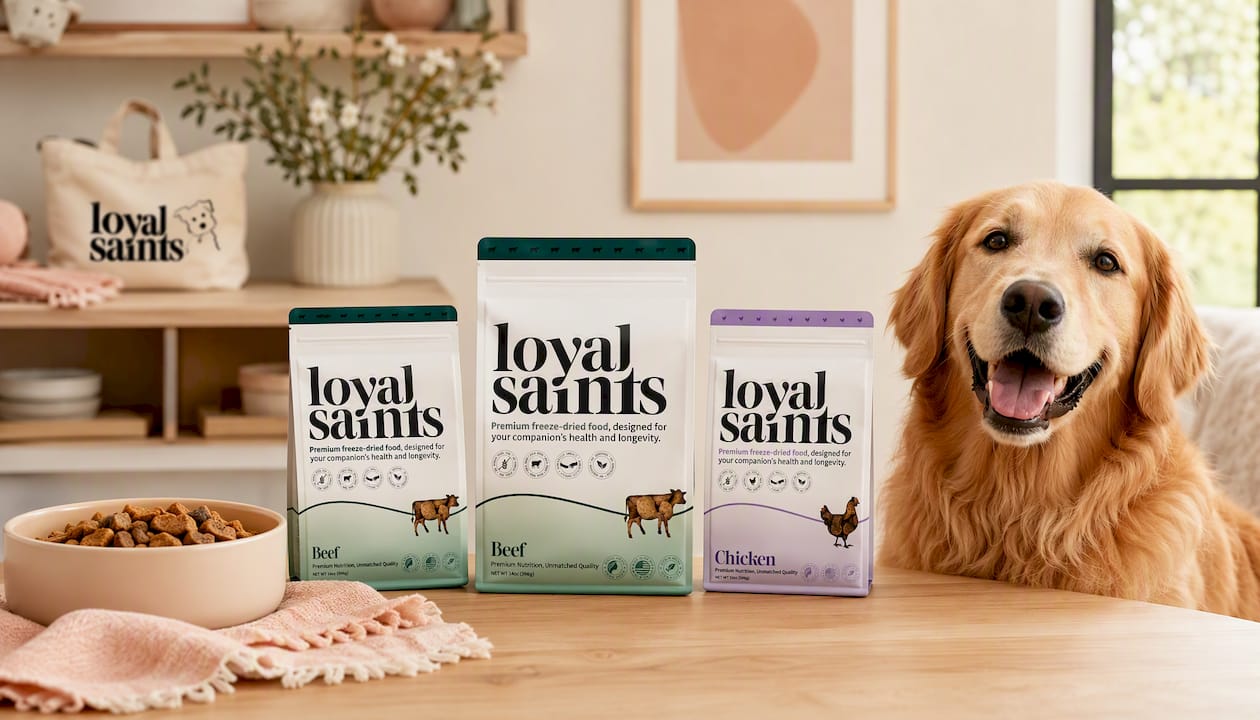
The Freeze Dried Raw Beef 5oz works well as a daily topper over your dog’s regular food, giving you an easy way to pair whole-food protein with a fiber addition like flaxseed or pumpkin. If you’re feeding a larger dog or want fewer reorders, the Freeze Dried Raw Beef 14oz covers more ground between purchases. Dogs who do better on poultry can try the Freeze Dried Raw Chicken 5oz instead, a single-protein option that’s gentle on sensitive stomachs.
All three are AAFCO-complete and human-grade, built to stand on their own as a meal or work as a topper. If your dog is on a therapeutic diet, check with your veterinarian before adding anything new, prebiotic or otherwise.
Sources
- The Function of Probiotics and Prebiotics on Canine Intestinal … — PMC
- Prebiotics and Probiotics for Pets — ISAPP
- Potential Effects of Prebiotics on Gastrointestinal and Immunological Modulation in the Feeding of Healthy Dogs — MDPI


