
TL;DR:
- Premium dog food features higher-quality proteins, natural preservatives, and better digestibility compared to budget options. Dogs with health issues or specific needs benefit most from premium formulas that support optimal absorption and overall wellness. The decision depends on your dog’s health profile, life stage, and the actual nutritional value rather than the label’s price.
Premium dog food is defined by higher-quality protein sources, better digestibility, and fewer artificial additives compared to regular or budget options. When you’re standing in the pet food aisle trying to decide between a $20 bag and a $60 bag, the difference isn’t just marketing. The gap between premium dog food vs regular comes down to what’s actually in the bowl and how well your dog’s body uses it. Brands like Purina Pro Plan, Hill’s Science Diet, and Royal Canin have built their reputations on veterinary nutritionist oversight and feeding-trial research, setting a measurable standard that budget options rarely match.
What are the main ingredient differences between premium and regular dog food?
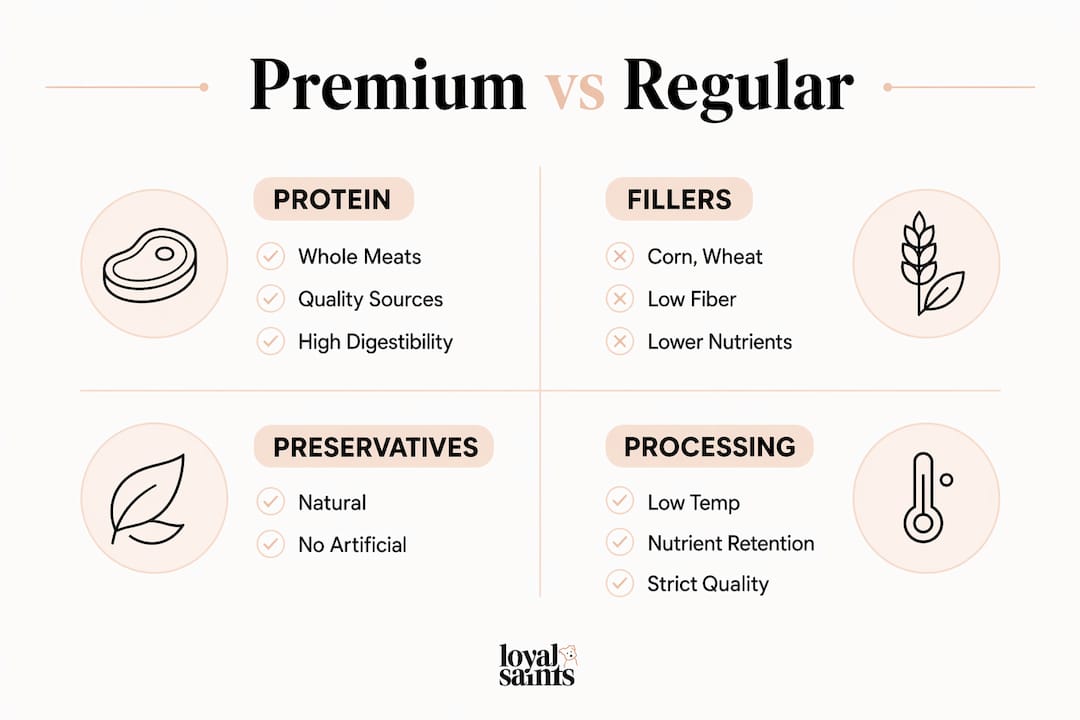
The single biggest gap between high quality dog food and budget options is protein sourcing. Premium foods list whole meats like deboned chicken, salmon, or beef as the first ingredient. Regular dog foods often lead with meat by-products, corn meal, or soy, which are lower-cost protein alternatives with less consistent nutritional profiles.
Carbohydrate sources also tell the story. Budget foods rely heavily on corn, wheat, and soy as fillers. Premium formulas use sweet potato, peas, or brown rice, which digest more cleanly and cause fewer blood sugar spikes. That difference matters most for dogs with weight issues or diabetes.
Preservatives are another clear dividing line. Premium foods exclude artificial preservatives like BHA and BHT, using natural alternatives such as mixed tocopherols and rosemary extract instead. Budget options use synthetic preservatives because they extend shelf life at lower cost.
Here’s a side-by-side look at the key ingredient contrasts:
| Category | Premium Dog Food | Regular Dog Food |
|---|---|---|
| Primary protein | Whole meats (chicken, beef, salmon) | Meat by-products, meal blends |
| Carbohydrate source | Sweet potato, peas, brown rice | Corn, wheat, soy |
| Preservatives | Natural (tocopherols, rosemary) | Synthetic (BHA, BHT) |
| Artificial colors | None | Often present |
| Fillers | Minimal to none | Common |
Processing methods also affect nutrient retention. Premium manufacturers use lower-temperature cooking and stricter quality controls to preserve vitamins and amino acids. Budget production often prioritizes speed and cost over nutrient preservation.
Pro Tip: Read the first five ingredients on any dog food bag. If you see a whole protein source in the top two, you’re looking at a food that prioritizes nutrition over cost-cutting.
How does digestibility compare between premium and regular dog food?
Digestibility is the most practical metric in any dog food quality comparison, and it’s one most owners overlook. Premium dog food digestibility ranges from 80–90%, compared with 65–75% for budget options. That means your dog absorbs significantly more nutrition from every cup of premium food.
The real-world effects of that gap show up in a few specific ways:
- Stool volume: Dogs on budget food produce more waste because more of the food passes through undigested. Smaller, firmer stools are a reliable sign of better digestibility.
- Portion size: Because premium food delivers more usable nutrition per cup, you often feed less of it. That partially offsets the higher price per bag.
- Energy levels: Better nutrient absorption supports steadier energy throughout the day, especially in active or working dogs.
- Coat and skin: Dogs absorbing more omega fatty acids from premium formulas typically show shinier coats and less flaking within 6–8 weeks of switching.
One finding worth knowing: fresh-cooked diets improve digestibility by only about 5% over premium kibble. That translates to roughly 55–60 extra absorbed calories per day for a 50-pound dog. For most healthy adults, that margin is not worth the significant price jump. The digestibility advantage of fresh food matters most for dogs with chronic digestive conditions, not the average healthy adult dog.
Pro Tip: If your dog’s stool is large, loose, or frequent, digestibility may be the issue. Switching to a higher-digestibility formula often resolves this before any medical intervention is needed.

Is premium dog food actually worth the cost?
The annual cost difference between budget and premium kibble for a typical 40-pound dog runs roughly $200–$330 per year. Budget kibble costs $237–$347 annually. Premium kibble runs $438–$676. Fresh-cooked subscription services like those from meal-delivery brands cost $1,800–$3,000 annually, which is 2–6 times more than premium kibble.
That cost gap looks large until you factor in what you get per dollar of nutrition absorbed. Because premium food has higher digestibility, you feed smaller portions. The effective cost-per-nutrient absorbed narrows considerably.
Here’s how the numbers stack up across food types:
| Food Type | Annual Cost (40 lb dog) | Digestibility | Cost-Per-Nutrient Value |
|---|---|---|---|
| Budget kibble | $237–$347 | 65–75% | Lower |
| Premium kibble | $438–$676 | 80–90% | Moderate to high |
| Fresh-cooked subscription | $1,800–$3,000 | ~85–95% | High cost, marginal gain |
Consider these cost-benefit factors before deciding:
- Vet visit frequency: Dogs on poor-quality diets visit the vet more often for skin issues, digestive problems, and weight management. One avoided specialist visit can offset a full year of premium food costs.
- Portion efficiency: Feeding 20–25% less food per meal due to better digestibility reduces how fast you go through a bag.
- Long-term health outcomes: Chronic inflammation, joint problems, and allergy management all have real financial costs. Better nutrition reduces their frequency.
- Life stage alignment: A puppy or senior dog has different caloric and nutrient needs. Feeding the right formula for their stage is more cost-effective than treating deficiencies later.
The honest answer to “is premium dog food worth it” is: it depends on your dog’s health profile. For a healthy adult dog with no sensitivities, a well-formulated mid-range food may be entirely adequate. For dogs with chronic conditions, the math often favors premium.
Which dogs benefit most from premium dog food?
Not every dog needs the most expensive food on the shelf. Understanding what qualifies as premium pet nutrition helps you match the food to the dog, not the price tag to your budget.
Dogs with the following conditions gain the most measurable benefit from premium formulas. Dogs with chronic digestive issues, allergies, skin sensitivities, or joint problems show real improvement on premium diets, including better coat shine, reduced inflammation, and more consistent digestion.
Beyond health conditions, life stage and breed size matter. Puppies of large breeds like German Shepherds or Labrador Retrievers need precise calcium-to-phosphorus ratios to support bone development. Senior dogs need higher protein and joint-supporting nutrients like glucosamine. These needs are rarely met well by generic budget formulas.
Veterinary experts are clear on one point: complete and balanced nutrition for your dog’s life stage matters more than price or the word “premium” on the label. An expensive but poorly balanced diet can cause more harm than a mid-range food with a solid AAFCO statement.
Here’s a practical checklist to guide your decision:
- Does your dog have recurring skin issues, loose stools, or low energy? Premium is worth trying.
- Is your dog a puppy, pregnant, or senior? Life-stage-specific formulas are non-negotiable.
- Does your dog have a diagnosed food allergy or intolerance? Look for limited-ingredient or single-protein options.
- Is your dog a healthy adult with no known sensitivities? A well-formulated mid-range food with an AAFCO statement may be entirely sufficient.
- Are you supplementing with treats? Single-protein freeze-dried treats keep the treat portion nutritionally clean, especially if you train frequently.
Food consistency also matters. Constantly switching brands disrupts gut bacteria and makes it harder to identify what’s working. Pick a formula that fits your dog’s profile and stick with it long enough to see real results, typically 8–12 weeks.
Key takeaways
Premium dog food delivers measurably better digestibility, cleaner ingredients, and stronger nutritional value, but the right choice depends on your dog’s health profile and life stage, not the price tag alone.
| Point | Details |
|---|---|
| Digestibility gap is real | Premium food absorbs at 80–90% vs 65–75% for budget, meaning more nutrition per cup. |
| Ingredient quality drives value | Whole proteins and natural preservatives in premium foods reduce filler intake and support better health. |
| Cost difference is manageable | Premium kibble costs $200–$330 more annually than budget, but portion efficiency narrows the real gap. |
| Health conditions change the math | Dogs with allergies, skin issues, or digestive problems benefit most from premium formulas. |
| “Premium” is a marketing term | Look for AAFCO statements and vet-backed research, not just price or packaging claims. |
What i’ve learned after years of watching dogs eat
Here’s the thing most pet food marketing won’t tell you: the word “premium” has no legal definition. The FDA and AAFCO do not regulate what a brand can call premium. That means a $70 bag with a beautiful label and a story about small-batch sourcing may offer no more nutritional value than a solid mid-range food with a clean AAFCO statement.
What I’ve found actually matters is consistency and transparency. Brands like Purina Pro Plan and Hill’s Science Diet publish feeding trial data and employ veterinary nutritionists. That’s not marketing. That’s verifiable. When you’re comparing foods, ask whether the manufacturer conducts AAFCO feeding trials or relies only on formulation testing. The difference is significant.
I’ve also seen owners spend heavily on fresh-cooked subscriptions for healthy adult dogs who showed no measurable improvement over premium kibble. The digestibility gap between fresh and premium kibble is real but small for most dogs. Save the premium budget for dogs who genuinely need it.
The most practical advice I can give: match the food to your dog’s actual health profile. Use the age-appropriate diet guidance available from trusted sources, consult your vet before making major changes, and monitor your dog’s coat, stool, and energy for 8–12 weeks after any switch. Those three signals tell you more than any ingredient list.
— Kristina
Upgrade your dog’s nutrition with Loyalsaintspets
If you’re ready to take your dog’s diet to the next level, Loyalsaintspets offers freeze-dried raw treats made from single-protein, whole-food ingredients with zero fillers or artificial additives. These treats are designed for dogs with sensitivities and for owners who want every bite to count nutritionally.
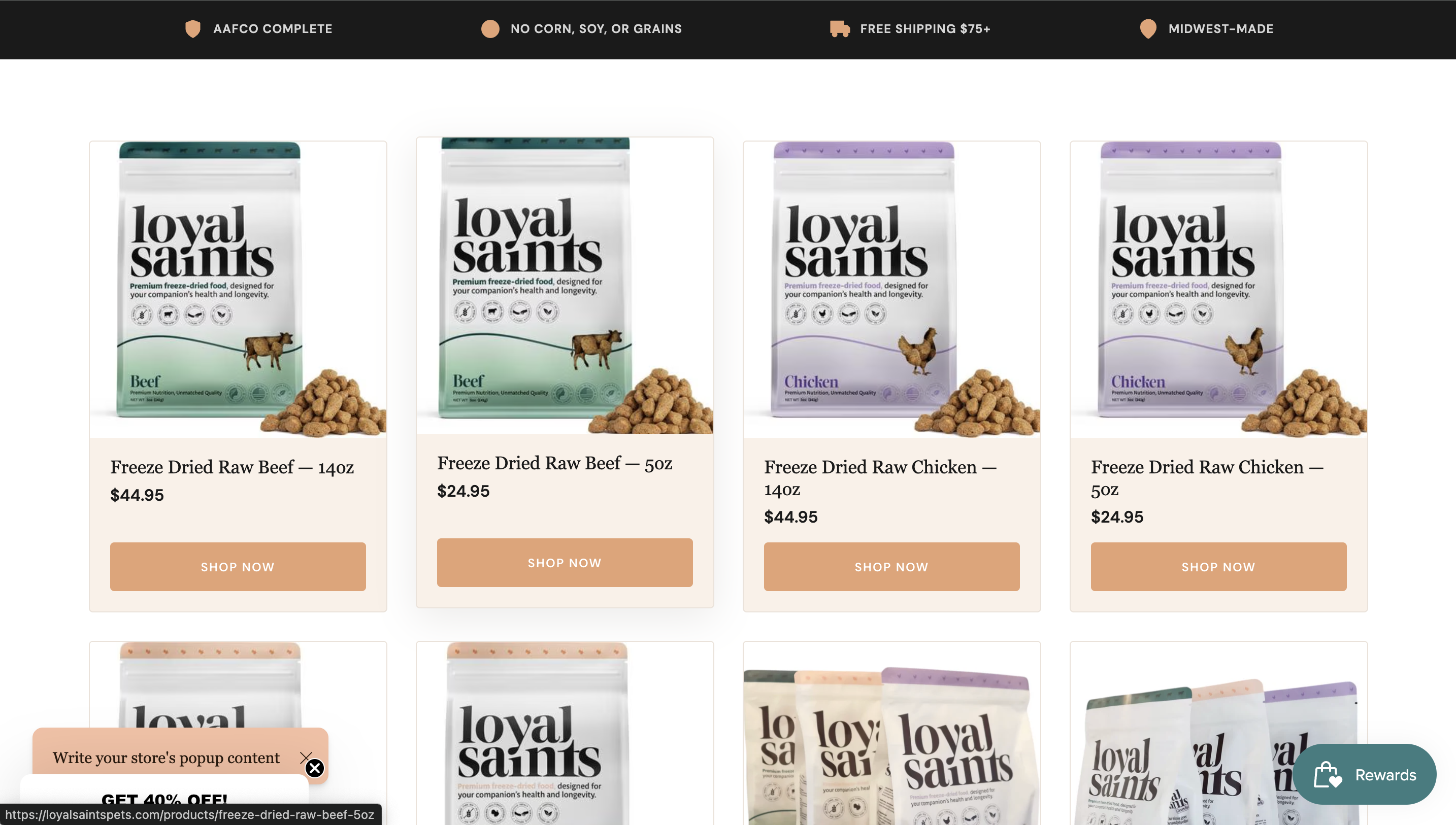
Loyalsaintspets’ freeze-dried raw chicken and freeze-dried raw beef treats are made from human-grade ingredients, meet AAFCO nutritional standards, and deliver dense nutrition in small portions. They’re ideal for training, supplementing meals, or rewarding your dog without disrupting their dietary balance. Because treats should support your dog’s health, not work against it. Explore the full range at Loyalsaintspets and find the right fit for your dog today.
FAQ
What is the real difference between premium and regular dog food?
Premium dog food uses whole protein sources, natural preservatives, and higher-quality carbohydrates, while regular dog food relies more on by-products, fillers, and synthetic additives. The practical result is better digestibility and nutrient absorption in premium formulas.
Does premium dog food actually improve my dog’s health?
For dogs with allergies, digestive issues, skin sensitivities, or joint problems, premium diets show measurable improvements in coat quality, digestion, and energy. Healthy adult dogs with no sensitivities may see less dramatic differences.
How much more does premium dog food cost per year?
For a 40-pound dog, premium kibble costs roughly $438–$676 annually compared to $237–$347 for budget kibble, a difference of $200–$330 per year. Fresh-cooked subscription diets cost significantly more at $1,800–$3,000 annually.
Is “premium” on a dog food label regulated?
No. The term “premium” has no legal or regulatory definition under AAFCO or FDA guidelines. Always look for an AAFCO nutritional adequacy statement and evidence of feeding trials rather than relying on label claims.
How do i know if my dog needs a premium diet?
Watch for recurring loose stools, dull coat, low energy, or frequent skin irritation. These are signs that your dog’s current food may not be meeting their nutritional needs, and a switch to a higher-digestibility formula is worth discussing with your vet.
Recommended
- Premium Dog Food Benefits: What Your Dog Really Gains | The Loved by Loyal Saints Blog
- Premium Ingredients in Pet Health: Why They Matter | The Loved by Loyal Saints Blog
- Premium Dog Foods Comparison – Explore Top Choices 2026 | The Loved by Loyal Saints Blog
- Premium Pet Food Ingredients: Why Quality Matters | The Loved by Loyal Saints Blog


