
TL;DR:
- Premium dog food offers higher digestibility and moisture content, promoting better health and hydration. Early-life nutrition with minimally processed diets reduces the risk of chronic inflammation and allergies, shaping long-term immunity. Choosing products with feeding trial validation and whole protein sources ensures quality beyond marketing claims.
Premium dog food is defined as a higher-quality diet that delivers superior nutrient absorption, better digestibility, and measurable long-term health benefits compared to standard commercial kibble. If you’ve been asking yourself why buy premium dog food, the answer starts with science. Dogs fed minimally processed, whole-ingredient diets show stronger immune function, healthier coats, and reduced risk of chronic disease. Standards like AAFCO feeding trials and nutrient bioavailability data confirm that not all dog food is created equal. The difference between a thriving dog and one that merely survives often comes down to what’s in the bowl.
Why buy premium dog food: the digestibility difference
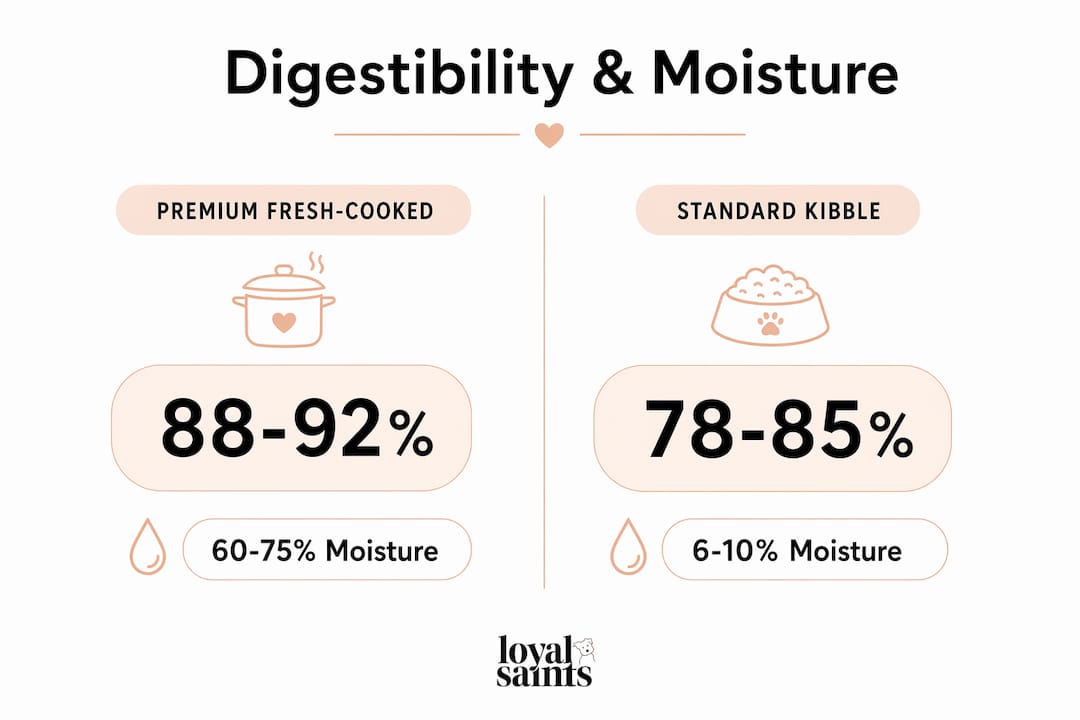
Premium fresh-cooked and minimally processed diets achieve 85–92% apparent total tract digestibility, compared to 78–85% for standard commercial kibble. That 5–10 percentage point gap means your dog extracts more usable nutrition from every meal and produces less stool volume as a result. Better digestibility is not just a comfort metric. It directly affects how much energy your dog gets, how well muscles are maintained, and how efficiently the immune system operates.
The quality of protein sources drives much of this difference. Premium foods use whole meats, organs, and identifiable animal proteins rather than rendered by-products or plant-based fillers. Rendered ingredients lose bioactive compounds during high-heat processing, which lowers the actual nutritional value even when the label looks complete. Synthetic fillers added to bulk up standard kibble can further reduce digestive efficiency by diluting nutrient density.
AAFCO validation adds another layer of assurance. AAFCO feeding trials test products on real dogs over 10–26 weeks, monitoring health markers to confirm nutrient bioavailability. Formulation-only validation, by contrast, uses nutrient math on paper without confirming how a dog’s body actually responds. Premium brands that carry feeding trial statements have cleared a higher bar than those relying on formulation claims alone.
Pro Tip: When reading a dog food label, look for the phrase “animal feeding tests using AAFCO procedures” rather than just “formulated to meet AAFCO nutrient profiles.” The first phrase means real dogs confirmed the nutrition. The second means a calculator did.
Digestibility and moisture comparison across dog food types
| Food type | Digestibility (ATTD) | Moisture content |
|---|---|---|
| Premium fresh-cooked | 88–92% | 60–75% |
| Freeze-dried raw | 85–90% | 3–5% (rehydrates to 60–70%) |
| Standard dry kibble | 78–85% | 6–10% |
How does moisture content affect your dog’s health?
Premium dog food formats deliver 60–75% moisture compared to just 6–10% in dry kibble. That gap matters because dogs evolved as meat eaters who obtained most of their hydration from prey, not from a water bowl. A dog eating dry kibble exclusively often runs in a state of mild, chronic dehydration without any obvious symptoms.
Veterinarians consistently link adequate hydration to urinary tract and kidney health. Dogs prone to bladder stones, urinary tract infections, or early-stage kidney disease benefit directly from higher moisture diets. Senior dogs, who often drink less water as their thirst response dulls, are especially vulnerable to the hydration shortfall that comes with a dry-food-only diet.
The practical benefits of higher moisture content include:
- Kidney and bladder support: Diluted urine reduces crystal formation and lowers infection risk.
- Better digestion: Moisture softens food and supports gut motility, reducing constipation.
- Improved palatability: Dogs with reduced appetite, especially seniors or recovering dogs, eat more readily when food has a fresh, moist texture.
- Weight management: Higher moisture content increases meal volume without adding calories, helping dogs feel full.
- Coat and skin health: Adequate hydration supports skin barrier function and reduces dry, flaky coats.
Pro Tip: If switching to a fully fresh or freeze-dried diet feels cost-prohibitive, use a premium fresh food or rehydrated freeze-dried product as a topper over high-quality kibble. Even partial moisture supplementation improves hydration and palatability meaningfully.
Does early-life nutrition with premium food affect long-term health?
Early-life feeding choices carry consequences that extend far beyond puppyhood. Research shows that feeding non-processed meat-based diets early in life lowers the risk of atopic dermatitis by 69%, while ultra-processed diets increase chronic inflammatory conditions threefold. Those are not small margins. They suggest that what a puppy eats in its first months shapes its immune system for life.
The mechanism runs through the gut microbiome. Early nutrition influences which bacterial communities establish in the digestive tract, and those communities train the immune system to distinguish threats from harmless proteins. A microbiome shaped by whole, minimally processed ingredients tends to produce a more balanced immune response. One shaped by synthetic additives and low-quality fillers may prime the immune system toward overreaction, which shows up later as allergies, skin conditions, or chronic gut inflammation.
Research from 2026 confirms that early nutrition impacts microbiome development, immune training, and bioactive nutrient delivery. These mechanisms link premium feeding in early life to reduced chronic disease risk, with impacts on allergy, chronic enteropathy, and dental health that far exceed diet changes made in adulthood.
The practical implications for puppy owners and breeders are clear:
- Start premium feeding during pregnancy if possible, as maternal diet influences fetal microbiome seeding.
- Introduce whole, minimally processed proteins from weaning rather than waiting until adulthood.
- Avoid ultra-processed treats and fillers during the first year, when immune programming is most active.
- Maintain dietary consistency through early growth phases rather than rotating between low and high-quality options.
One important nuance: current evidence shows strong association between early diet quality and long-term health outcomes, not confirmed causation in every case. Genetics, environment, and veterinary care all contribute. That said, the association is consistent enough across studies that the direction of the evidence is clear.
How do you read premium dog food labels accurately?
The phrase “complete and balanced” on a dog food label guarantees only that the product meets minimum AAFCO nutrient profiles. It does not guarantee premium quality, high bioavailability, or the absence of fillers. Veterinary recommendations emphasize reading the AAFCO statement, guaranteed analysis, and ingredient list together, not in isolation.
Premium quality is better defined by nutrient bioavailability and the absence of synthetic fillers than by ingredient labels alone. A food can list “chicken” as the first ingredient and still rely heavily on corn starch, artificial preservatives, and synthetic vitamin blends to hit its nutrient numbers. True premium status shows up in the feeding trial statement, the manufacturing controls, and the involvement of a board-certified veterinary nutritionist in formulation.
Use this checklist when evaluating any dog food claiming premium status:
- AAFCO feeding trial statement: Look for “animal feeding tests” language, not just “formulated to meet.”
- Named whole protein sources: The first two or three ingredients should be identifiable meats or organs, not generic “meat meal” or “animal by-products.”
- No synthetic filler ingredients: Avoid foods with corn syrup, artificial colors, BHA, BHT, or ethoxyquin.
- Guaranteed analysis with moisture context: Compare nutrients on a dry-matter basis, not as-fed, to make fair comparisons between wet and dry foods.
- Nutritionist involvement: Brands that disclose a veterinary nutritionist in their formulation process demonstrate a higher standard of care.
- Manufacturing transparency: Look for brands that disclose where and how food is produced, including quality control steps.
- Bioactive ingredient inclusion: Functional ingredients like omega-3 fatty acids, prebiotics, and antioxidants signal precision nutrition beyond basic calorie delivery.
Key Takeaways
Premium dog food delivers measurable health advantages through superior digestibility, higher moisture content, and early-life immune programming that standard kibble cannot replicate.
| Point | Details |
|---|---|
| Digestibility advantage | Premium diets reach 85–92% ATTD, giving dogs more nutrition from every meal. |
| Moisture and hydration | Fresh and freeze-dried formats deliver 60–75% moisture, supporting kidney and bladder health. |
| Early-life impact | Feeding minimally processed diets early reduces atopic dermatitis risk by 69% and lowers chronic inflammation. |
| Label literacy | “Complete and balanced” guarantees only minimum nutrition. Seek AAFCO feeding trial statements for real quality assurance. |
| Practical feeding | Mixed feeding with premium toppers balances cost and nutrition when a full fresh diet is not feasible. |
What I’ve learned after years of watching dogs eat better
The most common mistake I see dog owners make is treating premium food as an all-or-nothing decision. They look at the price of a high-quality fresh or freeze-dried diet, decide it’s out of reach, and default entirely to the cheapest kibble on the shelf. That binary thinking costs dogs more than it saves owners.
Mixed-feeding approaches that combine premium fresh foods as toppers with a solid base kibble consistently deliver better hydration, palatability, and nutrient intake without the full cost of an all-fresh diet. I’ve seen senior dogs with flagging appetites eat enthusiastically again once a rehydrated freeze-dried topper hits the bowl. That’s not marketing. That’s moisture and palatability doing real work.
The other thing I’d push back on is the obsession with raw ingredient lists. Owners often overvalue the presence of a premium-sounding ingredient and undervalue the question of whether the dog can actually absorb it. Nutrient bioavailability and the absence of synthetic fillers matter more than whether the label says “salmon” or “chicken.” Ask about feeding trials. Ask about the nutritionist behind the formula. Those answers tell you more than any ingredient list.
Your dog’s age, health status, and your own budget all shape the right answer. A healthy two-year-old Labrador has different needs than a nine-year-old Beagle with kidney disease. Prioritize quality indicators over marketing language, and you’ll make better decisions for your specific dog every time.
— Kristina
Premium freeze-dried nutrition from Loyalsaintspets
Loyalsaintspets offers a direct path to premium nutrition without the complexity of sourcing and preparing fresh food yourself.

The freeze-dried raw beef 14oz delivers whole-ingredient, human-grade protein with no additives or fillers, and rehydrates to a moisture level that supports digestion and hydration. For dog owners who want variety across proteins, the beef, chicken, and turkey variety pack provides balanced nutrition across multiple protein sources in one convenient order. If you want to try before committing to a larger supply, the freeze-dried beef 5oz is a practical starting point. All Loyalsaintspets products are formulated with your dog’s long-term health in mind.
FAQ
What makes premium dog food better than regular kibble?
Premium dog food achieves 85–92% apparent total tract digestibility compared to 78–85% for standard kibble, meaning your dog absorbs more nutrition per meal. Higher-quality protein sources, fewer synthetic fillers, and AAFCO feeding trial validation all contribute to that advantage.
Is premium dog food worth the higher cost?
For most dogs, yes. The long-term reduction in veterinary costs related to chronic inflammation, urinary issues, and skin conditions often offsets the higher food cost over time. Mixed-feeding strategies using premium toppers also make the investment more manageable.
How does premium dog food help with allergies?
Early feeding of non-processed meat-based diets lowers atopic dermatitis risk by 69% and reduces chronic inflammatory conditions. For dogs already showing allergy symptoms, eliminating synthetic additives and low-quality fillers often reduces the frequency and severity of reactions.
What should I look for when selecting premium dog food?
Look for an AAFCO feeding trial statement, named whole protein sources in the first three ingredients, no synthetic preservatives or fillers, and disclosed involvement of a veterinary nutritionist. Those four markers reliably separate genuine premium products from marketing-only claims.
Does moisture content in dog food really matter?
Premium formats deliver 60–75% moisture versus 6–10% in dry kibble, which directly supports kidney function, urinary tract health, and digestion. Dogs who eat dry food exclusively often experience mild chronic dehydration, which compounds over time, especially in senior dogs.


