Women-led pet food brands are pushing U.S. pet food toward stricter ingredient rules, lower-heat processing, clearer sourcing, and more public reporting. In this article, I look at Loyal Saints, The Honest Kitchen, Open Farm, and I and Love and You through four simple checks: ingredients, processing and safety, sourcing, and education.
If you want the short version, here it is:
- Loyal Saints focuses on freeze-dried raw vs kibble, human-grade ingredients, and no fillers
- The Honest Kitchen built its name on human-edible ingredients and food made in human food facilities
- Open Farm centers its model on 100% welfare-rated meat and product-level emissions data
- I and Love and You brings these ideas to mainstream retail, with multiple food formats and 6.5 million+ meals donated
This is not about naming one brand the winner. It’s about showing how each company pushes pet food in a different way:
- Ingredient standards
- Processing and safety
- Sourcing
- Consumer education and public work
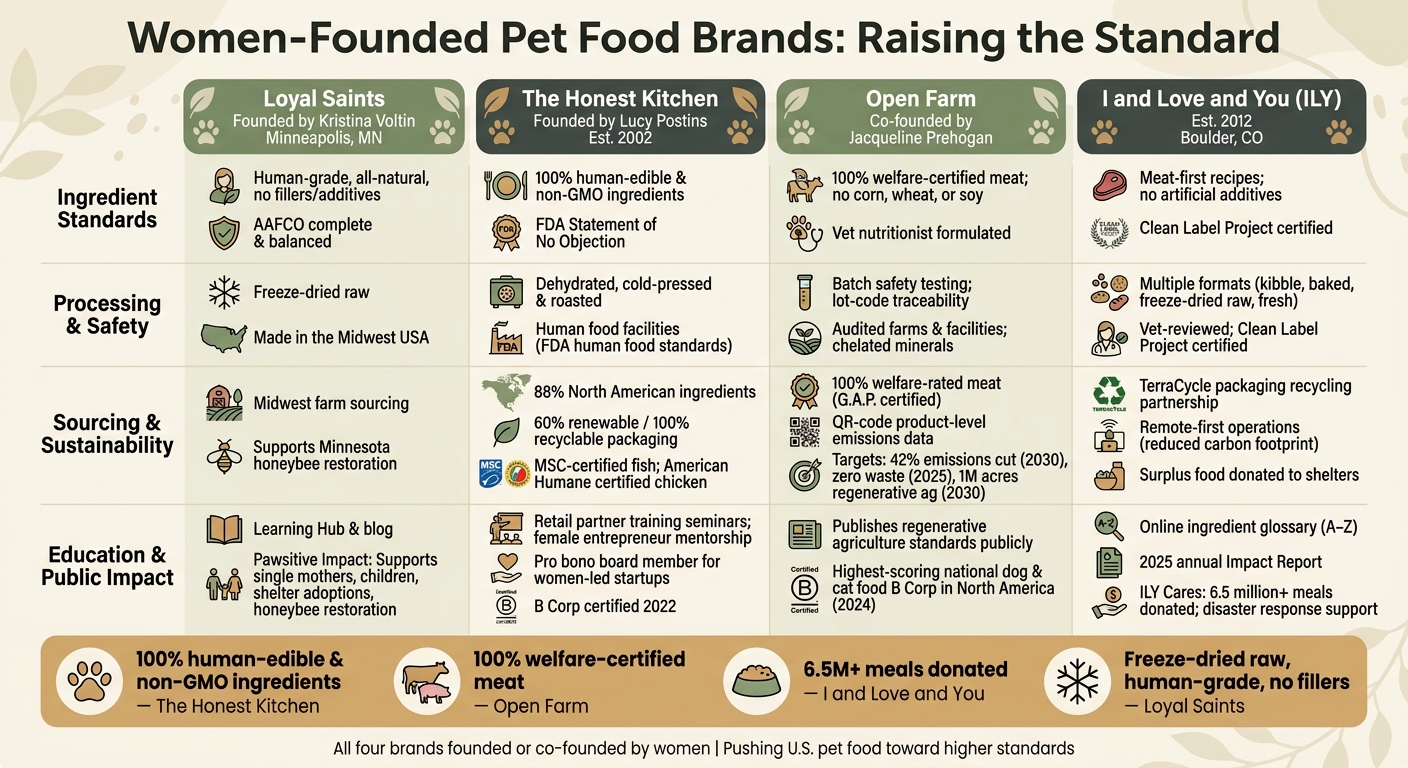
Some facts stand out fast. The Honest Kitchen says 100% of its ingredients are human-edible and non-GMO. Open Farm says 100% of its meat meets third-party animal welfare rules. I and Love and You says it has donated more than 6.5 million meals. Loyal Saints ties its product line to local farm sourcing and a social impact program.
Women-Founded Pet Food Brands Compared: Ingredients, Sourcing & Impact
Meet Marie Moody, A Dog Lover, Who Started Her Own Pet Food Company | TODAY
sbb-itb-b2753ee
Quick Comparison
| Brand | Ingredients | Processing | Sourcing | Education / Public Work |
|---|---|---|---|---|
| Loyal Saints | Human-grade, all-natural, no fillers or additives | Freeze-dried raw; made in the Midwest | Midwest farm sourcing; supports honeybee work | Learning Hub; supports single mothers, kids, shelters |
| The Honest Kitchen | 100% human-edible and non-GMO | Dehydrated, cold-pressed, roasted in human food facilities | North America sourcing for much of its line; recyclable packaging | Retail training and founder mentoring |
| Open Farm | 100% welfare-rated meat; no corn, wheat, or soy | Batch testing; lot-code traceability; audited sites | QR-code emissions data; 42% emissions cut target by 2030 | Shares sourcing standards and farming guidance |
| I and Love and You | Meat-first recipes; no artificial additives | Kibble, baked, freeze-dried raw, and fresh; Clean Label Project certified | TerraCycle partnership; remote-first model; meal donations | Ingredient glossary; 2025 Impact Report |
So when I look at these brands side by side, the main takeaway is simple: women founders are changing what many pet owners now expect from pet food - better ingredients, clearer labels, more traceability, and more public accountability.
1. Loyal Saints
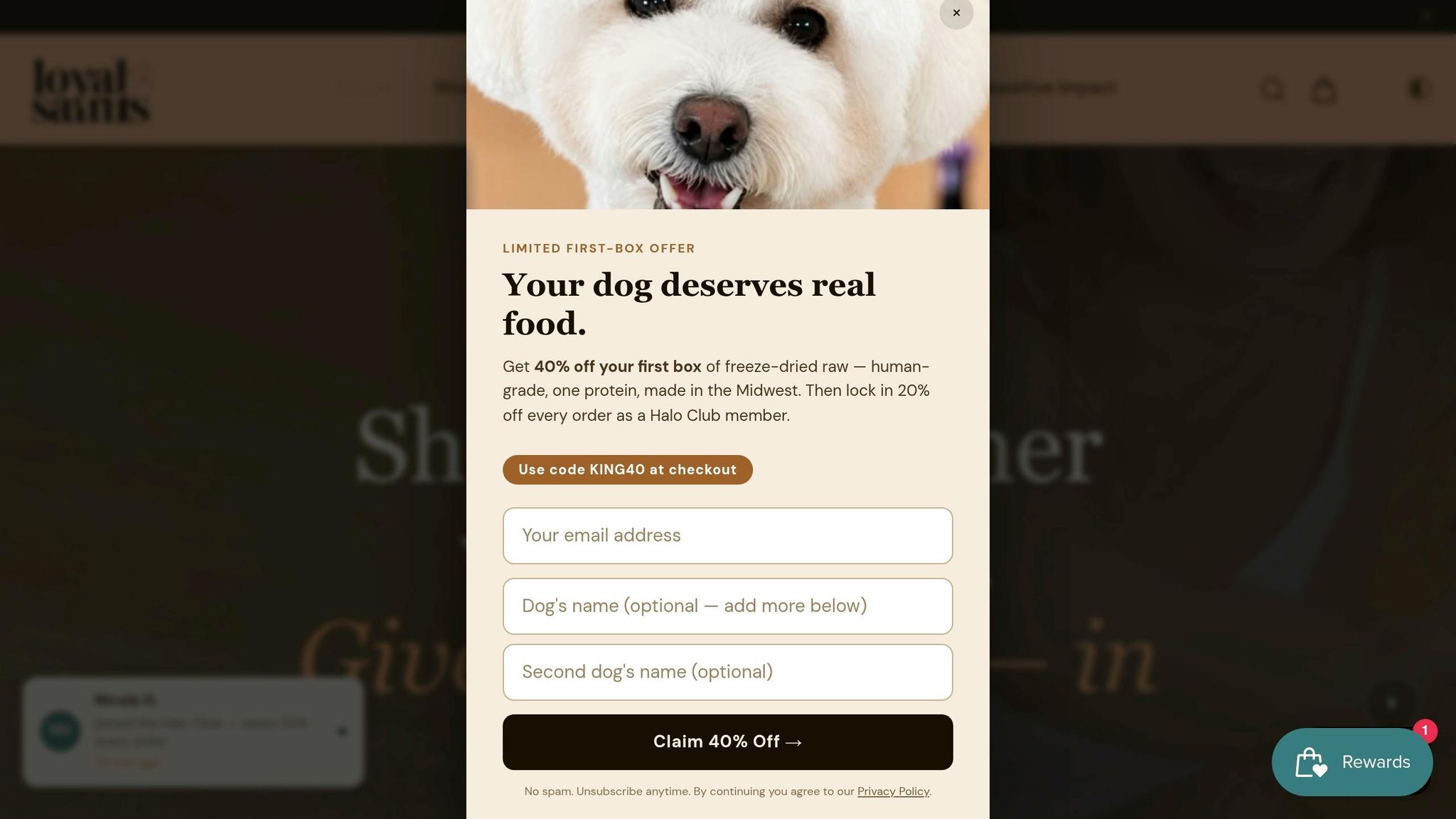
Loyal Saints, founded by Kristina Voltin in Minneapolis, is a good example of how a freeze-dried raw brand can push ingredient and sourcing standards higher. The company shows how women founders are tying pet nutrition to a bigger sense of responsibility. Looking at ingredient quality, processing, sourcing, and education, Loyal Saints makes those standards easy to see in day-to-day practice.
Voltin started the company after her dog King dealt with chronic digestive troubles, allergies, and a gallbladder condition [2][7].
Ingredient Standards
Loyal Saints uses human-grade, all-natural ingredients with no fillers or additives. Its complete and balanced formulas are AAFCO complete and balanced for dogs of all life stages, including dogs with sensitivities or digestive issues [2][5].
Processing and Safety
The brand uses freeze-dried raw processing to help preserve nutrients and support digestibility. All products are made in the Midwest [2][5].
Sustainability and Sourcing
Loyal Saints sources from Midwest farms it knows and trusts. It also supports Minnesota honeybee restoration [2].
Education and Advocacy
Its Learning Hub and blog give pet parents clear, practical help so they can make informed nutrition choices. The Pawsitive Impact initiative supports single mothers and children, helps shelter adoptions, and funds environmental restoration [2][5].
"Our mission is to nourish pets... Beyond pet wellness, we strive to make a meaningful impact by supporting single mothers and children, aiding animal shelters in finding loving homes for pets, and contributing to the restoration of the honeybee population." - Kristina Voltin, Founder, Loyal Saints [2]
That values-first model helps frame the standards this article compares next. These priorities create a starting point for the next brands in the comparison.
2. The Honest Kitchen
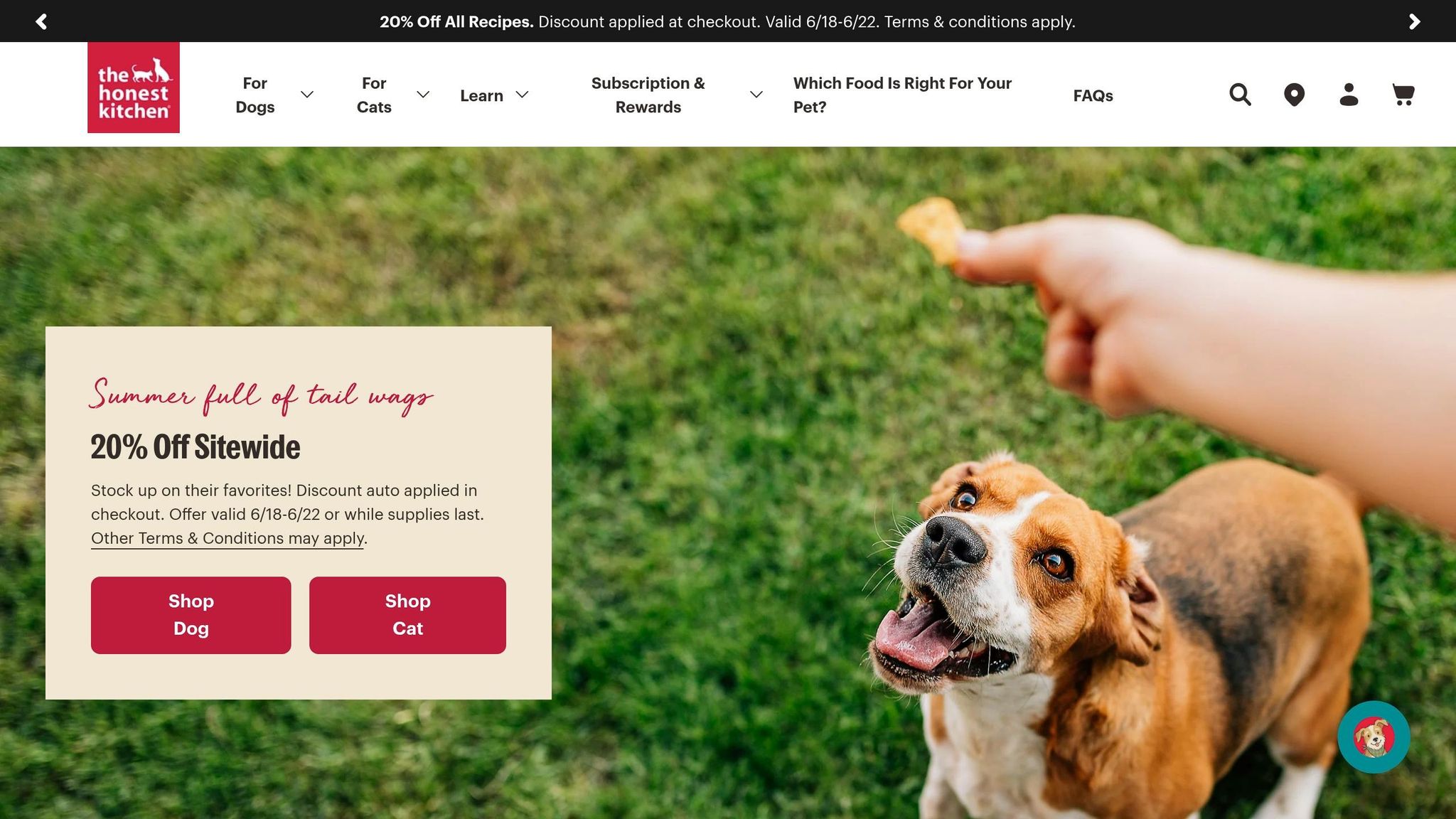
Lucy Postins founded The Honest Kitchen in 2002 after her dog Mosi’s chronic ear infections pushed her to look harder at standard kibble. That moment set the tone for the company: better ingredients, safer processing, and tighter sourcing.
Ingredient Standards
Postins turned away from the lower-grade ingredients often found in old-school pet food and built the brand around whole food nutrition, including wild-caught fish and non-GMO produce. 100% of the ingredients are human-edible and non-GMO [8]. The FDA also issued a formal "Statement of No Objection" that recognized the brand’s human-grade approach [1].
"I chose being Human Grade as a clear, tangible way to differentiate from the rest of the industry and really define our quality standards in a way that people could understand." - Lucy Postins, Founder [4]
Processing and Safety
The Honest Kitchen uses gentle dehydration, cold pressing, and roasting in human food facilities that follow FDA human food safety standards. That bar is stricter than what most pet food plants follow [1][9][10]. Those same rules carry through to packaging and sourcing too.
Sustainability and Sourcing
The numbers here help show the company’s approach in plain terms:
- 60% of the company’s packaging is made from renewable materials, and 100% is fully recyclable [11].
- 88% of Whole Food Clusters ingredients and 75% of dehydrated recipe ingredients are grown in North America [8][11].
Protein sourcing follows strict welfare benchmarks as well, including MSC-certified fish and American Humane certified chicken [11]. Postins has also made supplier diversity a stated focus, with work aimed at bringing more female- and minority-owned suppliers into the supply chain [1].
Education and Advocacy
The Honest Kitchen doesn’t just sell food. It also runs seminars and training programs for retail partners to help shoppers better understand ingredient quality and pet nutrition [1]. Postins supports that mission in her own work too, mentoring other female founders and serving as a pro bono board member for women-led startups [1][4].
The company earned B Corp certification in 2022 [1][11]. Its growth shows that a values-led company can move well beyond a niche audience and shape the market at a larger scale. That impact stands out even more in the next brand.
3. Open Farm
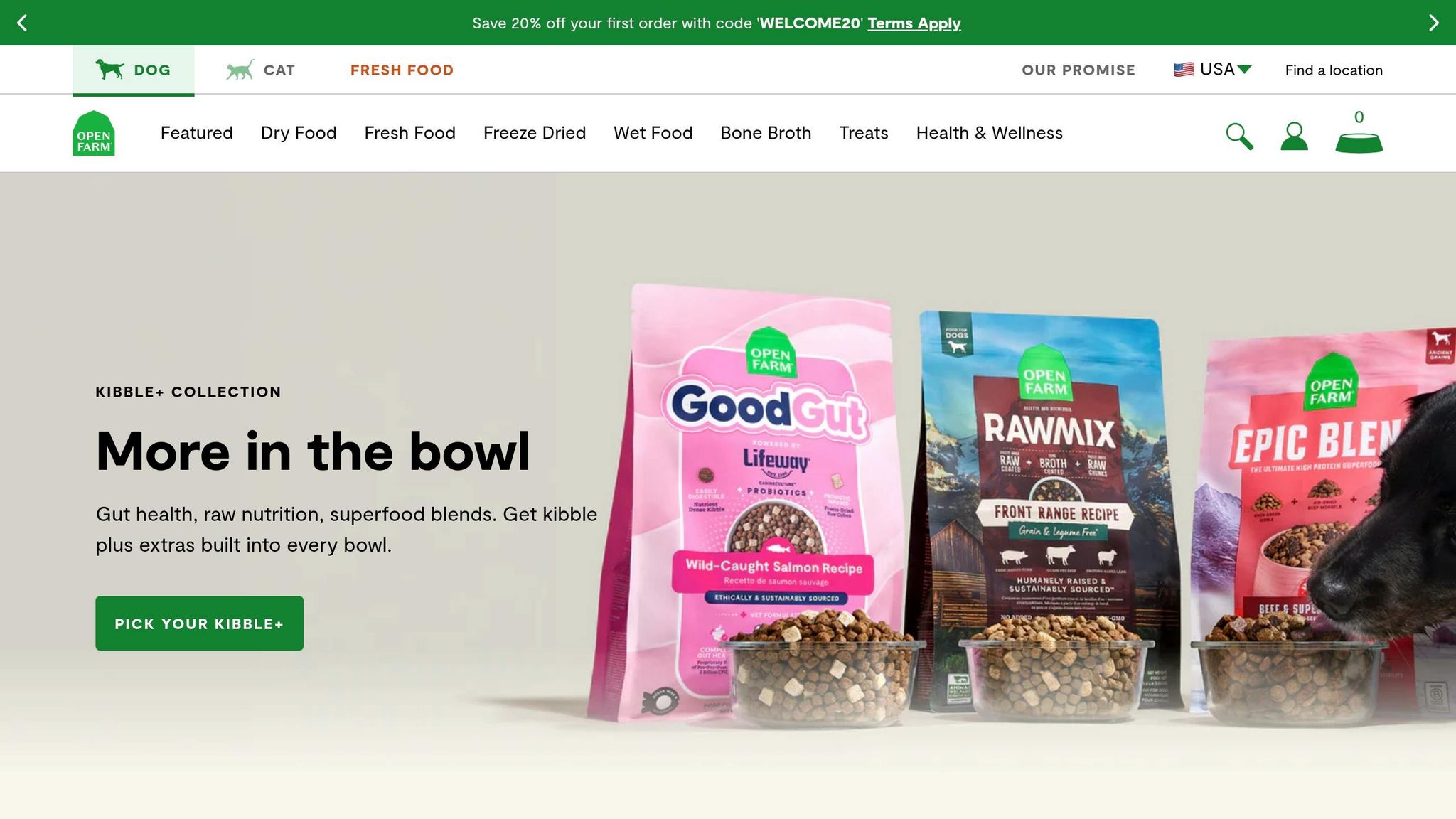
Open Farm, co-founded by Jacqueline Prehogan, focuses on humane sourcing, lower-impact production, and clear reporting.
"We're showing you don't need to choose between a humane product, a sustainable product and a good-quality product." - Jacqueline Prehogan, Co-founder and Chief Brand Officer, Open Farm [3]
That focus runs through the whole business, from ingredient rules to traceability, animal welfare, and climate reporting.
Ingredient Standards
Open Farm requires 100% of the meat in its products to meet third-party animal welfare standards [3][12]. The exact standard depends on the protein:
| Protein | Welfare Certification |
|---|---|
| Chicken | G.A.P. Step 2 - enriched environment, natural light, vegetarian diet, no antibiotics [13] |
| Turkey | G.A.P. Step 1 - extra space, vegetarian diet, no antibiotics [13] |
| Beef | G.A.P. Step 4 - 100% grass-fed and pasture-raised, never in a feedlot [13] |
| Pork | Certified Humane - enriched environment, no crates or cages, no added hormones [13] |
| Lamb | G.A.P. Step 4 - grass-fed and pasture-raised, no added hormones [13] |
| Fish | Ocean Wise / MSC - 100% wild-caught, seasonal availability, minimized bycatch [13] |
Its recipes are formulated by board-certified veterinary nutritionists and leave out corn, wheat, and soy [12][14].
Processing and Safety
Open Farm says it reviews and audits all farms, plants, and facilities [16]. Its products are made in Brainerd, Minnesota [18][19][20]. Every batch is safety-tested, and each lot code can be used to trace ingredient sources and test results [12][17].
The company also uses chelated minerals for better absorption [17]. Its GoodGut line takes a different route with probiotics, placing them in freeze-dried raw bits instead of kibble [18][19].
Sustainability and Sourcing
Open Farm publishes product-level greenhouse gas emissions through a QR code [3]. It has also set a few clear targets: a 42% emissions cut by 2030, zero waste to landfill by 2025, and regenerative agriculture across 1 million acres by 2030 [12].
Education and Advocacy
Prehogan has also argued for clearer standards across consumer goods. Open Farm shares its regenerative agriculture standards publicly to help farmers make the switch [3]. In 2024, it became the highest-scoring national dog and cat food brand in North America under B Corp certification [14].
"Be clear about your nonnegotiables early. The larger you become, the harder it is to retrofit values into a business model." - Jacqueline Prehogan, Co-founder and Chief Brand Officer, Open Farm [15]
Open Farm’s approach shows that transparency can grow with the business. The next brand takes a different route to make pet nutrition more accessible.
4. I and Love and You
I and Love and You, often shortened to ILY, takes a broader, more mainstream path than the brands covered earlier. It pairs broad retail reach with ingredient and impact claims. Founded in 2012 in Boulder, Colorado [21][26], the brand is built on a simple idea: pet nutrition should be practical, easy to buy, and responsible.
Ingredient Standards
ILY focuses on meat-first recipes, skips common grains and artificial additives, and includes functional ingredients to support digestion and overall health. One thing that sets it apart is its wide range of protein options. Just as important, it aims to make these products easy to find at scale.
Processing and Safety
ILY sells food in several formats, including kibble, baked food, freeze-dried raw food, and fresh food. All recipes are veterinarian-reviewed to support balanced nutrition across life stages [23][24]. The brand is also Clean Label Project certified, which means its products are tested for contaminants from the surrounding world [24].
Sustainability and Sourcing
ILY works with TerraCycle to recycle packaging that most curbside programs do not accept [22][27]. It also runs mainly as a remote-first company, which it says helps cut its carbon footprint. Instead of throwing away surplus food close to expiration, the brand donates it to shelters [22].
There’s also a clear giving component here. ILY Cares has donated more than 6.5 million meals and supports disaster response [22]. Taken together, that mix of retail reach, recycling efforts, and food donation makes ILY a useful brand to study when looking at how scale shapes pet food standards.
Education and Advocacy
The brand also puts effort into explaining what goes into its food. Its online ingredient glossary breaks down every component, from Alfalfa Meal to Zinc Proteinate [28]. In 2025, it released its first annual Impact Report to track carbon and sustainability progress [22][25].
"Our vision of responsibility is simple: we created 'I and love and you' to be the most trusted company to care for pets, people and our planet." - Michael Meyer, CEO, I and Love and You [22]
Its scale makes it a useful test case for the tradeoff between accessibility and strict premium standards.
Strengths, Tradeoffs, and Limits Across Women-Founded Pet Food Brands
Taken together, these brands show four different ways women founders have pushed pet food in a better direction. Some lean into raw or human-grade food. Others put the focus on sourcing, label clarity, or retail reach. And, as usual, each choice comes with tradeoffs in price, ease of use, and ingredient availability.
Loyal Saints is a strong match for dogs that need a cleaner, simpler raw food option. The Honest Kitchen helped set a formal human-grade standard and pushed stricter labeling into the mainstream. Open Farm built its model around third-party welfare certification and emissions reporting. I and Love and You shows how those kinds of standards can reach more households when paired with broad retail distribution.
There’s no way around it: freeze-dried and dehydrated foods often cost more. International sourcing can also add supply-chain risk. So this isn’t about picking one universal “best” brand. It’s more about matching the brand to the dog, the budget, and the household routine.
The clearest way to look at the differences is simple: what does each brand do well, and where does that approach create friction?
| Brand | Key Advantages | Limitations | Best Fit |
|---|---|---|---|
| Loyal Saints | Freeze-dried raw; human-grade ingredients; no fillers; supports digestive health; made in the USA [5] | Higher price; limited format | Dogs with sensitivities or allergies |
| The Honest Kitchen | FDA Statement of No Objection for human-grade label; B Corp certified; whole-food dehydrated recipes [1][6] | International sourcing adds supply-chain risk; early regulatory pushback [1] | Owners seeking shelf-stable, human-standard whole foods |
| Open Farm | 100% welfare-certified meat; product-level emissions reporting; highest-scoring B Corp in North American pet food [3][12][14] | Premium price; sourcing standards vary by protein tier | Owners prioritizing humane sourcing and supply-chain transparency |
| I and Love and You | Wide retail access; multiple formats; Clean Label Project certified; 6.5M+ meals donated [22][24] | Less specialized than raw or dehydrated formats | Owners wanting responsible nutrition at mainstream scale |
One theme runs through all four: higher standards can improve food quality, but no single model works for every dog. A small senior dog, an active young Lab, and a dog with stomach issues may all need different things. Breed, age, and health still shape the right choice. Even strong brand standards don’t replace veterinary guidance.
Conclusion
Across ingredient quality, processing, sourcing, and advocacy, women founders have changed what premium pet food means. The brands covered here didn’t just make better products - they changed what U.S. pet owners now expect from pet food.
Loyal Saints reflects that shift with U.S.-made, freeze-dried raw nutrition, human-grade ingredients, and no fillers. The Honest Kitchen’s human-grade legal win helped set a broader industry precedent. Across the category, women-founded brands have pushed for more traceability, minimally processed nutrition, and clearer sustainability reporting.
Looking ahead, expect more science-backed formulation, tighter supply-chain transparency, and less-processed nutrition. Women-led brands have set a higher bar for ingredient standards, processing integrity, sourcing accountability, and consumer education - and that pressure is helping move the category ahead.
The standard is higher now, and it will keep rising.
FAQs
What does human-grade really mean?
Human-grade means every ingredient must be edible for people, and the full supply chain - from harvesting and production to transportation, storage, and handling - must be documented to keep that status.
It also means the food is made in licensed, inspected facilities that meet human food safety standards. That points to better ingredient quality and more careful handling from start to finish.
Is freeze-dried raw safe for all dogs?
Freeze-dried raw food is generally safe for dogs when it’s made with strict quality and safety standards. The best options use steps like high-pressure pasteurization to help reduce the risk of pathogens.
Loyal Saints offers premium freeze-dried raw dog food made in the USA with human-grade, all-natural ingredients for dogs at every life stage.
How can I verify sourcing claims?
Look for brands that put supply chain transparency and third-party verification front and center. That means they should show where ingredients come from, how products are made, and how they’re moved from one step to the next. If a brand makes claims about quality or the planet, those claims should be checked by an outside party, not left to guesswork.
It also helps to confirm that ingredients are handled in human-grade, inspected, and licensed facilities. Those details matter. They show that a brand’s claims are backed by actual oversight, not just marketing copy.


