
Compostable dog food bags are certified packaging designed to break down in industrial or, in rare cases, home composting systems. For premium freeze-dried dog food, they can be a genuinely good choice when three things line up: a recognized third-party certification (ASTM D6400, EN 13432, or BPI), adequate barrier performance for your product’s shelf-life needs, and real composting infrastructure in your area. Without all three, the sustainability benefit mostly disappears.
Bottom line: Before buying or stocking compostable-packaged pet food, check for a certification logo (not just the word “compostable”), then check whether your municipality accepts compostable packaging in its organics collection. Those two steps decide whether the packaging actually delivers on its promise.
Quick buyer checklist before you read further:
- Look for BPI, TÜV OK Compost, or the Seedling logo on the bag.
- Confirm whether it’s home-compostable or industrial-compostable (these are very different).
- Check your local composting program’s accepted materials list.
Key Takeaways
Compostable dog food bags are a sound choice for premium freeze-dried food when certification, barrier performance, and local composting access all align.
| Point | Details |
|---|---|
| Certification is non-negotiable | Look for BPI, ASTM D6400, EN 13432, or TÜV OK Compost Home logos — never just the word “compostable.” |
| Barrier data protects your dog’s food | Request OTR and MVTR figures from suppliers; compostable films can offer shorter shelf life than mono-material bags for moisture-sensitive products. |
| Industrial vs. home composting | EN 13432 and ASTM D6400 are industrial standards; only TÜV OK Compost Home and AS5810 verify home compostability. |
| Composting access determines real impact | Compostable packaging delivers its environmental benefit only when it reaches an industrial compost facility, not a landfill. |
| Loyalsaintspets | Product pages for Freeze Dried Raw Chicken and Beef SKUs include packaging and shelf-life details for shoppers who want to verify before buying. |
Table of Contents
- What “compostable” actually means on a dog food bag
- Common materials and pouch formats used for eco-friendly pet food packaging
- How compostable packaging affects shelf life and freshness for freeze-dried food
- Which certifications and labels you can actually trust
- Can you actually compost these bags at home or locally?
- A practical checklist for choosing compostable dog food bags
- How and where to source compostable dog food pouches
- How Loyalsaintspets approaches packaging for its freeze-dried lines
- When compostable packaging is genuinely the right call
- Loyalsaintspets freeze-dried food: packaging that protects what’s inside
- Sources
What “compostable” actually means on a dog food bag
The word “compostable” on packaging has a specific technical meaning, but it’s often used loosely. Here’s what the key terms actually mean:
- Compostable vs. biodegradable: Biodegradable just means a material will eventually break down, with no timeline or conditions specified. Compostable means it breaks down within a defined timeframe, under specific conditions, into non-toxic compost. Compostable is the stricter, more meaningful claim. You can learn more about compostable vs. biodegradable distinctions at the material level.
- Industrial composting: Requires sustained temperatures around 55°C and controlled humidity. Standards like EN 13432 and ASTM D6400 define this pathway. Most compostable pet food packaging falls here.
- Home composting: A much cooler, slower process. Only materials certified to TÜV OK Compost Home or AS5810 are verified to break down in a backyard bin. EN 13432 and ASTM D6400 do not guarantee home compostability.
-
Key certifications to recognize:
- BPI Certified Compostable (North America, industrial standard)
- Seedling logo / EN 13432 (Europe, industrial)
- ASTM D6400 / D6868 (US industrial standard for films and coatings)
- TÜV OK Compost Home (home-compostable, stricter and rarer)
- AS5810 (Australian home-compostable standard, occasionally referenced by US suppliers)
Common materials and pouch formats used for eco-friendly pet food packaging
The material inside the bag determines how well it protects your dog’s food and how it actually composts. Here’s a plain-language breakdown of what you’ll encounter:
- PLA (polylactic acid): Made from corn starch. Widely used, but requires industrial temperatures above 55°C to biodegrade and can struggle with humidity during storage. Not suitable for home composting.
- PBAT blends (PBAT + starch): The most common industrial compostable film. Flexible, heat-sealable, and well-suited to stand-up pouches. Good for dry treats and freeze-dried formats.
- PHA (polyhydroxyalkanoates): One of the few materials that can biodegrade at lower temperatures, making it more favorable for home composting. The catch: it’s significantly more expensive and less widely available than PLA or PBAT.
- Cellulose / NatureFlex films: Derived from wood pulp, these offer decent moisture barriers and can be home-compostable depending on the grade. Often used as a liner layer in paper-based constructions.
For premium freeze-dried dog food specifically, the most realistic formats are resealable stand-up pouches (PBAT-based or cellulose-lined kraft paper) and single-serve sachets. Large bulk bags are harder to execute in compostable films because compostable pouches suit dry treats and small-format premium products better than high-volume, long-storage formats.
Pro Tip: If home compostability matters to your customers, PHA or NatureFlex-lined paper constructions are your realistic options. For most brands, industrial-compostable PBAT pouches are the practical starting point.
How compostable packaging affects shelf life and freshness for freeze-dried food
This is where the real trade-off lives. Freeze-dried dog food is moisture-sensitive and needs solid oxygen control to stay fresh. Compostable films have improved, but they often deliver shorter shelf life than mono-material films for moisture-sensitive products. Dry and freeze-dried goods are more forgiving than high-oil kibble, which helps.
Key barrier concern: Freeze-dried food needs good oxygen control. Ask any supplier for oxygen transmission rate (OTR) and moisture vapor transmission rate (MVTR) data before committing to a compostable pouch. These numbers tell you whether the bag will actually protect your product.
Practical ways to close the gap:
- Add an oxygen absorber sachet inside the pouch to compensate for higher OTR in compostable films.
- Use resealable zippers to reduce repeated oxygen exposure after opening.
- Choose smaller pack sizes (5oz vs. 14oz) to reduce the time between opening and finishing the bag.
- Run real-time shelf-life testing (room-temperature storage plus accelerated aging) before scaling up.
Request supplier test reports and small-run samples and run shelf-life tests before committing to a compostable pouch at scale. For food-contact compliance, ask for a Certificate of Analysis (COA) alongside barrier data.
Pro Tip: Match your OTR and MVTR targets to your product’s fat and moisture content. Freeze-dried foods generally need good oxygen control but a moderate moisture barrier compared with high-oil kibbles.
Which certifications and labels you can actually trust
Third-party certification is the only reliable way to verify a compostability claim. A bag that just says “compostable” with no logo is a marketing claim, not a verified standard.
- BPI Certified Compostable: The leading North American certifier for industrial composting. Look for the BPI logo with a certificate number.
- EN 13432 / Seedling logo: European industrial standard. Widely recognized and rigorous.
- ASTM D6400 / D6868: US industrial standards. D6400 covers plastics; D6868 covers films and coatings on paper.
- TÜV OK Compost Home: The most credible home-compostable certification. Rare on pet food packaging but worth seeking if home composting is the goal.
Labels to be cautious about:
- “Eco-friendly” or “green” with no certification logo.
- “Plant-based” (describes the material source, not end-of-life behavior).
- “Compostable” printed without a certifier name or certificate number.
For compostability claims, third-party certification such as BPI or EN 13432 is the reliable standard — vague claims without a logo are not. California’s SB 54 and the EU’s Packaging and Packaging Waste Regulation (PPWR) are also tightening what brands can legally claim, so certification documentation matters more than ever.
Quick label check: Find the certification logo, note the certifier name, and search the certifier’s database for the certificate number. If it’s not in the database, treat the claim as unverified.
Can you actually compost these bags at home or locally?
Realistically, most compostable pet food packaging requires an industrial composting facility. Compostable pouches typically break down in industrial composting within roughly 90–180 days, but most compostable films won’t fully degrade in a home bin.
Your practical disposal options, in order of preference:
- Municipal organics collection: Check whether your city’s curbside organics program accepts certified compostable packaging. Many do for BPI-certified items.
- Industrial facility drop-off: Find a local composting facility through the US Composting Council’s facility locator.
- Retailer take-back programs: Some natural pet food retailers and co-ops accept compostable packaging for drop-off.
- Landfill: If none of the above are available, landfill is the fallback. Compostable packaging in landfill does not deliver its environmental benefit, since anaerobic conditions prevent proper breakdown.
Pro Tip: Compostable packaging delivers its environmental benefit only when it reaches an industrial compost facility. If your area has no organics collection, a mono-material recyclable bag may actually be the greener choice.
A practical checklist for choosing compostable dog food bags
Whether you’re a shopper evaluating a product or a small brand vetting a supplier, these are the questions that matter:
For shoppers:
- Does the bag carry a BPI, EN 13432, ASTM D6400, or TÜV OK Compost Home logo?
- Does the label specify industrial or home composting?
- Are disposal instructions printed on the pack?
- Does your local composting program accept this type of packaging?
For brands sourcing packaging:
- Request OTR and MVTR data in writing.
- Ask for a COA confirming food-contact compliance.
- Get the actual certificate number and verify it with the certifying body.
- Ask for shelf-life data specific to your product type (freeze-dried, dry treats, etc.).
- Confirm minimum order quantity (MOQ) and lead times, since compostable pouches often have higher MOQs than conventional options.
- Compare total landed cost per unit against a mono-PE alternative, factoring in any oxygen absorbers or extra processing steps.
For compostability claims, request third-party certificates and supplier documentation such as OTR/MVTR data and COAs before committing. These documents protect both your product and your sustainability claims.
How and where to source compostable dog food pouches
Finding the right supplier takes a few deliberate steps, especially for small brands or independent buyers.
Common sourcing routes:
- Specialty sustainable packaging suppliers (search for converters offering certified compostable stand-up pouches with food-contact approval).
- Trade shows like Pack Expo or Sustainable Packaging Coalition events, where you can meet converters and request samples in person.
- Off-the-shelf compostable pouch SKUs from flexible packaging distributors, which suit low-volume or trial runs.
Step-by-step sourcing approach for small brands:
- Define your spec: target OTR, MVTR, pouch size, zipper type, and required certification.
- Request samples from two or three suppliers and ask for their COAs and certification documents upfront.
- Run barrier testing on samples using your actual product.
- Verify certificate numbers with BPI or TÜV directly.
- Do a small trial run before committing to a full production order.
For sustainable pet food supply chain decisions, documentation at every step protects your brand. Consumers buying premium, natural dog food are increasingly reading labels and asking questions.
How Loyalsaintspets approaches packaging for its freeze-dried lines
Loyalsaintspets takes the packaging question seriously for its freeze-dried raw chicken and beef SKUs, because the food inside is only as good as the protection around it. The brand’s eco-friendly packaging blog post walks through the packaging options considered for freeze-dried formats, including barrier trade-offs and sustainability priorities.
The Loyalsaintspets approach: Packaging for premium freeze-dried food has to protect the product first. Compostable materials are evaluated against real barrier data, and the brand publishes product details so shoppers can inspect shelf-life and packaging notes directly on each product page.
For shoppers who want to verify packaging details, the product pages for the Freeze Dried Raw Chicken 14oz, Freeze Dried Raw Chicken 5oz, and Freeze Dried Raw Beef 14oz include ingredient and packaging information. The 5oz single-serve format also illustrates the practical benefit of smaller pack sizes for maintaining freshness after opening.
When compostable packaging is genuinely the right call
There’s a version of the compostable packaging conversation that’s mostly about optics, and there’s a version that’s about actually doing the right thing for your dog and the planet. The difference comes down to whether the certification, the barrier data, and the local composting infrastructure are all real.
Brands that adopt compostable packaging without verifying OTR/MVTR data are taking a risk with product quality. Shoppers who buy compostable-packaged food and then landfill the bag aren’t getting the environmental benefit they paid for. The honest answer is that compostable packaging works well for premium freeze-dried formats when the product is dry, the pack size is modest, and the buyer has access to industrial composting. For large-format or high-oil products, mono-material recyclable films remain the pragmatic choice for longer shelf life and handling durability.
What I’d encourage every premium pet food buyer to do: treat the certification logo as the minimum bar, not the finish line. Ask where the bag actually goes after use. That question separates genuine sustainability from a label.
Loyalsaintspets freeze-dried food: packaging that protects what’s inside
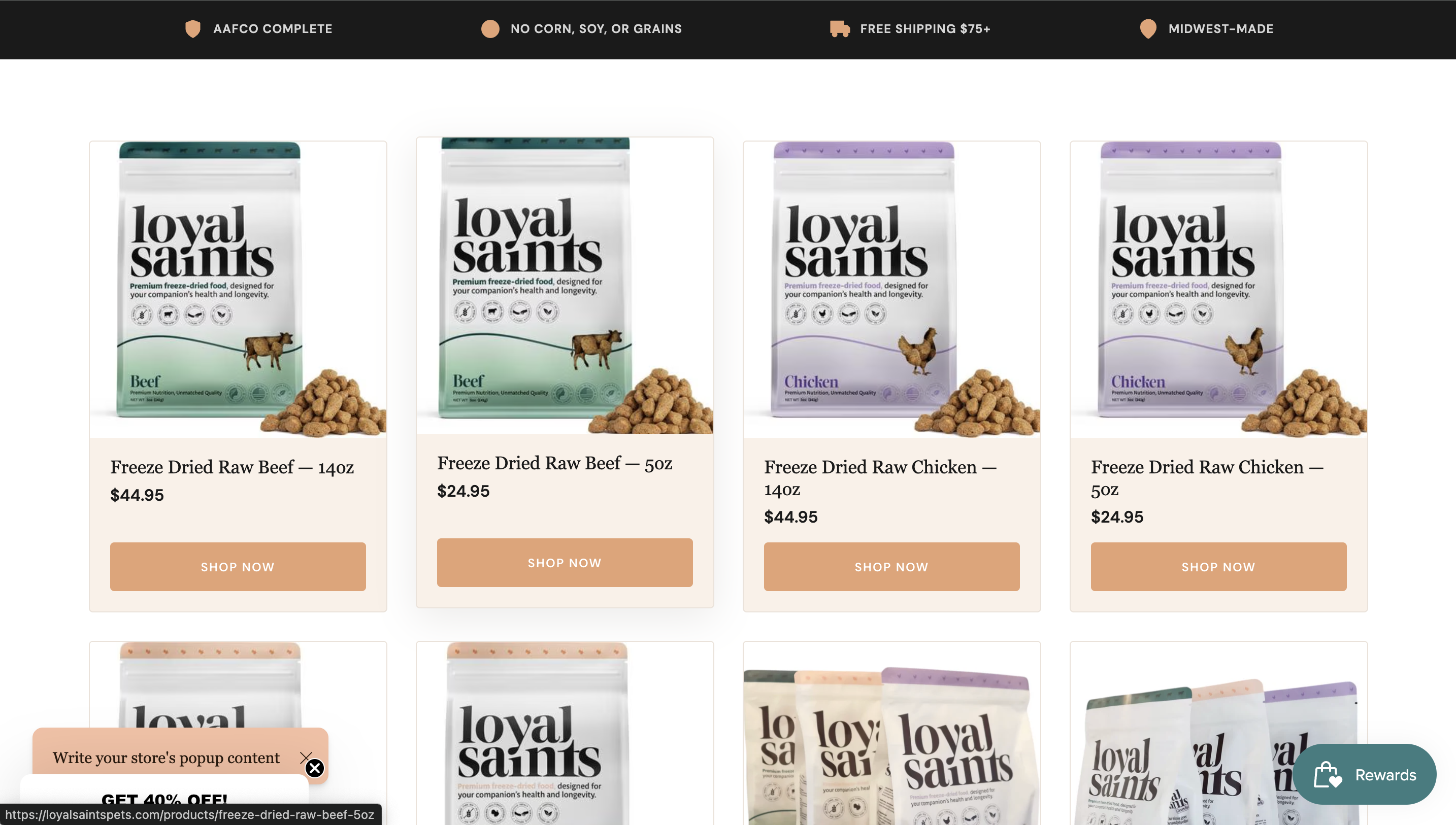
Loyalsaintspets freeze-dried raw dog food is made with human-grade, whole ingredients and packaged with your dog’s health and your values in mind. The Freeze Dried Raw Chicken (available in 14oz and 5oz) and Freeze Dried Raw Beef 14oz are shelf-stable, AAFCO-complete, and free of fillers. The 5oz format is a practical choice for households that want to minimize air exposure after opening. For full packaging details, certifications, and ingredient sourcing, visit the product pages directly and explore the brand’s eco-friendly packaging guide for a deeper look at how Loyalsaintspets thinks about sustainable packaging for freeze-dried food.
Sources
- Sustainable Pet Food Packaging Guide 2026 – TrustMyPets
- Eco-Friendly Pet Food Packaging: Materials & Rules Guide
- Sustainable Pet Food Packaging Materials: Complete Supplier Evaluation Guide | Achieve Pack Blog
- Home vs Industrial Compostable Bags: What’s the Real Difference and Disposal Path? - Green Symbiosis


