
Dog food does expire, and both safety and nutrition are on the line once it does. Unopened dry kibble typically holds for 12 to 24 months, canned food can run close to two years sealed, and opened dry food should be finished within a few weeks. Opened canned food needs to go in the fridge and get used within 3 to 4 days. Sealed freeze-dried food generally outlasts all of these because moisture removal starves the bacteria and mold that need it to grow.
Here’s your immediate checklist:
- Damaged bag, dented or bulging can, or an off smell? Toss it. Don’t taste-test your dog’s food to decide.
- Dog already ate something questionable? Note the lot number and date code, then watch closely for vomiting, diarrhea, or lethargy.
- Unsure about a date code? When in doubt, treat “best by” as a safety line, not a suggestion.
AAFCO sets the labeling rules manufacturers follow for these dates. Veterinary nutrition researchers at institutions like UC Davis have long pointed out that a printed date only holds true if storage conditions cooperate.
Key Takeaways
Freeze-dried food built without fillers or synthetic preservatives holds its safety and nutrient profile longer than most conventional dog food once sealed.
| Point | Details |
|---|---|
| Dates aren’t universal | Unopened dry kibble lasts about 12 to 24 months, canned food nearly two years, but storage conditions can shorten either window. |
| Trust your senses, not your dog | Rancid smell, mold, or slimy texture mean discard the food, even if your dog is happy to eat it. |
| Best-by ≠ expiration | Best-by signals declining quality; expiration signals a real safety cutoff worth respecting. |
| Storage habits matter most | Airtight containers, cool dry spots, and clean bins between bags extend freshness more than the date alone. |
| Freeze-dried lasts longer sealed | Loyalsaintspets’ freeze-dried recipes remove moisture that spoilage organisms need, giving sealed bags a longer safe shelf life than typical kibble. |
Table of Contents
- Do Dog Food Expiration Dates Really Matter?
- How Can You Tell if Your Dog’s Food Has Spoiled?
- How Long Does Each Type of Dog Food Actually Last?
- What’s the Best Way to Store Dog Food and Keep It Fresh?
- What Should You Do if Your Dog Eats Expired Food?
- Why Freeze-Dried Food Holds Up Longer Than Most Dog Food
- Where Do You Find the Expiration Date on a Dog Food Bag?
- Expiration Date vs. Best-By Date: What’s the Real Difference?
- How Should You Dispose of Expired Dog Food?
- Do Preservatives and Packaging Actually Extend Shelf Life?
- What Owners Consistently Get Wrong About Expiration Dates
- Get Freeze-Dried Dog Food That’s Built to Stay Fresh Longer
- Sources
Do Dog Food Expiration Dates Really Matter?
They matter more than most owners assume, and not just because of spoiled taste. A date on a bag of kibble is a promise about a sealed, properly stored product. Once oxygen, heat, or moisture gets involved, that promise starts breaking down long before the printed date arrives.
How Can You Tell if Your Dog’s Food Has Spoiled?
Your nose is often the first and best tool you have. A rancid, musty, or sour smell coming from a bag or can is the clearest sign something has gone wrong, and it usually means fats have oxidized past the point of safe feeding. Visible mold, whether it’s a fuzzy patch on kibble or a filmy layer on canned food, is a hard stop. So is any greasy or slimy texture that wasn’t there when you opened the package, and discoloration, especially a shift toward yellow or brown in what should be a lighter kibble, tells you the fats inside have turned.
Packaging itself sends warnings too:
- A bulging or leaking can almost always means gas-producing bacteria are active inside.
- Punctured or torn bags let in air, moisture, and pests, all of which accelerate decay.
- Pest droppings near stored food are a contamination risk on their own, regardless of the food’s age.
- Missing or illegible lot and date codes make it impossible to verify freshness or check against a recall.
Pro Tip: Don’t trust your dog’s enthusiasm as a freshness test. Dogs will happily eat food that’s gone rancid or picked up light mold, because their sense of smell and taste doesn’t flag spoilage the way ours does. That’s backed by veterinary nutrition guidance from the AKC, which specifically warns against using a dog’s appetite as a safety check.
How Long Does Each Type of Dog Food Actually Last?
Shelf life depends heavily on how the food was processed, and the differences are bigger than most labels let on.
- Dry kibble: Unopened, it typically lasts 12 to 24 months. Once opened, plan to use it within 4 to 8 weeks before the fats start to break down.
- Canned or wet food: Sealed cans can last about two years, but the clock speeds up dramatically once opened. Refrigerate and use within 3 to 4 days, and never leave it out longer than two hours at room temperature.
- Fresh or frozen food: Usually good for a few months frozen, with a 2 to 3 day window once thawed.
- Freeze-dried food: Sealed bags often hold their nutrient profile and safety for well over a year, since removing moisture cuts off the microbial growth that spoils moist foods.
The chemistry behind all of this comes down to a few forces: fat oxidation causes rancidity in kibble, moisture invites mold in anything not fully dried, and preservatives, canning heat, or freeze-drying each fight those forces in different ways. Higher-fat formulas, including many premium recipes, are more vulnerable to rancidity, so richer foods deserve extra attention to storage timelines.
What’s the Best Way to Store Dog Food and Keep It Fresh?
Storage habits often matter more than the date printed on the bag. Heat, humidity, and light can degrade nutrients and speed up spoilage well before that date arrives, according to research highlighted by Texas A&M. A few consistent habits protect both freshness and safety.
- Keep food in its original bag, then place that bag inside an airtight container. The bag holds your lot number and date code, which you’ll need if a recall ever comes up. The container blocks air and pests.
- Roll or clip the bag tightly before sealing to push out excess air, which slows oxidation.
- Store everything in a cool, dry, dark spot. Aim for room temperature or cooler, away from ovens, water heaters, and humid garages where humidity swings are common.
- Wash storage bins between bags. Empty out old remnants, wash with hot soapy water, and let the bin dry completely before adding a new bag. Skipping this step lets oils and residue from old kibble contaminate the fresh batch, quietly shortening its shelf life.
- For freeze-dried food, keep the bag sealed as tightly as possible between uses. A resealable zip-top or clip works well. Freezing isn’t necessary for sealed freeze-dried products, but once you rehydrate a portion, treat it like fresh food and use it within a day or two.
Pro Tip: A simple trick that pays off later: write the open date on the bag with a marker the day you crack it open. You’ll never have to guess how long it’s been sitting in your pantry.
What Should You Do if Your Dog Eats Expired Food?
Stay calm, but move quickly through a short checklist.
- Remove any remaining food immediately so your dog can’t eat more.
- Check the packaging for the lot number, date code, and any visible mold or damage.
- Estimate how much your dog ate and how long ago, since both affect risk level.
- Watch closely over the next 24 to 48 hours.
Symptoms that warrant a call to your veterinarian or an emergency clinic include repeated vomiting, diarrhea, unusual lethargy, loss of appetite, or tremors. Tremors and neurological symptoms are especially urgent, since mold-produced mycotoxins like aflatoxin can cause severe, sometimes delayed liver damage. If you suspect a recalled batch or heavily moldy food, photograph the packaging and lot code before you throw anything away. That information helps your vet and can matter for a recall report.
Why Freeze-Dried Food Holds Up Longer Than Most Dog Food
Freeze-drying pulls moisture out of raw ingredients while keeping the nutrient structure largely intact, which is why sealed freeze-dried products tend to outlast typical kibble and canned food. Mold and most spoilage bacteria need water to multiply. Take that away, and you remove most of the risk that shortens shelf life in moist or high-fat foods.
The real advantage isn’t just shelf life. It’s that freeze-drying preserves nutrients that heat-based processing often degrades, so your dog gets closer to whole-food nutrition even months after the bag was sealed.
Loyalsaintspets builds every recipe around that principle, using human-grade proteins with no fillers or synthetic preservatives, formulated to meet AAFCO’s completeness standards.
To get the most from a sealed bag:
- Store it in a cool, dry spot away from direct sunlight.
- Reseal it tightly after every use, ideally in an airtight container.
- Check our freeze-dried storage guide for step-by-step handling tips.
Pro Tip: If your dog goes through a bag faster than you can track open dates, a Halo Club subscription times deliveries so you’re never storing food longer than necessary.
Where Do You Find the Expiration Date on a Dog Food Bag?
Manufacturers don’t standardize placement, so you’ll need to check a few common spots. Most brands print the date code on the bottom seam of the bag, the back panel near the ingredient list, or occasionally the side gusset. Canned food usually carries it on the bottom or side of the can, stamped rather than printed.
The code itself often looks like a mix of letters and numbers, something like “BB012027” or “EXP 03 2027,” followed by a separate lot or batch number. That lot number matters more than most owners realize. It’s the identifier manufacturers use to trace a specific production run if a recall happens, and AAFCO’s labeling framework requires it appear alongside date information precisely for that reason.
If you can’t find a clear date at all, or the print has rubbed off from handling, treat that bag with the same caution as a bag that’s missing packaging integrity. Don’t guess. A missing date code means you have no way to verify freshness or check it against a recall list if a problem surfaces later.
One habit worth building: photograph the full label, including the date code and lot number, the day you open a new bag. It takes ten seconds and gives you a permanent record if you ever need to reference it during a health scare or a manufacturer recall notice.
Expiration Date vs. Best-By Date: What’s the Real Difference?
These two labels get used interchangeably by owners, but they mean different things, and that distinction actually matters for your dog’s safety.
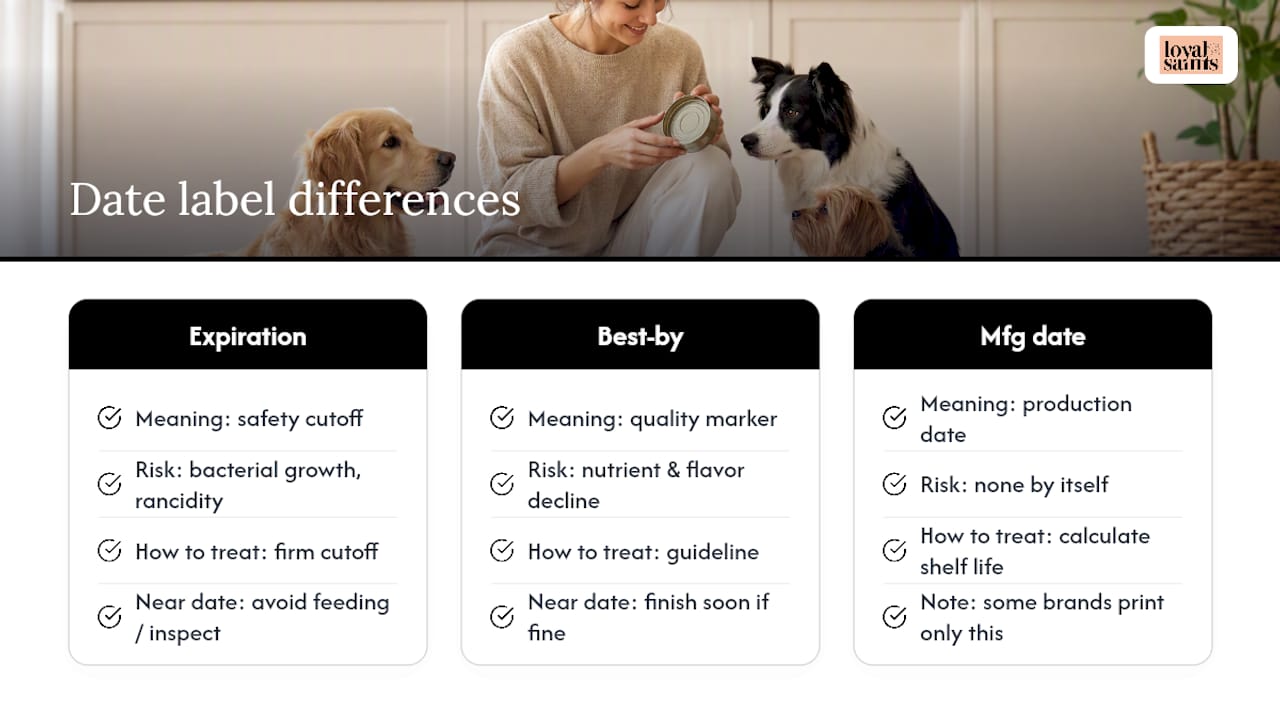
A best-by date is a quality marker. It tells you when the manufacturer expects peak flavor, texture, and nutrient levels to start declining, not when the food becomes unsafe. Food can often still be fed slightly past this date if it’s been stored well and shows no signs of spoilage, though nutrient levels, particularly heat-sensitive vitamins, may have started to drop.
An expiration date, by contrast, is closer to a safety line. Past this point, ingredients may no longer be reliably safe, and the risk of bacterial growth or fat rancidity climbs. This is the date you should treat as firm.
A manufacturing date is different still. It simply marks when the food was produced, and you’ll typically see it used to calculate the other two dates rather than displayed as a standalone safety cutoff. Some smaller or specialty brands print only a manufacturing date and expect you to add the shelf-life window yourself, which is worth knowing if you’re comparing labels across brands.
Knowing which label you’re looking at changes how much caution to apply. A near best-by date calls for finishing the bag soon. A near expiration date calls for checking the food carefully, or simply not feeding it at all.
How Should You Dispose of Expired Dog Food?
Throwing expired food straight into a household trash can works for small amounts, but a few precautions protect both your household and the environment. Seal the food in a bag before disposal so it doesn’t leak into your trash bin or attract pests like rodents and insects, especially with wet or canned food that can spoil further once exposed to air.
Never pour large quantities of spoiled kibble or wet food down a drain or toilet. It can clog pipes and, in larger volumes, contributes to nutrient runoff issues in wastewater systems. For big quantities, such as a recalled shipment, check whether your local waste facility accepts pet food separately or treats it as regular organic waste.
Composting is tempting, but skip it for spoiled meat-based or high-fat foods. Rancid fats and mold spores can survive typical backyard composting temperatures and end up back in your garden soil. If you’re set on composting, stick to small amounts of plain, unspoiled dry kibble, and avoid anything with visible mold entirely.
If mold or bacterial contamination is visible, treat that bag like contaminated waste rather than ordinary trash. Wash your hands after handling it, and wipe down any surface or container the food touched before spoilage was obvious.
Do Preservatives and Packaging Actually Extend Shelf Life?
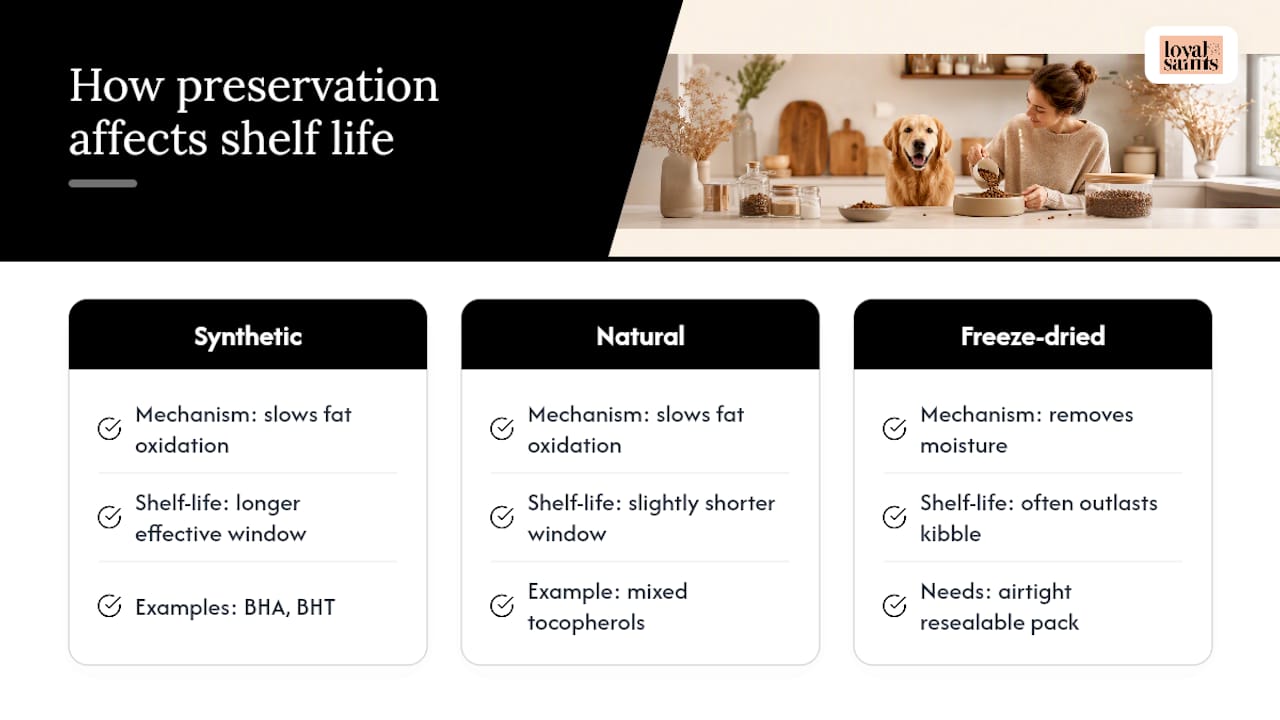
Preservatives and packaging technology do most of the invisible work behind every date printed on a bag. Traditional dry kibble relies on either synthetic preservatives like BHA and BHT or natural alternatives like mixed tocopherols (a form of vitamin E) to slow fat oxidation, which is the main driver of rancidity in kibble. Natural preservatives tend to offer a shorter effective window than synthetic ones, which is part of why some naturally preserved kibbles carry slightly tighter best-by windows.
Packaging matters just as much as what’s inside it. Multi-layer bags with foil or metallized linings block oxygen and light far better than basic paper or single-layer plastic, and that barrier is a big part of why two bags of kibble with identical ingredients can carry different shelf-life windows. Vacuum sealing and nitrogen flushing, common in higher-end packaging, push oxygen out before the bag is ever sealed, which slows oxidation before it starts.
Freeze-dried food takes a different approach entirely. Instead of leaning on chemical preservation, it removes the moisture that bacteria and mold need to survive in the first place. Combined with an airtight, resealable package, that’s what lets a sealed bag of freeze-dried food often outlast conventional kibble on the shelf, without relying on synthetic preservatives to get there.
What Owners Consistently Get Wrong About Expiration Dates
Most advice on this topic treats every date the same way, and that’s the mistake. A best-by date and a true expiration date carry very different weight, yet plenty of owners toss perfectly good food a week past a quality marker while feeding food well past a real safety cutoff simply because it “still smells fine.” Smell is a useful early warning, not a guarantee.
The bigger blind spot is storage. Two identical bags with the same printed date can age at wildly different rates depending on whether they sat in a hot garage or a cool pantry. I’d argue storage habits deserve more attention than the date itself, since heat and humidity can quietly undercut even a generous shelf-life window.
Freeze-dried food doesn’t erase the need for good habits, but it does buy real margin. If you’re the kind of owner who occasionally lets a bag sit longer than planned, that margin is worth something. Prioritize reading your food’s actual spoilage signs over trusting a date alone, and treat storage as the variable you actually control.
— Kristina
Get Freeze-Dried Dog Food That’s Built to Stay Fresh Longer
If you’re tired of tracking open dates on kibble that starts losing quality within weeks, freeze-dried food solves that problem at the source. Loyalsaintspets makes single and limited-protein recipes from human-grade beef, chicken, and turkey with salmon, all AAFCO-complete and free of fillers or synthetic preservatives, so you’re not choosing between shelf life and ingredient quality.
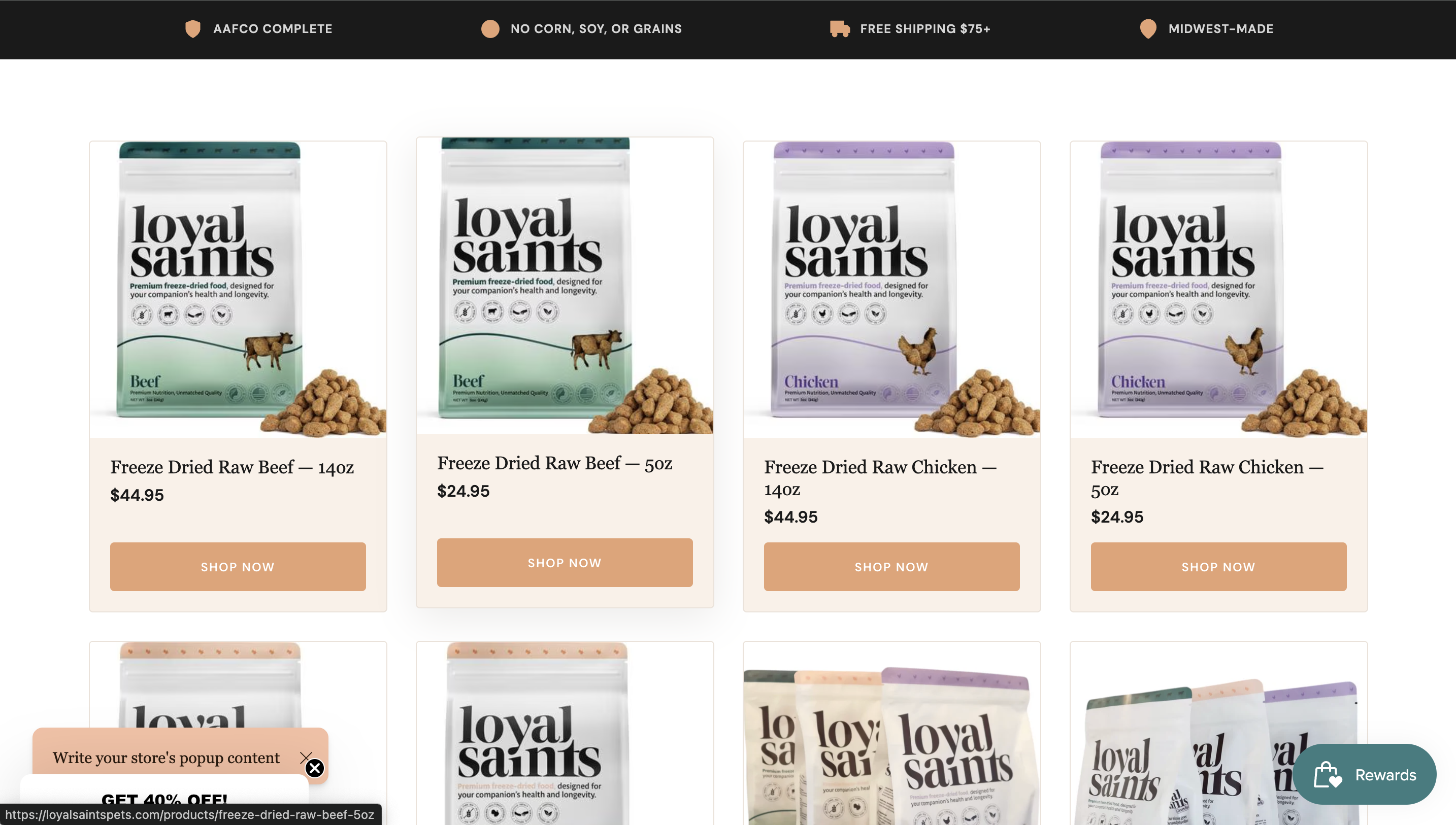
Our Freeze Dried Raw Chicken (14oz) and Freeze Dried Raw Beef (14oz) work well for daily feeding, while the 5oz Chicken and 5oz Beef sizes are a low-commitment way to test palatability before committing to a larger bag. If your dog does well with mixed proteins, the Turkey with Salmon (14oz) is worth a look. Join the Halo Club subscription and your deliveries stay timed to your dog’s actual consumption, so you’re never storing an opened bag longer than you should. Start with a sample size and see how it fits your routine.
Sources
- Does Dog Food Expire? (The Spruce Pets)
- Offering spoiled food is no way to spoil your pet (Texas A&M story)
- How to Store Dog Food (PetMD)
- Does Dog Food Expire? (AKC)
- AAFCO labeling requirements


