
For most active dogs, a calorie-dense, higher-fat formula with high-quality animal protein — adjusted to your dog’s body condition and activity level — reliably raises and sustains energy. That’s the core recommendation from the Cornell Riney Canine Health Center, backed by AAFCO nutrient profiles, and reflected in the formulations Loyalsaintspets builds around human-grade, single-source proteins. Your next step: check your dog’s life stage and body condition score, then look for a product with an AAFCO “complete and balanced” statement and a caloric density that matches your dog’s workload. If you’re considering freeze-dried or raw-style options, read the safety section below before feeding.
Key Takeaways
For active dogs, a calorie-dense, higher-fat formula with named animal protein and an AAFCO “complete and balanced” statement is the most reliable nutritional approach to raise and sustain energy.
| Point | Details |
|---|---|
| Fat fuels endurance | Higher-fat formulas are metabolically cooler and better suited to sustained activity than protein-heavy diets. |
| Use the MER formula | Calculate RER (70 × kg^0.75), apply an activity multiplier (1.2–5.0), then match portion to caloric density. |
| Check AAFCO labeling | Only products stating “complete and balanced” for the correct life stage are safe as a sole diet. |
| Transition over 4–6 weeks | Gradual mixing prevents digestive upset and allows metabolic adaptation before heavy work. |
| Loyalsaintspets freeze-dried options | The Chicken and Beef 14oz formulas are AAFCO-complete, human-grade, and calorie-dense for active dogs. |
Table of Contents
- Which nutrients actually fuel your dog’s energy?
- How vets calculate a high-energy feeding plan
- What to look for on the label before you buy
- Practical feeding plans for dogs at every activity level
- When low energy signals illness, not nutrition
- Are raw and freeze-dried foods safe for active dogs?
- How to transition your dog to a higher-energy diet safely
- Recommended formulations that support energy in active dogs
- What I’ve learned from using concentrated freeze-dried meals on training days
- Loyalsaintspets freeze-dried recipes for high-energy dogs
- Sources
Which nutrients actually fuel your dog’s energy?
Fat, protein, and carbohydrates are the three energy-providing macronutrients in any dog food, but they don’t contribute equally to stamina, and they don’t burn the same way. Understanding how each one works helps you read labels with real purpose.
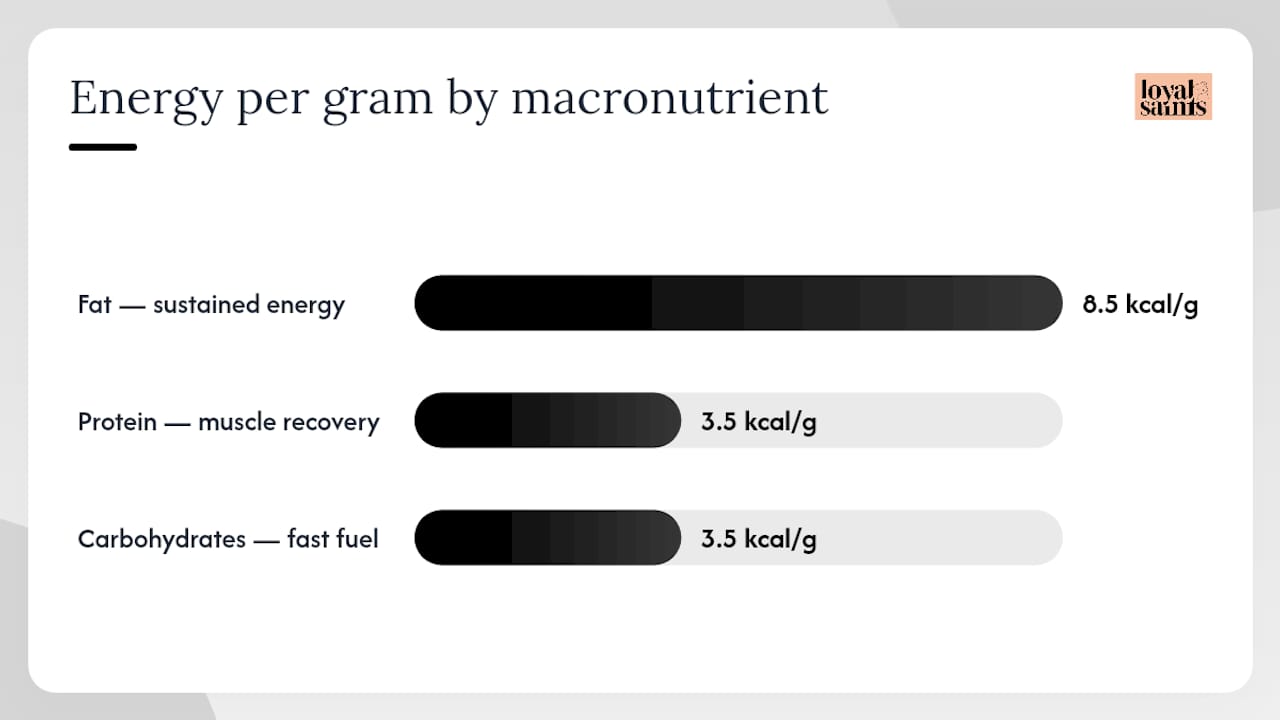
Fat is the most calorie-dense macronutrient at roughly 8.5 kcal per gram of metabolizable energy, compared to about 3.5 kcal per gram for protein and carbohydrates. More importantly, Cornell’s research on performance dogs notes that fat is metabolically “cooler” than protein as a fuel source during prolonged exercise, meaning it generates less body heat. For endurance dogs or dogs working in warm conditions, that thermal advantage matters. A crossover study published in Frontiers in Veterinary Science found some advantages to polyunsaturated fat sources and corn-oil supplementation for thermal recovery and olfactory performance in detection dogs, though the authors note the findings warrant further investigation.
Protein doesn’t serve as the primary fuel during aerobic exercise, but it’s critical for preserving lean muscle mass, supporting red blood cell production, and aiding recovery after hard work. Single-source animal proteins — chicken, beef, lamb — deliver a complete amino acid profile your dog can actually use. Learn more about how protein and fat impact canine endurance and why the ratio between them shifts depending on your dog’s workload.
Carbohydrates are a fast-burning fuel, useful for short bursts of high-intensity activity and for replenishing glycogen stores after exercise. Digestible starches like sweet potato or brown rice can support recovery, but they’re not the primary energy lever for sustained stamina.
B vitamins — particularly B1 (thiamine), B2 (riboflavin), B3 (niacin), and B12 — are cofactors in the metabolic pathways that convert all three macronutrients into usable energy. A complete, balanced formula will meet these through whole-food ingredients or added vitamins.
One important caution: high-fat diets are not appropriate for every dog. Dogs with a history of pancreatitis or hyperlipidemia need veterinary guidance before any fat increase.
| Macronutrient | Primary role | Best for |
|---|---|---|
| Fat (>20% DM for active dogs) | Sustained energy, thermal efficiency | Endurance, working, active dogs |
| Protein (above adult maintenance minimum levels recommended for active dogs) | Muscle preservation, recovery | All active dogs, especially heavy work |
| Carbohydrates | Fast fuel, glycogen repletion | Sprint athletes, post-exercise recovery |
| B vitamins | Metabolic cofactors | All dogs — check AAFCO completeness |
How vets calculate a high-energy feeding plan
The Merck Veterinary Manual defines Maintenance Energy Requirement (MER) as the starting point for any feeding plan. MER builds on Resting Energy Requirement (RER), which is calculated as: RER (kcal/day) = 70 × (body weight in kg)^0.75.
From RER, you apply an activity multiplier to get MER:
Once you know your dog’s daily kcal target, divide by the food’s caloric density (listed as kcal/cup or kcal/kg on the label) to get the daily portion. The Loyalsaintspets feeding guide includes a portion calculator that walks you through this step.
A critical point about calorie-dense foods: when your dog eats a smaller volume to meet caloric needs, the food must still deliver adequate protein, vitamins, and minerals per 1,000 kcal. AAFCO nutrient profiles express minimums on a per-1,000-kcal basis precisely for this reason. A food that looks high in protein by percentage on a dry-matter basis may fall short when corrected for energy density. Always cross-check the guaranteed analysis against caloric content, not just the percentage column.
For working dogs, Cornell recommends beginning the transition to a higher-energy formula several weeks before heavy training or competition, then tapering back to maintenance in the off-season to avoid unnecessary weight gain.
What to look for on the label before you buy
A good label tells you almost everything you need to know. Here’s what to check, in order of priority:
- AAFCO nutritional adequacy statement: Look for “complete and balanced for [life stage]” — either formulated to meet AAFCO profiles or substantiated by a feeding trial. Products labeled only as “complementary” or “for intermittent or supplemental feeding” are not designed as sole diets.
- Life stage match: Puppies, adults, and seniors have different minimums. “All life stages” formulas meet puppy requirements and are generally safe for active adults too.
- Guaranteed analysis: Protein and fat percentages on a dry-matter basis. For active dogs, look for fat above 15–20% DM and protein above 25% DM as a starting benchmark.
- Caloric density: Listed as kcal/cup or kcal/kg. Higher density means smaller portions, which is practical for travel or working dogs but requires the nutrient-per-1,000-kcal check above.
- First ingredients: Named animal proteins (chicken, beef, salmon) should lead the list. “Meat meal” from a named species is acceptable; “meat and bone meal” with no species named is a red flag.
- Added vitamins and minerals: A complete formula will list chelated minerals and specific vitamins. Their presence confirms the recipe was formulated, not just assembled.
- For freeze-dried or raw products: Look for an HPP (high-pressure processing) statement or pathogen-control claim. Check whether the product is labeled “complete” or “topper/complementary” — this distinction matters enormously for sole-diet feeding. AAFCO model regulations require feeding-trial or nutrient-profile substantiation for any “complete and balanced” claim.
Red flags: vague ingredient lists (“animal digest,” unnamed fat sources), no caloric information, no AAFCO statement, or a product marketed as a complete diet without meeting the labeling standard.
Practical feeding plans for dogs at every activity level
Start with your dog’s daily kcal target (calculated above), then build a simple daily plan around it. Meal timing matters too — feeding a large meal immediately before vigorous exercise can contribute to bloat in deep-chested breeds, so aim to feed at least 1–2 hours before activity.
Pre-exercise: Feed a moderate meal 1–2 hours before work. Avoid high-fat meals immediately before intense exercise to reduce GI risk.
Post-exercise: A small carbohydrate-containing meal or snack within 30–60 minutes supports glycogen repletion. Energy-dense dog treats with digestible starches work well here.
Monitoring: Weigh your dog weekly and assess body condition score (BCS) on a 9-point scale. A BCS of 4–5 is ideal for most active dogs. If your dog is losing weight despite adequate portions, increase caloric density before increasing volume.
Pro Tip: For working dogs in a heavy season, Cornell recommends monitoring albumin and red blood cell levels periodically — a protein deficit can develop quietly even when caloric intake looks adequate.
When low energy signals illness, not nutrition
Nutrition is rarely the only explanation for a dog who seems tired or sluggish. Before changing your dog’s food, rule out medical causes. These signs warrant a vet visit rather than a diet swap:
- Sudden onset of lethargy, especially with no change in diet or activity
- Progressive fatigue over days or weeks
- Unexplained weight loss despite normal or increased appetite
- Decreased appetite or refusal to eat
- Vomiting, diarrhea, or changes in stool consistency
- Increased thirst or urination
- Pale gums, weakness, or exercise intolerance disproportionate to workload
- Neurologic signs: stumbling, disorientation, or muscle tremors
Common medical causes include hypothyroidism (very common in middle-aged dogs), anemia from various causes, infectious disease, organ dysfunction (kidney, liver, heart), chronic pain, and medication side effects. The Merck Veterinary Manual notes that life-stage nutrient deficits can also present as low energy, which is why AAFCO-complete labeling matters.
Your vet will likely run a complete blood count (CBC), serum chemistry panel, thyroid panel (T4), and urinalysis. Bring a full diet history: current food, portion sizes, treats, and any supplements. Some blood tests require fasting for accurate results, so ask when you book the appointment.
For senior dogs, energy decline can be a normal part of aging or a sign of an underlying condition. Senior dog care resources and the Loyalsaintspets senior dog food page both address how calorie and protein needs shift with age.
Are raw and freeze-dried foods safe for active dogs?
The short answer: freeze-dried products with HPP treatment offer a practical middle ground between fresh raw and conventional kibble, but handling still matters.
Cornell’s Riney Canine Health Center documents measurable pathogen and antimicrobial-resistance risks in raw and some freeze-dried products, with FDA and university investigations linking handling to human exposures. Freeze-drying alone does not eliminate pathogens. HPP (high-pressure processing) uses extreme water pressure to inactivate bacteria like Salmonella and Listeria without heat, preserving nutrient integrity while closing much of the safety gap. Not all freeze-dried products are HPP-treated, so check the label or manufacturer’s website explicitly.
Freeze-dried products also retain most of their nutrient content compared to fresh raw, making them a practical option for travel, training, or owners who want raw-style nutrition without refrigeration. The Loyalsaintspets freeze-drying process explains how each step addresses safety and nutrient retention.
Safe-handling checklist for freeze-dried and raw products:
- Store unopened bags in a cool, dry place; refrigerate after opening if the label recommends it.
- Rehydrate with clean, cold or room-temperature water — not warm water, which can encourage bacterial growth.
- Wash hands, bowls, and any prep surfaces with soap and water after handling.
- Do not leave rehydrated food out for more than 30 minutes.
- Keep raw or freeze-dried products away from immunocompromised household members, infants, and elderly individuals who are at higher risk from foodborne pathogens.
- Verify the product is labeled “complete and balanced” (AAFCO statement) if using as a sole diet — many freeze-dried toppers are complementary only.
Pro Tip: Use freeze-dried products as a complete meal on training days or travel when you need portability, and confirm the AAFCO statement before making it your dog’s only food source. For everyday feeding, a freeze-dried complete formula paired with the safe-handling steps above covers both the nutrition and the safety bases.
How to transition your dog to a higher-energy diet safely
Switching foods too quickly is one of the most common causes of digestive upset in dogs. A gradual transition gives your dog’s gut microbiome time to adapt and helps you catch any intolerance early. Cornell’s guidance for performance dogs recommends a 4–6 week transition before heavy work begins.
A practical mixing schedule:
- Week 1: 75% old food, 25% new food
- Week 2: 50% old food, 50% new food
- Week 3: 25% old food, 75% new food
- Week 4 onward: 100% new food
For freeze-dried products, follow the transition guide and account for the caloric density difference — freeze-dried foods are often significantly more calorie-dense than kibble by volume, so the portion by cup will be smaller.
What to monitor during the transition:
- Stool quality: some softening is normal in week 1; persistent diarrhea beyond 3–4 days is a signal to slow down.
- Appetite: a brief dip is common; refusal to eat for more than 2 days warrants a vet call.
- Body condition: weigh weekly and adjust portions if weight shifts more than 5% in either direction.
- Signs of pancreatitis: vomiting, hunched posture, or abdominal pain after a high-fat meal — stop the new food and call your vet immediately.
- Signs of food intolerance: itching, ear infections, or chronic loose stools that persist after the adjustment period.
If any of these signs appear and don’t resolve within a few days of slowing the transition, stop and consult your vet before continuing.
Recommended formulations that support energy in active dogs
When you’re looking for a premium dog food for stamina, the formulations that consistently perform well share a few traits: named animal protein as the first ingredient, fat content calibrated to activity level, AAFCO-complete labeling, and transparent sourcing.
Freeze-dried raw formulas are among the most calorie-dense options available and are increasingly popular with owners of working dogs, agility athletes, and high-drive breeds. The format preserves nutrient integrity, offers practical shelf stability, and delivers the protein-to-fat ratios that performance nutrition research supports.
Loyalsaintspets offers three freeze-dried formulas that fit the high-energy use case directly:
Freeze Dried Raw Chicken (14oz) is a complete, human-grade formula built around single-source chicken protein. The caloric density makes it well-suited as a primary diet for active dogs, and the 14oz size supports consistent daily feeding without frequent reorders. View the Freeze Dried Raw Chicken 14oz.
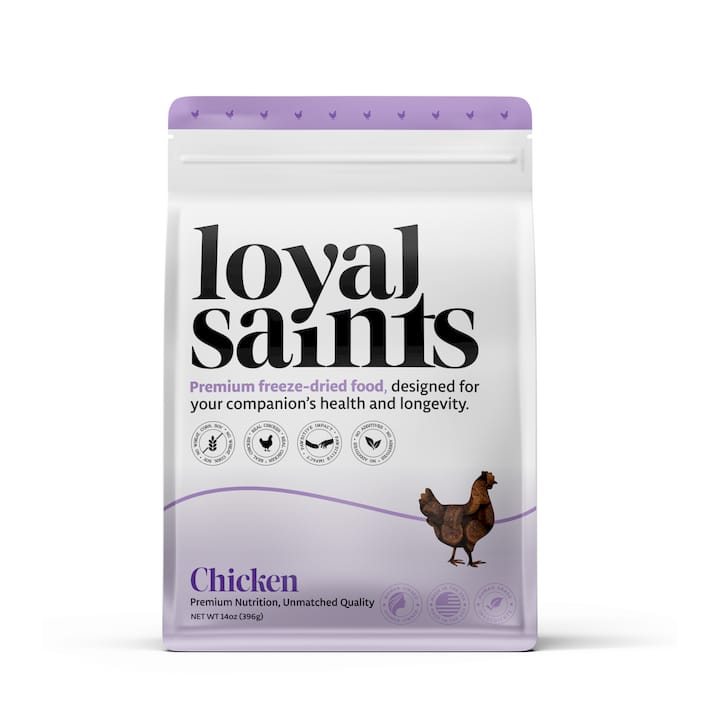
Freeze Dried Raw Chicken (5oz) is the same formula in a smaller format, practical for travel, training rewards, or owners who want to trial the recipe before committing to the larger size. View the Freeze Dried Raw Chicken 5oz.
Freeze Dried Raw Beef (14oz) uses single-source beef as its protein base, offering a higher-fat profile that suits dogs with elevated caloric demands. For owners whose dogs need more caloric density per serving, this is a strong option. View the Freeze Dried Raw Beef 14oz.
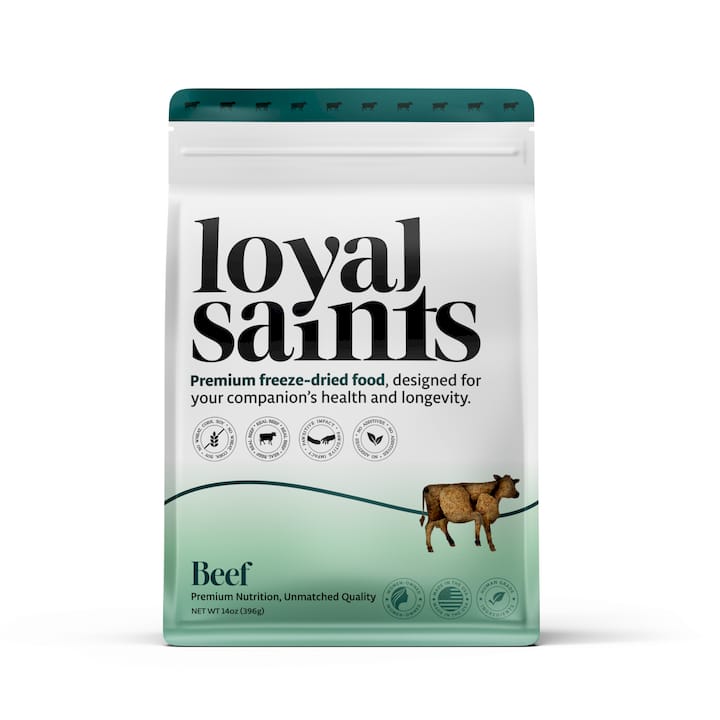
All three are formulated to meet AAFCO standards for complete and balanced nutrition, made with whole, human-grade ingredients, and free of fillers or synthetic additives. Explore the full range of freeze-dried options to find the right fit for your dog’s activity level and protein preference.
What I’ve learned from using concentrated freeze-dried meals on training days
Freeze-dried complete meals have become my go-to recommendation for active dogs on heavy training days, and the reason is practical: the caloric density means you carry less, your dog gets more, and there’s no refrigeration required. For a dog running agility courses or working a full field day, that convenience isn’t trivial.
What I always tell owners is to weigh the portion rather than scoop it. Freeze-dried food is so calorie-dense that a “cup” can deliver twice the calories of the same volume of kibble. A kitchen scale takes the guesswork out entirely.
Loyalsaintspets’s formulas earn credibility here because they meet AAFCO’s “complete and balanced” standard and use human-grade, whole ingredients — not because they’re the only option, but because those two criteria are the non-negotiables I’d check on any freeze-dried product. The single-source proteins also make it easier to identify a food intolerance if one develops, which matters when you’re pushing a dog’s performance.
Loyalsaintspets freeze-dried recipes for high-energy dogs
Real nutrition for active dogs doesn’t need to be complicated. Loyalsaintspets freeze-dried formulas deliver calorie-dense, single-source protein meals made from human-grade ingredients, with no fillers, no synthetic additives, and AAFCO-complete labeling for sole-diet confidence.
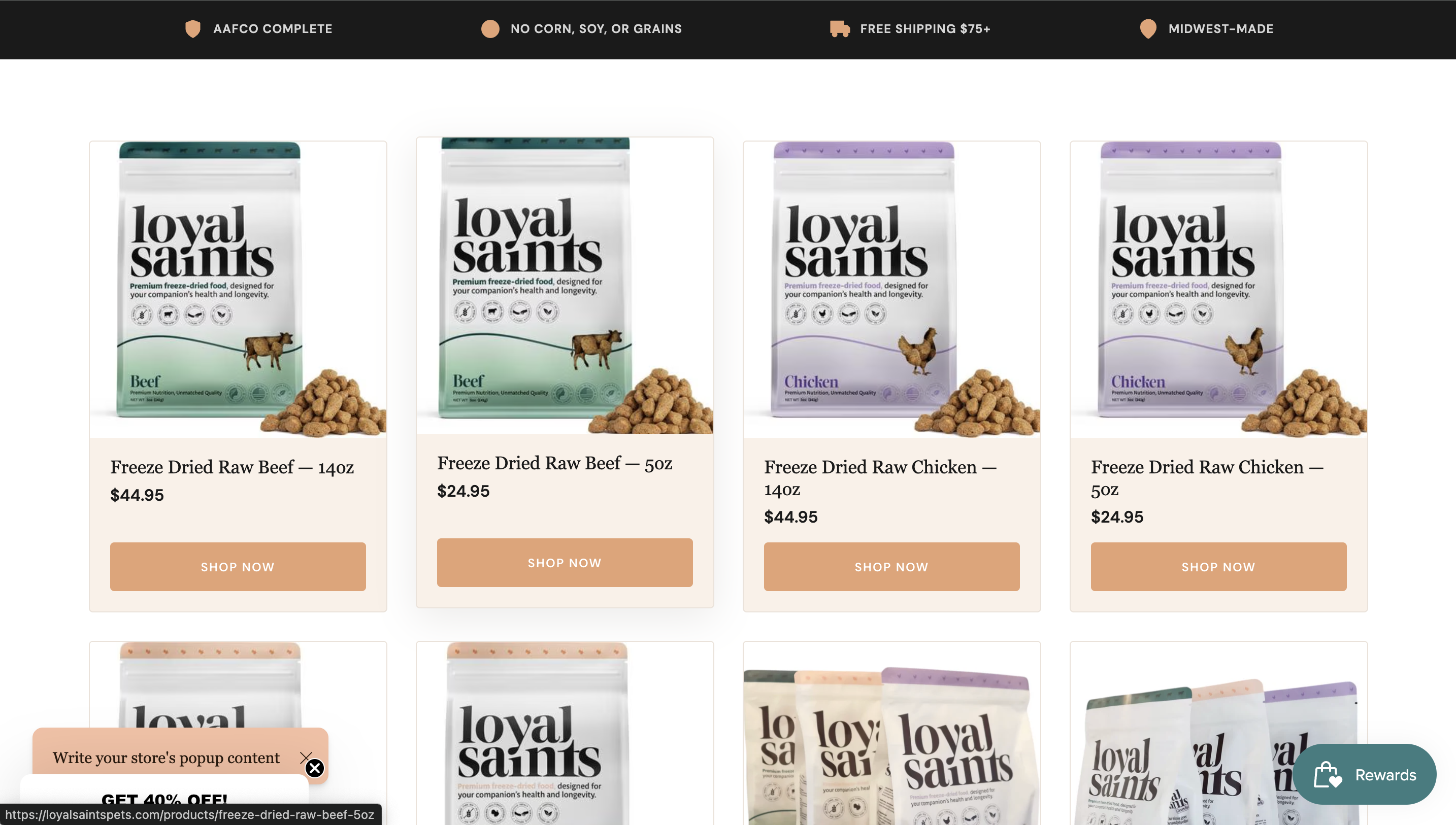
For daily feeding, the Freeze Dried Raw Chicken 14oz and Freeze Dried Raw Beef 14oz cover the caloric density active dogs need. The 5oz Chicken is a practical trial size or travel companion. Rehydrate with a small amount of cool water, weigh your portion against the caloric density on the label, and adjust weekly based on body condition.
Working dog owners and those who feed daily can save on every order through the Halo Club membership, which includes recurring delivery and free shipping. Head to the Loyalsaintspets shop to see current options and start your first order.
Sources
- Feeding your performance dog | Cornell University College of Veterinary Medicine
- Nutritional requirements of small animals — Merck Veterinary Manual
- Diet and performance in detection dogs — Frontiers in Veterinary Science (2016)
This article is general information, not a substitute for advice from a qualified doctor. Consult a qualified healthcare professional about your own circumstances before acting on anything here.


