
Here’s the short answer: dog poop on a raw diet is usually smaller, firmer, darker, and far less smelly than what you saw on kibble, and your dog will likely poop less often. That’s a sign of digestion working well, not a red flag. Research backs this up: raw and freeze-dried diets produced firmer stools and lower fecal output than extruded kibble in a controlled feeding trial.
Normal signs to watch for:
- Firm, sausage-shaped stool that holds together but crumbles when dry
- Little to no odor compared to kibble poop
- Fewer bathroom trips overall
Red flags that need attention:
- Loose stool or mucus lasting more than 72 hours
- Black, tarry, or bloody stool
- Vomiting paired with diarrhea
If it’s mild and your dog is otherwise bright and eating, give it 48 to 72 hours and monitor. AAFCO-complete formulas like the ones Loyalsaintspets makes are built to support this adjustment period without adding unnecessary variables.
Key Takeaways
Firm, smaller, less-smelly stool is the normal outcome of a well-managed raw diet, and most deviations resolve within 72 hours with simple fixes.
| Point | Details |
|---|---|
| Normal raw stool | Expect firm, darker, less-smelly stool with fewer daily bathroom trips. |
| Match cause to symptom | Dark loose stool often means too much organ meat; hard pellets mean too much bone. |
| Transition over 21 days | Ramp from 25% to 100% raw in stages, slower for sensitive dogs or puppies. |
| Know your red flags | Black or bloody stool, vomiting, or lethargy means call the vet immediately. |
| Try shelf-stable raw | Loyalsaintspets’ AAFCO-complete freeze-dried formulas keep fat and organ ratios consistent for easier troubleshooting. |
Table of Contents
- What Does Normal Raw-Fed Dog Stool Look Like?
- Why Does Stool Change When You Switch to Raw?
- How Fast Should You Transition to a Raw Diet?
- When Should You Call the Vet About Raw-Fed Poop?
- What Can You Try Before or Alongside Vet Care?
- What Does the Research Say About Raw Diets and Stool Health?
- Try a Shelf-Stable Raw Option for Easier Portion Control
- Frequently Asked Questions
- Sources
What Does Normal Raw-Fed Dog Stool Look Like?
A healthy raw-fed stool checks four boxes: color, consistency, frequency, and smell. Color usually runs light to dark brown, sometimes very dark when a meal is heavy on organ meat like liver. Consistency should be firm and shaped, not mushy, and it often crumbles slightly once it dries out on the lawn. Frequency tends to drop. Many raw-fed dogs go from two or three stools a day down to one, since raw-fed stool volume can shrink noticeably compared to kibble. Smell is noticeably milder, too.
Some color shifts are completely benign:
- White or crumbly usually means bone content is high
- Green often points to veggies, grass, or bile
- Orange tint can trace back to carrots or sweet potato in the meal
Hydration plays a role here as well. Raw meals carry far more natural moisture than kibble, and that extra water content usually keeps stool from drying into hard, difficult-to-pass pellets.
Pro Tip: Snap a quick photo of your dog’s stool once a week for the first month on raw. That baseline makes it much easier to spot a real change later instead of guessing from memory.
Why Does Stool Change When You Switch to Raw?
Most stool changes trace back to specific ingredients or how fast the switch happened. Matching the symptom to the likely cause saves you a lot of guesswork.
- Very dark, loose stool → too much organ meat in the rotation
- Hard, dry, chalky pellets → too much bone relative to muscle meat
- Greasy, foul-smelling stool → a meal too high in fat for your dog’s tolerance
- Mucus coating or soft serve texture → the diet switch happened too fast
Age, breed, and prior diet history all shift how a dog responds. Puppies and seniors tend to have less digestive reserve, and dogs with a history of sensitive stomachs often need a slower ramp than a young, healthy adult. A dog coming from years of highly processed kibble may also react more dramatically to the fat and protein density of raw than one who’s already eaten fresh food.
When to watch: soft stool that resolves inside 48 to 72 hours is typical adjustment. Soft stool, mucus, or straining that lasts longer than 72 hours warrants a log of what your dog ate, when symptoms started, and any treats or table scraps involved. That log becomes valuable if you need to call your vet.
How Fast Should You Transition to a Raw Diet?
A rushed switch is the single biggest cause of diarrhea and mucus in newly raw-fed dogs. Practical transition guidance generally recommends starting at 25 percent new food and stepping up gradually, and a crossover feeding trial found measurable improvements in fecal score and microbiome balance within two to four weeks of switching diets, which is why a full three weeks is worth planning for rather than rushing.
Sample 21-day schedule:
- Days 1 to 4: 25% raw, 75% previous diet, plain muscle meat only
- Days 5 to 8: 50% raw, 50% previous diet, introduce a small amount of ground bone
- Days 9 to 13: 75% raw, 25% previous diet, add a small portion of organ meat
- Days 14 to 21: 100% raw, full recipe with organ, bone, and fat ratios balanced
Sensitive dogs, seniors, and puppies often do better stretching each stage to 6 to 7 days instead of 4.
Avoid during transition:
- Large jumps in organ meat percentage in a single step
- High-fat cuts or fatty treats layered on top of a new raw meal
- Introducing whole bones before your dog has adjusted to ground bone
When Should You Call the Vet About Raw-Fed Poop?
Most stool changes on raw resolve on their own. Some don’t, and knowing the difference matters.
Call your vet right away if you see:
- Black or tarry stool, which can indicate digested blood higher in the GI tract
- Bright red blood that continues past one bowel movement
- Vomiting combined with diarrhea
- Lethargy, refusing food, or signs of dehydration like sunken eyes or tacky gums
If your vet wants a sample, collect a fresh, small portion in a clean bag or container and refrigerate it if you can’t drop it off within a couple hours. Bring your dog’s diet history, the date you started transitioning, and photos of any concerning stool. Depending on symptoms, your vet may run a fecal parasite test, a bacterial culture or PCR panel, bloodwork, or imaging if something more serious is suspected; Skin Cytology in Dogs: A Clinic-Ready Diagnostic Guide offers practical insights your vet might consider during diagnosis. AKC guidance treats stool color and consistency as a first-line window into digestive health, worth tracking every time something looks off.
What Can You Try Before or Alongside Vet Care?
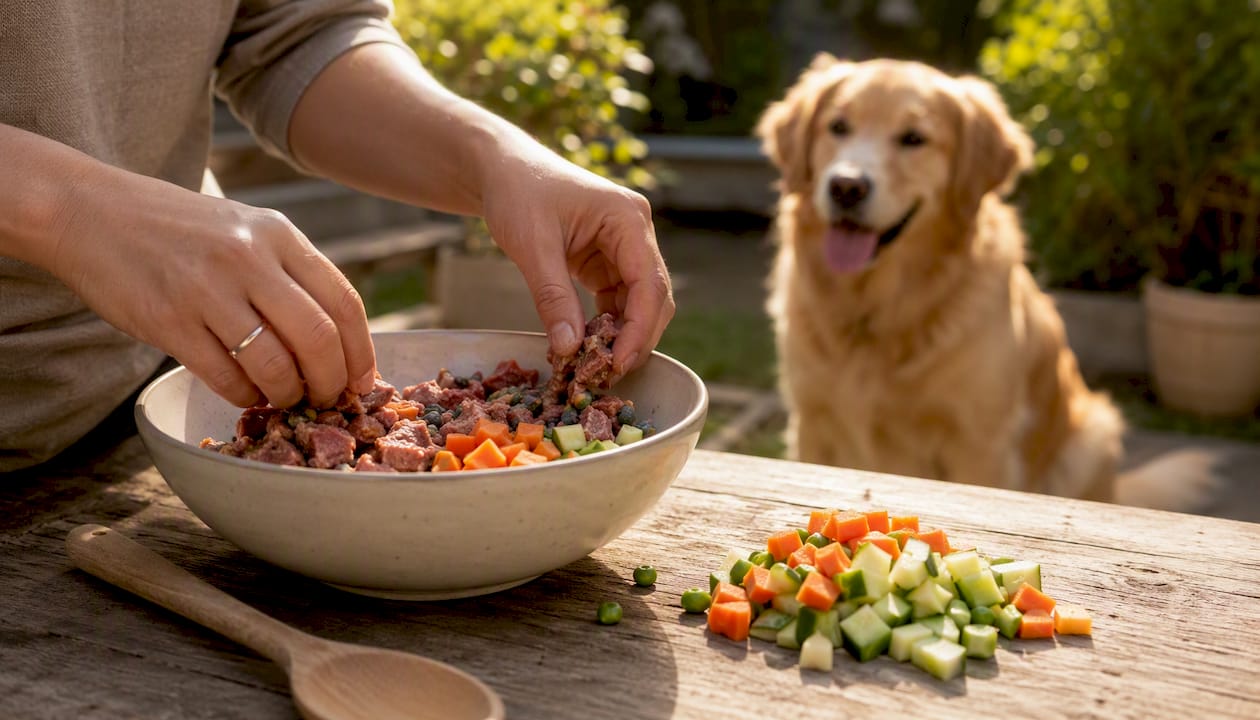
A few adjustments handle most mild raw-diet stool issues without a vet visit:
- Cut the fat content of the next few meals
- Pull organ meat out of the rotation for 3 to 4 days, then reintroduce slowly
- Add a spoonful of plain canned pumpkin or psyllium husk to firm things up
- Introduce a veterinarian-formulated probiotic to support gut flora during adjustment
- Add a splash of water or bone broth to meals if stool looks dry or hard
A quality probiotic with multiple live strains tends to help more than a single-strain product, and digestive enzymes can support dogs whose pancreas needs a little backup breaking down fat and protein. If you’re weighing a fat-reducing approach for a dog with a known sensitivity, loop your vet in before making it a long-term change.
Avoid: human anti-diarrheal medications unless your vet specifically directs it, sudden high-fat treats like a chunk of skin or trim, and reaching for antibiotics without a confirmed bacterial cause.
Pro Tip: Introduce one new supplement at a time and wait three to four days before adding another. If you stack pumpkin, probiotics, and enzymes all at once and stool improves, you won’t know which one actually worked.
What Does the Research Say About Raw Diets and Stool Health?
Dogs fed frozen or freeze-dried raw diets showed higher apparent digestibility and produced firmer, lower-volume stool than dogs fed extruded kibble, according to a controlled feeding trial comparing multiple diet formats side by side.
That’s not a fluke of one small study. A 2024 study on dietary format found raw-fed dogs had significantly higher levels of fecal IAP, IgA, and IgG compared to kibble-fed dogs, pointing to real differences in local gut immune activity tied to diet format. A broader review of raw meat-based diets confirms improved digestibility in multiple trials, while also flagging pathogen risk in poorly handled raw diets.
What this means for you: a smaller, firmer stool is usually a sign that your dog is absorbing nutrients efficiently, not a sign of underfeeding.
A note from Loyal Saints Pets
My priority when a dog owner emails about a stool change is always the same: rule out anything urgent, then slow the transition down before doing anything else. Most fixes are simple. Patience and careful ingredient ratios solve more raw-feeding stool issues than any supplement ever will.
Try a Shelf-Stable Raw Option for Easier Portion Control
Freeze-dried raw solves one of the biggest frustrations in this article: consistency. Every batch carries the same measured fat, protein, and organ ratio, so you’re not guessing whether tonight’s portion has more liver than last night’s.

Loyalsaintspets builds every formula to AAFCO-complete standards with human-grade ingredients and no fillers, which gives you a more predictable stool response while you’re troubleshooting. If you’re starting a transition, the Freeze Dried Raw Chicken — 5oz size is a low-commitment way to test tolerance before committing to a larger bag. Once your dog settles in, the Freeze Dried Raw Chicken — 14oz or Freeze Dried Raw Beef — 14oz options give you a single-protein formula to isolate what’s working. Curious how freeze-drying compares to frozen raw? Why Freeze Dried? breaks down the handling and nutrient differences. Always run a new diet by your vet first, especially for puppies, seniors, or dogs with existing health conditions. Members of the Halo Club get ongoing savings and free shipping, making it easier to stick with the same trusted formula through a full transition. Ready to try it? Order a bag today and start tracking your dog’s stool against the baseline you’ve built.
Frequently Asked Questions
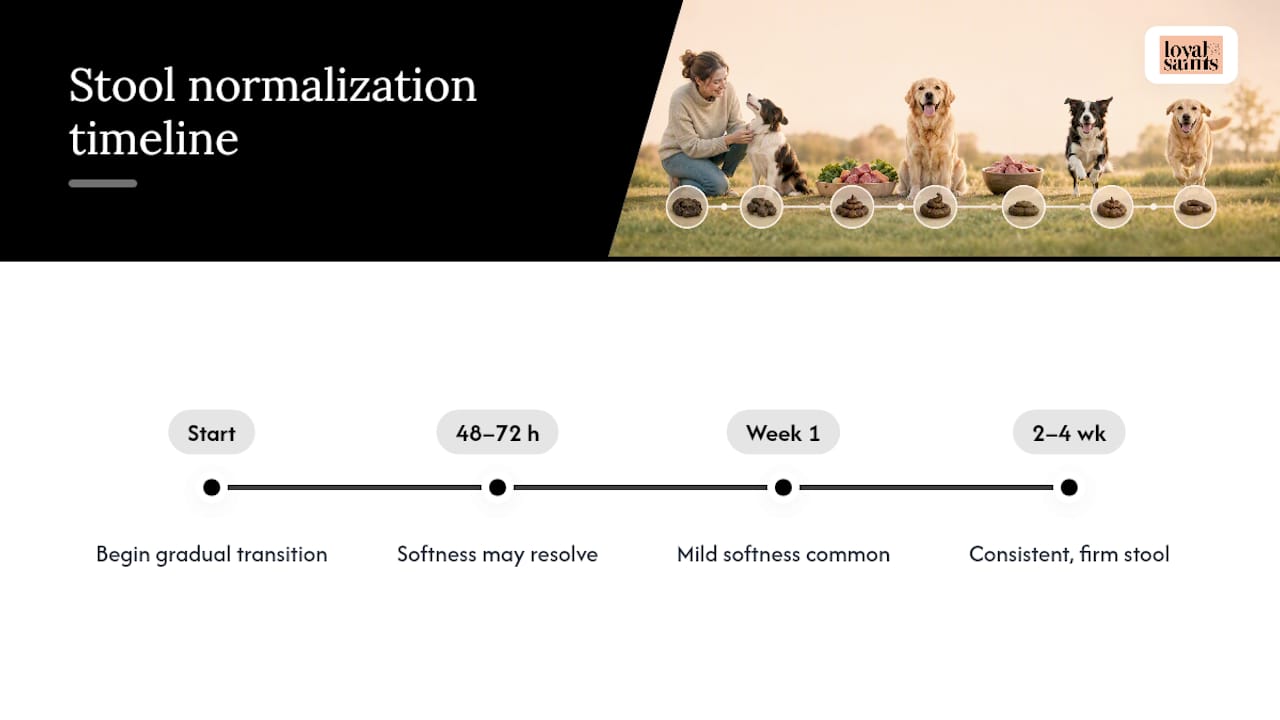
How long does it take for a dog’s poop to normalize on a raw diet? Most dogs settle into consistent, firm stool within two to four weeks of a gradual transition, based on crossover trial data tracking fecal score changes after a diet switch.
Is it normal for a dog to poop less on raw food? Yes. Raw and freeze-dried diets are more digestible, so less waste material leaves the body. That’s typically a sign of efficient digestion, not a problem.
What does white or chalky poop mean on a raw diet? White, crumbly stool usually points to a bone-heavy meal. Reducing bone content for a few days should return stool to a normal brown color.
Should I be worried if my dog has soft stool right after starting raw? Mild softness during the first week is common, especially if the transition moved fast. If it clears up within 48 to 72 hours and your dog is acting normal otherwise, it’s not a concern.
Can food allergies affect stool on a raw diet? Yes. A single-protein formula, like a chicken or beef only recipe, makes it much easier to identify a food sensitivity than a multi-protein diet, since you can isolate the ingredient causing the reaction.
This article is general information, not a substitute for advice from a qualified doctor. Consult a qualified healthcare professional about your own circumstances before acting on anything here.
Sources
- Apparent total tract nutrient digestibility of frozen raw, freeze-dried raw, fresh, and extruded dog foods and their effects on serum metabolites and fecal characteristics, metabolites, and microbiota of healthy adult dogs - PMC
- Dietary format alters fecal microbiota, metabolome and local intestinal markers in dogs (Frontiers in Veterinary Science)
- Current Evidence on Raw Meat Diets in Pets: A Natural Symbol, but a Nutritional Controversy (MDPI Animals)
- Raw meat based diet influences faecal microbiome and end products of fermentation in healthy dogs | BMC Veterinary Research
- What your dog’s poop says about their health (AKC)


