
Grass-fed beef gives dogs measurably higher omega-3s, CLA, and antioxidant vitamins than conventional grain-fed beef, and those nutrients are tied to real outcomes: less inflammation, a shinier coat, and stronger lean muscle. A Frontiers in Veterinary Science pilot study found lower serum methionine in dogs fed raw meat-based diets, a marker linked to metabolic longevity in mammals. The evidence is promising, not proof, and it only pays off inside a diet that still meets AAFCO completeness standards.
TL;DR:
- Grass-fed beef provides dogs with higher omega-3s, CLA, and vitamin E, which support joint health, coat condition, and lean muscle retention.
- Properly certified grass-fed products, especially from the American Grassfed Association, ensure actual grass-finished ingredients and avoid grain finishing.
- Introducing grass-fed beef gradually over two weeks minimizes stomach upset, and freeze-dried options offer a safer, less microbial risk alternative to raw meat.
- While grass-fed beef benefits older or inflamed dogs most, it may not be cost-effective or necessary for healthy, young dogs already on a balanced diet.
- AAFCO-complete formulas with human-grade proteins remain essential, as grass-fed beef alone cannot meet all nutritional requirements.
Table of Contents
- Grass-Fed Dog Food Benefits at a Glance
- Nutrient Profile: What Actually Changes and Why It Matters
- What Digestibility and Metabolomic Research Actually Show
- Safety, Labeling, and Nutritional Completeness
- How to Introduce Grass-Fed Beef Into Your Dog’s Diet
- Why Freeze-Dried Grass-Fed Beef Is a Practical Way to Try This
- Where Grass-Fed Beef Isn’t the Right Fit
- When Grass-Fed Beef Makes Sense, and When It Doesn’t
- Try Grass-Fed Beef the Safer, Simpler Way
- Sources
- FAQ
Grass-Fed Dog Food Benefits at a Glance
Not every dog needs the same upgrade, but the pattern across the research points to five areas where grass-fed beef tends to make a real difference. Here’s what shows up most consistently:
- Joint and mobility support: Higher EPA and DHA content helps blunt inflammatory markers, which shows up most in older dogs and dogs recovering from orthopedic issues.
- Skin and coat quality: A better balance of fatty acids often translates to less flaking and a glossier coat within weeks of consistent feeding.
- Lean muscle maintenance: Conjugated linoleic acid (CLA) is associated with preserving lean mass, useful for active dogs and dogs on calorie-restricted plans.
- Appetite and palatability: Grass-fed beef’s richer flavor profile often wins over picky eaters who turn their nose up at kibble.
- Cognitive and cardiac support: Omega-3s contribute to brain and heart health markers, an area especially relevant for senior dogs.
Grass-fed beef typically carries a more favorable omega-6 to omega-3 ratio than grain-fed beef, which is the mechanism behind most of these benefits. Seniors, highly active working dogs, and dogs with mild joint stiffness tend to notice the difference fastest, simply because they have the most inflammation to lose.
Nutrient Profile: What Actually Changes and Why It Matters
Cattle raised on pasture build a different fat profile than cattle finished on grain, and that difference carries straight into your dog’s bowl. Grass-fed beef consistently shows higher omega-3 polyunsaturated fatty acids and an improved n-6 to n-3 ratio compared with grain-fed beef, along with more CLA and vitamin E.
Each nutrient does a specific job:
- EPA and DHA (both omega-3s) calm inflammatory pathways, which is why they show up in osteoarthritis and post-surgical recovery research.
- CLA supports lean mass retention rather than fat storage, helpful for weight management.
- Vitamin E acts as an antioxidant, protecting cell membranes from oxidative stress.
- Iron and zinc support oxygen transport and immune function, both naturally abundant in beef regardless of feed type but often slightly higher in grass-fed cuts.
Here’s the honest caveat: a few ounces of grass-fed beef as a topper contributes real nutrients, but it cannot replace a complete diet on its own. Balance still has to come from the whole formula, not the protein alone.
What Digestibility and Metabolomic Research Actually Show
Commercial raw meat-based diets tested in an Iowa State evaluation showed apparent total tract digestibility between 83% and 97%, a wide but generally strong range. Higher digestibility means more of the protein and fat your dog eats actually gets absorbed, rather than passing through unused.
The metabolomic side is where things get genuinely interesting. Dogs fed raw meat-based diets showed lower serum methionine than dogs fed kibble, a marker tied to longevity signatures in other mammals. That’s a real signal worth watching, but it comes from a small pilot study, so treat it as a lead, not a conclusion.
A few things researchers are still sorting out:
- How diet-driven shifts in bile acids and carnitines translate into long-term health outcomes.
- Whether microbiome changes from meat-based diets actually extend to measurable lifespan gains.
- How much of the methionine effect holds up in larger, longer trials.
Safety, Labeling, and Nutritional Completeness
Raw meat carries some microbial risk. The same Iowa State evaluation that found strong digestibility numbers also detected low but non-zero Salmonella presence across tested raw diets, which is why handling matters as much as nutrition.
A few things worth knowing before you buy:
- “Grass-fed” and “grass-finished” aren’t interchangeable. The American Grassfed Association certifies animals that are 100% grass-fed and grass-finished on open pasture, without antibiotics or added hormones. A product without that certification may still use grain finishing at the end.
- AAFCO completeness matters more than the protein source. Grass-fed beef is a nutrient upgrade, not a substitute for a formula built to meet a dog’s full daily requirements.
- Watch for warning signs during any diet change: loose stool, appetite loss, or lethargy. Stop and call your vet if symptoms last more than a day or two.
Pro Tip: Look for the AGA seal specifically, not just the words “grass-fed” on the front of the bag. Certification is the only way to confirm the claim actually holds up.
How to Introduce Grass-Fed Beef Into Your Dog’s Diet
Switching proteins too fast is the number one reason dogs get upset stomachs during a diet change. Here’s a transition plan that keeps things smooth:
- Days 1 to 3: Mix a small amount (about 10% of the meal) of grass-fed beef into your dog’s current food. Watch stool consistency daily.
- Days 4 to 7: Increase to 25 to 50%, depending on how well your dog tolerated the first phase.
- Days 8 to 14: If using it as a full meal replacement rather than a topper, confirm the product is AAFCO-complete, since beef alone doesn’t cover every micronutrient a dog needs.
- Ongoing: A small dog might get a tablespoon as a topper; a large, active dog might get a quarter cup. Adjust based on activity level and body condition.
Freeze-dried grass-fed beef sidesteps most of the handling risk tied to raw feeding while keeping the nutrient profile largely intact, which makes it the more practical choice for most households. Store it in a cool, dry place, and rehydrate only the portion you’re using that day.
Pro Tip: If your dog has any chronic condition, kidney issues especially, run the transition plan by your vet first. Protein levels that are fine for a healthy adult dog can be a problem for a dog with reduced kidney function.
Why Freeze-Dried Grass-Fed Beef Is a Practical Way to Try This
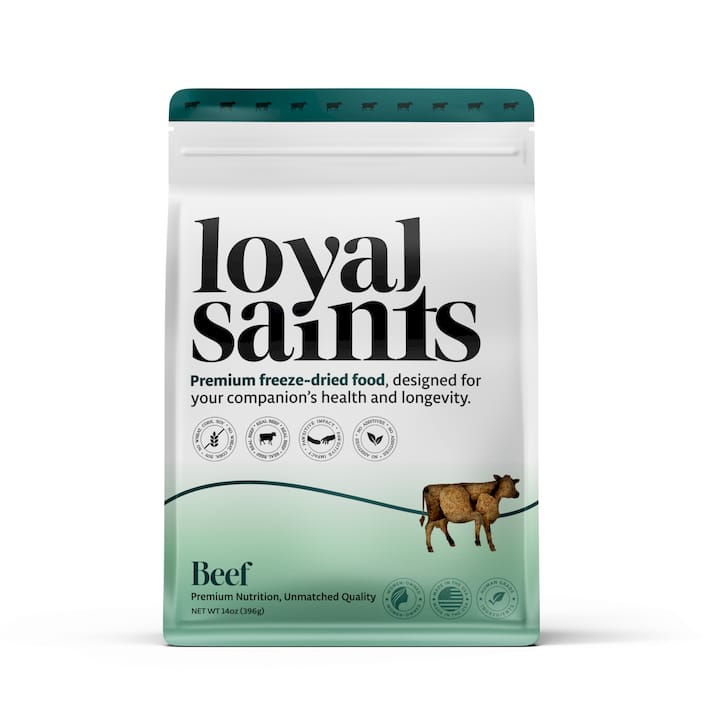
Freeze-drying locks in nutrients like omega-3s and vitamin E while sidestepping the microbial handling risk of raw meat, which makes it a genuinely practical middle ground. Some freeze-dried dog food brands build formulas from human-grade ingredients sourced from Midwest farms, with veterinarian-approved, AAFCO-complete recipes behind their products.
For readers who want to test these benefits without committing to a full raw-feeding setup, a few paths work well:
- Start small with a trial-size bag to see how your dog responds before committing to a larger supply.
- Read more on why minimally processed pet food supports healthier dogs if you’re comparing formats beyond raw and kibble.
Where Grass-Fed Beef Isn’t the Right Fit
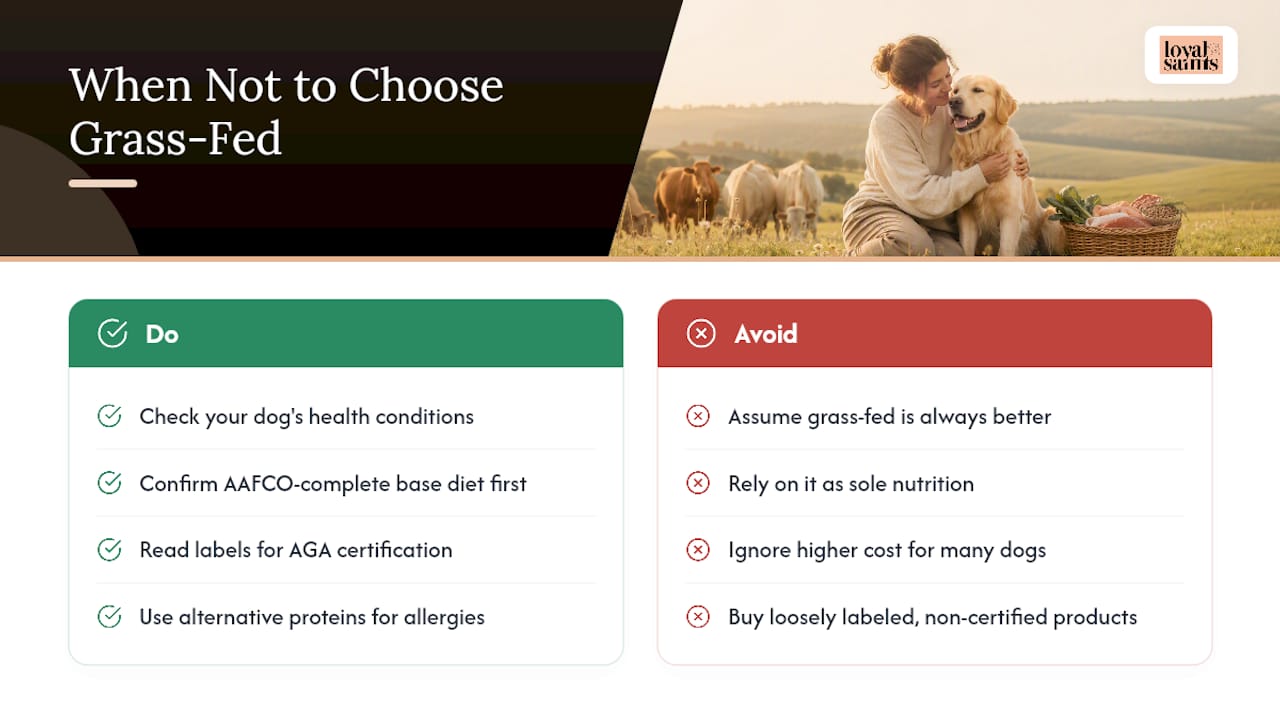
Grass-fed beef isn’t automatically the better choice for every dog or every budget, and it’s worth being honest about that before you switch. Cost is the first real barrier. Pasture-raised beef costs more to produce than grain-finished beef, and that premium shows up at checkout. For households feeding multiple large dogs, the price difference between grass-fed and conventional formulas can add up fast, especially if you’re feeding it as a full meal rather than a topper.
Availability is the second issue. Not every region has consistent access to certified grass-fed products, and some brands stretch the term loosely on packaging without AGA certification behind it. That makes label literacy as important as the nutrition itself.
Health conditions matter too. Dogs with certain kidney or liver conditions need carefully controlled protein and fat levels, and a rich, higher-fat beef product isn’t automatically appropriate just because it’s grass-fed. Dogs with existing beef allergies or sensitivities won’t benefit from a different feeding method for the same protein; they need a different protein entirely, like the turkey and salmon options in a rotation plan. Very young puppies and pregnant or nursing dogs have nutrient requirements dense enough that any single-protein topper, grass-fed or not, has to stay secondary to a fully balanced, AAFCO-complete base diet.
None of this rules grass-fed beef out. It just means the decision should weigh your dog’s actual health picture, not just the appeal of a cleaner-sounding ingredient.
When Grass-Fed Beef Makes Sense, and When It Doesn’t
Grass-fed beef earns its place when a dog is older, has mild inflammation, or just needs a nutrient-dense topper to make meals more appealing. It’s a smaller win, or no win at all, for a young, healthy dog already eating a complete, high-quality diet.
Cost and availability are real trade-offs, not excuses to skip it entirely. Always loop in your vet before changing anything for puppies, pregnant dogs, or dogs managing a medical condition.
— Kristina
Try Grass-Fed Beef the Safer, Simpler Way
Loyalsaintspets gives you the nutritional upgrade of grass-fed beef without the handling risks or guesswork of raw feeding at home, since every batch is freeze-dried from human-grade ingredients and formulated to meet AAFCO completeness standards. That means you get the omega-3s, CLA, and antioxidant vitamins covered in this article, backed by a formula built to be nutritionally whole, not just a flavorful add-on.
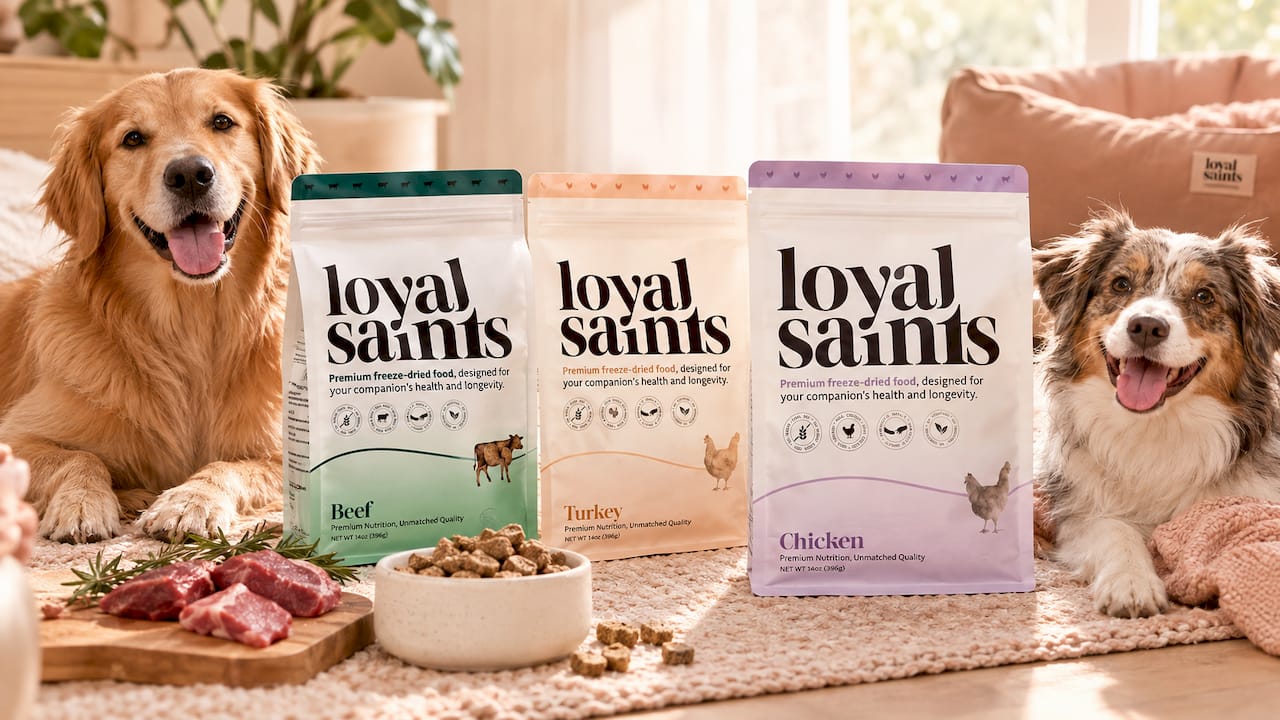
If you’re ready to test it, start small with the 5oz Freeze Dried Raw Beef as a topper, or go bigger with the 14oz Freeze Dried Raw Beef if your dog takes to it right away. Want variety without extra guesswork? The Beef, Chicken & Turkey with Salmon variety pack lets you rotate proteins while keeping every meal complete. Feeding regularly? The Halo Club membership runs $79.99 a year or $10.99 a month and comes with shipping perks that make ongoing orders easier on your wallet. Pick a size, place your order, and watch how your dog responds over the next few weeks.
Sources
- Targeted metabolomics … fed two different diets, a pilot study — Frontiers in Veterinary Science
- The nutritional and health value of beef lipids - fatty acid composition in grass-fed and grain-fed beef
- Grassfed for Pets: Why Your Dog Deserves Better Beef Too — American Grassfed Association
FAQ
What are the top 5 healthiest dog foods?
There’s no single universal list, since the healthiest food depends on your dog’s age, breed, and health status. In general, the strongest options are AAFCO-complete formulas built from named, human-grade proteins with minimal processing, and grass-fed beef options rank well for dogs needing extra anti-inflammatory support.
Can I feed my dog beef every day?
Yes, beef can be fed daily as long as it’s part of a complete and balanced diet that meets AAFCO standards, rather than beef alone. Rotating proteins occasionally, as with a variety pack, also helps prevent sensitivities from developing to any single protein.
Why do people feel better after eating grass-fed beef?
Many people report feeling better on grass-fed beef because of its higher omega-3 content and more favorable omega-6 to omega-3 ratio, which is linked to lower inflammation. The same mechanism is the basis for reported improvements in dogs, particularly around joint comfort and coat quality.
What did dogs eat before dog food?
Before commercial dog food existed, dogs largely ate whatever meat, scraps, and bones their households had available, which was often closer to a raw, meat-heavy diet than modern kibble. That history is part of why raw and minimally processed formats, including grass-fed beef, have drawn renewed interest from owners looking for a less processed feeding option.
Is grass-fed dog food better than grain-fed?
Grass-fed beef generally offers a better fatty acid profile and more antioxidant vitamins than grain-fed beef, which translates into real, if modest, health advantages for most dogs. It isn’t automatically the right call for every dog, especially those with certain health conditions or budget constraints, so weigh it against your dog’s specific needs.


