
TL;DR:
- Loyalsaintspets, The Farmer’s Dog, Ollie, Stella & Chewy’s, and Orijen are the top healthy dog food brands today.
- Their products meet strict standards for safety, sourcing transparency, and complete nutrition, with format choice depending on individual dog needs.
The healthiest dog food brands right now are Loyalsaintspets, The Farmer’s Dog, Ollie, Stella & Chewy’s, and Orijen. For most health-conscious owners, Loyalsaintspets freeze-dried raw food is the strongest daily choice: human-grade ingredients, AAFCO-complete formulation, veterinarian approval, and full sourcing transparency in a shelf-stable format that fits real life.
Here’s the short version of why each brand earns a spot:
- Loyalsaintspets — Freeze-dried raw, human-grade, AAFCO-complete, vet-approved, single-protein options, no fillers or synthetic additives, subscription available
- The Farmer’s Dog — Fresh-cooked, vet-formulated, USDA-kitchen-produced, strong sourcing transparency
- Ollie — Fresh-cooked, personalized portions, AAFCO-complete, human-grade facility
- Stella & Chewy’s — Freeze-dried raw, widely available, protein-first formulas, AAFCO-complete
- Orijen — High-protein kibble, named regional ingredients, biologically appropriate rationale, AAFCO-complete
Every brand on this list carries an AAFCO nutritional adequacy statement, which is the baseline standard for complete and balanced nutrition in the U.S. None have active recalls at publication. Your dog’s life stage, protein tolerance, and your budget will determine which is the right fit.
Table of Contents
- How do the healthiest dog food brands compare?
- How we chose these brands
- Which food format is actually healthiest for your dog?
- How to choose the healthiest dog food for your dog’s needs
- Recalls, safety records, and how to verify a brand’s history
- How to switch your dog safely to a new food
- What “human-grade” really means on a dog food label
- Key Takeaways
- Why transparency and vet approval matter more than format hype
- Loyalsaintspets freeze-dried products: where to start
- Authoritative sources and further reading
How do the healthiest dog food brands compare?
| Brand | Best for | Format | Primary protein | Sourcing transparency | AAFCO-complete & vet approval | Recalls history | Price / cost per day | Subscription |
|---|---|---|---|---|---|---|---|---|
| Loyalsaintspets | All life stages; sensitive stomachs; owners wanting shelf-stable raw | Freeze-dried raw | Chicken or Beef | Human-grade, named origin, meat% disclosed | ✅ AAFCO-complete; vet-approved | No active recalls | ~$3–$5/day | ✅ Halo Club membership |
| The Farmer’s Dog | Puppies, seniors, picky eaters | Fresh-cooked | Beef, turkey, chicken, pork | USDA-kitchen, named sourcing | ✅ AAFCO-complete; vet-formulated | No active recalls | ~$2–$12/day | ✅ Auto-ship |
| Ollie | Weight management, personalized feeding | Fresh-cooked | Beef, chicken, turkey, lamb | Human-grade facility, named sourcing | ✅ AAFCO-complete; vet-formulated | No active recalls | ~$3–$10/day | ✅ Auto-ship |
| Stella & Chewy’s | Dogs transitioning to raw; toppers | Freeze-dried raw | Beef, chicken, duck | Named proteins, limited sourcing detail | ✅ AAFCO-complete | Minor past recalls | ~$4–$8/day | Limited |
| Orijen | Active dogs; high-protein needs | Kibble | Chicken, fish, red meat | Regional named ingredients | ✅ AAFCO-complete | No active recalls | ~$3–$6/day | Retail only |
Brand notes:
- Loyalsaintspets stands out for combining freeze-dried convenience with human-grade sourcing and a clear single-protein lineup. The Halo Club subscription adds meaningful savings for owners feeding daily.
- The Farmer’s Dog leads fresh-cooked options on personalization and USDA-kitchen credentials, though refrigeration and higher cost per day are real trade-offs.
- Ollie is a close fresh-food alternative with strong portion-control tools, particularly useful for weight-management cases.
- Stella & Chewy’s is the most accessible freeze-dried option in retail stores, though its sourcing disclosures are less detailed than Loyalsaintspets.
- Orijen is the top kibble pick for owners not ready to move to raw or fresh formats, with a genuinely protein-dense formula and named regional ingredients.
How we chose these brands
Selecting the healthiest dog food brands meant applying a consistent set of criteria rather than relying on marketing language. Here’s what we evaluated:
- AAFCO-complete formulation — every product must carry a nutritional adequacy statement for the intended life stage, not just “supplemental” labeling
- Recalls and safety record — cross-referenced with FDA recall databases; active recalls disqualified a brand
Third-party testing, veterinarian formulation, and clear AAFCO statements are the strongest objective trust signals on a product label, and they guided every ranking decision here.
“When evaluating premium freeze-dried and raw diets, transparency about meat percentage and ingredient origin is a key signal experts use to separate high-integrity brands from marketing-driven labels.” — The Canine Dietitian
Evidence sources included peer-reviewed digestibility studies, FDA guidance, AAFCO model regulations, veterinary nutrition guidance from Cornell’s Riney Canine Health Center, and manufacturer transparency statements reviewed directly from product labels.
Which food format is actually healthiest for your dog?
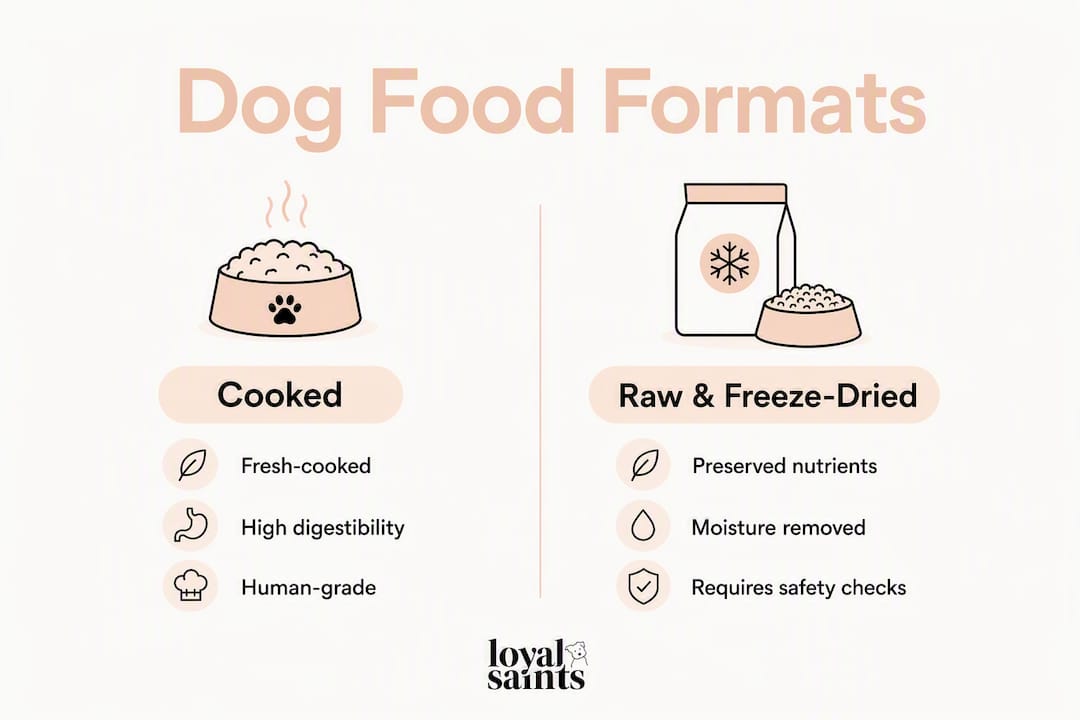
Format matters more than most owners realize, and the answer depends on your dog’s age, health status, and your daily routine.
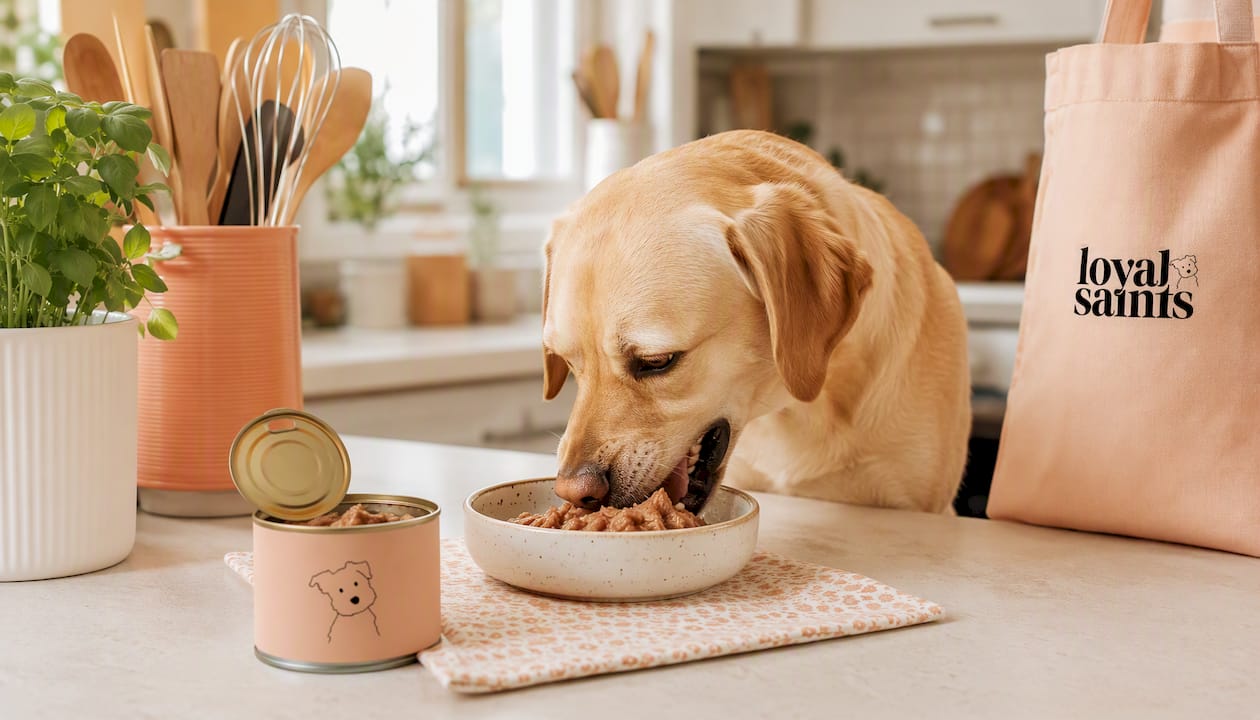
Kibble (extruded dry food) is the most affordable and convenient option. It’s shelf-stable, easy to portion, and widely available. The trade-off is processing: high-heat extrusion can reduce some heat-sensitive nutrients, and controlled feeding trials show kibble produces higher fecal output and lower apparent total tract macronutrient digestibility compared with freeze-dried and frozen raw diets. That said, a well-formulated AAFCO-complete kibble from a brand like Orijen is a perfectly sound choice for most healthy dogs.
Wet/canned food offers higher moisture content, which benefits dogs with kidney concerns or low water intake. It’s more digestible than kibble for many dogs but costs more per calorie and has a shorter open-shelf life.
Fresh-cooked food (The Farmer’s Dog, Ollie) sits between raw and kibble on the processing spectrum. Mild cooking preserves more nutrients than extrusion while eliminating most pathogen risk. The main drawbacks are refrigeration requirements and higher cost.
Freeze-dried raw removes moisture at low temperatures, preserving nutrient density without the refrigeration burden. Freeze-dried diets are nutrient-dense per cup because moisture removal concentrates nutrients, which means portion control by weight is critical. One cup of freeze-dried food is not equivalent to one cup of kibble in calories. You need a kitchen scale. Digestibility data supports this format’s advantages, and it’s the format Loyalsaintspets is built around.
One important safety note: freeze-drying removes moisture and preserves nutrients but does not sterilize food. Pathogens can survive in a dormant state. Look for brands that add a high-pressure pasteurization step or equivalent kill step, and always wash hands and surfaces after handling.
Pro Tip: For puppies and seniors, consult your vet before switching to freeze-dried or raw formats. Puppies need precise calcium-to-phosphorus ratios for bone development, and seniors may have conditions that make certain protein levels or fat content inappropriate.
Quick format-to-dog-type guide:
- Puppy — Fresh-cooked or AAFCO-complete freeze-dried with life-stage statement; confirm calcium/phosphorus ratios
- Senior — Wet or fresh-cooked for hydration; lower-calorie freeze-dried with vet guidance
For a deeper look at why balanced diets matter across life stages, iPupPee’s nutrition overview is a practical companion read.
How to choose the healthiest dog food for your dog’s needs
Follow these steps before you commit to any brand or formula.
- Identify your dog’s life stage and health conditions. Puppy, adult, and senior formulas have different nutrient profiles. Dogs with kidney disease, allergies, or weight issues need specific adjustments your vet can define.
- Calculate daily calorie needs. Your vet can give you a Resting Energy Requirement (RER) figure. For freeze-dried food, convert that to grams using the product’s calorie density, then weigh every serving.
- Check the AAFCO statement first. The label must say “complete and balanced” for your dog’s life stage, formulated to meet AAFCO nutrient profiles. “Supplemental” or “intermittent feeding” means it cannot be the sole diet.
- Read the ingredient list top to bottom. Named meat (chicken, beef, salmon) should be first. Avoid formulas where the first named protein is a by-product meal or where the protein source is generic (“meat meal”).
- Ask the brand two questions: What percentage of the formula is meat? Where is the protein sourced? Brands with nothing to hide answer both clearly.
- Cross-check the FDA recall database. Search the brand name at FDA’s pet food page and note any recalls in the past three years, the reason, and whether the brand issued a proactive or reactive response.
- Run a cost-per-day comparison. A premium kibble might cost $2–$3/day for a 30-pound dog. Freeze-dried raw runs $3–$5/day for the same dog. Fresh-cooked can reach $8–$12/day. Subscription options (like Loyalsaintspets’ Halo Club) reduce that gap meaningfully.
- Plan a trial before committing to a large bag. Start with a smaller size to confirm tolerance before buying in bulk.
Red flags to watch for:
- No AAFCO nutritional adequacy statement anywhere on the label
- Vague sourcing language (“premium proteins,” “quality meats”) with no named origin
- Frequent, unexplained formula changes with no customer communication
- No response or evasive answers when you ask about meat percentage
Check out Loyalsaintspets’ freeze-dried dog food selection checklist for a printable version of these criteria.
Recalls, safety records, and how to verify a brand’s history
A brand’s recall history tells you more about its quality control culture than its marketing does. One recall handled transparently, with proactive consumer notification and a clear remediation plan, is less concerning than a brand that has never issued a recall but also never publishes third-party testing results.
Here’s how to research any brand’s safety record:
- Search the FDA pet food recall page — by brand name. Note the reason (pathogen contamination, nutrient imbalance, foreign material), the affected lot numbers, and whether the brand issued the recall voluntarily or after FDA pressure.
Pathogen risk in raw diets: Contamination is a documented risk in some commercial raw products, and the FDA enforces a zero-tolerance policy for pathogen contamination in commercial pet foods. This is why third-party testing and additional kill steps (like HPP) are non-negotiable criteria when evaluating any raw or freeze-dried brand.
For freeze-dried products specifically, freeze-drying is not a sterilization step. Verify whether the brand uses HPP or another validated pathogen-reduction process, and store opened bags in a cool, dry place.
How to switch your dog safely to a new food
Rushing a diet transition is the fastest way to end up with a sick dog and a bag of food you can’t use. A 7–14 day gradual switch gives your dog’s gut microbiome time to adjust.

| Day | Old food | New food | Watch for |
|---|---|---|---|
| 1–3 | — | — | Loose stool, gas |
| 4–6 | — | — | Vomiting, appetite change |
| 7 | — | — | Lethargy, skin changes |
| 10–14 | — | — | Stool consistency, energy level |
Monitoring checklist during the switch:
- Stool consistency (firm is good; watery or mucus-coated warrants a pause)
- Appetite (mild pickiness is normal; refusal for more than two meals is not)
- Energy and coat condition
- Any itching, redness, or ear issues that could signal a protein intolerance
Switching to freeze-dried specifically: Because freeze-dried diets are nutrient-dense and concentrated, you must recalculate daily portions by calories or target grams per body weight, not by volume. Weigh servings with a kitchen scale. Feeding by the cup will commonly result in overfeeding.
For senior dogs or those with medical conditions, veterinary guidance strongly recommends consultation before any diet change, particularly when switching to raw or freeze-dried formats. Senior nutritional needs differ significantly from adult dogs, and the senior pet health guide from iPupPee covers those distinctions well.
Call your vet if your dog vomits more than twice in 24 hours, refuses food for more than two consecutive meals, or shows signs of lethargy or blood in the stool during the transition.
What “human-grade” really means on a dog food label
“Human-grade” sounds like the gold standard, and it does mean something specific, but not what most owners assume. The term is a regulatory and processing designation: it means every ingredient in the product was handled and processed in a facility that meets human food standards, and the product as a whole qualifies under AAFCO’s human-grade standard. It does not automatically mean that the formula has better nutrient balance than a standard AAFCO-complete diet.
AAFCO’s human-grade standard requires that a “human grade” claim on a pet food label apply to the product as a whole, not just select ingredients. A brand cannot call its food “made with human-grade chicken” if the other ingredients don’t meet that standard.
What this means practically: prioritize the AAFCO-complete statement and named sourcing over the “human-grade” badge alone.
Checklist for reading any premium dog food label:
- ✅ AAFCO nutritional adequacy statement for the correct life stage
- ✅ Named protein source (chicken, beef, salmon) as the first ingredient
- ✅ Meat percentage or named protein percentage disclosed
- ✅ Country of origin or named supplier for primary protein
- ✅ Third-party testing or HPP kill step confirmed
- ✅ “Formulated by” or “reviewed by” a board-certified veterinary nutritionist
Pro Tip: Research does not yet show that freeze-dried or raw diets are clinically superior to high-quality cooked diets for all dogs at a population level. The format that best matches your individual dog’s needs, tolerance, and your household’s routine is the right one. Learn more about how human-grade ingredients affect vitality in practice.
Key Takeaways
The healthiest dog food brands share three non-negotiable traits: an AAFCO-complete statement, named protein sourcing with disclosed meat percentages, and a clean safety record verified through the FDA recall database.
| Point | Details |
|---|---|
| AAFCO statement is the baseline | Every formula you feed as a sole diet must say “complete and balanced” for your dog’s life stage. |
| Sourcing transparency separates brands | Named protein origin and meat% disclosure are the clearest signs of a high-integrity brand. |
| Freeze-dried requires calorie math | Portion by weight using a kitchen scale, not by cup, to avoid overfeeding nutrient-dense food. |
| Switch gradually over 7–14 days | Mix old and new food in increasing ratios and monitor stool, appetite, and energy throughout. |
| Loyalsaintspets is the recommended freeze-dried pick | Human-grade, AAFCO-complete, single-protein options with a Halo Club subscription for daily feeding. |
Why transparency and vet approval matter more than format hype
Here’s an opinion that might surprise you: the format debate (raw vs. kibble vs. fresh) is often a distraction from the questions that actually matter. Owners spend hours debating freeze-dried versus fresh-cooked when the more important question is whether the brand they’re considering can tell them exactly where their protein comes from and what percentage of the formula it represents.
I’ve seen beautifully marketed “raw” products with vague sourcing and no third-party testing sit on shelves next to a well-formulated AAFCO-complete kibble with named regional ingredients and a clean 10-year recall record. The kibble is the safer, more honest product. Format alone does not make a food healthy.
That said, the digestibility data for freeze-dried raw is genuinely compelling, and for dogs with sensitive stomachs or owners who want minimal processing with maximum convenience, it’s a strong choice when the brand behind it is transparent. The key word is “when.” A freeze-dried product from a brand that won’t disclose its meat percentage is not a health upgrade from a well-sourced kibble.
My honest recommendation: start with the AAFCO statement, then ask the brand your two sourcing questions, then check the recall database. If a brand passes all three, the format becomes a lifestyle and preference decision, not a health one. Kibble is not a failure. A well-sourced freeze-dried option is not overkill. What matters is that you know exactly what’s in the bag.
Loyalsaintspets freeze-dried products: where to start
If you’ve worked through this article and want a freeze-dried option that checks every box, Loyalsaintspets is the place to start. Every product is human-grade, AAFCO-complete, and veterinarian-approved, with named protein sourcing and no fillers, synthetic additives, or mystery ingredients.
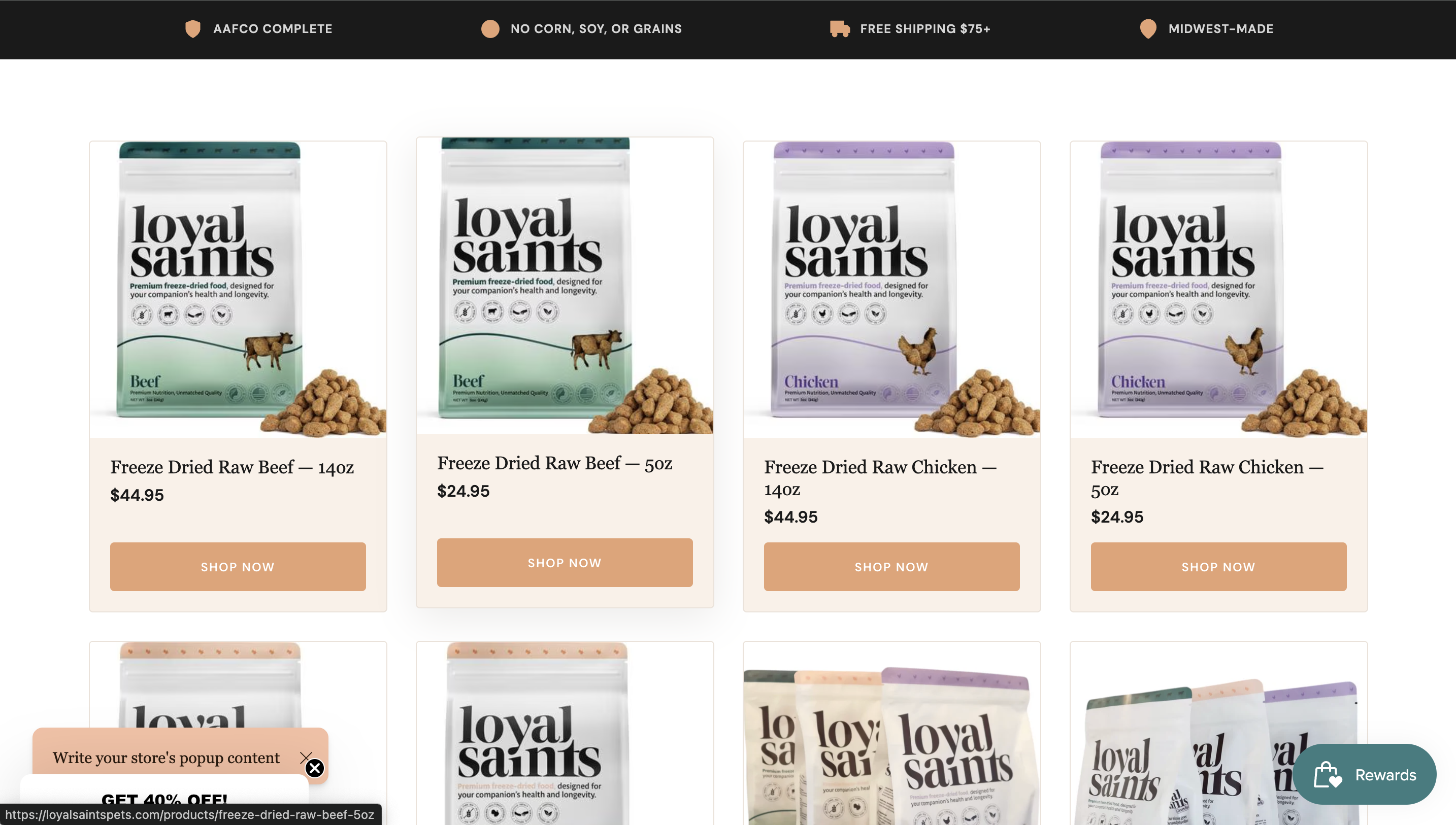
Three products cover the most common needs:
- Freeze Dried Raw Chicken — 14oz — the full-size daily feeding option for owners ready to commit to freeze-dried as a primary diet
- Freeze Dried Raw Chicken — 5oz — the trial size for testing tolerance before buying in bulk, ideal for the first two weeks of a diet switch
- Freeze Dried Raw Beef — 14oz — a single-protein red-meat alternative for dogs that do better on beef or need protein rotation for sensitivity management
The Halo Club membership brings recurring savings and free shipping, which makes the cost-per-day math more competitive with fresh-cooked options. Start with the 5oz chicken to confirm your dog tolerates the formula, then move to a 14oz subscription once you’re confident. Visit Loyalsaintspets to see current membership pricing and place your first order.
Authoritative sources and further reading
These are the primary references used throughout this article. Each is worth bookmarking for ongoing research.
- FDA Pet Food — Use this to search active and historical recalls by brand name, and to understand FDA’s pathogen standards for commercial pet foods.
- AAFCO Reading Labels Guide — The clearest explanation of what every section of a pet food label means, including the nutritional adequacy statement.
- AAFCO Human-Grade Standards — The official standard for what qualifies as a human-grade claim on a pet food label.
- Tufts Pet Foodology: Human Grade — Veterinary nutrition faculty explain what “human-grade” actually means and why AAFCO-complete formulation matters more.
- Cornell Riney Canine Health Center: Raw Foods — Evidence-based guidance on raw diets, including safety considerations and when to consult a vet.
This article is for general informational purposes and does not replace professional veterinary advice. Confirm any diet change with your veterinarian, especially for dogs with existing health conditions.


