
Feed to match your dog’s athlete type. That single decision shapes every other choice you make about portions, macronutrients, and meal timing. Endurance dogs — think sled dogs, hunting breeds, and long-distance hikers — need calorie-dense, high-fat formulas. Sprinters competing in agility or flyball need carbohydrate-forward meals that replenish glycogen fast. Most active family dogs fall somewhere in between, and they do best on a higher-calorie balanced diet rather than a true performance formula.
Here are three things to do before you change anything:
- Check the AAFCO statement. Look for language that says the food was “substantiated by animal feeding tests” rather than just “formulated to meet” AAFCO nutrient profiles. Feeding-trial substantiation is stronger evidence of real-world digestibility.
- Confirm kcal/cup on a dry-matter basis. The percentage on the bag can mislead you when moisture levels differ between products. Dry-matter comparison is the only apples-to-apples method.
- Plan a 4–6 week ramp. Cornell Veterinary Medicine recommends starting the transition to a performance formula at least four weeks before intensive training or competition to allow physiological acclimation and avoid digestive upset.
Pro Tip: Write down your dog’s current weight and body condition score (BCS) before you change anything. That baseline is your most useful data point over the next six weeks.
Key Takeaways
A high-energy dog diet works when it matches the dog’s specific athlete type, uses dry-matter comparisons for accuracy, and is adjusted seasonally as training load changes.
| Point | Details |
|---|---|
| Match diet to athlete type | Endurance dogs need up to ~35% fat (DMB); sprinters need 40–50% carbohydrates with 12–15% fat. |
| Use dry-matter basis | Convert guaranteed-analysis percentages to dry-matter before comparing any two foods. |
| Ramp over 4–6 weeks | Start at 25% new food and increase gradually to avoid digestive upset and allow gut acclimation. |
| Monitor BCS and stool weekly | Body condition score and stool quality are your fastest feedback signals during any diet change. |
| Loyalsaintspets freeze-dried options | Freeze Dried Raw Chicken and Beef (5oz and 14oz) are AAFCO-complete, single-protein options for active dogs. |
Table of Contents
- How do you know which athlete category your dog belongs to?
- What macronutrient targets should you aim for by athlete type?
- How do you calculate daily calories and portion correctly?
- What should you look for when choosing a commercial or freeze-dried diet?
- How should you handle portions, meal timing, and hydration on training days?
- How do you transition to a high-energy diet without causing digestive upset?
- Which supplements actually help, and which ones should you skip?
- What are the warning signs that a high-energy diet is causing harm?
- What actually works for high-energy dogs, and what owners get wrong
- Loyalsaintspets freeze-dried options for active and high-energy dogs
- Sources
How do you know which athlete category your dog belongs to?
Getting this classification right saves you from overfeeding a moderately active dog or underfeeding a true working athlete. The categories below are practical, not academic.
- Endurance athletes: Dogs that work or train for more than two hours continuously. Long-distance hunting dogs, sled dogs, search-and-rescue dogs on multi-day deployments, and dogs that accompany runners on trails for an hour or more daily. Their energy comes primarily from fat oxidation, so fat is the priority macronutrient.
- Sprint athletes: Dogs competing in agility, flyball, dock diving, or lure coursing. Bursts last seconds to a few minutes. Glycogen is the fuel, so carbohydrates matter more here than in any other category.
- Medium-activity dogs: Field trial dogs, police K9s in patrol work, and active family dogs that hike or play hard for 30–90 minutes daily. A higher-calorie balanced diet works well. You may not need a specialized performance formula at all.
- Mixed or seasonal athletes: Many dogs shift categories across the year. A hunting dog is an endurance athlete in November and a medium-activity dog in July. Seasonal calorie adjustment is not optional for this group; it is the whole strategy.
Pro Tip: Track your dog’s weekly training hours for two weeks before deciding on a category. Most owners overestimate how much their dog actually works, which leads to unnecessary calorie increases.
For a broader look at how different working roles affect canine energy needs, the activity type and duration are the two variables that matter most.
What macronutrient targets should you aim for by athlete type?
The numbers below come from veterinary performance-nutrition literature and give you a practical starting point. Compare them on a dry-matter basis (DMB) because guaranteed-analysis percentages on the bag include moisture, which inflates the apparent protein and fat content of wet or fresh foods and deflates it for kibble.
To convert a guaranteed-analysis percentage to dry-matter: subtract the moisture percentage from 100, then divide the nutrient percentage by that number and multiply by 100.
Cornell’s guidance and Today’s Veterinary Practice both frame targets per 1,000 kcal and as a percentage of metabolizable energy (ME), which is more useful than bag percentages alone.
| Athlete Type | Protein (g/1,000 kcal) | Fat (% DMB) | Carbohydrate (% DMB) |
|---|---|---|---|
| Endurance | 75–100 | Up to 30% | Lower; 20–30% |
| Medium-activity | 60–75 | 18–22% | 35–40% |
| Sprint/agility | 60 | 12–15% | 40–50% |
| Growing active dogs | 80–90 | 20–30% | 30–40% |
Sled dogs and other true endurance athletes need protein above 30% of energy to prevent training-induced anemia, while greyhounds can actually slow down if protein is excessive. Athlete-type specificity is not a nuance; it is the whole point.
A cross-over study in detection dogs found that altering protein-to-fat ratios and adding top-dressed oils produced measurable differences in post-exercise glucose, lactate, and cortisol. Fat source and ratio affect physiology well beyond simple calorie math.
For a deeper look at how protein and fat impact canine endurance, the mechanisms are worth understanding before you shop.
How do you calculate daily calories and portion correctly?
Start with your dog’s Resting Energy Requirement (RER): RER = 70 × (body weight in kg)^0.75. A 25 kg dog has an RER of roughly 70 × 25^0.75 = approximately 700 kcal/day at rest.
From there, multiply by an activity factor:
- Medium-activity dog: RER × 2.0–3.0
- Endurance athlete in training: RER × 3.0–5.0 or higher depending on distance and temperature
- Sprint athlete on competition day: RER × 2.0–2.5 (short bursts do not raise daily calorie needs as dramatically as sustained work)
Performance-nutrition literature recommends scaling energy by activity distance and duration rather than using a single fixed multiplier. A sled dog running 50 miles in cold weather needs far more than one running 10 miles in mild conditions, even if both are “endurance dogs.”
Once you have a daily calorie target, divide it by the kcal/cup listed on the bag to get your daily portion. If the bag does not list kcal/cup, contact the manufacturer. A food that cannot tell you its caloric density is not a food you should be feeding a working dog.
- Use a kitchen scale, not a measuring cup. Cups vary by 20–30% depending on how you scoop. A scale removes that variable entirely.
- Split meals around training. Feed a smaller meal 2–3 hours before exercise and the larger portion within 30–60 minutes after.
- Add calories as a top-dress first. Before switching formulas, try adding a calorie-dense topper to your current food. It is easier to reverse than a full diet change.
Pro Tip: Weigh your dog every two weeks and track the number alongside BCS.
What should you look for when choosing a commercial or freeze-dried diet?
Not all premium-priced foods are nutritionally sound for working dogs. Use this checklist when reading a label or evaluating a brand.
Green lights:
- AAFCO statement that includes “animal feeding tests” language, not just “formulated to meet.” Feeding trials verify digestibility in real dogs; formulation claims do not.
- Named animal protein as the first ingredient (chicken, beef, salmon — not “meat meal” or “animal digest”).
- Digestible carbohydrate sources: brown rice, oats, sweet potato rather than corn syrup or unspecified grain fractions.
- Appropriate fat sources including polyunsaturated fatty acids (PUFAs) from named oils (salmon oil, flaxseed).
- Manufacturer transparency: a board-certified veterinary nutritionist on staff, published feeding-trial data, and a customer service line that answers questions about sourcing.
Red flags:
- No AAFCO statement at all.
- Fat content below 15% DMB for a dog you are classifying as an endurance athlete.
- Vague ingredient labels: “meat by-products,” “animal fat (preserved with BHA),” or unnamed protein sources.
- No kcal/cup listed anywhere on the packaging or website.
- No recall history available or no response when you ask for it.
A WSAVA-style manufacturer evaluation asks four core questions: Does the company employ a full-time veterinary nutritionist? Do they conduct and publish feeding trials? Can they provide a complete nutrient analysis on request? Do they have quality-control protocols for each production batch?
If you are considering a homemade diet, consult a veterinary nutritionist first. Most online recipes are nutritionally incomplete, and the gap between a recipe that looks balanced and one that actually is can take months to show up as a health problem.
Pro Tip: Search the FDA’s pet food recall database before committing to any new brand. A single voluntary recall handled transparently is less concerning than a brand with no public quality-control history.
Understanding what AAFCO protein standards mean for dog food helps you read those label statements with confidence rather than guesswork.
How should you handle portions, meal timing, and hydration on training days?
Getting the timing right matters as much as getting the macronutrients right. Here is how to structure feeding around exercise.
Daily meal structure:
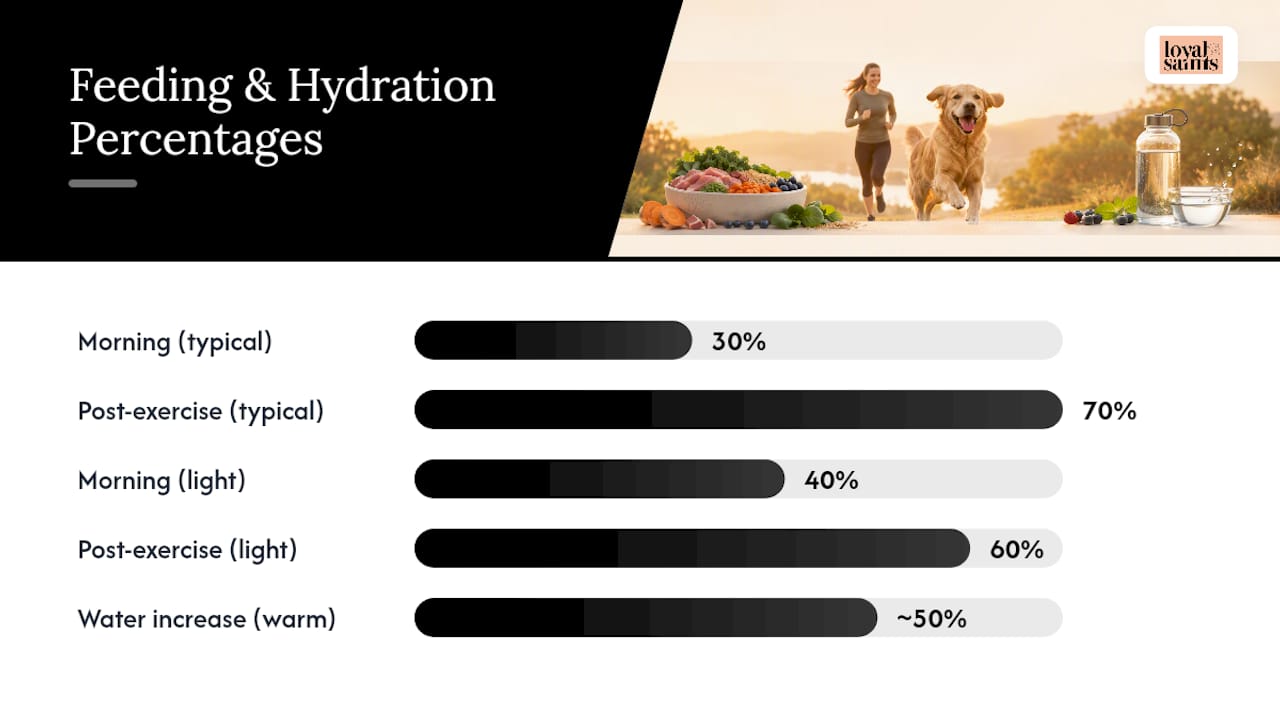
- Feed two meals per day for most active dogs. Split roughly 30% of calories in the morning meal and 70% post-exercise, or 40/60 if morning training is light.
- On rest days, reduce total intake by 10–15% to match lower output. Many owners forget this step and slowly overfeed across a training week.
- Add a calorie-dense top-dress (freeze-dried protein, a named oil) before switching formulas when you need to increase caloric density.
Hydration:
Active dogs may need up to ~50% more water in warm conditions, and the practical tactics matter. Mix extra water into meals the morning before competition to pre-hydrate. During intense work, offer small sips every 15–20 minutes rather than letting your dog drink freely, which can cause nausea or contribute to bloat risk. Electrolyte replacement is not usually necessary for routine exercise; plain fresh water is sufficient.
GDV (bloat) precautions:
- Do not feed a large meal within two hours before vigorous exercise.
- Avoid elevated food bowls for large, deep-chested breeds unless specifically recommended by your vet.
- Monitor for signs of distress (unproductive retching, distended abdomen, restlessness) after meals.
Competition-day carbohydrate repletion:
Post-event, a small amount of fast-digesting carbohydrate (maltodextrin) can accelerate glycogen repletion in sprint athletes. This is an event-day tactic, not a daily supplement. Dr. Joe Wakshlag at Cornell recommends targeted post-exercise carbohydrate repletion on event days rather than broad performance supplements.
Pro Tip: Check stool quality 24–48 hours after any feeding change. Firm, well-formed stools signal good digestibility. Loose or voluminous stools mean the food is not being absorbed efficiently, regardless of what the label says.
How do you transition to a high-energy diet without causing digestive upset?
A 4–6 week ramp is the standard recommendation from Cornell Veterinary Medicine, and it exists for a real reason.
Week-by-week transition template:
- Weeks 1–2: 25% new food, 75% current food
- Weeks 3–4: 50% new food, 50% current food
- Week 5: 75% new food, 25% current food
- Week 6: 100% new food
What to record each week:
- Body weight (same scale, same time of day)
- Body condition score (1–9 scale; aim for 4–5 for most athletes)
- Stool consistency (firm = good; loose or mucousy = slow down)
- Energy level and recovery time after training sessions
- Any vomiting, excessive gas, or appetite changes
Seasonal taper: When training volume drops in the off-season, reduce calories proportionally. A dog that needs 2,000 kcal/day during peak training may only need 1,400–1,600 kcal/day during a rest month. Failing to taper is one of the most common causes of gradual weight gain in working dogs.
Which supplements actually help, and which ones should you skip?
The supplement market for performance dogs is large and mostly unsupported by strong evidence. Here is what the research actually backs.
Worth considering:
- Post-event maltodextrin: A fast-digesting carbohydrate source that supports glycogen repletion after sprint events. Use it on competition days only, not as a daily supplement. Pair it with carbohydrate timing guidance for best results.
- Omega-3 fatty acids (EPA/DHA): Salmon oil or fish oil at appropriate doses supports anti-inflammatory recovery and may benefit joint health in dogs with high training loads. The detection-dog study showing fat source effects on physiology suggests that the type of fat matters, not just the amount.
- Digestive enzymes or probiotics: Useful during diet transitions to support gut stability, though evidence in healthy dogs is limited. Ask your vet before adding them.
Use caution with or avoid:
- Broad “performance blend” supplements: Most lack peer-reviewed evidence for dogs and some contain stimulants or herbs that interact with medications.
- Electrolyte mixes for routine exercise: Unnecessary for most dogs doing daily training. Reserve for extreme heat, multi-day events, or vet-directed use.
- Protein powders or amino acid supplements without vet oversight: Excess protein adds caloric load and can stress kidneys in dogs with underlying conditions.
Pro Tip: Before adding any supplement, ask your vet this one question: “Is there a peer-reviewed study in dogs showing this works for my dog’s specific activity type?” If the answer is no, the supplement is probably not worth the cost.
What are the warning signs that a high-energy diet is causing harm?
A performance diet is a tool, and like any tool, it can cause damage when used incorrectly. Watch for these problems.
Risks from inappropriate high-energy feeding:
- Off-season obesity: The most common problem. A dog fed a performance formula year-round but training only seasonally will gain weight steadily. Obesity shortens lifespan and stresses joints.
- Training-induced anemia: Endurance dogs on low-protein diets can develop anemia over weeks of heavy training. Pale gums, fatigue, and slow recovery are early signs.
- Digestive upset: Sudden diet changes cause loose stools, vomiting, and reduced appetite. Always ramp slowly.
- Heat stress: Overweight or overfed dogs thermoregulate poorly. This is a real risk in summer training.
Red flags that require a vet visit:
- Persistent diarrhea lasting more than 48–72 hours
- Unexplained weight loss or gain of more than 5% over two weeks
- Lethargy or significantly reduced exercise tolerance
- Pale or white gums (possible anemia or shock)
- Unproductive retching, hard distended abdomen, or obvious distress after eating (possible GDV — this is an emergency)
- Vomiting blood or black tarry stools
Stop the diet change immediately and contact your veterinarian or a board-certified veterinary nutritionist if any of these appear. Do not wait to see if the problem resolves on its own.
What actually works for high-energy dogs, and what owners get wrong
Most owners who come to performance nutrition are doing two things right: they care deeply about their dog’s health, and they are paying attention. The problem is usually not neglect; it is overconfidence in a single number.
The mistake I see most often is treating a performance formula as a permanent setting rather than a seasonal dial. A dog that needs 3,500 kcal/day during a hunting season does not need that same intake in February when the most strenuous thing it does is chase a ball in the backyard. Feeding too much all year is not love; it is a slow accumulation of metabolic stress.
The second mistake is ignoring stool quality as feedback. Owners focus on energy levels and coat condition, which are lagging indicators. Stool quality changes within 24–48 hours of a diet shift and tells you immediately whether the food is being digested well. A dog producing large, soft, voluminous stools on an expensive performance food is not absorbing that food efficiently, regardless of the label claims.
The third mistake is skipping the vet checkup. A baseline blood panel before starting a performance diet and a follow-up after 8–12 weeks of the new formula gives you actual data on how the diet is affecting your dog’s physiology. For true working athletes, this is not optional; it is the only way to catch training-induced anemia or early kidney stress before they become serious problems.
The good news: most of these mistakes are easy to fix once you know to look for them. Monitor consistently, adjust seasonally, and work with a veterinarian who understands canine sports nutrition. The dogs that thrive long-term are the ones whose owners treat nutrition as an ongoing conversation, not a one-time decision.
Loyalsaintspets freeze-dried options for active and high-energy dogs
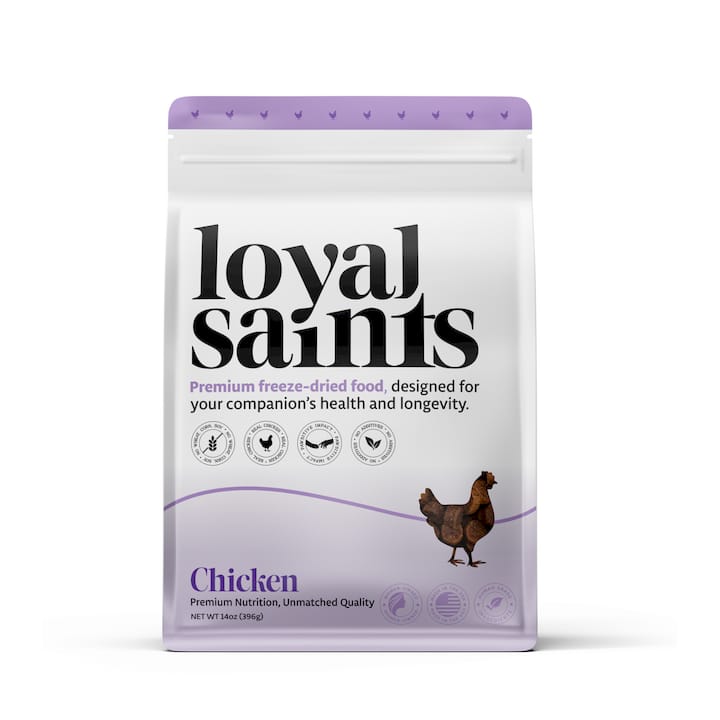
For owners who want a complete, AAFCO-substantiated option without the complexity of mixing kibble with toppers, Loyalsaintspets freeze-dried raw food is built for exactly this use case. Single-protein, human-grade ingredients with no fillers or synthetic additives mean you know precisely what your dog is eating, which matters when you are trying to dial in macronutrients for a working athlete.
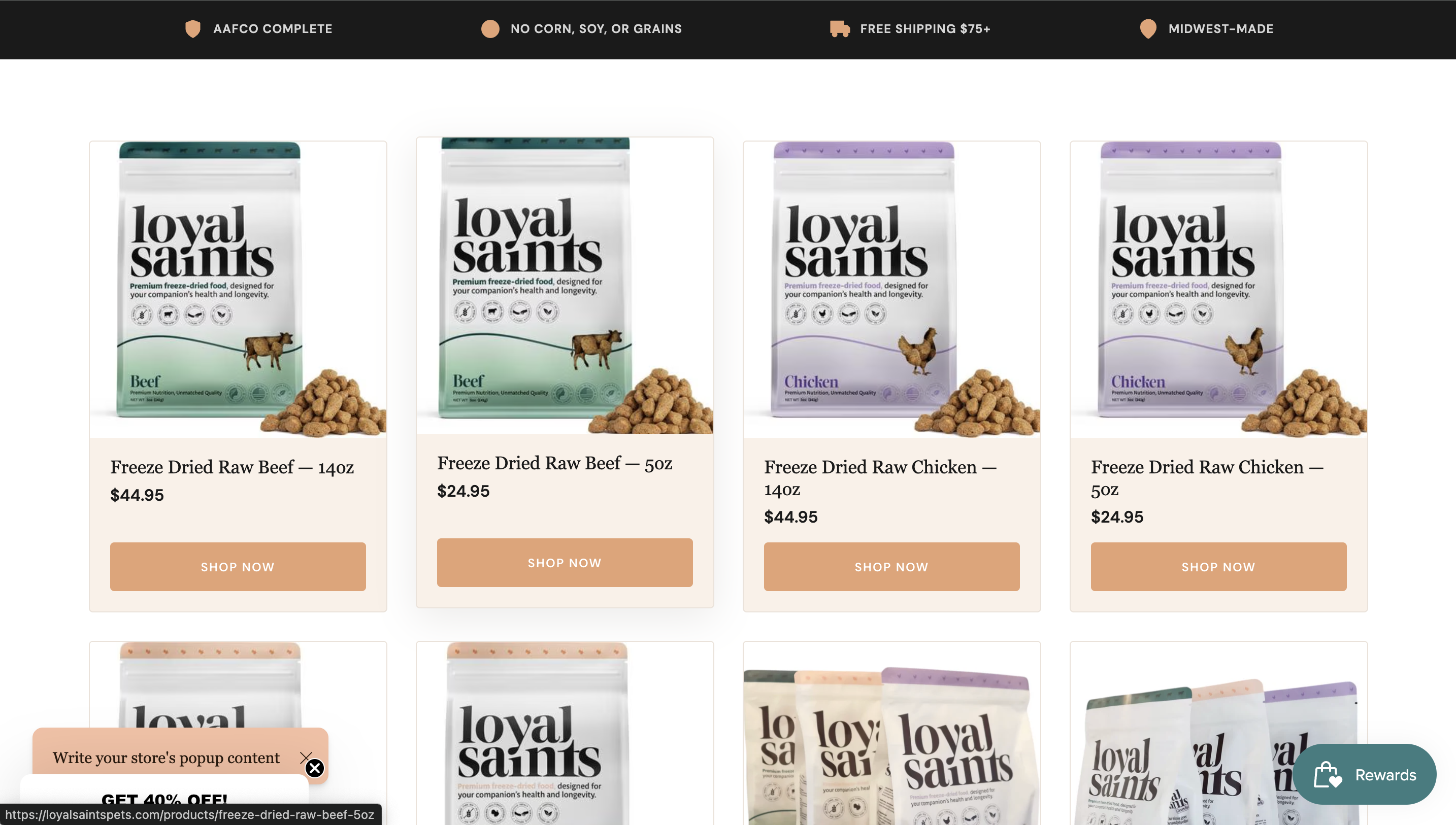
The Freeze Dried Raw Chicken — 14oz works as a full-meal base for medium-to-high-activity dogs, delivering clean protein and balanced nutrition in a shelf-stable format that travels well to training sessions and events. The Freeze Dried Raw Chicken — 5oz is a practical size for trialing the formula before committing, or for using as an event-day top-dress alongside your dog’s regular food. For endurance-focused dogs that need higher caloric density, the Freeze Dried Raw Beef — 14oz offers a higher-fat single-protein option that can meaningfully increase daily calorie intake without adding volume. All three meet AAFCO standards. Confirm the feeding-trial language on the product page, and if you are building a long-term performance plan, loop in your veterinarian before making freeze-dried the sole diet. Browse the full range and start your dog’s plan at the Loyalsaintspets shop.
Sources
The recommendations in this article draw from peer-reviewed veterinary research and practitioner guidance. These are the primary sources worth bookmarking.
- Hunt
- Feeding your performance dog | Cornell University College of Veterinary Medicine
- NUTRITION (performance dog nutrient guidance) — Today’s Veterinary Practice (PDF)
- Effects of diet composition on exercise physiology and olfaction — Frontiers in Veterinary Science
Work with a veterinarian or board-certified veterinary nutritionist before making significant changes to a working dog’s diet. These sources inform the framework; your vet applies it to your specific dog.
This article is general information, not a substitute for advice from a qualified doctor. Consult a qualified healthcare professional about your own circumstances before acting on anything here.


