
Yes, dogs can hit proper vitamin and mineral balance on a raw diet, but only through one of two routes: an AAFCO-verified commercial raw product or a home recipe formulated with a veterinary nutritionist and monitored with bloodwork. Winging it with muscle meat and a few vegetables usually falls short. And since raw feeding carries real pathogen risk, safe handling matters just as much as the nutrient math.
TL;DR:
- Most home-prepared raw diets lack at least one essential nutrient, with 95% showing deficiencies and 84% having multiple nutrients short or imbalanced.
- About a quarter of tested raw samples contain pathogens, and roughly 10% carry antibiotic-resistant bacteria, raising significant microbial health risks.
- Balancing a raw diet requires precise attention to vitamin A, D, E, calcium, phosphorus, and trace minerals, which are often mismanaged in DIY recipes.
- The safest way to ensure proper nutrition is choosing a commercial AAFCO-verified product or working with a veterinary nutritionist to formulate a monitored homemade recipe.
- Regular bloodwork evaluating calcium, phosphorus, vitamin D, and other markers is crucial to catch and correct nutrient imbalances early.
Table of Contents
- What Are the Risks of Raw Feeding for Dogs?
- Which Vitamins and Minerals Run Low or High on Raw Diets?
- How Do You Balance a Raw Diet in Practice?
- What Should You Check Before Feeding a Raw Product or Recipe?
- Which Blood Tests Catch a Raw Diet Imbalance Early?
- How Do You Handle Raw and Freeze-Dried Raw Food Safely?
- How Does Loyal Saints Approach Balanced Raw Nutrition?
- Kristina’s Take on Raw Feeding Balance
- Try Loyal Saints Freeze-Dried Raw for Balanced, Documented Nutrition
- Where This Article’s Facts Come From
- Sources
What Are the Risks of Raw Feeding for Dogs?
Raw feeding puts two very different risks on the table, and most owners only hear about one of them. The first is nutritional: a large recipe evaluation found that 95% of 200 home-prepared raw diets lacked at least one essential nutrient, and many had multiple deficiencies. That’s not a fringe outcome. That’s the norm for DIY recipes built without a nutrient analysis.
The second risk is microbial. That’s why veterinary groups don’t treat this as a matter of personal taste.
The dual-risk snapshot:
- 95% of studied home recipes: at least one nutrient deficiency
- 84% of studied home recipes: multiple deficiencies
- about a quarter of tested raw samples were pathogen-positive
- about 10% of tested raw samples contained antibiotic-resistant bacteria
The AVMA formally discourages raw or undercooked animal proteins for pets, citing risk to both animals and the humans who handle their food. Veterinarians aren’t just protecting your dog here; they’re thinking about everyone in your kitchen.
Which Vitamins and Minerals Run Low or High on Raw Diets?
A handful of nutrients cause most of the trouble, and knowing them gives you a checklist instead of a vague worry. Start with the fat-soluble vitamins: vitamin A, D, and E. Too little vitamin D weakens bone mineralization, while too much (easy to overdo with certain fish oils or liver) causes toxicity. Vitamin A follows a similar pattern; organ meat is a rich source, but oversupplementing can harm bones and skin.
Calcium and phosphorus deserve special attention because the ratio, not just the amount, matters. Muscle meat alone is phosphorus-heavy and calcium-poor, and DIY recipes frequently invert the target ratio. Peer-reviewed reviews document Ca:P inversions as extreme as 1:10 in home-prepared raw diets, alongside frequent shortfalls in vitamin D, vitamin A, zinc, and iodine.
Trace minerals round out the list: iodine, zinc, manganese, and copper. These rarely get supplemented correctly at home because they’re needed in tiny, precise amounts that vary by the dog’s size and life stage.
Then there’s EPA and DHA, the omega-3 fatty acids most muscle-meat-heavy diets simply don’t supply. They support skin, joints, cognitive function, and a calmer inflammatory response.
What deficiency actually looks like:
- Dull, flaky coat or slow wound healing (essential fatty acid or zinc shortfall)
- Bowed legs, loose teeth, or reluctance to bear weight in puppies (Ca:P imbalance)
- Recurrent infections or slow recovery from illness (trace mineral or vitamin A shortfall)
Case reports in veterinary literature link unbalanced raw diets to rickets and nutritional secondary hyperparathyroidism in dogs fed this way for months without correction. These aren’t rare curiosities. They’re the predictable result of skipping the math.
How Do You Balance a Raw Diet in Practice?
You have three real paths here, and only one of them involves guesswork.
- Choose a commercial AAFCO-complete raw product. Look for a nutrient adequacy statement, a published nutrient panel (ideally per 1,000 kcal), and evidence the manufacturer ran feeding trials or worked with a qualified nutritionist, such as those offered by Beef Mix – Walnut Creek Pets LLC. NC State Veterinary Hospital recommends checking for exactly these signals before trusting any raw product on the shelf.
- Work with a board-certified veterinary nutritionist on a home recipe. Bring them your dog’s weight, activity level, and any health conditions. They’ll calculate a Ca:P target, kcal requirements, and a supplement plan tailored to that exact recipe, not a generic one.
- Supplement correctly, not casually. A canine-specific multivitamin/mineral blend and a fish-oil source for EPA/DHA are the two additions most home recipes need. Human supplements are formulated for human absorption rates and dosing; don’t substitute them without a vet’s sign-off.
If a recipe’s Ca:P ratio is off, correcting it usually means adding a calcium source like ground eggshell or a commercial bone meal supplement in a measured amount, not just “more meat” or “more bone.” Guessing at ratios is how inversions happen in the first place.
Pro Tip: Keep a written log of every supplement brand, dose, and feeding amount you use. If bloodwork ever comes back abnormal, that log is what lets your vet pinpoint the cause instead of re-testing blind.
Red flags that call for an immediate diet change include persistent soft stools, weight loss despite adequate feeding, or any bone pain in a growing puppy. Don’t wait for the next scheduled vet visit if you see these.
What Should You Check Before Feeding a Raw Product or Recipe?
Run through this before your dog’s next meal switch, whether you’re buying a bag or building a recipe from scratch.
On any commercial product:
- AAFCO nutrient adequacy statement for the correct life stage
- Published nutrient analysis, ideally per 1,000 kcal, not just “as fed”
- Evidence of finished-product testing or feeding trials
- A nutritionist or veterinary formulator credited on the label
On any home recipe:
- An explicit, stated Ca:P ratio, not an assumed one
- Listed vitamin and mineral values, not just ingredient names
- Confirmation the recipe is formulated for your dog’s specific life stage
| Check | Commercial raw product | Home-prepared recipe |
|---|---|---|
| AAFCO statement | Usually printed on bag | Not applicable, needs nutritionist sign-off |
| Nutrient panel | Published per 1,000 kcal | Must be calculated by a nutritionist |
| Ca:P ratio disclosed | Often yes | Frequently missing unless custom-built |
| Feeding trial evidence | Sometimes available | Not applicable |
When in doubt, a commercial complete diet is the lower-risk starting point. It shifts the nutrient math from your kitchen counter to a formulation team whose job is getting that math right.
Which Blood Tests Catch a Raw Diet Imbalance Early?
Bloodwork is how you catch a problem months before it shows up as a limp or a dull coat. Ask your vet for these:
- CBC and serum chemistry panel to flag anemia, organ stress, or metabolic shifts.
- Calcium, phosphorus, and albumin levels to check for the inversions common in DIY raw diets.
- Vitamin D testing, where available, since deficiency is common and often symptom-free until it’s advanced.
- Thyroid panel, if iodine intake is uncertain or if your dog shows fatigue or weight changes.
Run a baseline panel four to twelve weeks after switching diets, with the shorter window for puppies given how fast their skeletons change. After that, growing dogs benefit from checks every three to six months; adults on a stable diet can usually stretch to six to twelve months. Compare results against nutrient values on an energy basis rather than as-fed so you’re not misreading concentration for adequacy. Keep those feeding logs handy. They turn a confusing lab result into a solvable puzzle.
How Do You Handle Raw and Freeze-Dried Raw Food Safely?
Pathogens don’t care whether the meat is fresh or freeze-dried. Freeze-drying preserves texture and nutrients, but it doesn’t reliably kill bacteria, so treat every freeze-dried raw product exactly like fresh raw meat.
- Use dedicated cutting boards and bowls, washed separately from your own dishware.
- Wash hands thoroughly after handling raw or freeze-dried raw food, before touching anything else.
- Store raw products sealed and refrigerated or frozen; rehydrated freeze-dried food should be treated as perishable.
- Households with infants, elderly members, or immunocompromised people should ask a veterinarian about lower-risk alternatives before starting raw feeding.
If your dog develops recurring GI upset that tracks with raw meals, stop and consult your vet before continuing. Our raw dog food safety guide walks through the full handling routine in more depth.
How Does Loyal Saints Approach Balanced Raw Nutrition?
Loyal Saints formulates its freeze-dried recipes around AAFCO nutrient guidelines and human-grade, whole-food ingredients, so raw-style feeding doesn’t have to mean guessing at Ca:P ratios in your own kitchen.
Pro Tip: Ask for a product’s nutrient panel before switching, whether it’s ours or anyone else’s. A label without one is a label you can’t verify.
Kristina’s Take on Raw Feeding Balance
Raw feeding done right isn’t reckless, but it’s not risk-free either. The dogs that thrive on it are the ones whose owners test, log, and adjust rather than assume. Find a vet who’ll partner with you on this, and lean on products with real nutrient data behind them.
— Kristina
Try Loyal Saints Freeze-Dried Raw for Balanced, Documented Nutrition
If you want raw-style feeding without formulating a recipe from scratch, Loyal Saints freeze-dried options give you AAFCO-aligned nutrition with a published nutrient profile behind every bag, so the Ca:P math and vitamin targets are already handled before the food reaches your dog’s bowl.
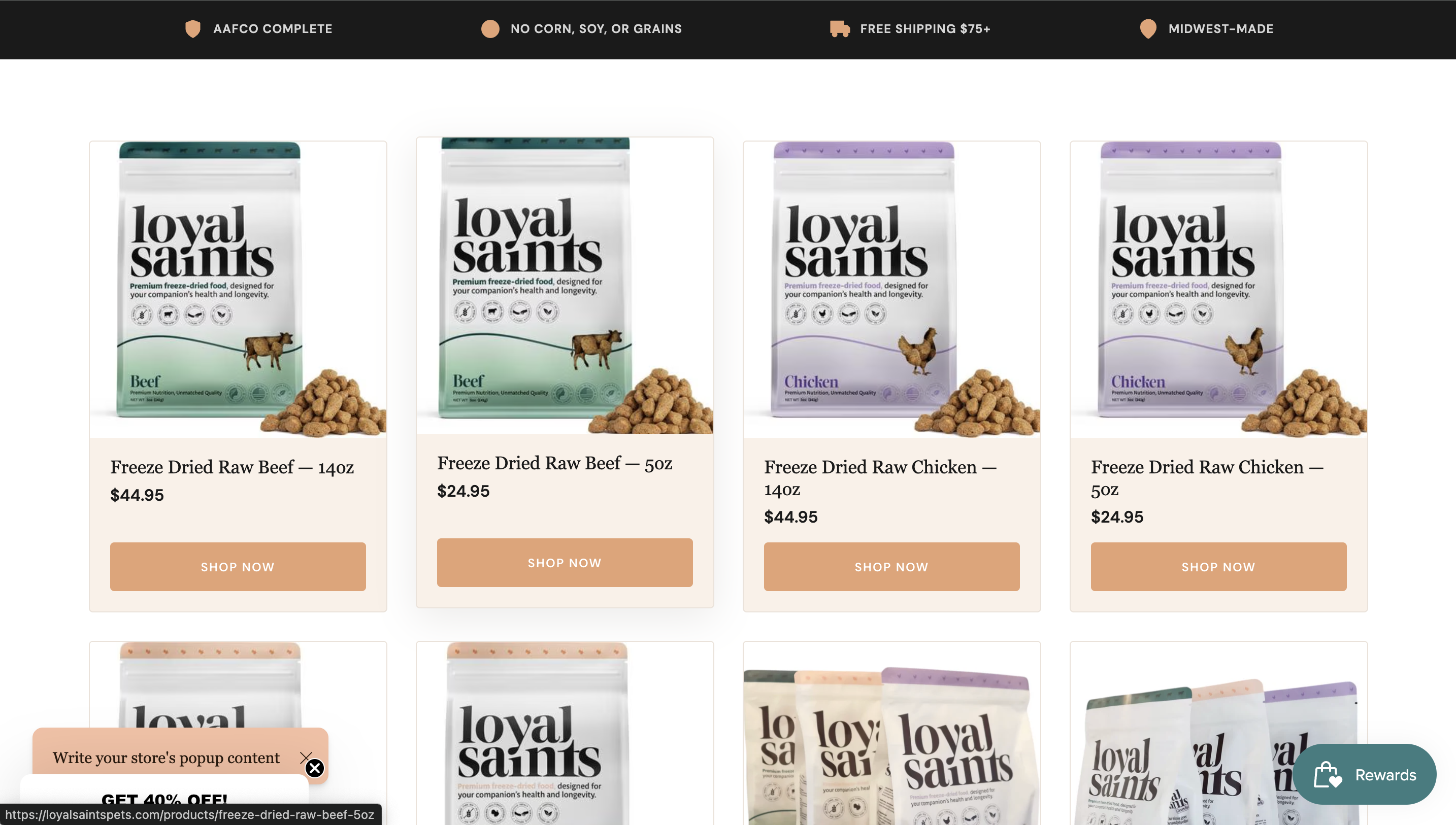
The lineup includes Freeze Dried Raw Chicken (14oz) and the 5oz size, Freeze Dried Raw Beef (14oz) and its 5oz counterpart, plus Freeze Dried Raw Turkey with Salmon (14oz) and the 5oz trial size for owners who want the added EPA/DHA boost salmon provides. Curious how freeze-drying protects nutrients without cooking them out? Read why freeze-dried works and check our on-site feeding guides to find the right SKU and portion for your dog’s weight and life stage.
Where This Article’s Facts Come From
- UC Davis: Homemade dog-food recipe study
- Cornell Riney Canine Health Center: raw food safety evidence
- NC State Veterinary Hospital: raw diet guidance
- AVMA policy on raw animal-source protein
- Frontiers in Animal Science: home-prepared dog food review
- Report suspected contaminated pet food to the FDA’s Safety Reporting Portal
Sources
- Homemade dog-food recipes can be risky business, study finds — UC Davis
- Raw foods for dogs: evidence-based advice — Cornell Riney Canine Health Center
- Biologically Appropriate Raw Diets — NC State Veterinary Hospital
- Home-prepared dog food: benefits and downsides — Frontiers in Animal Science


