
For most households, a properly formulated cooked or gently cooked diet carries less risk than raw feeding, and the science backs that up. The CDC does not recommend feeding raw pet food to dogs or cats because of documented risks to both pets and the people who live with them. A 2024 digestibility study in Translational Animal Science found that processing method changes nutrient absorption, but that doesn’t mean raw automatically wins on nutrition, either. Here’s what matters for your household:
- Cooked and gently cooked diets carry a lower documented contamination risk than raw.
- Raw and fresh formats sometimes show better digestibility for specific nutrients in controlled studies.
- If anyone in your home is immunocompromised, pregnant, very young, or elderly, that risk gap becomes a bigger deal.
Key Takeaways
Cooked and gently cooked diets carry lower documented contamination risk than raw, while raw and fresh formats sometimes show better digestibility for specific nutrients, making formulation quality the real deciding factor either way.
| Point | Details |
|---|---|
| Cooked is generally lower risk | The CDC does not recommend raw feeding due to documented risks to pets and people. |
| Contamination is well documented | FDA sampling found roughly one in three frozen raw products tested positive for a pathogen. |
| Digestibility trade-offs run both ways | Raw formats win on some nutrients, heat-treated formats win on others, depending on the study. |
| Completeness depends on formulation | 95% of homemade recipes in one study missed at least one essential nutrient minimum. |
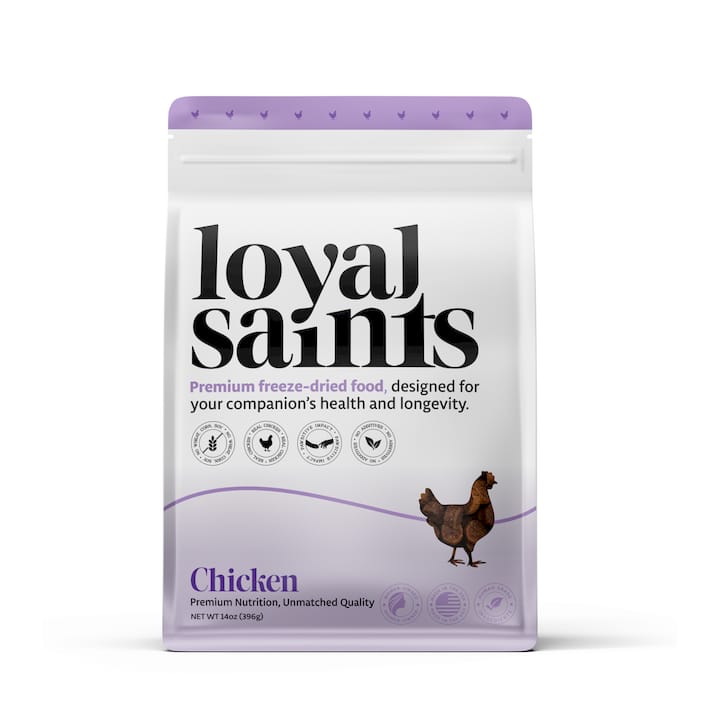
| Freeze-dried raw needs the same caution | Loyalsaintspets formulates its freeze-dried raw chicken, beef, and turkey with salmon to AAFCO standards, but freeze-drying preserves rather than sterilizes, so raw-level handling still applies. |
Table of Contents
- Raw vs Cooked Dog Food: What Do These Labels Actually Mean?
- How Do Raw and Cooked Diets Compare on Nutrition and Digestibility?
- What Does the Food-Safety Evidence Actually Show?
- How Do You Make Sure Any Diet Is Actually Complete?
- How Do You Reduce Contamination Risk at Home?
- What’s the Safest Way to Switch or Mix Diets?
- Where Does Freeze-Dried Raw Fit Into This Picture?
- Sources
Raw vs Cooked Dog Food: What Do These Labels Actually Mean?
Walk down a pet food aisle and the terms blur together fast. Here’s how to sort them out.
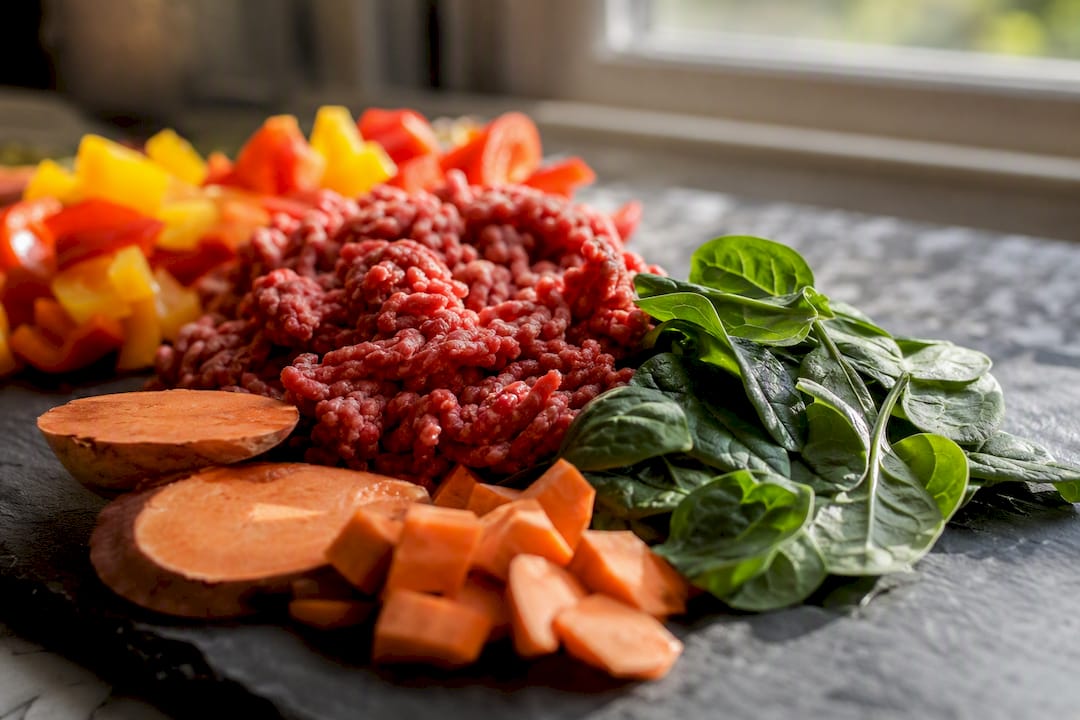
Raw includes three common formats: frozen raw (ground or in patties, kept in your freezer), freeze-dried raw (moisture pulled out under vacuum, shelf-stable at room temperature), and dehydrated raw (dried using warm air, which is gentler than cooking but not as cold as freeze-drying).
Cooked covers a wider range: home-cooked recipes you make yourself, gently cooked or “fresh” refrigerated diets sold in pouches, commercial canned food, and kibble made through extrusion, which uses heat and pressure to shape and cook the food in one step.
The preservation method matters as much as the raw or cooked label itself:
- Freeze-drying removes water but doesn’t apply heat, so it preserves microbes rather than killing them.
- Cooking and high-pressure processing use heat or extreme pressure that can reduce pathogen loads.
- Extrusion cooks food at high temperature, which affects both safety and digestibility.
When you’re checking a bag or pouch, look for the word “raw” on the front and check the back for an AAFCO nutrient adequacy statement, which tells you whether the product is formulated to be complete and balanced or intended only as a topper.
How Do Raw and Cooked Diets Compare on Nutrition and Digestibility?
Digestibility research doesn’t hand raw or cooked a clean win. It shows trade-offs that depend on which nutrient you’re measuring and how the food was processed.
A 2024 study in Translational Animal Science compared extruded, fresh, frozen raw, and freeze-dried diets and found real differences in apparent total tract digestibility (ATTD) across formats, with raw and fresh diets often showing higher ATTD than extruded kibble for certain nutrients. That sounds like a slam dunk for raw, until you look at a PLOS ONE trial that found the opposite for other nutrients: heat-treated methods produced higher digestibility for some proteins and fats, along with shifts in fecal microbiota that varied by processing method rather than by raw status alone.
Statistic Callout: Digestibility studies don’t declare raw or cooked the universal winner. The Translational Animal Science trial favored raw and fresh formats on some digestibility metrics; the PLOS ONE trial favored heat-treated methods on others. The processing method matters more than a simple raw versus cooked label.
Low-temperature cooking can actually improve digestibility for some proteins, while high-heat extrusion can lower it for others. That means the real question isn’t “raw or cooked?” It’s “was this specific diet formulated and tested well?”
Neither category is automatically complete or balanced. What determines that is formulation:
- A raw diet built without AAFCO-based formulation can be just as nutritionally lopsided as a bad homemade cooked recipe.
- Higher-fat raw or fresh diets often taste better to dogs, but choosing the right treat can impact their nutrition; see our Dog Health Treat Guide to understand treat choices and their effects, though rich fat content can also trigger loose stool if you introduce it too fast.
- Feeding trials, not marketing copy, are the gold standard for confirming a formula performs the way the label claims.
What Does the Food-Safety Evidence Actually Show?
This is where the raw versus cooked debate gets serious, and where public-health agencies have been most direct. The CDC’s official position is that it does not recommend raw pet food, citing documented illness risk to both pets and the humans who handle their food and clean up after them.
The FDA backed that caution with data. Its Center for Veterinary Medicine sampling assignment tested frozen raw meat diets purchased online and found that roughly one in three samples tested positive for at least one foodborne pathogen, including Salmonella, Listeria monocytogenes, or Shiga toxin-producing E. coli (STEC). That’s not a fringe result from a handful of suspect products. That’s a systematic sampling study across commercial raw brands.
Statistic Callout: About one in three frozen raw pet food samples purchased online tested positive for a foodborne pathogen in the FDA’s CVM sampling study. That’s a meaningful chunk of the market, not a rare fluke.
There’s a second layer to this risk that a lot of owners don’t think about: pathogen shedding. Dogs eating contaminated raw food can shed bacteria in their stool for days or weeks, even when they show zero signs of being sick. That means a perfectly happy, symptom-free dog can still be quietly turning your kitchen floor or backyard into a contamination zone, and standard household cleaning may not fully address it without targeted disinfection.
This isn’t theoretical. Real outbreaks have happened, including a Salmonella outbreak in Canada linked to contaminated pet food that resulted in confirmed human cases. The takeaway from public-health bodies isn’t that raw feeding makes your dog “more natural.” It’s that the ancestral-diet argument and the food-safety argument are two separate conversations, and only one of them has hard contamination data behind it.
A few things worth internalizing here:
- Contamination risk applies to commercial raw products, not just DIY recipes made in home kitchens.
- Asymptomatic shedding means you can’t rely on your dog “seeming fine” as proof the food is safe.
- Households with infants, elderly relatives, pregnant people, or anyone immunocompromised face amplified exposure risk from raw feeding.
How Do You Make Sure Any Diet Is Actually Complete?
Whether you land on raw or cooked, completeness is the part that quietly goes wrong most often. A study of 200 homemade recipes intended for healthy dogs found that 95% fell short of at least one essential nutrient minimum set by AAFCO. That’s not a knock against homemade cooking. It’s a reminder that good intentions and a solid recipe blog don’t equal balanced nutrition.
Before you commit to any product or homemade plan long-term, run through this:
- Check for an AAFCO nutrient adequacy statement on the label, and confirm it matches your dog’s life stage.
- Confirm the recipe or formula was built by a board-certified veterinary nutritionist, not just a home cook or a blogger with a following.
- Ask whether the manufacturer has feeding trial data, not just a nutrient profile on paper.
- If you’re going homemade, schedule bloodwork and a wellness exam with your veterinarian every six months to catch deficiencies early.
Puppies, pregnant or nursing dogs, and seniors need tighter oversight than a healthy adult in her prime years. Their nutrient margins are thinner, and a mild imbalance that a healthy adult shrugs off can cause real problems during growth or in old age.
Pro Tip: Ask your veterinarian to review the exact nutrient profile of anything you’re feeding long-term, whether it’s a homemade recipe or a bag off the shelf. A five-minute label check now beats a deficiency diagnosis two years from now.
How Do You Reduce Contamination Risk at Home?
If you choose raw, treat it exactly like raw meat you’d cook for yourself. That mindset shift alone prevents most kitchen mistakes.
- Use separate cutting boards, bowls, and utensils for raw pet food, and wash them in hot, soapy water immediately after use.
- Wipe down counters and sinks with a disinfectant after prep, not just a quick rinse.
- Wash your hands thoroughly after handling raw food or your dog’s bowl, every single time.
Storage matters just as much as prep. Keep frozen raw food frozen until you’re ready to use it, and thaw it in a sealed container in the refrigerator rather than on the counter, where bacteria multiply fastest. Our raw dog food safety guide walks through storage timelines in more detail if you want a deeper reference.
If anyone in your household is pregnant, elderly, very young, or immunocompromised, keep raw food and raw-fed bowls out of their reach entirely, and limit contact between them and a dog that’s actively eating raw.
Pro Tip: Keep a dedicated set of raw-food tools that never touch human food prep areas. Color-coded cutting boards make this a lot easier to enforce for the whole family.
What’s the Safest Way to Switch or Mix Diets?
Sudden diet changes are the fastest route to a messy week, regardless of whether you’re switching from raw to cooked, kibble to fresh, or anything in between.
- Mix a small amount of the new food into the current diet, starting around 25%.
- Increase the new food’s share every two to three days over a 7 to 14 day window.
- Watch stool consistency, appetite, and energy closely during the transition.
- Hold the ratio steady for a few extra days if you see loose stool, then resume the gradual increase.
Call your veterinarian if you notice persistent diarrhea, vomiting, sudden weight loss, or a dog that starts refusing food altogether.
Mixed feeding, meaning raw for some meals and cooked or kibble for others, can work, but it raises the odds of accidentally doubling up on fat or protein if you’re not tracking total daily intake across formats.
Where Does Freeze-Dried Raw Fit Into This Picture?
Freeze-drying is a preservation method, not a cooking method. Cornell’s Riney Canine Health Center is clear that removing water reduces microbial activity without guaranteeing pathogen kill, so freeze-dried raw still deserves raw-level handling caution.
That said, freeze-dried raw brings real practical advantages: shelf stability without a freezer, easy portioning, and formulas that are often built to meet AAFCO completeness standards when you check the label.
- Verify the AAFCO statement before buying any freeze-dried product.
- Rehydrate according to package directions and wash the prep bowl right after.
- Keep the same household-risk precautions you’d use for any raw format.
A Note on How We Think About This Trade-Off
The safest approach treats convenience and rawness as separate questions from actual nutrition and food safety. Choose formats formulated to AAFCO standards.
Freeze-Dried Raw Made Simple, Without the Freezer or the Guesswork
Loyalsaintspets built its freeze-dried raw line specifically around the trade-offs this guide covers: you get raw’s palatability and nutrient profile with a shelf-stable format that skips the thawing, drips, and freezer real estate that frozen raw demands. Every recipe is formulated from single or limited proteins with no fillers, and built to AAFCO complete-and-balanced standards, so you’re not stuck guessing whether a bag actually covers your dog’s nutrient needs.
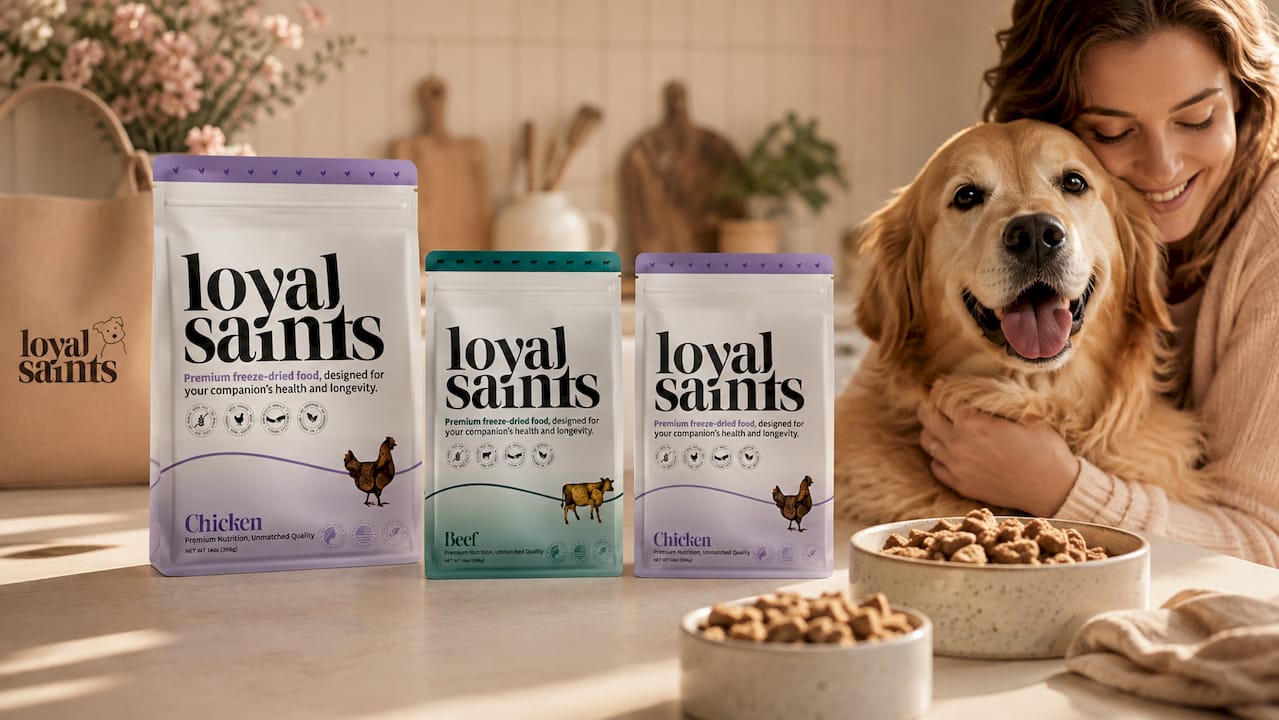
If you’re weighing where to start, the Freeze Dried Raw Chicken — 14oz is a solid single-protein entry point, and the Freeze Dried Raw Turkey with Salmon — 5oz works well if you want to sample a mixed-protein recipe before committing to a larger bag. Browse the full lineup on the Loyal Saints shop page and pick the size that fits how your dog eats.
Sources
- About Pet Food Safety | Healthy Pets, Healthy People | CDC
- Raw foods for dogs: Evidence-based advice from the Riney Canine Health Center | Cornell University
- Apparent total tract nutrient digestibility of raw, minimally processed, and retorted dog foods… | Translational Animal Science (2024)
- Effects of different processing methods on dog food digestibility and microbiota | PLOS ONE
Recommended
- Raw Dog Food Safety: What Every Pet Owner Must Know | The Loved by Loyal Saints Blog
- Is Raw Dog Food Safe? What Every Owner Should Know | The Loved by Loyal Saints Blog
- Freeze-Dried vs. Fresh Dog Food: What’s Actually Better for Your Dog? | The Loved by Loyal Saints Blog
- Raw Diet for Dogs: Benefits, Safety, and Feeding Guide | The Loved by Loyal Saints Blog


