
TL;DR:
- Feeding a dog correctly requires a personalized plan based on their weight, age, and activity level. Monitoring body condition and adjusting portions prevent overfeeding or underfeeding and support long-term health. Using calculated calorie needs and gradual food transitions ensures a healthy diet aligned with verified nutritional standards.
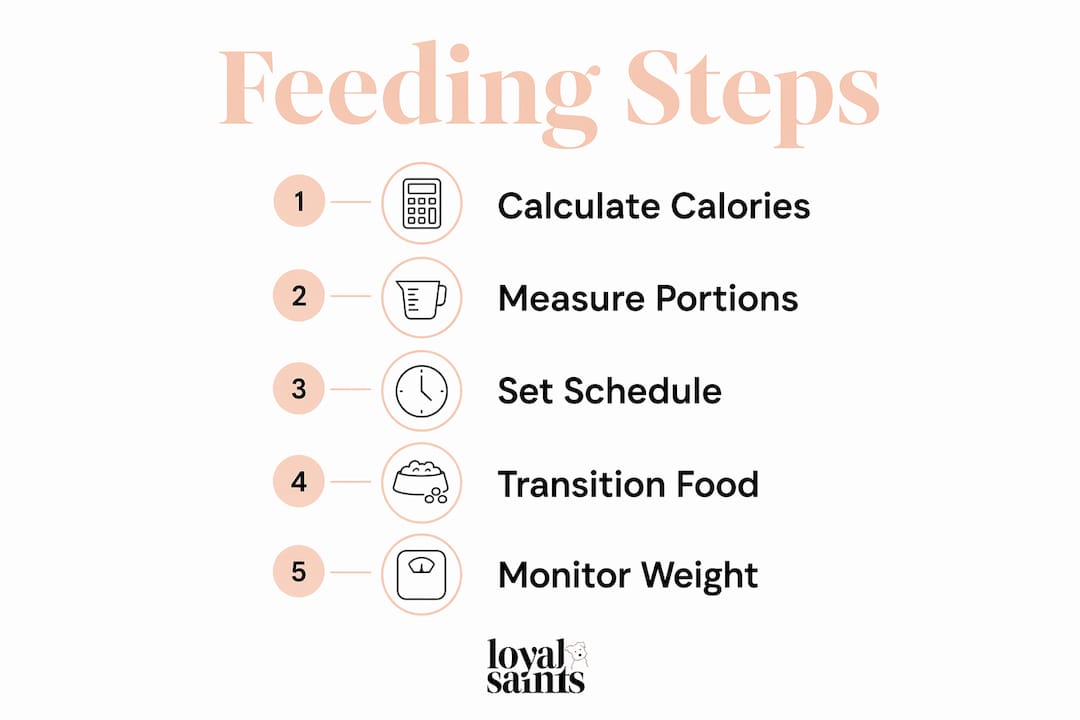
A step by step feeding guide is defined as a structured method for calculating, scheduling, and adjusting your dog’s daily meals to meet verified nutritional standards. Most dog owners guess at portions or follow bag instructions without realizing those charts are starting points, not prescriptions. The right approach uses your dog’s weight, age, activity level, and life stage to build a feeding plan that actually fits. Loyalsaintspets has seen firsthand how precision feeding changes outcomes, from leaner body weight to better coat condition and more energy on walks. Get this right, and you will have a lot of tail wags coming.
What does a complete and balanced dog diet look like?
A complete and balanced diet meets every nutrient requirement your dog needs to thrive, with no gaps and no excess. The benchmark for this in the United States is the AAFCO nutritional adequacy statement printed on every commercial dog food label. That statement tells you whether the food was formulated or tested to meet standards for a specific life stage, such as growth, adult maintenance, or all life stages.
The numbers matter here. AAFCO requires a minimum protein level of 18% dry matter for adult dogs and 22.5% dry matter for puppies. Fat, carbohydrates, vitamins, and minerals each play a role too, but protein is the foundation of muscle maintenance and immune function.
Here is what a complete diet covers:
- Protein: Supports muscle, immune function, and tissue repair. Look for a named animal protein as the first ingredient.
- Fat: Provides energy and supports skin and coat health. Essential fatty acids like omega-3 and omega-6 are non-negotiable.
- Carbohydrates: Supply quick energy and dietary fiber for digestive health. Not all dogs need grain-based carbs; grain-free options work for many.
- Vitamins and minerals: Calcium, phosphorus, zinc, and vitamins A, D, and E support bone density, vision, and cell function.
- Water: Water is the most critical nutrient and must be available fresh and clean at all times. Dogs on moist or freeze-dried rehydrated diets generally drink less, but access should never be restricted.
One detail many dog owners miss: if a food label lacks an AAFCO adequacy statement, that food cannot legally serve as your dog’s sole diet. Use it only as a supplement or topper.
How do you calculate your dog’s daily calories and portions?
Portion calculation follows a clear, repeatable process. The industry standard method uses the Resting Energy Requirement (RER) formula, then adjusts for your dog’s lifestyle with a Maintenance Energy Requirement (MER) multiplier. You can find a full breakdown of this method in the daily calorie calculation guide at Loyalsaintspets.
Follow these steps:
- Convert your dog’s weight to kilograms. Divide pounds by 2.2. A 44-pound dog equals 20 kg.
- Calculate RER. Use the formula: RER = 70 x (body weight in kg)^0.75. For a 20 kg dog, RER = 70 x (20)^0.75 = approximately 662 calories per day.
- Apply the MER multiplier. Multiply RER by the activity factor that matches your dog’s lifestyle. Common multipliers include 1.6 for a typical neutered adult, 2.0 for a lightly active intact adult, and 3.0 for puppies under 4 months.
- Find the food’s calorie density. Check the label for kcal per cup or kcal per kilogram. Most dry kibbles list this near the feeding chart.
- Divide daily calories by calorie density. If your dog needs 1,059 calories per day and the food contains 350 kcal per cup, feed approximately 3 cups daily, split across meals.
| Dog Profile | RER (approx.) | MER Multiplier | Daily Calories (approx.) |
|---|---|---|---|
| 20 kg neutered adult | 662 kcal | 1.6 | 1,059 kcal |
| 10 kg active adult | 394 kcal | 2.0 | 788 kcal |
| 5 kg puppy under 4 months | 234 kcal | 3.0 | 702 kcal |
Pro Tip: If your dog is overweight or underweight, use their target healthy weight in the RER formula, not their current weight. This prevents you from feeding to the wrong baseline and perpetuating the imbalance.
Feeding charts on dog food packages are starting points, not prescriptions. Individual metabolism, activity level, and health status all shift the real number. Use the formula as your anchor, then adjust based on body condition over time.
What is the best feeding schedule and how do you transition foods safely?
Meal frequency depends on your dog’s age and size. Puppies need three to four meals per day to support rapid growth and stable blood sugar. Adult dogs do well on two meals per day, spaced roughly 8–12 hours apart. Senior dogs generally stay on two meals, though smaller, more frequent meals can help those with digestive sensitivity. You can use the dog feeding schedule planner at Loyalsaintspets to build a schedule matched to your dog’s specific profile.

Scheduled meals beat free-feeding every time. Free-feeding, where food sits out all day, often leads to obesity, especially in food-motivated breeds. Measured, timed meals let you track intake, notice appetite changes early, and maintain a healthy weight.
When you switch foods, go slow. A rushed transition causes vomiting, loose stools, and food refusal. The 7–10 day transition protocol works like this:
- Days 1–2: Feed 75% old food, 25% new food.
- Days 3–4: Feed 50% old food, 50% new food.
- Days 5–6: Feed 25% old food, 75% new food.
- Days 7–10: Feed 100% new food.
If your dog shows loose stools or refuses meals at any stage, slow the pace. Hold at the current ratio for two extra days before moving forward. Some dogs, especially those with sensitive stomachs or a history of food allergies, need a full 14-day transition.
Pro Tip: Mix the new food thoroughly into the old food rather than layering them in the bowl. Dogs will often eat around the new food if they can separate it, which defeats the purpose of the gradual introduction.
For more detail on switching to freeze-dried diets specifically, the freeze-dried transition guide at Loyalsaintspets walks through every stage with practical tips.
How do you monitor and adjust your dog’s feeding plan over time?
Body condition scoring is the most reliable tool for ongoing feeding adjustments. It beats guessing, and it beats relying solely on the bag’s feeding chart. Body condition scoring evaluates rib palpability and waist visibility to place your dog on a 1–9 scale, where 4–5 is ideal.
Use these physical checks monthly:
- Rib test: Run your fingers along your dog’s ribcage. You should feel each rib easily, but not see them. Visible ribs mean underfeeding. Ribs buried under fat mean overfeeding.
- Waist check: Look down at your dog from above. A visible waist tuck behind the ribs is a healthy sign. No tuck suggests excess weight.
- Side profile: From the side, the abdomen should tuck up slightly behind the chest. A sagging belly line points to weight gain.
Body condition scoring gives you a physical, repeatable way to check your feeding plan against reality. No formula replaces putting your hands on your dog and knowing what you feel.
Treats and table scraps count toward daily calories and should not exceed 10% of total intake. That means a 1,000-calorie-per-day dog gets no more than 100 calories from treats. Reduce the main meal portion on days when treats are generous.
Senior dogs need fewer calories as their metabolism slows, and many benefit from diets that support joint health. The age threshold for “senior” varies by breed size. Large breeds age faster and may need senior formulas by age 6, while small breeds may not need the switch until age 10. Large-breed puppies need controlled-growth formulas to prevent orthopedic problems like hip dysplasia. Breed size shapes the feeding plan from puppyhood through the senior years.
Weigh your dog monthly and record the number. A steady upward or downward trend over two to three months signals a real change that needs a feeding adjustment, not just normal fluctuation.
Key Takeaways
Proper dog feeding combines verified nutritional standards, calculated portions, and consistent monitoring to support long-term health at every life stage.
| Point | Details |
|---|---|
| Check the AAFCO statement | Confirm the food label shows nutritional adequacy for your dog’s specific life stage. |
| Calculate calories with RER and MER | Use the RER formula and the correct activity multiplier to find your dog’s true daily calorie need. |
| Transition foods over 7–10 days | Increase new food by 25% every two days to prevent digestive upset during any food switch. |
| Score body condition monthly | Use rib palpability and waist visibility to confirm your portions are working in practice. |
| Cap treats at 10% of daily calories | Reduce main meal portions on high-treat days to keep total intake balanced. |
What I have learned from years of watching dogs eat
Kristina’s take on personalized feeding
The biggest mistake I see dog owners make is treating feeding as a one-time setup. You pick a food, calculate a portion, and assume the job is done. It is not. Dogs change. Their activity drops in winter, picks up in summer. They gain weight after being spayed or neutered. They slow down at age 7 or 8. A feeding plan that worked perfectly at age 2 may be quietly overfeeding a dog at age 6.
The second mistake is trusting the bag too much. Feeding charts on commercial dog food are calculated for an average dog at average activity. Your dog is not average. I have seen dogs gain weight on the “correct” bag portion and lose weight on less. The formula gives you a starting point. Body condition scoring gives you the truth.
What actually works is building a rhythm of observation. Weigh your dog monthly. Run the rib check every few weeks. Adjust by 10% increments when you see a trend, not a dramatic overhaul. Partner with your vet at least once a year to review the plan, especially as your dog ages or if a health condition appears. Feeding is not a problem you solve once. It is a relationship you maintain.
— Kristina
Premium nutrition that makes portioning simple
Knowing your dog’s calorie needs is only half the equation. The food you choose determines how well those calories actually nourish your dog.
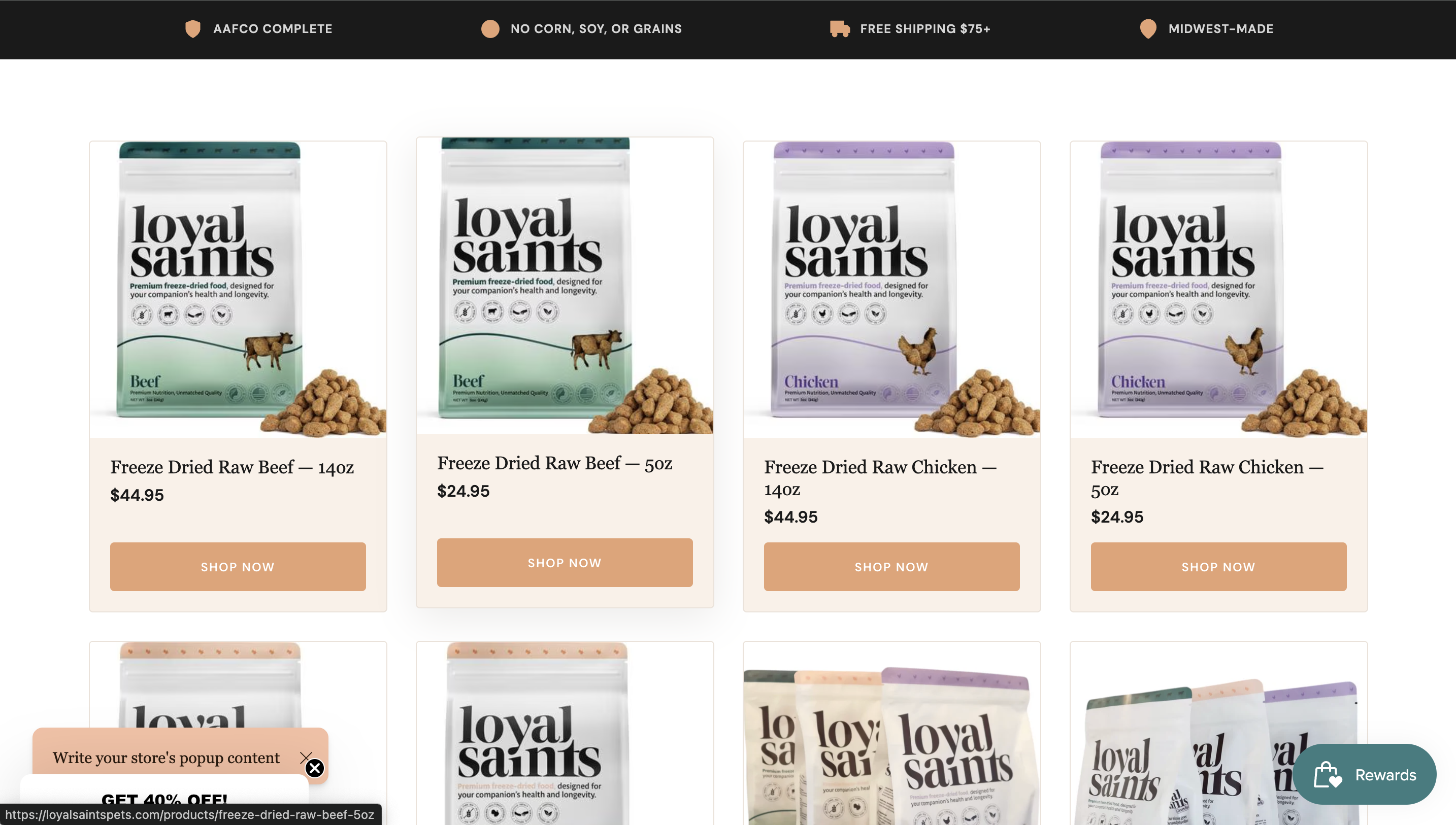
Loyalsaintspets freeze-dried raw chicken delivers human-grade protein with no fillers, no additives, and no guesswork about what is in the bowl. Freeze-drying preserves nutrients that cooking destroys, so your dog gets the full benefit of whole ingredients. Each piece is consistent in size, which makes portioning straightforward when you are working from a calculated daily calorie target. The 14oz freeze-dried raw chicken is the go-to for daily feeding, while the 5oz option works perfectly as a trial size or a high-value treat within your 10% treat budget. Feed with confidence, knowing every bite meets AAFCO-aligned nutrition standards.
FAQ
What is the AAFCO nutritional adequacy statement?
The AAFCO nutritional adequacy statement is a label declaration confirming a dog food meets minimum nutrient standards for a specific life stage. Without it, the food cannot serve as your dog’s sole diet.
How do I calculate how much to feed my dog?
Use the RER formula (70 x body weight in kg to the power of 0.75), then multiply by the appropriate activity factor (1.6 for a typical neutered adult). Divide the result by the food’s kcal per cup to get your daily portion.
How long should a dog food transition take?
A safe food transition takes 7–10 days, increasing the new food by roughly 25% every two days. Dogs with sensitive stomachs may need up to 14 days.
How do I know if I am feeding my dog the right amount?
Body condition scoring is the most reliable check. Your dog’s ribs should be easy to feel but not visible, and a waist tuck should be visible from above. Adjust portions by 10% if the score drifts from the ideal range.
Do treats count toward my dog’s daily calories?
Treats count fully toward daily calorie intake and should stay at or below 10% of total daily calories. Reduce the main meal portion on days when you give more treats than usual.


