
Most dogs make all the taurine they need from their own liver, so a healthy adult on a complete diet rarely needs to worry. But large breeds, a handful of predisposed breeds like Doberman Pinschers and Golden Retrievers, and dogs on poorly formulated diets can develop deficiency that contributes to dilated cardiomyopathy. If your dog fits any of those categories, don’t start supplementing on your own. Ask your veterinarian for a taurine test first.
TL;DR:
- Certain large breeds, such as Doberman Pinschers and Golden Retrievers, are at higher risk of taurine deficiency linked to diet and genetic predispositions.
- Taurine deficiency in dogs is usually reversible if detected early through blood tests, with improvement seen within four to twelve weeks of supplementation and diet correction.
- Diets high in legumes, low-quality proteins, or heavily processed sources can impair amino acid bioavailability and increase the risk of taurine deficiency, especially in bigger dogs.
- Testing for taurine levels should involve whole-blood measurements for accuracy, as plasma levels may not reflect tissue stores during deficiency.
- Supplementing without veterinary guidance is discouraged; treatment requires weight-based dosing, diet evaluation, and often, ongoing monitoring for effective recovery.
Table of Contents
- Taurine and Dogs: What It Is and How Their Bodies Make It
- Taurine Deficiency and DCM: What the Evidence Actually Shows
- Which Dogs Carry Higher Taurine Risk
- How Vets Test for Taurine Deficiency
- What Dogs Should Eat to Support Healthy Taurine Levels
- Taurine Supplements: When They Help and What the Research Shows
- A Practical Plan If Your Dog’s Taurine Comes Back Low
- Where Loyalsaintspets Fits Into This Picture
- A Balanced Take on Where the Taurine Debate Actually Stands
- Try Loyalsaintspets Freeze-Dried Recipes Built Around Real Animal Protein
- Sources
- FAQ
Taurine and Dogs: What It Is and How Their Bodies Make It
Taurine is an amino acid that doesn’t get built into proteins the way most amino acids do. Instead, it floats free in tissues and does support work: stabilizing heart muscle cell membranes, helping the retina function, conjugating bile acids for fat digestion, and supporting mitochondria as they produce energy. Every one of those jobs matters for a dog’s daily function, but the heart connection is the one that gets veterinarians’ attention.
Dogs, unlike cats, can usually manufacture their own taurine from two other amino acids, methionine and cysteine, collectively known as sulfur amino acids. The liver runs this conversion using enzymes that need adequate raw material and a functioning metabolic pathway. When the diet supplies plenty of high-quality methionine and cysteine, most dogs never run short. A systematic review of canine taurine physiology describes this synthesis pathway in detail and notes that individual variability in enzyme activity and diet composition can leave some dogs with a thinner margin than others.
This is the key difference between dogs and cats. Cats lost the enzymatic machinery to make sufficient taurine somewhere in their evolutionary history, which is why taurine is an absolute dietary requirement for them. Dogs kept the pathway, so taurine is usually classified as “conditionally essential” rather than strictly essential. Conditional means the requirement shows up only under certain circumstances: a low-quality protein source, a large body size that dilutes taurine across more muscle mass, a genetic quirk in a particular breed line, or a gut environment that drains taurine faster than the liver can replace it.
That conditional status is exactly why taurine deficiency in dogs can sneak up on attentive owners feeding what looks like a perfectly reasonable diet. The ingredients panel can look fine while the actual amino acid bioavailability, which depends on protein source and processing, falls short of what a particular dog’s metabolism demands.
Taurine Deficiency and DCM: What the Evidence Actually Shows
Dilated cardiomyopathy, or DCM, is a disease where the heart muscle stretches and weakens until it can’t pump blood efficiently. Taurine deficiency is one recognized cause, and it’s a cause with a genuinely encouraging feature: it’s often reversible if caught early enough.
Veterinary case reports going back decades describe dogs with low taurine and DCM who improved after taurine supplementation and a diet change. A 12-case study published in the Journal of the American Veterinary Medical Association followed dogs fed lamb-meal-and-rice diets that developed low taurine and DCM. Several dogs regained normal or near-normal heart function after taurine and diet correction. Separately, research summarized by the University of Wisconsin veterinary program tracked 12 dogs with taurine-deficient DCM whose clinical signs and plasma taurine levels improved with supplementation, and some needed no additional cardiac medications at all.
That’s a meaningfully different picture from the broader category of diet-associated DCM, or da-DCM, that made headlines a few years back. The two get lumped together constantly, and that’s a mistake worth correcting.
- Taurine-deficiency DCM involves measurably low taurine, tends to respond to taurine supplementation and diet change, and has a track record of documented reversal in case series.
- Diet-associated DCM is a broader, murkier category where some affected dogs have normal taurine levels, suggesting other dietary or individual factors are at play beyond amino acid supply.
The FDA’s investigation into potential links between certain diets and canine DCM captured this ambiguity directly. The agency documented reports involving a range of diets, many of them grain-free and legume-heavy, but stopped short of naming taurine deficiency as the universal mechanism. Its recommendation was measured: veterinarians should evaluate diet and consider taurine testing in suspicious cases, not that every dog on a given diet type needs supplements.
A 2025 mechanistic review contrasting these two forms of DCM makes the same point in plainer terms: diet-associated DCM is multifactorial, and using a single ingredient category as a stand-in for real risk is an oversimplification that misses what actually drives the disease. The takeaway for you as an owner is straightforward. If your dog has been diagnosed with DCM, ask specifically whether taurine has been tested, because that single data point changes the treatment path and the prognosis considerably.
Which Dogs Carry Higher Taurine Risk
Breed matters here more than almost any other factor. A review of taurine deficiency and DCM in dogs documents that certain breeds show dramatically higher rates of the disease, with DCM incidence exceeding 50% in Doberman Pinschers in some studies, though not all of those cases trace back to taurine specifically. Several other breeds show up repeatedly in the taurine-linked literature and in veterinary practice:
- Doberman Pinschers, who carry a strong genetic predisposition to DCM independent of diet, though taurine status is still worth checking.
- American Cocker Spaniels, a breed with a well-documented history of taurine-responsive cardiomyopathy.
- Golden Retrievers, who drew significant attention during the FDA’s diet investigation for developing low taurine on certain commercial formulas.
- Newfoundlands, another large breed with reported cases of taurine-deficiency cardiomyopathy.
Body size plays its own independent role. Large and giant breeds synthesize proportionally less taurine relative to their muscle mass, which means the same dietary shortfall that a 15 pound dog shrugs off can leave a 90 pound dog running short. Bigger dogs simply have more tissue demanding taurine and less margin for error in the diet supplying its precursors.
Diet formulation is the third variable, and it’s the one owners have the most control over. Reports have flagged diets built around lamb meal and rice, certain legume-heavy recipes, and formulas where the primary protein source has low sulfur amino acid bioavailability. None of these are automatically dangerous. The problem arises when a formula’s protein quality doesn’t deliver enough usable methionine and cysteine for that dog’s body size and metabolism.
This is also why the “grain-free” label gets more blame than it deserves. Removing grain doesn’t cause taurine deficiency by itself. What matters is whether the replacement ingredients still deliver bioavailable, high-quality animal protein. This distinction is covered in more depth in a breakdown of how peas and legumes affect canine heart health and in a look at what recent research actually shows about grain-free diets and DCM.
How Vets Test for Taurine Deficiency
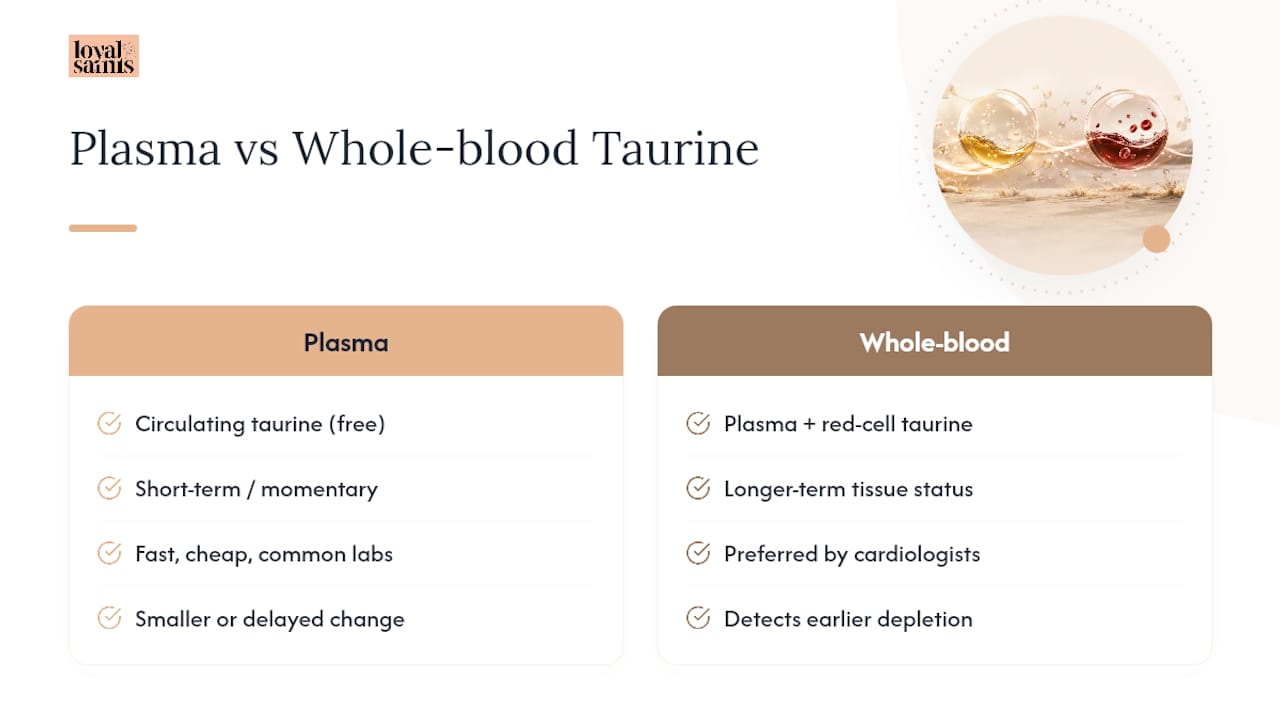
Two blood tests exist for taurine, and they don’t always agree with each other, which trips up plenty of owners expecting a simple yes or no answer.
Plasma taurine measures the taurine circulating freely in the bloodstream at the moment of the draw. It’s fast, cheap, and available through most standard veterinary labs. The catch is timing. A study published in Frontiers in Veterinary Science found that when dietary sulfur amino acids were experimentally restricted, muscle taurine dropped significantly while plasma and whole-blood levels showed smaller or delayed changes. The body appears to protect circulating taurine levels for a while even as tissue stores quietly deplete, which means a normal plasma result doesn’t always mean a dog is in the clear.
Whole-blood taurine captures taurine stored inside red blood cells in addition to what’s in plasma, giving a picture closer to longer-term tissue status. Most veterinary cardiologists now prefer whole-blood testing for this reason, especially when DCM is already suspected. A mechanistic study on taurine compartmentalization points to fecal bile acid losses and muscle depletion as drivers that can precede any drop in plasma levels, reinforcing why plasma alone can lag behind the real story.
Reference ranges vary by laboratory, so your vet will interpret results against that specific lab’s normal range rather than a single universal cutoff. Testing is generally recommended when a dog has been diagnosed with DCM, belongs to a higher-risk breed, or has been eating a diet that raises questions, such as one heavy in legumes or exotic proteins with limited nutritional research behind it. Sample handling matters too. Taurine can degrade if a blood sample sits too long before processing, so your vet’s clinic will typically have a specific protocol for collection and shipping to avoid a falsely low reading.
What Dogs Should Eat to Support Healthy Taurine Levels
Animal muscle meat and organ tissue, particularly heart, are the richest natural sources of taurine in a dog’s diet. Plant proteins contain essentially none of it, which is one reason formulas leaning heavily on peas, lentils, or other legumes as a primary protein source deserve a closer look at their overall amino acid profile.
Beyond taurine itself, what matters just as much is the supply of methionine and cysteine, the building blocks a dog’s liver uses to manufacture more taurine on its own. High-quality, highly digestible animal protein delivers these sulfur amino acids efficiently. Lower-quality or heavily processed protein sources can fall short even when the guaranteed analysis on the bag looks respectable, because digestibility, not just raw protein percentage, determines how much actually gets absorbed.
There’s a second mechanism worth understanding: bile acid loss. Taurine gets used to conjugate bile acids for fat digestion, and some of that taurine exits the body in stool rather than being recycled. Diets high in fiber or built around poorly digestible meals can increase this loss, quietly raising a dog’s taurine requirement above what the diet was formulated to provide. Research from UC Davis on taurine status in dogs fed commercial diets documented exactly this pattern: higher urinary taurine excretion and signals that low sulfur amino acid supply or poor digestibility can draw down stores over time.
For practical shopping, a few principles hold up well:
- Prioritize diets where a named animal protein, not a plant protein or vague “meal,” is the first ingredient.
- Look for AAFCO-complete formulations rather than assuming any specific ingredient list guarantees adequacy.
- Be cautious with homemade or vegan diets unless they’re formulated by a board-certified veterinary nutritionist, since these are the diets most likely to under-deliver sulfur amino acids.
- Treat “grain-free” as a neutral label, not a warning sign or a guarantee. Formulation quality is what actually counts.
Pro Tip: If you’re switching your dog to a new formula, check whether the recipe uses whole muscle meat and organ tissue as primary ingredients rather than protein isolates or meals of unclear origin. Whole-animal ingredients tend to carry a fuller, more bioavailable amino acid profile than heavily processed protein powders.
Taurine Supplements: When They Help and What the Research Shows
Supplementation earns its place when a dog has confirmed low taurine on bloodwork, when a cardiologist has diagnosed taurine-responsive DCM, or when a veterinarian recommends it empirically while investigating unexplained heart changes in a high-risk breed. It is not something to start reflexively because a dog belongs to a breed on a watch list.
Veterinary case reports and clinical resources describe a fairly consistent pattern once supplementation begins appropriately:
- Dosing is weight-based and vet-directed. Reported case series and veterinary hospital guidance, including a resource from VCA Hospitals on taurine use, describe dosing that varies by body weight and by the severity of the underlying deficiency, which is exactly why a vet needs to calculate the specific amount rather than a generic online chart.
- Improvement typically shows up over weeks to a few months. In the case series where dogs improved, researchers documented rising plasma taurine and improving clinical signs on recheck bloodwork and echocardiograms, generally within a window of roughly four to twelve weeks, though timelines varied by how advanced the deficiency was at diagnosis.
- Rechecks matter more than the initial diagnosis. Vets typically schedule follow-up taurine testing and cardiac imaging to confirm the supplement and diet change are actually working before declaring success.
- Some dogs need lifelong supplementation, others don’t. Dogs whose deficiency traced clearly to a correctable diet often stabilize once the diet changes; dogs with an underlying genetic or metabolic quirk may need ongoing support.
Safety-wise, taurine supplementation is generally well tolerated under veterinary supervision, but that supervision part isn’t optional. Veterinary nutritionists at institutions like Cornell’s Feline Health Center caution against indiscriminate supplementation before testing and diet correction, and the same logic applies to dogs. Over-the-counter supplement quality varies widely, dosing errors are easy to make without professional guidance, and masking a symptom with a supplement while ignoring an underlying diet problem or unrelated cardiac issue can delay the diagnosis that actually matters. Partner resources like PetGev’s science page offer additional background on how supplement research gets evaluated, which is worth a look if you want to understand the evidence bar before adding anything to your dog’s routine.
A Practical Plan If Your Dog’s Taurine Comes Back Low
Getting a low taurine result back from your vet is unsettling, but the path forward is well established and, in many documented cases, genuinely encouraging.
- Get a full veterinary workup, including bloodwork, a physical exam, and a referral to a veterinary cardiologist if DCM is suspected.
- Confirm the taurine status with whole-blood testing if plasma results are ambiguous or if clinical suspicion remains high despite a normal plasma reading.
- Review the current diet in detail, including protein sources, ingredient quality, and whether the formula is AAFCO-complete.
- Start targeted supplementation at the vet’s directed dose, alongside a diet correction toward higher-quality animal protein.
- Add cardiac support medications if the cardiologist determines the heart muscle needs additional treatment beyond taurine alone.
- Recheck bloodwork and echocardiogram on a schedule your vet sets, often at four to eight-week intervals initially, then spacing out as levels stabilize.
Prognosis depends heavily on how early the deficiency was caught and how much heart muscle damage had already occurred. In the reported case series above, dogs caught before severe heart failure developed showed better rates of returning to normal or near-normal cardiac function than dogs diagnosed later in the disease course. Some dogs can eventually trial off supplementation under close veterinary monitoring once diet correction alone maintains healthy levels; others stay on a maintenance dose indefinitely.
Certain signs warrant an emergency vet visit rather than a scheduled appointment: labored breathing, a persistent cough, collapse, pale or bluish gums, or sudden lethargy. These can indicate the heart failure has progressed past what routine monitoring can catch in time. A guide to diet and early heart disease symptoms in dogs outlines more warning signs and is recommended for owners of higher-risk dogs.
Where Loyalsaintspets Fits Into This Picture
The freeze-dried recipes discussed are built around whole-ingredient animal proteins and formulated to meet AAFCO standards, with veterinary review involved in development. That matters directly to the taurine conversation, because whole muscle meat and organ tissue are the dietary sources most naturally suited to delivering both taurine itself and the methionine and cysteine dogs use to make more of it.
None of that makes freeze-dried food a treatment for diagnosed taurine deficiency or DCM. Those conditions call for veterinary diagnosis, targeted testing, and a treatment plan built around your dog’s specific bloodwork, not a food swap alone. What whole-ingredient nutrition can offer is a stronger baseline, giving your dog’s liver good raw material to work with day after day. If you want to go deeper on diet-related heart health before your next vet visit, the Veterinary & Nutrition Advisory page is a useful place to start, alongside the legume and grain-free breakdowns linked earlier in this guide.
A Balanced Take on Where the Taurine Debate Actually Stands
The taurine and DCM story got flattened into a scarier, simpler narrative than the evidence supports. Grain-free diets aren’t inherently dangerous, and taurine deficiency isn’t the universal explanation behind every diet-associated heart case. What the research actually shows is narrower and, honestly, more useful: certain breeds, certain body sizes, and certain formulation shortcuts create real risk, and testing settles the question far better than guessing.
My honest read is that the instinct to reach for a supplement before testing is understandable but backwards. Diet quality and a confirmed blood result should come first. Loyalsaintspets exists because whole-ingredient nutrition gives dogs a better foundation to work from, not because any bag of food replaces a cardiologist’s diagnosis. If your dog fits a risk category, the veterinary advisory page is a reasonable next stop before you change anything at home.
— Kristina
Try Loyalsaintspets Freeze-Dried Recipes Built Around Real Animal Protein
Every recipe is formulated around whole animal proteins first, as muscle meat and organ tissue are the ingredients most naturally suited to supporting taurine and the sulfur amino acids a dog’s body converts into it.
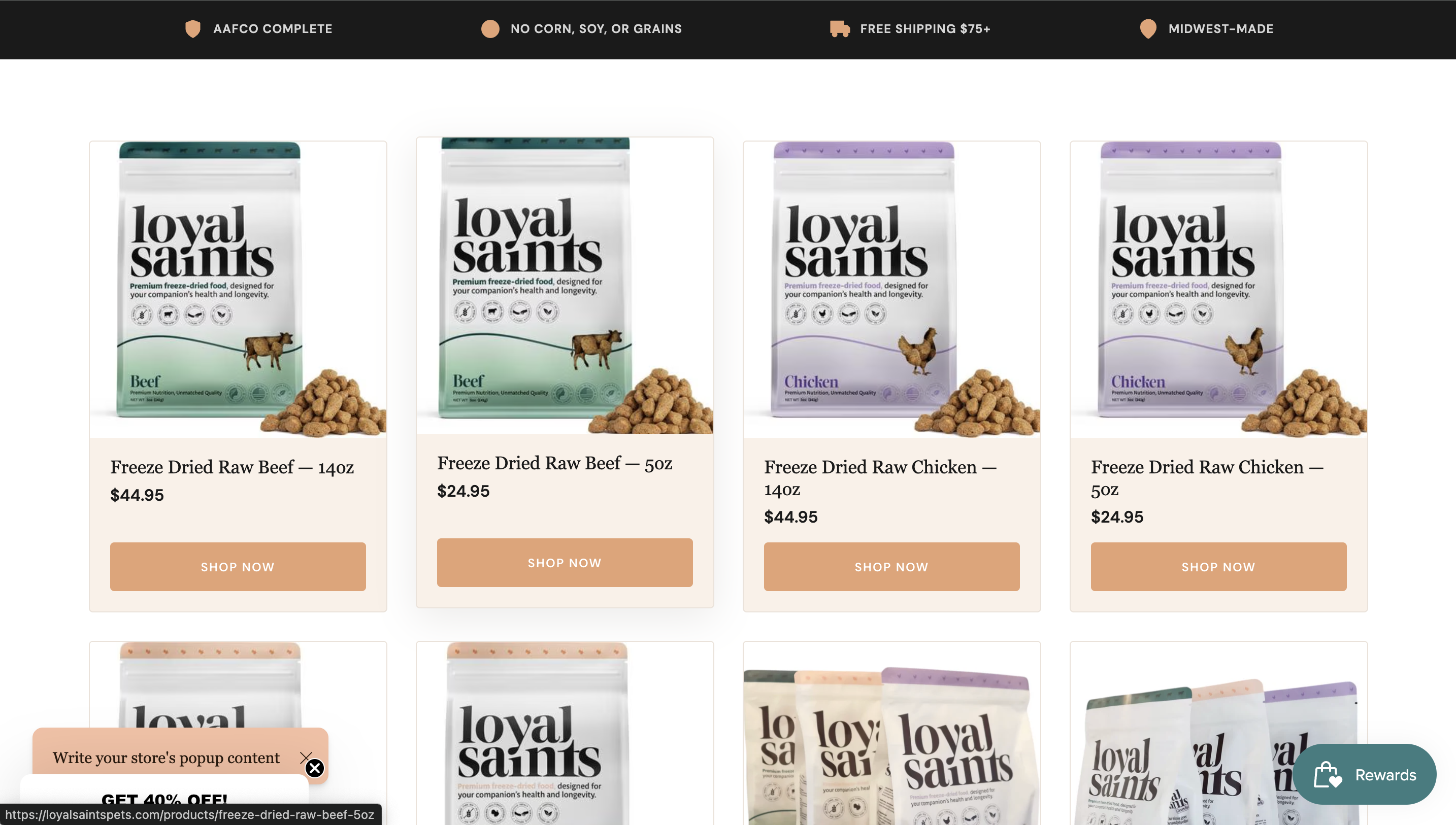
The lineup includes single-protein options like Freeze Dried Raw Chicken in a 14oz bag or a 5oz trial size, along with Freeze Dried Raw Beef in 14oz and 5oz sizes. For a protein blend that adds fish-based amino acid diversity, there’s Freeze Dried Raw Turkey with Salmon in 14oz and 5oz. Owners who want to rotate proteins can choose the 14oz Variety Pack or the 5oz Variety Pack, each covering beef, chicken, and turkey with salmon. Curious why freeze-drying preserves nutrients that other processing methods can degrade? The Why Freeze Dried? page walks through the method in plain terms.
If your dog has a diagnosed heart condition or confirmed taurine deficiency, talk to your veterinarian before changing diets. For everyday feeding, ordering a trial size is the simplest way to see how your dog takes to whole-ingredient nutrition.
Sources
- Taurine in canine physiology and metabolic regulation
- Diet-associated cardiac disease (University of Wisconsin)
- FDA investigation: potential link between certain diets and canine dilated cardiomyopathy
This article is general information, not a substitute for advice from a qualified doctor. Consult a qualified healthcare professional about your own circumstances before acting on anything here.
FAQ
Which Dog Breeds Need More Taurine?
Doberman Pinschers, American Cocker Spaniels, Golden Retrievers, and Newfoundlands show up most often in taurine-linked cardiomyopathy reports, along with large and giant breeds generally due to their higher muscle mass relative to taurine synthesis capacity.
Can You Give Too Much Taurine to a Dog?
Taurine supplementation is generally well tolerated under veterinary guidance, but dosing should always be weight-based and vet-directed rather than estimated, since supplement quality and concentration vary widely between products.
How Much Taurine Can I Give My Dog?
There’s no universal over-the-counter dose that fits every dog. Veterinary case reports use weight-based dosing tailored to the severity of a confirmed deficiency, which is why a vet needs to calculate the amount rather than a generic online recommendation.
How Long Does It Take for Taurine to Work in Dogs?
Reported case series show measurable improvement in plasma taurine and clinical signs typically within four to twelve weeks of starting supplementation and diet correction, with recheck bloodwork and echocardiograms confirming progress along the way.


