
TL;DR:
- Natural dietary supplements and food toppers can enhance a dog’s immune system, digestion, skin, coat, and joints beyond standard kibble. Using targeted, dose-appropriate boosters alongside a complete diet improves canine health, with probiotics, omega-3s, spirulina, and fermentable fibers offering specific benefits. Proper introduction, monitoring, and avoiding excess ensure safe, effective supplementation tailored to each dog’s individual needs.
Top canine health boosters are natural dietary supplements and food toppers that enhance your dog’s immune function, digestion, skin, coat, and joints beyond what a standard kibble provides. Think of them as targeted additions to a complete diet, not replacements for one. Veterinary research in 2026 confirms that functional foods including probiotics, omega-3 fatty acids, spirulina, and fermentable fibers each address specific health systems in dogs. The key is knowing which booster fits your dog’s actual needs, at the right dose, introduced the right way.
1. What are the top canine health boosters for gut health?

Gut health is the foundation of canine wellness. A dog with a healthy gut absorbs nutrients better, maintains a stronger immune response, and experiences fewer skin and coat problems. The most effective natural boosters for canine digestion target the microbiome directly.
Microbiome-derived supplements represent the most clinically supported category. The Superculture® Pet Immune supplement improved loose stools in 50% of dogs within 28 days, compared to just 10% in the placebo group. That gap shows how much targeted probiotic support can outperform a do-nothing approach.
Fermentable fibers such as inulin, fructooligosaccharides (FOS), and psyllium husk feed beneficial gut bacteria and reinforce the gut barrier. Functional foods like these support immune homeostasis and reduce systemic inflammation over time. They work best when introduced gradually to avoid gas and loose stools.
Key gut health boosters to consider:
- Probiotics (Lactobacillus and Bifidobacterium strains): support stool consistency and immune balance
- Prebiotics (inulin, FOS): feed beneficial bacteria and strengthen the gut lining
- Digestive enzymes: aid nutrient breakdown, especially in older dogs
- Bone broth (low sodium, no onion or garlic): soothes the gut lining and adds palatability
Pro Tip: Start any new fiber or probiotic at half the recommended dose for the first week. Your dog’s microbiome needs time to adjust, and a slow start prevents the digestive upset that makes owners give up too soon.
For a deeper look at research-backed ingredients, the digestive health ingredient list from Loyalsaintspets breaks down what actually works and why.
2. How does spirulina work as a canine health booster?
Spirulina platensis is a blue-green microalgae with one of the most concentrated nutrient profiles of any single food source. It delivers protein, B vitamins, iron, and phycocyanin, a pigment with documented anti-inflammatory and antioxidant properties.
A 2026 study on working German Shepherds found that daily spirulina at 0.08 g/kg body weight for seven weeks produced measurable improvements in antioxidant capacity, inflammatory markers, and immune parameters, with no adverse effects reported. That dose for a 50-pound dog equals roughly 1.8 grams per day, a small amount with a meaningful impact.
Dogs that benefit most from spirulina include:
- Working and sport dogs with high oxidative stress from physical output
- Senior dogs with declining immune function and increased inflammation
- Dogs recovering from illness who need immune system support
- Active adult dogs whose diets lack sufficient antioxidant-rich whole foods
Spirulina is best added to food in powder form, mixed into wet food or a food topper. Quality matters: choose a product tested for heavy metals, since low-grade spirulina can carry contaminants that offset its benefits.
3. What role do food toppers play as natural health boosters?
Food toppers are additions placed on top of a dog’s regular meal to increase palatability, add specific nutrients, or address a targeted health concern. They are not a complete food. Used correctly, they are one of the most flexible canine wellness products available.
Common toppers with documented health benefits include collagen peptides for joint and skin support, omega-3 oils for inflammation management, and probiotic powders for gut health. Each targets a different system, which is why matching the topper to your dog’s specific need matters more than choosing the most popular option.
Veterinary guidelines recommend that food toppers not exceed 9–10% of a dog’s daily caloric intake. Exceeding that threshold risks creating nutritional imbalances in the base diet. Toppers must also exclude toxic ingredients including garlic, onion, grapes, and xylitol.
Risks of misusing food toppers:
- Nutritional imbalance: excess fat or protein from toppers can throw off the base diet’s ratios
- Weight gain: calorie-dense toppers added without adjusting meal size lead to gradual weight creep
- Picky eating: consistent feeding of a balanced diet outperforms variety; toppers used to coax a reluctant eater can create preference cycles that are hard to break
Pro Tip: When you add a topper, reduce the base meal by an equivalent calorie amount. A food scale makes this easy and keeps your dog’s weight stable over time.
4. Which natural ingredients best support canine joint health?
Joint health is one of the most searched concerns among dog owners, and the supplement market reflects that with hundreds of products making broad claims. The research tells a more specific story.
Omega-3 fatty acids, specifically EPA and DHA, are the most supported natural option for canine joint inflammation. The recommended dosage is approximately 310 mg of combined EPA and DHA per 5 kg of body weight. For a 30-pound dog, that works out to roughly 840 mg daily, an amount achievable through fish oil or a high-quality omega-3 supplement.
Glucosamine is widely used but its primary efficacy is limited according to current meta-analyses. It works best as an adjunct, meaning it may support the effects of other treatments rather than acting as a standalone solution. That does not make it useless, but it does mean you should not rely on it alone.
Natural joint support options worth discussing with your vet:
- Fish oil (EPA+DHA): the most evidence-backed anti-inflammatory for joint tissue
- Green-lipped mussel: contains unique omega-3s and glycosaminoglycans not found in standard fish oil
- Turmeric (curcumin): anti-inflammatory properties, though bioavailability in dogs requires a fat-based carrier
- Glucosamine and chondroitin: adjunctive support, best combined with omega-3s
Always consult your vet before starting long-term joint supplementation, especially in dogs already on NSAIDs or other medications.
5. How to integrate natural canine boosters safely into daily feeding
Adding natural boosters to your dog’s routine requires more than picking a good product. Dose, timing, and your dog’s individual health history all determine whether a supplement helps or causes problems.
The dose-dependency rule applies to every booster category. Slow titration over 7–10 days when introducing fiber or spirulina prevents microbiome shock, which shows up as flatulence, loose stools, or reduced appetite. Starting at half the target dose and increasing every few days gives the gut time to adapt.
Dogs with pancreatitis, food allergies, or GI sensitivities need extra caution. Many foods considered dog-safe can trigger flare-ups in these dogs, including certain oils, broths, and fiber additives. A vet check before adding any new supplement is not optional for these animals.
Follow this practical sequence when introducing a new booster:
- Identify the health goal: joint support, gut health, immune function, or skin and coat.
- Choose one booster at a time: adding multiple supplements simultaneously makes it impossible to identify what is helping or causing a reaction.
- Start at 50% of the target dose for days 1–7.
- Increase to the full dose on day 8 if no adverse signs appear.
- Monitor for 4 weeks before evaluating effectiveness. Most supplements need consistent use to show measurable results.
- Adjust meal calories to account for any calorie-containing toppers.
Pro Tip: Keep a simple log of your dog’s stool quality, energy level, and coat condition for the first month of any new supplement. Patterns in that log tell you far more than a single observation.
Consistency matters more than variety. Supplements work best when they augment a complete and balanced base diet, not when they substitute for one. Rotating through trendy products without a clear health goal wastes money and can create gaps in your dog’s nutrition.
For practical guidance on natural digestive support, the Loyalsaintspets guide on improving dog digestion naturally offers a clear, research-grounded starting point.
Key Takeaways
The most effective canine health boosters are targeted, dose-appropriate, and used alongside a complete and balanced diet, not instead of one.
| Point | Details |
|---|---|
| Match the booster to the need | Choose supplements based on a specific health goal, not general wellness claims. |
| Dose and titration matter | Introduce fiber, spirulina, or probiotics at half dose for 7–10 days to prevent digestive upset. |
| Toppers have a calorie cap | Food toppers should not exceed 9–10% of daily calories to avoid nutritional imbalance. |
| Omega-3s lead for joint health | EPA and DHA at 310 mg per 5 kg body weight are the most evidence-backed joint supplements. |
| Supplements complement, not replace | No booster substitutes for a complete, AAFCO-compliant base diet. |
What I’ve learned from years of watching dog owners supplement wrong
The most common mistake I see is the “more is better” mindset. A dog owner reads about spirulina, adds it to the bowl, then adds fish oil the same week, then a probiotic the week after. When the dog’s coat improves or digestion gets worse, there is no way to know which product caused what. You lose all the signal.
The second mistake is treating supplements as a fix for a poor base diet. No amount of omega-3s will compensate for a food that does not meet AAFCO standards. Boosters are exactly what the name says: additions that boost an already solid foundation.
What actually works is boring but reliable. Pick one supplement with a clear purpose. Give it six weeks at the correct dose. Observe and document. Then decide whether to continue, adjust, or add something else. That process is slower than the marketing promises, but it is the only way to know what is genuinely helping your dog.
The spirulina research on German Shepherds impressed me because it used a real dose, a real duration, and measured real biomarkers. That is the standard every supplement choice deserves. If a product cannot point to that level of evidence, treat it as experimental and dose conservatively.
— Kristina
Natural nutrition your dog can actually feel
Loyalsaintspets freeze-dried raw food is built around the same principle as the best canine health boosters: whole ingredients, minimal processing, and nutrients your dog’s body can actually use.
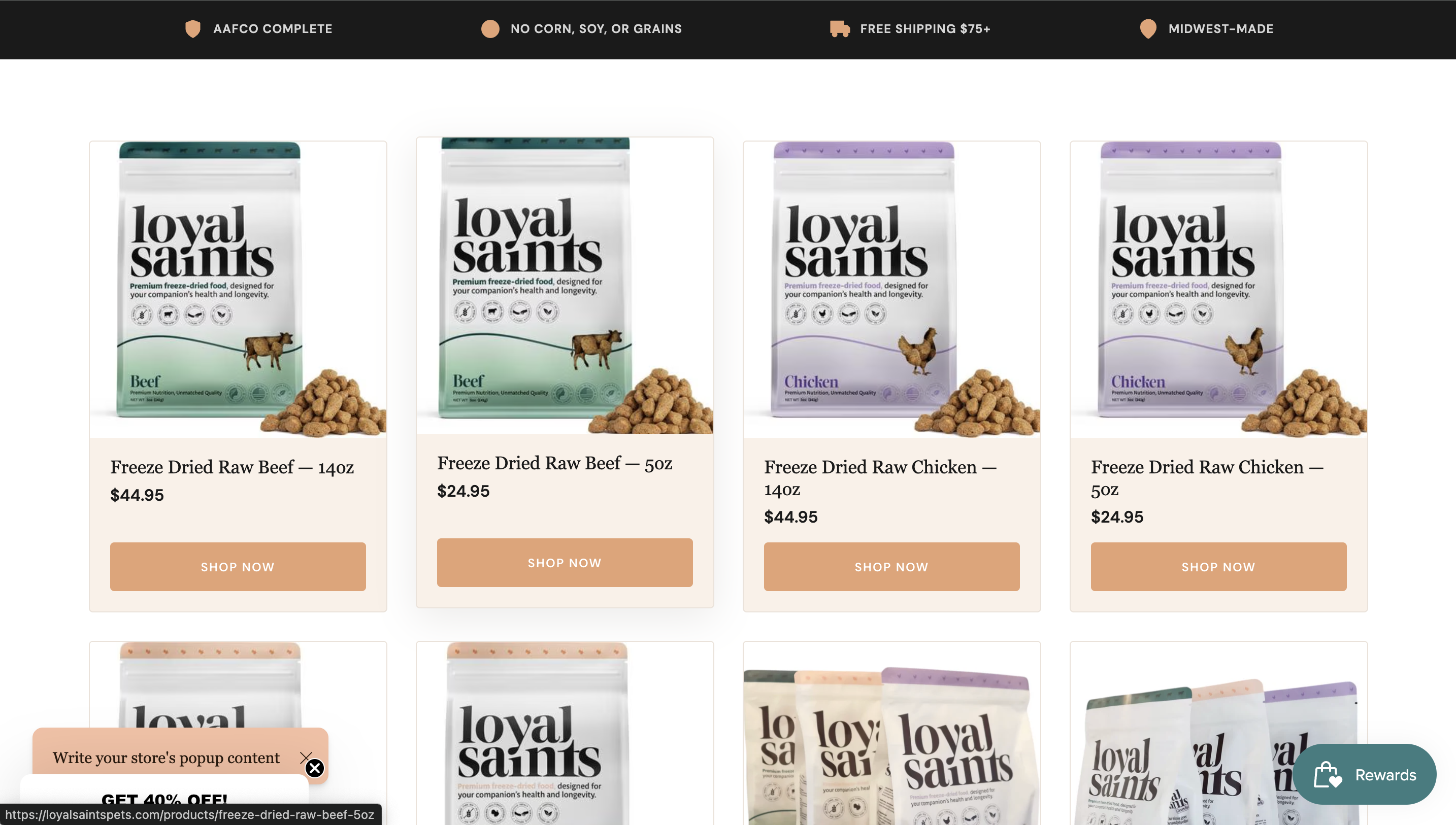
The freeze-dried raw chicken is a high-protein, single-ingredient option that supports skin, coat, and muscle health without additives or fillers. The freeze-dried raw beef delivers natural collagen and amino acids that support joint tissue and overall vitality. Both meet AAFCO nutritional standards and are made from human-grade ingredients. If you want to understand why freeze-drying preserves more nutrients than cooking or air-drying, the science behind the process is worth a read before your next order.
FAQ
What are the best natural health boosters for dogs?
The most research-supported natural boosters are omega-3 fatty acids (EPA and DHA), probiotics, fermentable fibers, and spirulina platensis. Each targets a specific health system, so the best choice depends on your dog’s individual needs.
How much food topper is safe for my dog daily?
Veterinary guidelines recommend keeping food toppers below 9–10% of your dog’s total daily caloric intake. Exceeding that amount risks disrupting the nutritional balance of the base diet.
Can I give my dog spirulina every day?
Yes, daily spirulina at 0.08 g/kg body weight is supported by a 2026 study showing immune and antioxidant benefits in working dogs with no adverse effects over seven weeks. Use a product tested for heavy metal contamination.
Does glucosamine actually help dogs with joint pain?
Glucosamine has limited primary efficacy as a standalone joint supplement. It works best as an adjunct alongside omega-3 fatty acids, which have stronger evidence for managing canine joint inflammation.
How long before I see results from a canine health supplement?
Most supplements require four to six weeks of consistent daily use before producing measurable changes in energy, coat quality, stool consistency, or mobility. Evaluating a product before that window closes leads to premature conclusions.


