
TL;DR:
- A safe daily diet for dogs is a commercial, “complete and balanced” food verified by an AAFCO statement. Human foods can be treats but should never replace the core nutrition, and toxic foods like chocolate and grapes must be avoided. Transition diets gradually over 7-10 days, and verify formulation quality beyond format preferences for optimal pet health.
Feed your dog a life-stage-appropriate, AAFCO-complete commercial diet as the daily base. Limited, vetted human foods can work as occasional treats or toppers, but they should never replace a nutritionally complete main meal. Some human foods are outright toxic and need to stay off the menu entirely. That is the short answer. Everything below gives you the practical detail to make confident, safe choices every day.
Here is what to keep in mind right from the start:
- Do choose a food labeled “complete and balanced” with an AAFCO nutritional adequacy statement matched to your dog’s life stage (puppy, adult, or senior).
- Do limit human foods to low-risk options in small, treat-size portions, and always introduce new foods one at a time.
- Don’t feed chocolate, xylitol, grapes or raisins, onions, garlic, or macadamia nuts. These are genuinely dangerous, not just “not ideal.”
The Merck Veterinary Manual notes that even within the “adult maintenance” life stage, individual needs vary based on age, metabolic rate, and health status, so monitoring your dog’s weight and energy is part of the job. Loyalsaintspets’ freeze-dried options carry AAFCO nutritional adequacy statements and use human-grade whole ingredients, making them a solid starting point for owners who want a minimally processed, shelf-stable base diet.
Table of Contents
- What should you feed your dog every day?
- Which human foods are safe to share with your dog?
- Foods that are toxic to dogs and what to do in an emergency
- How much should you feed your dog, and how do you switch foods safely?
- When does your dog need a specialty or prescription diet?
- Is home-cooked or raw feeding safe for your dog?
- How do you read a dog food label and pick a quality product?
- Key Takeaways
- Why formulation beats format every time
- Real nutrition without the guesswork: Loyalsaintspets freeze-dried dog food
- Useful sources for further reading
What should you feed your dog every day?
The most reliable daily diet for most dogs is a commercial food labeled “complete and balanced.” That phrase has a specific legal meaning: the FDA requires that any pet food making this claim either meets AAFCO nutrient profiles or passes a feeding trial. AAFCO sets separate profiles for Growth & Reproduction (puppies and pregnant or nursing dogs) and Adult Maintenance, so the life-stage match on the label is not just marketing.

The main diet formats compared
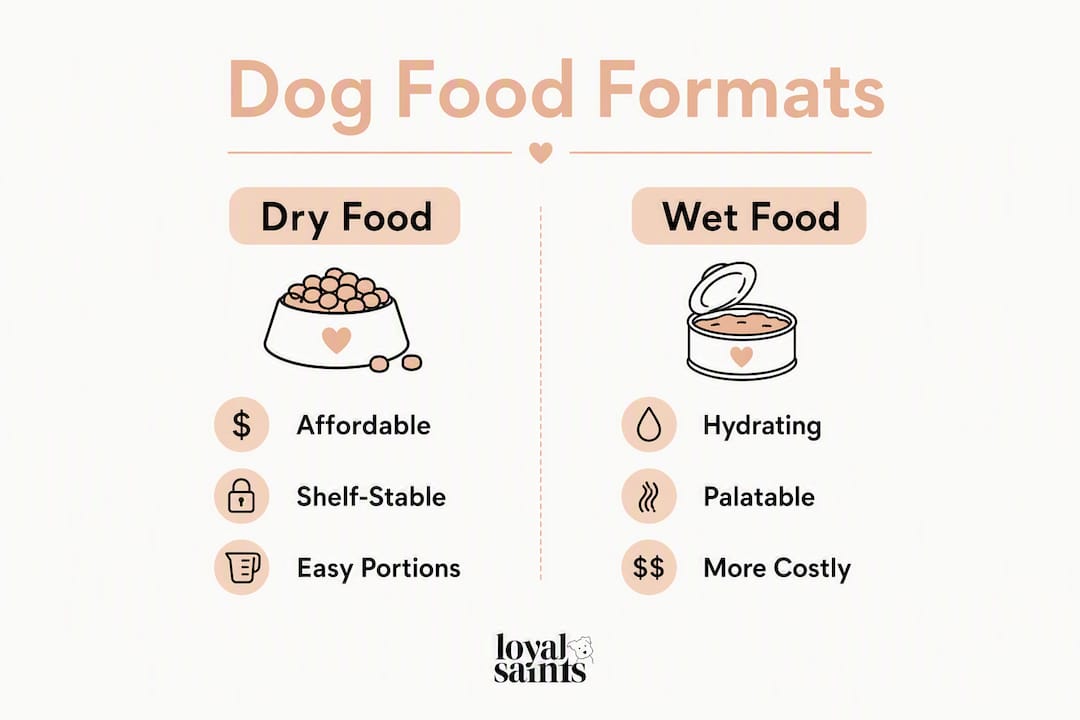
Extruded kibble is the most widely used format in the U.S. It is affordable, shelf-stable before opening, and easy to portion. The trade-off is that high-heat extrusion can reduce some nutrient bioavailability, and many kibbles rely on synthetic vitamin and mineral premixes to hit AAFCO targets.
Canned or wet food has higher moisture content, which helps with hydration and palatability. It tends to cost more per calorie than kibble and has a shorter shelf life once opened, but it is a good option for picky eaters or dogs with dental issues.
Fresh-cooked commercial diets (delivered refrigerated or frozen) use minimally processed whole ingredients. They can be nutritionally excellent when properly formulated, though they require refrigeration and are typically the most expensive format per day.
Frozen raw preserves much of the nutrient profile of raw meat, but it requires freezer space, careful thawing, and strict hygiene. Veterinary organizations caution about pathogen risks including Salmonella and Listeria, and recommend consulting a vet before starting raw feeding.
Freeze-dried raw keeps many of the nutritional benefits of raw meat while being shelf-stable before opening, making it far more practical for everyday households. A 2024 controlled study published in Translational Animal Science found that freeze-dried diets often produced lower fecal volume and higher dry matter percentage than extruded diets, suggesting differences in digestibility across formats. Freeze-dried products still require proper handling once opened or rehydrated, and price per calorie is typically higher than kibble.
Toppers and treats are not complete diets. The FDA is clear that products labeled as snacks, treats, or toppers are not required to be complete and balanced and should not serve as a primary food source.
The honest takeaway: format matters less than formulation. A freeze-dried product with a verified AAFCO statement and transparent ingredients is better than a fresh-cooked diet with no nutritional adequacy claim every time. Check the label before you check the packaging aesthetic.
Pro Tip: Before switching your dog’s primary diet, especially for a puppy, senior, or dog with a health condition, get a vet’s sign-off. A single 15-minute appointment can prevent months of trial and error.
Which human foods are safe to share with your dog?
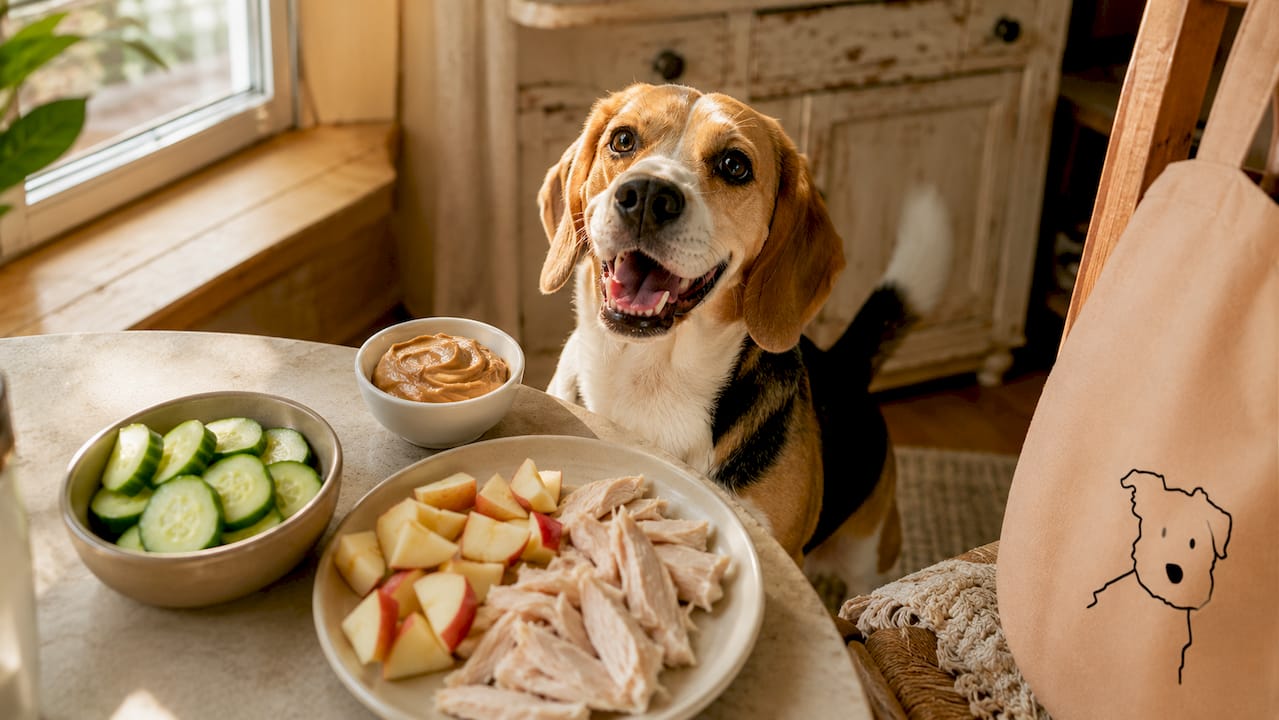
Most dogs will happily eat whatever you are eating, but “safe” and “good for them” are not the same thing. The foods below are generally well-tolerated when prepared plainly and given in small amounts. Think treat-size portions, not a second dinner.
Lean cooked meats
- Chicken, turkey, beef, and pork — (cooked, boneless, unseasoned): safe and protein-rich. Remove all skin and fat, which can trigger pancreatitis in sensitive dogs. No cooked bones, ever.
Vegetables
- Carrots: crunchy, low-calorie, and most dogs love them raw or lightly steamed. Good for dental health too.
- Green beans: plain, cooked or raw, no seasoning. A useful low-calorie filler for dogs on a weight-management plan.
- Broccoli and cauliflower: fine in small amounts, but broccoli florets can cause gas in larger quantities.
- Sweet potato: cooked and plain, not canned with syrup. Rich in fiber and beta-carotene.
- Cucumber: hydrating and very low in calories. A good hot-weather snack.
Fruits
- Blueberries, watermelon (seedless, no rind), and apple slices (no seeds or core): safe and antioxidant-rich in small amounts.
- Banana: fine occasionally, but high in sugar, so keep portions small.
- Avoid grapes, raisins, and cherries entirely (see the toxic foods section below).
Grains and dairy
- Plain cooked rice, oatmeal, or pasta: useful for a short-term bland diet when your dog has an upset stomach. Not nutritionally complete on their own for long-term feeding.
- Plain yogurt or cottage cheese: tolerated by many dogs in small amounts, but skip if your dog is lactose-sensitive. Watch for loose stools after the first serving.
A few practical rules apply across all of these: no salt, no garlic or onion powder, no artificial sweeteners, and no sauces. Start with a small amount and watch for changes in stool consistency, appetite, or coat over the next 24–48 hours.
Pro Tip: A splash of low-sodium, unseasoned bone broth over your dog’s regular food is one of the easiest ways to boost palatability without meaningfully changing the calorie count or fat content. Just confirm the broth contains no onion or garlic.
Foods that are toxic to dogs and what to do in an emergency
Some foods are not just unhealthy for dogs. They can cause organ failure, seizures, or death. This list is not exhaustive, but it covers the most common and most dangerous exposures.
The must-avoid list
- Chocolate: contains theobromine, which dogs metabolize far more slowly than humans. Dark chocolate and baking chocolate are the most dangerous; milk chocolate and white chocolate are lower risk but still harmful in quantity.
- Xylitol: an artificial sweetener found in sugar-free gum, some peanut butters, baked goods, and even some toothpastes. It causes a rapid drop in blood sugar (hypoglycemia) and can lead to liver failure. Check ingredient labels on any nut butter before sharing it.
- Grapes and raisins: can cause acute kidney injury in dogs. The toxic mechanism is still not fully understood, which makes any amount potentially dangerous.
- Onions and garlic (raw, cooked, or powdered): damage red blood cells and can cause hemolytic anemia. Garlic is more concentrated than onion by weight.
- Macadamia nuts: cause weakness, vomiting, tremors, and hyperthermia. Even small amounts can produce symptoms within 12 hours.
- Alcohol and caffeine: both toxic to the central nervous system and cardiovascular system. Coffee grounds and tea bags are a particular risk if your dog gets into the trash.
- Raw or undercooked yeast dough: expands in the stomach and produces alcohol as it ferments. A double hazard.
- High-salt foods: chips, pretzels, and cured meats can cause sodium ion poisoning in large amounts, leading to vomiting, seizures, and in severe cases, death.
If your dog eats any of the above, do not wait for symptoms to appear. Call your veterinarian or the Pet Poison Helpline immediately. Have the following ready: what was eaten, the estimated amount, when it happened, and your dog’s current weight. Time matters, especially with xylitol and grapes, where early intervention can prevent irreversible damage. If you cannot reach a vet, go directly to an emergency animal clinic.
Emergency steps
- Stay calm and remove any remaining food from your dog’s reach.
- Call your vet or Pet Poison Helpline (1-800-213-6680) right away.
- Tell them: the substance, estimated quantity, time of ingestion, and your dog’s weight and breed.
- Follow their instructions exactly. Do not induce vomiting unless a vet specifically tells you to.
- If symptoms appear (tremors, collapse, extreme lethargy, vomiting), go to an emergency clinic immediately.
One often-overlooked risk: cross-contamination. Baking with xylitol leaves residue on bowls and counters. Candy wrappers in the trash still carry enough chocolate or xylitol to cause harm. Compost bins are a serious hazard because moldy food can contain mycotoxins that cause seizures. Keep lids on trash cans and compost containers your dog can access.
How much should you feed your dog, and how do you switch foods safely?
Getting portions right is one of the most common places dog owners go wrong. Overfeeding is easy, especially with calorie-dense formats like freeze-dried food, and the consequences accumulate slowly.
Calculating daily portions
Start with the calorie information on your dog’s food packaging, listed as kcal per cup or kcal per kilogram. Then match that to your dog’s daily calorie needs. As a practical example: a healthy, moderately active adult dog typically needs roughly the right amount of calories per day for maintenance. If your kibble provides 350 kcal per cup, that works out to about 3 cups per day, split across two meals. For freeze-dried food, which is more calorie-dense, the same dog might need a much smaller volume. Always use the packaging’s feeding guide as a starting point, then adjust based on body condition.
Body condition score (BCS) is the most reliable at-home check. On a 9-point scale, a healthy dog scores 4–5: you can feel the ribs easily without pressing hard, and there is a visible waist when viewed from above. A score of 6 or higher means the dog is carrying excess weight; below 4 suggests underfeeding or a health issue worth investigating.
Pro Tip: Weigh your dog monthly on a bathroom scale. Pick them up, step on the scale together, then weigh yourself alone and subtract. It takes 30 seconds and catches weight creep before it becomes a problem.
Transitioning to a new food: a 7–10 day plan
Switching foods too quickly is the most common cause of digestive upset during a diet change. A gradual mix-over gives your dog’s gut microbiome time to adjust.
- Days 1–2: 75% old food, 25% new food.
- Days 3–4: 50% old food, 50% new food.
- Days 5–6: 25% old food, 75% new food.
- Days 7–10: 100% new food.
Watch for these signs during the transition:
- Loose stools or diarrhea (slow down the transition if this happens)
- Reduced appetite or food refusal
- Vomiting
- Increased gas or bloating
- Changes in energy level
If symptoms persist beyond a day or two at any stage, pause the transition and consult your vet before continuing.
When does your dog need a specialty or prescription diet?
A standard AAFCO-complete food covers the nutritional needs of most healthy dogs. But “most” is not “all,” and there are clear situations where a general commercial diet falls short.
Life-stage nutritional differences
Puppies need more calcium, phosphorus, and total calories per pound of body weight than adult dogs. Foods formulated for Growth & Reproduction meet these higher demands. Feeding an adult maintenance diet to a growing puppy, especially a large or giant breed, can lead to skeletal development problems. Giant breeds have an additional wrinkle: too much calcium during growth can be just as harmful as too little, so giant-breed-specific puppy formulas matter.
Senior dogs generally need fewer calories as their activity level drops, but many also benefit from added joint support (glucosamine, chondroitin) and adjusted protein levels depending on kidney function. The Merck Veterinary Manual emphasizes that adult maintenance is not a uniform category: individual monitoring is always necessary.
Small breeds have higher metabolic rates and need calorie-dense foods in smaller volumes. Large breeds benefit from controlled calorie density to avoid rapid weight gain.
Red flags that require a vet visit
- Chronic loose stools, vomiting, or gas lasting more than a week
- Unexplained weight loss or gain despite consistent feeding
- Recurring skin infections, hot spots, or ear infections (possible food allergy)
- Excessive water intake or urination (kidney or metabolic concerns)
- Straining to urinate or blood in urine (possible urinary stones)
- Diagnosis of pancreatitis, liver disease, or kidney disease
Managing food allergies
True food allergies in dogs most commonly involve proteins: beef, chicken, dairy, and wheat are among the most frequently reported triggers. An elimination trial is the gold standard for diagnosis. This means feeding a novel single-protein or hydrolyzed protein diet exclusively for 8–12 weeks, with no treats, table scraps, or flavored medications that could introduce the suspected allergen. If symptoms resolve and return when the original food is reintroduced, you have your answer.
Freeze-dried limited-ingredient diets can be useful during elimination trials because the short ingredient lists make it easier to control what your dog is actually eating. Prescription hydrolyzed protein diets, available only through a vet, break proteins into fragments too small to trigger an immune response and are the most reliable option for confirmed allergies.
Is home-cooked or raw feeding safe for your dog?
Home-cooked and raw diets appeal to owners who want full control over ingredients. That instinct is understandable, but both approaches carry real risks that are worth knowing before you commit.
The biggest risks
- Pathogen exposure — raw meat can carry Salmonella, Listeria, and E. coli. These pathogens pose a risk not just to your dog but to people in your household, particularly children, elderly individuals, and anyone immunocompromised. Veterinary organizations recommend consulting a vet before starting raw feeding for exactly this reason.
Risk-reduction checklist for home-cooked or raw diets
- Work with a board-certified veterinary nutritionist (Diplomate ACVN) to formulate the recipe, not a general practitioner or an online calculator alone.
- Use a recipe that specifies exact ingredient weights, not volume measurements.
- Include appropriate supplementation as directed by the nutritionist.
- Wash hands, bowls, and prep surfaces thoroughly after every raw meal.
- Store raw meat frozen until 24 hours before use; thaw in the refrigerator, not on the counter.
- Never use a bland diet (boiled chicken and rice) as a long-term solution. It is appropriate for 2–3 days during GI upset, not as a permanent feeding plan.
Freeze-dried vs. frozen raw: a practical distinction
Freeze-dried raw food retains much of the nutrient profile of raw ingredients while being shelf-stable before opening, which removes the freezer-space requirement and makes it far more practical for travel and everyday storage. Frozen raw requires continuous cold chain management. Both formats still require careful handling once opened, and neither is automatically pathogen-free: freeze-drying reduces water activity but does not sterilize ingredients. Reputable manufacturers use high-pressure pasteurization or other processing controls to reduce pathogen risk, so checking a brand’s manufacturing standards matters.
For owners who want raw-like nutrition without the full logistical burden, a verified AAFCO-complete freeze-dried product is a reasonable middle ground, provided you confirm the nutritional adequacy statement on the label before committing.
Pro Tip: If you want to add raw or home-cooked elements to your dog’s diet without going fully homemade, use them as toppers over an AAFCO-complete base. You get the palatability and variety without risking nutritional gaps.
How do you read a dog food label and pick a quality product?
A dog food label tells you almost everything you need to know, if you know where to look. Here is the checklist to run through before buying.
Label checklist
- AAFCO nutritional adequacy statement — look for the phrase “complete and balanced” and confirm it names your dog’s life stage. If it says “for intermittent or supplemental feeding only,” it is not a daily diet.
- Substantiation method — the AAFCO statement will say either “formulated to meet” (nutrient profile method) or “animal feeding tests” (feeding trial method). Feeding trials provide stronger real-world evidence of nutritional adequacy.
Understanding label language
| Label Claim | What It Means | Suitable as Daily Diet? |
|---|---|---|
| “Complete and balanced” | Meets AAFCO nutrient profiles or passed a feeding trial | Yes |
| “Complementary food” | Not nutritionally complete on its own | No |
| “Treat” or “snack” | Not required to meet AAFCO standards | No |
| “For intermittent or supplemental feeding” | Partial nutrition only | No |
The AAFCO labeling requirements specify that all eight required label items must appear on the package, and any descriptive claims must not be false or misleading. “Natural,” “grain-free,” and “holistic” are marketing terms with no regulatory definition tied to nutritional adequacy. They tell you nothing about whether the food is complete and balanced.
One practical note on calorie density: freeze-dried food is significantly more calorie-dense by volume than kibble because moisture has been removed. Comparing cost per day rather than cost per bag gives you a more accurate picture. Divide the bag’s total kcal by your dog’s daily kcal needs to find out how many days a bag lasts, then divide the price by that number.
Key Takeaways
A life-stage-appropriate, AAFCO-complete commercial diet is the safest and most reliable daily base for most dogs; human foods work best as occasional additions, never as replacements.
| Point | Details |
|---|---|
| AAFCO statement is non-negotiable | Choose foods labeled “complete and balanced” for your dog’s specific life stage, confirmed by an AAFCO nutritional adequacy statement. |
| Toxic foods require zero tolerance | Chocolate, xylitol, grapes, onions, garlic, and macadamia nuts can cause organ failure; keep them completely out of reach. |
| Transition slowly over 7–10 days | Mix old and new food gradually to avoid digestive upset; watch stool quality and appetite at each stage. |
| Format matters less than formulation | Kibble, freeze-dried, or fresh all work when properly formulated; verify the AAFCO statement regardless of format. |
| Loyalsaintspets freeze-dried options | AAFCO-complete, human-grade, shelf-stable freeze-dried food that works as a primary diet or a high-value topper. |
Fresh water should be available at all times alongside every meal. Hydration supports kidney function, digestion, and temperature regulation, and dogs on dry or freeze-dried diets especially benefit from consistent water access.
Why formulation beats format every time
There is a version of the dog food conversation that gets stuck on format debates: raw versus kibble, freeze-dried versus fresh, grain-free versus grain-inclusive. Those debates are not meaningless, but they consistently distract owners from the question that actually matters: is this food nutritionally complete and transparently formulated?
A freeze-dried diet with a verified AAFCO feeding-trial statement and a short, readable ingredient list will serve most dogs better than a “fresh” or “raw” product with no nutritional adequacy claim and a recipe that has never been tested on actual dogs. The Translational Animal Science study showing digestibility differences across formats is real and worth knowing, but digestibility differences do not override the foundational question of whether a food is complete.
What I find underappreciated is how much the “raw is always better” narrative pressures owners into DIY approaches they are not equipped to execute safely. A home-cooked diet prepared without veterinary nutritionist input is almost certainly deficient in something, and the deficiency may not show up for months. Freeze-dried AAFCO-complete products from a reputable brand offer a genuine middle path: minimally processed, nutrient-dense, and formulated to a recognized standard. That combination is harder to find than the marketing noise suggests, which is exactly why verifying the AAFCO statement on every product you consider is worth the 10 seconds it takes.
Real nutrition without the guesswork: Loyalsaintspets freeze-dried dog food
If you have been looking for a minimally processed, high-protein option that does not require a freezer or a nutrition degree to use safely, Loyalsaintspets’ freeze-dried raw dog food is worth a close look. Every product is made with human-grade whole ingredients, carries an AAFCO nutritional adequacy statement, and contains no fillers or synthetic additives. That means it qualifies as a complete daily diet, not just a topper.
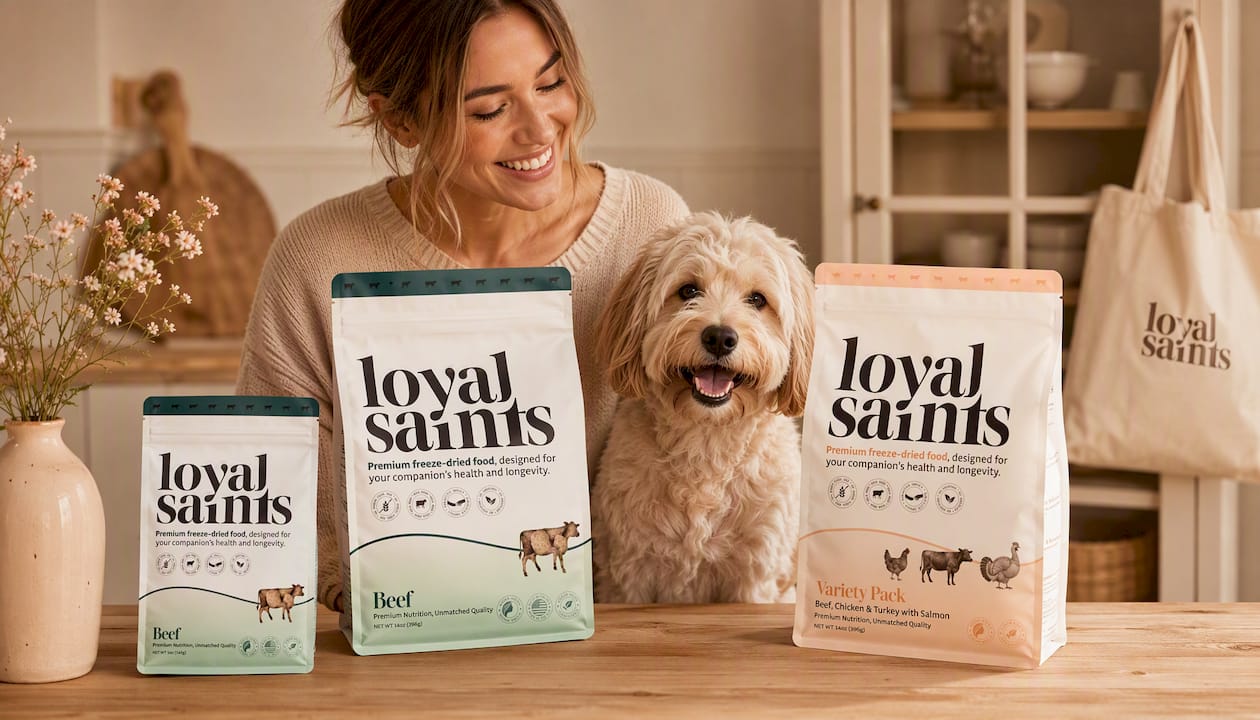
For owners who want to try the format before committing to a larger bag, the Freeze Dried Raw Beef 5oz is a practical starting point. It is sized for a slow transition or a short trial run, which aligns with the 7–10 day switch-over plan described above. For regular home feeding, the Freeze Dried Raw Beef 14oz offers better value per serving. And if your dog is picky, prone to food boredom, or you are working through an informal rotation to identify sensitivities, the Variety Pack 14oz featuring Beef, Chicken & Turkey with Salmon gives you three protein options in one order.
Check the AAFCO statement on each product page before making a full switch, and loop in your vet if your dog has any existing health conditions. Free shipping is available on qualifying orders. Browse the full lineup at Loyalsaintspets and find the option that fits your dog’s size, stage, and preferences.
Useful sources for further reading
These are the primary and peer-reviewed sources behind the guidance in this article. When in doubt about your specific dog’s needs, your veterinarian is always the right first call.
- Complete and Balanced Pet Food (FDA): the FDA’s plain-language explanation of what “complete and balanced” means legally, how AAFCO statements work, and why treats and toppers are not substitutes for a complete diet.
- AAFCO Labeling & Labeling Requirements: the official AAFCO resource on what must appear on a pet food label and how nutritional adequacy claims are regulated.
- Nutritional Requirements of Small Animals (Merck Veterinary Manual): authoritative clinical reference on how nutritional needs shift across life stages, health conditions, and individual variation.
- Re-Evaluating Your Dog’s Diet (Cornell Riney Canine Health Center): Cornell Veterinary guidance on when and how to reassess a dog’s diet, including signs that a change may be needed.
- Apparent Total Tract Nutrient Digestibility of Frozen Raw, Freeze-Dried Raw, Fresh, and Extruded Dog Foods (Translational Animal Science): 2024 controlled study comparing digestibility and fecal characteristics across four diet formats in healthy adult dogs.
- The Complete Guide to Freeze-Dried Raw Dog Food (Dog Food Advisor): practical overview of freeze-dried nutrition, storage, handling, and cost considerations.
- Freeze-Dried Dog Food: Pros and Cons (PetMD): balanced summary of veterinary perspectives on freeze-dried and raw diets, including food-safety considerations.
This article provides general nutritional information for educational purposes. It is not a substitute for professional veterinary advice. Always confirm feeding decisions with your veterinarian, especially for puppies, seniors, or dogs with medical conditions.


