
HPP-treated raw dog food significantly reduces pathogen risk and is one of the most evidence-based safety steps available in the raw pet food category today. It is not sterilization, but peer-reviewed research shows that validated high-pressure processing at parameters like 586 MPa for 4 minutes can achieve 5-log reductions of Salmonella, Shiga toxin-producing E. coli, and Listeria monocytogenes in raw pet food. The FDA’s Center for Veterinary Medicine (CVM) actively surveys retail raw pet foods under FSMA authority and has found measurable contamination, underscoring the value of risk reduction for your dog and household.
Here is what that means for your day-to-day feeding decisions:
- Choose products with validated HPP parameters. Look for explicit pressure and hold-time data, third-party lab results, and test-and-hold programs from the manufacturer.
- Keep your hygiene habits in place. HPP reduces risk; it does not remove it. Treat HPP-treated raw food like raw meat in your kitchen.
- Reconsider raw feeding if your household includes young children, elderly family members, pregnant individuals, or anyone immunocompromised. Even HPP-treated products carry residual risk for these groups.
Key Takeaways
HPP-treated raw dog food meaningfully reduces pathogen risk through validated pressure processing, but it requires strict household hygiene and documented manufacturer validation to deliver on that promise.
| Point | Details |
|---|---|
| HPP reduces but doesn’t eliminate risk | Validated HPP can achieve 5-log pathogen reductions; it is not sterilization and hygiene remains necessary. |
| Strain and species variability matter | L. monocytogenes and some Salmonella strains are more pressure-resistant; manufacturer validation must address this. |
| FDA/CVM actively surveys raw pet foods | A 196-sample study found 7.7% Salmonella and 16.3% L. monocytogenes prevalence in retail raw pet foods. |
| Ask for documented validation before buying | Look for published pressure/hold-time data, test-and-hold programs, and lot-level COAs from any HPP brand. |
| Loyalsaintspets freeze-dried raw | Offers shelf-stable raw nutrition with human-grade ingredients, AAFCO compliance, and veterinarian approval. |
Table of Contents
- What high-pressure pasteurization (HPP) actually does to raw dog food
- How HPP inactivates microbes and which process variables matter
- What the science shows about HPP effectiveness and its real limits
- Does HPP change the nutrition in your dog’s food?
- U.S. regulatory context: what the FDA requires and what it doesn’t
- Remaining safety risks and household hygiene steps
- How to evaluate HPP-treated raw dog food before you buy
- Freeze-dried raw vs. HPP-treated frozen: which format fits your life?
- A perspective on HPP and the cautious raw feeder
- Loyalsaintspets freeze-dried raw: a shelf-stable option worth knowing about
- Sources
What high-pressure pasteurization (HPP) actually does to raw dog food
High-pressure pasteurization, also called high-pressure processing (HPP) or high hydrostatic pressure (HHP) processing, is a non-thermal preservation method. Sealed packages of food are submerged in water and subjected to isostatic pressure, meaning equal pressure applied from all directions simultaneously, typically in the range of 400–600 MPa (roughly 58,000–87,000 psi). The process runs at cold or ambient temperatures, usually below 45°F, and hold times typically run from 1 to 6 minutes depending on the target pathogen and product formulation.
That cold-temperature operation is the key distinction from heat pasteurization. Traditional pasteurization uses elevated temperatures to denature proteins and kill microbes, which also degrades heat-sensitive vitamins, enzymes, and other nutrients. HPP achieves microbial inactivation through pressure alone, leaving the food’s temperature profile largely unchanged. The result looks, smells, and in most measurable ways behaves nutritionally like raw food, which is why manufacturers and veterinary nutrition experts describe it as a way to deliver raw nutrition with a meaningfully lower pathogen burden.
So yes, HPP-treated food is still considered “raw” in the sense that it has not been cooked. The proteins have not been heat-denatured, and the product retains its raw appearance and aroma.
How HPP inactivates microbes and which process variables matter
The mechanism is physical rather than chemical. Isostatic pressure disrupts bacterial cell membranes, inactivates key enzymes involved in cellular metabolism, and interferes with DNA replication, all without the thermal energy that cooking relies on. Vegetative bacteria like Salmonella, E. coli, and Listeria are susceptible to this kind of mechanical disruption. Bacterial spores, however, are not, which is one of HPP’s documented limitations.
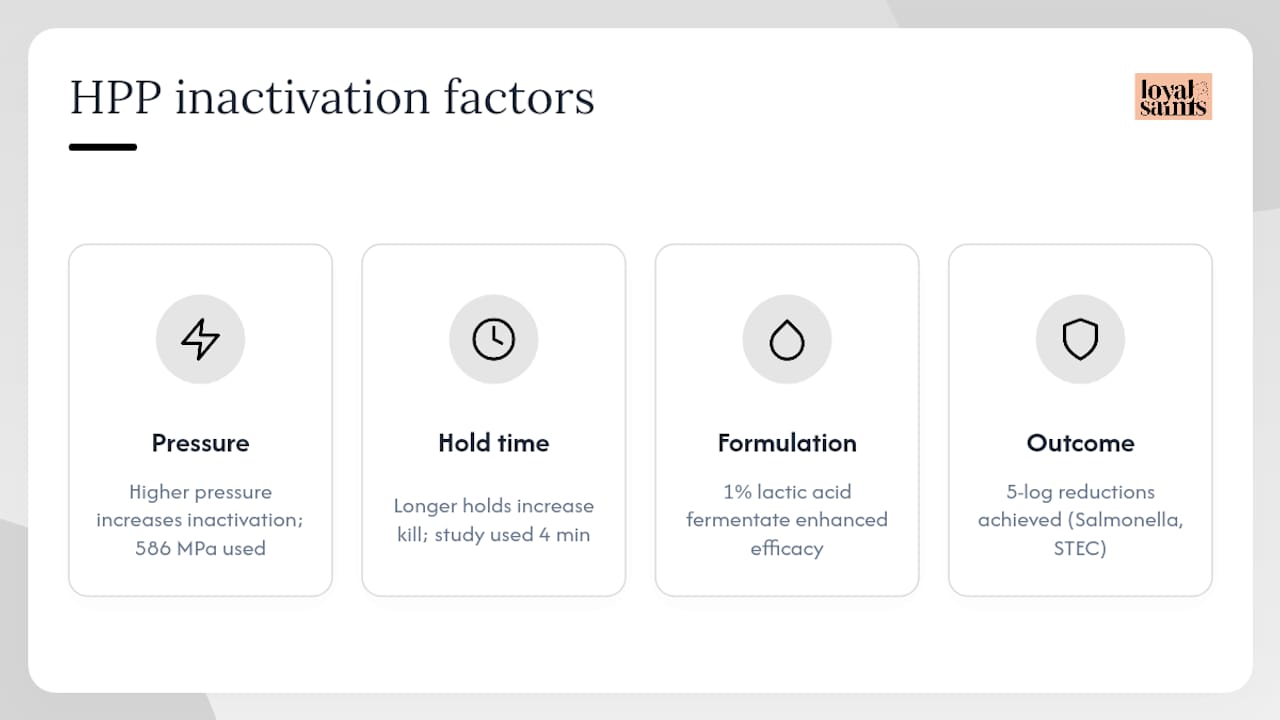
The three variables that most affect how well HPP works are pressure level, hold time, and product formulation.
One well-controlled study found that combining 1% lactic acid fermentate with HPP at 586 MPa for 4 minutes achieved consistent 5-log reductions of Salmonella, STEC, and L. monocytogenes in inoculated raw chicken-based pet food. Frozen storage after processing helped maintain those reductions across the product’s shelf life. That combination of acidulation plus HPP plus frozen storage represents the strongest validated approach currently documented in peer-reviewed literature for raw pet food.
Pro Tip: When reviewing a manufacturer’s validation statement, look for three specific data points: the pressure in MPa or psi, the hold time in minutes, and whether the validation was conducted on the finished packaged product rather than a bulk sample. Finished-package validation is more meaningful because packaging material and fill weight affect pressure transmission.
What the science shows about HPP effectiveness and its real limits
Research confirms that HPP lethality is not uniform across all pathogens. Listeria monocytogenes tends to be more pressure-resistant than many Salmonella serovars, and some Salmonella strains are more resistant than typical E. coli strains. This strain-level variability is why a validated process needs to be tested against the most resistant target organism under worst-case formulation conditions, not just average conditions.
The practical limitations of HPP in raw pet food include:
- Spores survive. Clostridium and Bacillus spores are pressure-resistant and are not inactivated by HPP at commercial parameters.
- Strain variability is real. Some Salmonella and Listeria strains survive conditions that eliminate others, making strain-level challenge testing during validation critical.
- Packaging-to-packaging variability exists. Inconsistent fill weights or air pockets can reduce pressure transmission to specific areas of a package.
- Post-process recontamination is possible. If packaging integrity is compromised after HPP, the safety benefit is lost.
- HPP is not sterilization. Products can still harbor low levels of surviving organisms, particularly if the initial load was very high or the process parameters were at the lower end of the validated range.
The FDA/CVM surveillance program found 7.7% Salmonella prevalence and 16.3% L. monocytogenes prevalence in a 196-sample study of retail raw pet foods, which underscores why these limitations matter in a real-world context.
Does HPP change the nutrition in your dog’s food?
The short answer is: much less than cooking does. Laboratory and feeding studies show that HPP preserves protein digestibility close to raw levels, with in vitro chicken protein digestibility around 84–86% after HPP, compared to lower values after heat processing. Amino acid profiles remain largely intact because pressure does not break peptide bonds the way heat does.
Some nutrient classes are more sensitive than others:
- Well-preserved by HPP: most B vitamins, amino acids, fat-soluble vitamins (A, D, E, K), and overall protein digestibility
- Somewhat sensitive: certain antioxidants and heat-labile enzymes may show modest reductions, though these are generally smaller than losses from cooking
- Texture and appearance: cell disruption from pressure can slightly soften tissue and alter mouthfeel, but the product retains its raw color and smell
Pro Tip: If your dog is a picky eater who has rejected cooked commercial food in the past, HPP-treated raw food is often accepted readily because the sensory profile, smell, color, and texture, stays close to fresh raw.
The honest comparison looks like this. HPP-treated raw food sits between untreated raw (highest nutrient preservation, highest pathogen risk) and heat-processed commercial food (lowest pathogen risk, greatest nutrient alteration). For most healthy adult dogs, the nutritional difference between HPP-treated and untreated raw is small. The safety difference, however, is meaningful.
U.S. regulatory context: what the FDA requires and what it doesn’t
HPP is not legally mandated for raw pet food in the United States. What is required, under the Food Safety Modernization Act (FSMA), is that animal food manufacturers conduct a hazard analysis, implement preventive controls for identified hazards, and maintain written food safety plans. HPP is one accepted process control that manufacturers can use to address microbial hazards, but they can also use other validated interventions or rely on supplier controls and testing programs.
The FDA/CVM actively surveys raw pet foods in interstate commerce, collecting samples and testing for Salmonella, L. monocytogenes, E. coli O157:H7, and non-O157 STEC. When positive findings occur, the agency can initiate recalls, issue warning letters, or request Reportable Food Registry (RFR) submissions from manufacturers.
As a buyer, you can take these practical steps to get stronger assurance:
- Ask the manufacturer for their validated HPP parameters (pressure and hold time).
- Request confirmation of a test-and-hold program, meaning the product is held pending negative pathogen results before release.
- Ask whether third-party Certificates of Analysis (COAs) are available for each production lot.
- Check the FDA’s recall database periodically for the brand you feed.
- Ask about country of origin for ingredients and where the product is processed.
Remaining safety risks and household hygiene steps
Even after HPP, veterinary infectious disease experts recommend treating HPP-treated raw food as potentially contaminated in your home. Dogs can shed pathogens in their feces after consuming raw food, even when they show no signs of illness. That shedding creates a real transmission pathway for humans in the household, particularly children who may have contact with the dog’s mouth or feces.
Your household hygiene checklist for HPP-treated raw feeding:
- Thaw in the refrigerator, never on the counter, to prevent bacterial regrowth during thawing.
- Use dedicated prep surfaces and utensils that are not shared with human food preparation.
- Wash hands with soap and water for at least 20 seconds after handling raw food, food packaging, or the dog’s bowl.
- Wash the dog’s bowl after every meal with hot soapy water or in the dishwasher.
- Dispose of packaging immediately and wash your hands again after doing so.
- Launder dog bedding regularly, especially if your dog sleeps near areas where food is prepared or eaten.
- Clean and disinfect prep surfaces with an EPA-registered disinfectant after each feeding.
For households with young children under 5, adults over 65, pregnant individuals, or anyone with a compromised immune system, the residual risk from any raw diet, HPP-treated or not, warrants a direct conversation with your physician and your veterinarian before you start. The raw dog food safety guidance from Loyalsaintspets covers this in more detail.
Important: HPP reduces pathogen risk meaningfully, but it does not eliminate the need for household precautions. Every surface, bowl, and hand that contacts raw pet food should be treated with the same care you would give raw chicken from the grocery store.
How to evaluate HPP-treated raw dog food before you buy
Not all HPP claims are equal. A product that simply says “HPP-treated” on the label without supporting validation data gives you much less assurance than one backed by documented process parameters and third-party testing. Here is what to look for and ask about.
Buyer checklist:
- Explicit “HPP” or “high-pressure processed” statement on the label or product page
- Published or available-on-request validated pressure (in MPa or psi) and hold time
- Test-and-hold program confirmed in writing
- Third-party COAs available by lot number
- Lot traceability from production to retail
- Packaging integrity guarantee (no swollen, punctured, or leaking packages)
Questions to ask the manufacturer or retailer:
- What pressure (MPa) and hold time (minutes) are used in your validated HPP process?
- Was the validation conducted on finished packaged product or bulk material?
- Do you use a test-and-hold program before releasing product to retail?
- Are third-party COAs available for each production lot?
- Which pathogens are included in your challenge testing (Salmonella, STEC, L. monocytogenes)?
- How do you handle a positive test result, and what is your recall protocol?
- Where is the product manufactured and where do the primary protein ingredients originate?
For storage and serving, HPP-treated frozen raw food should stay frozen until the day before use, thaw in the refrigerator (not at room temperature), and be served within 3–4 days of thawing. Do not refreeze thawed HPP-treated raw food. For choosing freeze-dried dog food, the handling rules differ slightly since freeze-dried formats are shelf-stable before rehydration.
Freeze-dried raw vs. HPP-treated frozen: which format fits your life?
Both freeze-dried raw and HPP-treated frozen raw can deliver the nutritional raw diet benefits your dog needs, but they handle safety, storage, and convenience differently.
Format comparison:
- HPP-treated frozen raw: Requires freezer storage, careful thawing, and strict hygiene at every meal. Pathogen risk is reduced by HPP but the product remains perishable and must be handled like raw meat throughout its life.
- HPP-treated freeze-dried raw: Combines HPP’s pathogen reduction with the shelf stability of freeze-drying. Lower cross-contamination risk at home because the product is dry until rehydrated. Industry workshops confirm that applying HPP before freeze-drying reduces initial microbial loads, improving the safety profile of the final shelf-stable product.
- Non-HPP raw (frozen or freeze-dried): Retains maximum nutrient integrity but carries the highest pathogen risk of the three formats. Requires the most rigorous household hygiene and is the least suitable for households with vulnerable members.
Pro Tip: If you want the raw nutrition profile with the lowest at-home cross-contamination risk and the most convenient storage, HPP-treated freeze-dried is the format to prioritize. It eliminates the daily thawing routine and reduces the surface-contamination risk that comes with handling wet raw food at every meal.
The raw feeding guide from Loyalsaintspets walks through the practical transition from conventional food to freeze-dried raw, including portion guidance and rehydration steps.
A perspective on HPP and the cautious raw feeder
The conversation around HPP in raw pet food sometimes gets pulled in two directions. Raw feeding advocates occasionally dismiss HPP as unnecessary processing that compromises the “purity” of raw food. On the other side, critics of raw feeding sometimes treat HPP as a marketing claim that gives false confidence. Both framings miss the point.
HPP is a genuinely meaningful safety improvement backed by peer-reviewed research. The 5-log reductions documented in controlled studies represent a 100,000-fold reduction in viable pathogen counts under validated conditions. That is not trivial. At the same time, it is not sterilization, and the residual risks, particularly for households with vulnerable members, are real enough to take seriously.
What I find most useful for cautious raw feeders is this: the question is not “is HPP safe enough?” in the abstract. The question is “does this specific product, from this specific manufacturer, have documented validation data I can verify?” A brand that publishes its HPP parameters, uses test-and-hold, and makes COAs available by lot number is giving you something concrete to evaluate. A brand that simply prints “HPP” on the bag without supporting documentation is giving you a claim, not evidence.
If you are choosing a raw-format diet, document the manufacturer’s validation before you commit. And regardless of format, talk to your veterinarian before making any significant diet change, especially for puppies, senior dogs, or dogs with health conditions.
Loyalsaintspets freeze-dried raw: a shelf-stable option worth knowing about
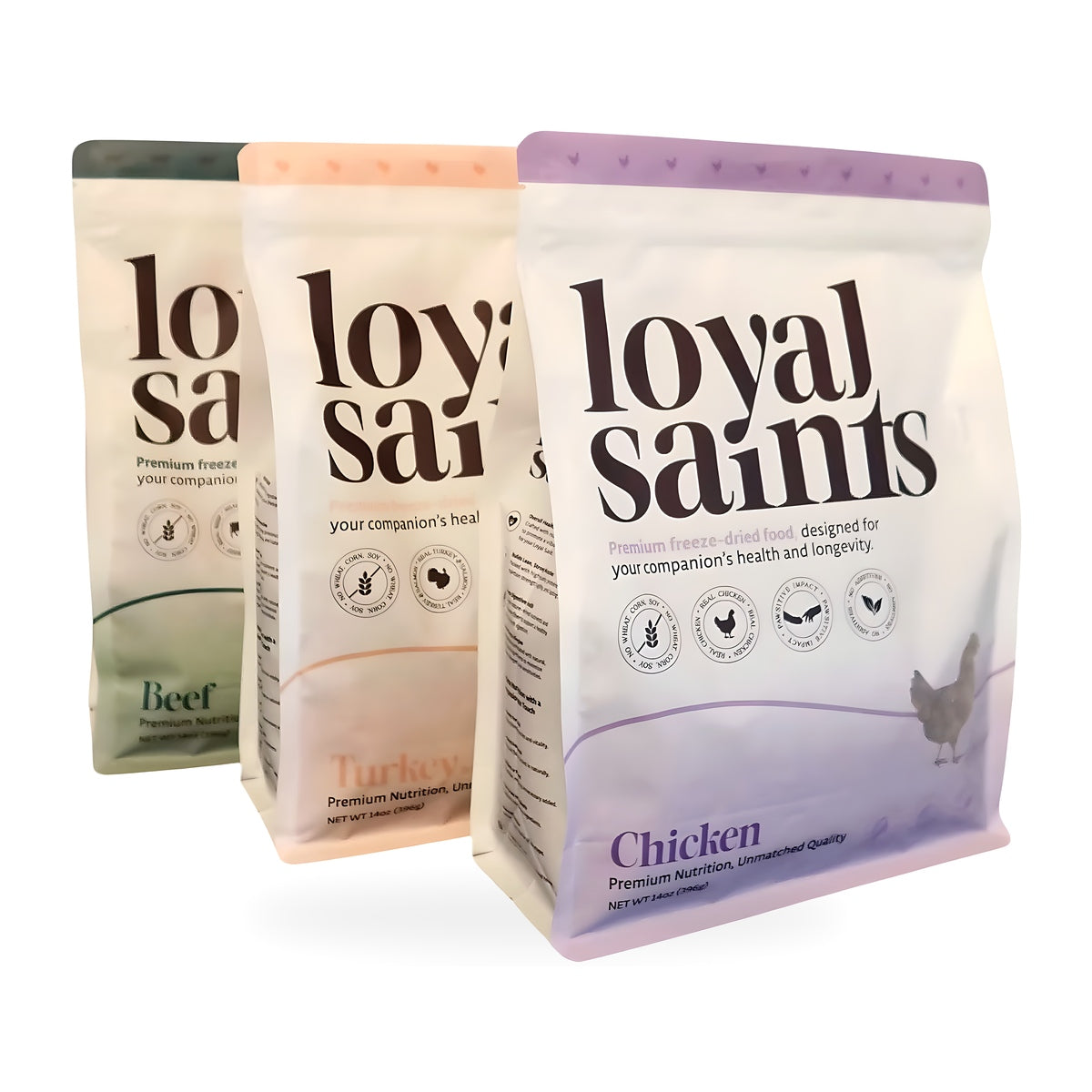
For owners who want the nutritional raw diet benefits without the daily thawing routine or the higher cross-contamination risk of wet raw formats, Loyalsaintspets freeze-dried raw is worth a close look. The products are made from human-grade, whole ingredients with no fillers or synthetic additives, meet AAFCO nutritional standards, and carry veterinarian approval.
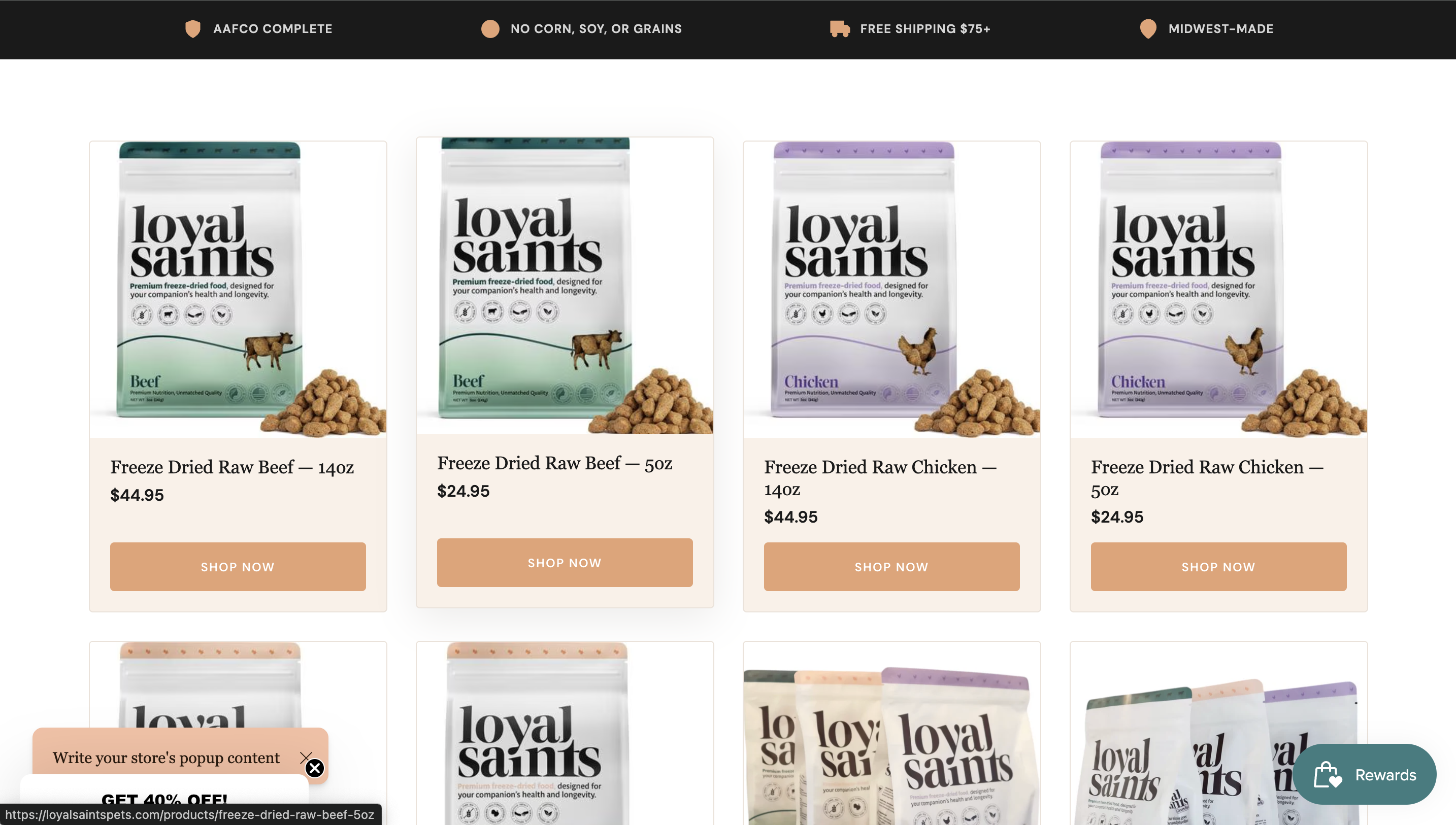
Key trust signals from the Loyalsaintspets line:
- AAFCO-complete nutrition for balanced daily feeding
- Human-grade, single or limited proteins with fruits and vegetables
- No fillers, artificial preservatives, or synthetic additives
- Shelf-stable before rehydration, reducing at-home cross-contamination risk compared to wet raw formats
- Veterinarian-approved formulation
- Halo Club subscription for recurring savings and free shipping
The Freeze Dried Raw Chicken (14oz) is the most popular option for daily feeding, while the Freeze Dried Raw Chicken (5oz) is a practical size for trying the format before committing. For dogs who do better on red meat, the Freeze Dried Raw Beef (14oz) offers a high-protein alternative with the same quality standards. Note that Loyalsaintspets products are freeze-dried raw, not HPP-treated frozen raw, so the handling and storage protocols differ from the wet HPP formats discussed in this article. Visit the Why Freeze Dried? page for a full breakdown of the format’s benefits.
Sources
The sources below back the major claims in this article. Safety and effectiveness claims draw primarily from peer-reviewed research; regulatory context comes from FDA primary sources; veterinary commentary provides practitioner perspective.
- CVM Issues Assignment to Collect Official Samples of Raw Foods for Dogs or Cats in Interstate Commerce in the United States and Analyze them for Salmonella, Listeria monocytogenes, Escherichia coli O157:H7 and Non O157:H7 STEC | FDA
- HPP and Raw Foods | The Science Dog
- High pressure pasteurization of raw pet food diets | Worms & Germs Blog
- The Combined Use of High Pressure Processing and Lactic Acid Containing Fermentate on Inactivation of Salmonella, Shiga Toxin-producing E. coli, and Listeria monocytogenes in Raw Pet Foods
- Enhanced high hydrostatic pressure lethality in acidulated raw pet food formulations was pathogen species and strain dependent - PubMed
- Impact of High-Pressure Processing on Antioxidant Activity during … - PMC
This article provides general educational information about HPP processing and raw pet food safety. It is not a substitute for veterinary advice. Consult your veterinarian before making significant changes to your dog’s diet.


