
TL;DR:
- Natural dog food offers benefits for dogs with sensitivities or specific health needs but is unnecessary for healthy, thriving pets on balanced commercial diets. The label term “natural” is regulated but not a safety guarantee, and homemade diets carry nutritional and microbial risks if not carefully formulated. Owners should prioritize ingredient quality, consult their veterinarian, and verify AAFCO compliance before making a switch.
Natural dog food is worth it for many dogs, but not automatically for every dog or every budget. The clearest benefit shows up when a dog has confirmed food sensitivities, when an owner genuinely needs ingredient transparency, or when a vet-formulated recipe addresses a specific health condition. For a healthy adult dog already thriving on an AAFCO-complete commercial diet, the evidence does not show a guaranteed health upgrade from switching to a “natural” label alone.
The strongest case for natural food rests on ingredient quality and what’s left out: no synthetic dyes, no mystery fillers, no chemical preservatives. The strongest counter-argument is that “natural” on a label is not a safety guarantee. Poorly formulated homemade diets and some raw products carry real nutritional and microbial risks that can quietly harm your dog over months or years.
- Try it if: Your dog has food intolerances, you want full ingredient transparency, or your vet recommends a limited-ingredient or home-prepared diet.
- Stick with commercial if: Your dog is healthy and thriving, your budget is tight, or anyone in your household is immunocompromised.
- Either way: Look for an AAFCO nutritional adequacy statement on every bag or pouch before you buy.
Pro Tip: Before switching, ask your vet two questions: “Is my dog’s current diet meeting all life-stage requirements?” and “Are there any labs I should run before and after a diet change?” Those two answers will tell you more than any label claim.
Table of Contents
- What “natural” actually means on a dog food label
- What research and vets say about natural and home-prepared diets
- Benefits owners report — and how strong the evidence is
- Risks you should know before switching
- How much natural dog food costs — and how to judge the value
- How to pick a safe, genuinely natural dog food
- Safe transition plan: step-by-step timeline and monitoring
- Quick decision guide: is natural dog food right for your dog now?
- Key Takeaways
- What I actually think about the “natural” debate
- Loyalsaintspets freeze-dried options worth trying
- Useful sources and further reading
What “natural” actually means on a dog food label
The word “natural” sounds simple, but the regulatory reality behind it is more nuanced than most owners expect. AAFCO defines “natural” as a feed or ingredient derived solely from plant, animal, or mined sources, either in its unprocessed state or processed through physical or heat methods, but not produced by a chemically synthetic process. That definition covers a wide range of processed ingredients, including rendered meals and hydrolyzed proteins, which often surprises owners who picture “natural” as meaning fresh and minimally handled.

The FDA has not established a formal federal definition for “natural” on pet food labels. It relies on general false-or-misleading labeling rules and state adoption of AAFCO language, which means enforcement varies. A brand can use the word “natural” with relatively little regulatory friction as long as no outright false claims are made.
One important nuance: AAFCO allows a product to be called “natural” even when synthetic vitamins and minerals are added, provided the label carries a specific disclaimer. Look for the phrase “Natural with added vitamins, minerals, and trace nutrients” printed near the word “natural” on the front panel. That disclosure is required and is actually a good sign — it means the manufacturer is being transparent about supplementation needed to complete the diet.
Natural vs. organic vs. holistic: quick distinctions
| Label | Regulatory backing | What it actually means |
|---|---|---|
| Natural | AAFCO model definition (state-adopted) | No chemically synthetic ingredients; synthetic vitamins/minerals allowed with disclaimer |
| Organic | USDA National Organic Program | Certified ingredients grown/raised to organic standards; separate certification required |
| Holistic | None | No legal definition; purely a marketing term |
What to look for on the label
- AAFCO nutritional adequacy statement — confirms the diet meets minimum nutrient requirements for a life stage (adult maintenance, growth, all life stages).
- Feeding trial language — “Animal feeding tests using AAFCO procedures substantiate…” is stronger than “formulated to meet” because it reflects real feeding data.
- “Natural with added vitamins, minerals, and trace nutrients” disclaimer — shows the manufacturer is following AAFCO guidelines honestly.
- Ingredient sourcing transparency — named proteins (“deboned chicken”) over vague terms (“meat meal”).
- Manufacturer contact information — a brand willing to answer sourcing questions is worth more than a clean-looking label alone.
What research and vets say about natural and home-prepared diets
The honest answer is that the research base is thinner than the marketing suggests. No long-term randomized clinical trials in healthy dogs have demonstrated that natural or homemade diets are superior to balanced commercial diets. VCA Hospitals notes this gap directly, pointing out that owner peace of mind and individual pet response often drive perceived value more than controlled clinical evidence.
Where some evidence does exist, it tends to cluster around digestibility, palatability, and stool quality rather than long-term disease prevention. Dogs on fresh or minimally processed diets sometimes show improved stool consistency and appetite, but these outcomes are difficult to separate from the overall improvement in ingredient quality that often accompanies a diet change.
Veterinarians consistently prioritize nutritional adequacy over marketing language. Their primary concern with any “natural” or home-prepared diet is whether it is complete and balanced for the dog’s life stage. A 2025 Frontiers in Animal Science review highlighted both the potential benefits of home-prepared diets and the documented risk of nutrient imbalances when owners formulate recipes without professional input. The review also noted that commercial pet food recalls between 2018 and 2023 — involving bacteria, mycotoxins, and excessive vitamins — have understandably pushed more owners toward home-prepared or minimally processed options, even though those alternatives carry their own risks.
Key finding: VCA Hospitals emphasizes that consistent nutrient profiles are a genuine advantage of commercial manufacturing, and that the absence of an AAFCO adequacy statement on any diet — natural or otherwise — is a warning sign worth taking seriously.
Pro Tip: When you bring this topic to your vet, ask specifically: “Does my dog’s life stage or health condition make a natural or home-prepared diet worth the extra effort?” and “What bloodwork should we baseline before and after a switch?” A board-certified veterinary nutritionist (find one at ACVN.org) can formulate a home-prepared recipe that is genuinely complete.
Benefits owners report — and how strong the evidence is
Owners who switch to natural or minimally processed diets frequently report real, observable changes. Some of those changes have plausible biological explanations; others are harder to pin to diet alone.
- Improved digestion and stool quality: Highly plausible. Diets with fewer fillers and more digestible proteins tend to produce smaller, firmer stools. This is one of the more consistent owner observations and aligns with digestibility research.
- Shinier coat and healthier skin: Plausible, especially when the switch adds omega-3 fatty acids from whole fish or quality animal fats. Coat changes typically appear within 6–8 weeks.
- Reduced allergy symptoms: Possible, particularly with limited-ingredient or single-protein diets that eliminate a known allergen. The benefit here comes from the ingredient simplification, not the “natural” label itself.
- Better energy and vitality: Reported frequently but harder to measure objectively. Body condition score and lean muscle mass are better markers than owner impression alone.
- Improved appetite: Common, especially when switching from heavily processed kibble to a more palatable fresh or freeze-dried format.
One honest caveat: owner perception bias is real. When you invest more money and attention in your dog’s food, you tend to notice positive changes more readily. Use objective markers — body condition score (1–9 scale), stool score, coat assessment at vet exams, and periodic bloodwork — to separate genuine improvement from wishful thinking. Explore the benefits of natural dog food in more depth if you want a closer look at what ingredient quality can realistically deliver.
Risks you should know before switching
Natural does not mean risk-free. The two biggest concerns are microbial contamination and nutritional imbalance, and both are serious enough to warrant careful planning.
Microbial risks in raw and freeze-dried products
Raw and freeze-dried pet foods carry meaningful pathogen risks. A systematic review published in PMC found that raw pet food is more frequently contaminated with pathogens and antimicrobial-resistant bacteria than heat-treated pet food. Cornell University’s Riney Canine Health Center cites FDA Center for Veterinary Medicine research showing that frozen raw meat diets for pets purchased online carried roughly a 1-in-3 odds of containing a foodborne pathogen such as Salmonella, Listeria, or toxigenic E. coli. Cornell also notes that some canine raw food products have tested positive for ESBL-producing bacteria, which degrade common antibiotics and create public health concerns beyond the pet itself.
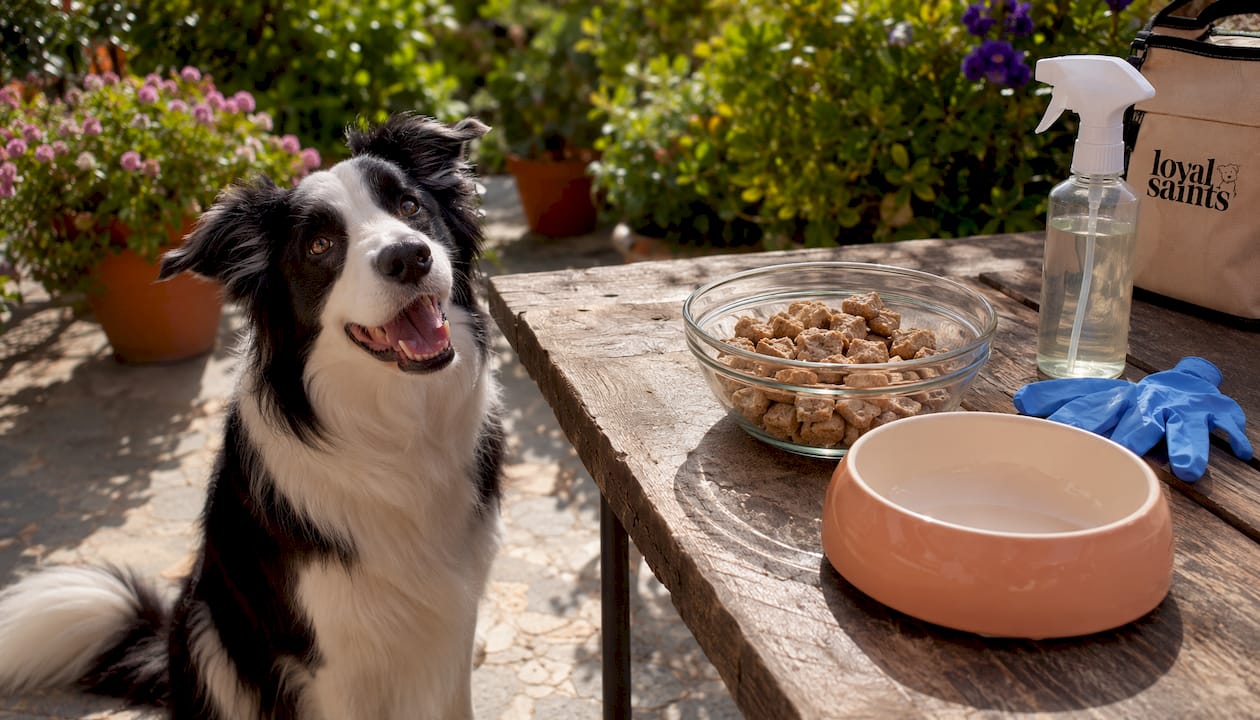
Freeze-drying does not eliminate these risks. Cornell explains that freeze-drying actually preserves bacteria effectively — it is the same technique researchers use to keep bacteria viable in lab settings. Treat freeze-dried products exactly as you would handle raw meat.
Nutritional imbalances in homemade diets
The Frontiers review documents calcium-to-phosphorus ratios as far off as 1:10 in some homemade recipes, against an optimal range of 1:1 to 2:1. That kind of imbalance, sustained over months, can cause bone disorders — especially in growing puppies. Vitamin D deficiency and inadequate trace minerals are also common in owner-formulated diets. These deficiencies rarely show up immediately; they accumulate quietly until a vet catches them on bloodwork or X-ray.
Red flags to watch for:
- No AAFCO adequacy statement on a commercial product
- A homemade recipe from a non-nutritionist source (blog, social media, or general cookbook)
- No storage or handling guidance on a raw or freeze-dried product
- Ingredient lists with vague protein sources (“meat” or “poultry” with no species named)
How much natural dog food costs — and how to judge the value
Natural and minimally processed dog foods cost more than standard kibble, sometimes significantly. Freeze-dried raw diets typically run the highest per-meal cost, followed by fresh-cooked options, with premium natural kibble sitting closer to the middle. Standard commercial kibble from a grocery store is generally less expensive.
Note: Costs vary by brand, region, and dog size; consider cost per 1,000 kcal for a fair comparison across formats.
To judge value honestly, factor in the full picture:
- Health outcomes you can reasonably expect (digestion, coat, allergy management) vs. what you are currently seeing
- Hidden costs: vet nutritionist consultation fees, special storage (refrigeration, airtight containers), and preparation time for home-prepared diets
- Subscription savings: many premium brands, including Loyalsaintspets, offer membership programs that reduce per-order cost and include free shipping
The owners who get the clearest value from premium natural food are those with a specific reason to switch — a dog with confirmed food intolerances, a need for limited ingredients, or a vet recommendation. Paying more for a “natural” label on an otherwise healthy dog with no issues is harder to justify on evidence alone.
How to pick a safe, genuinely natural dog food
A clean label and a pretty bag are not enough. Use this checklist before you buy.
Must-have signals:
- AAFCO nutritional adequacy statement for your dog’s life stage
- Named protein source as the first ingredient (“deboned beef,” “whole chicken”)
- “Natural with added vitamins, minerals, and trace nutrients” disclaimer if vitamins are included
- Transparent sourcing information (country of origin, supplier standards)
- Feeding trial language if available (stronger than “formulated to meet”)
What to avoid:
- Products with no AAFCO statement at all
- Homemade recipes from non-professional sources
- Raw or freeze-dried products with no handling or storage guidance
- Vague ingredient names (“animal fat,” “meat by-products”) without species identification
Questions to ask your vet or a board-certified veterinary nutritionist:
- Is this diet appropriate for my dog’s life stage and health status?
- Does my dog need any supplements if I switch to this product?
- Should we run baseline bloodwork before and after the transition?
Special-needs checklist:
- Puppies and large breeds: calcium/phosphorus balance is critical; verify the AAFCO statement covers “growth” or “all life stages.”
- Seniors: protein quality matters more than quantity; check for kidney-appropriate phosphorus levels if your vet has flagged kidney function.
- Pregnant or nursing dogs: energy and nutrient demands spike; only use diets labeled for “all life stages.”
- Dogs with chronic disease: always get vet or veterinary nutritionist sign-off before switching.
Pro Tip: VCA Hospitals recommends looking for consistent quality across batches — one marker of a trustworthy manufacturer is whether they publish batch testing results or have a dedicated quality-control line you can call.
Safe transition plan: step-by-step timeline and monitoring
Switching your dog’s food too quickly is one of the most common causes of GI upset, and it can make you think the new diet is the problem when the real issue is just the speed of change.
| Day range | New food proportion | What to watch |
|---|---|---|
| Days 1–3 | — | Stool consistency, appetite, any vomiting |
| Days 4–6 | — | Energy level, continued stool monitoring |
| — | — | Coat and skin changes beginning |
| — | — | Body condition score, overall vitality |
| Week 6–8 | — | Coat assessment, vet check if needed |
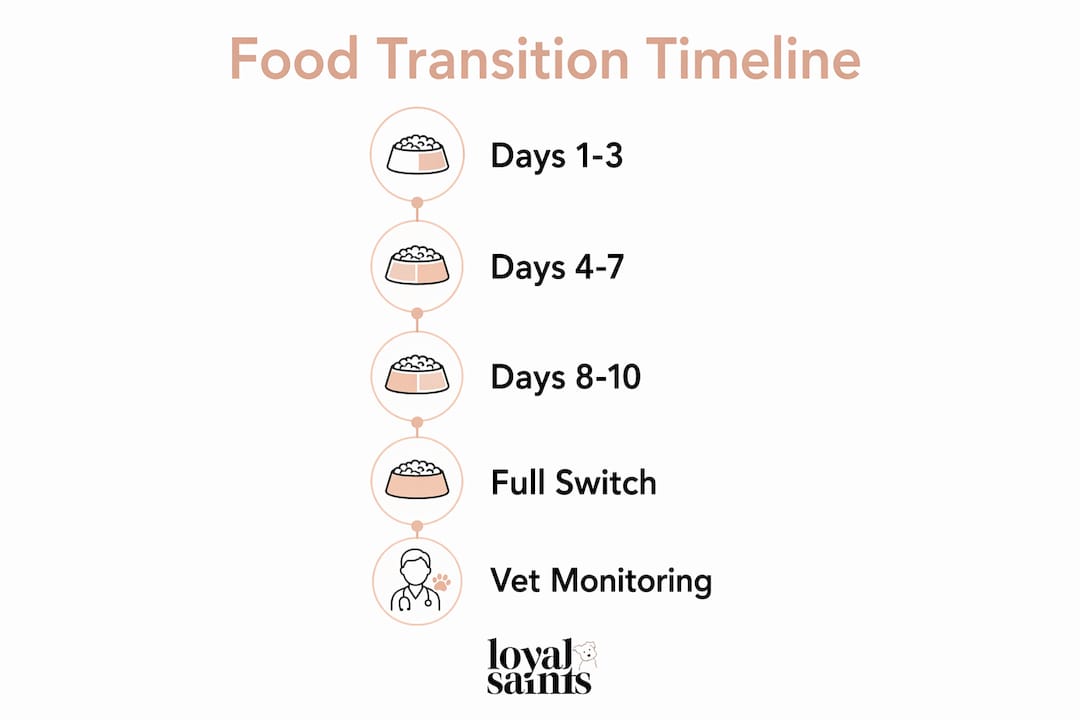
For dogs with sensitive stomachs or a history of GI issues, stretch the transition to 3–4 weeks and move more slowly through each phase with specially formulated Храна за Кученца - Sensitive Stomach & Skin - Petswin. A vet-approved transition guide can walk you through the specifics for different dog types, including dogs coming from stressful environments or with prior nutritional deficiencies.
What to monitor throughout:
- Stool quality (aim for firm, well-formed stools; loose or very frequent stools signal too-fast a switch)
- Appetite (a temporary dip is normal; refusal lasting more than 2 days warrants a call to your vet)
- Energy and behavior
- Skin and coat condition starting around week 4–6
- Body condition score at each vet visit
Stop and call your vet if your dog has persistent diarrhea beyond 48 hours, significant weight loss, or a complete loss of appetite.
Handling safety for raw and freeze-dried products: Treat every raw or freeze-dried product like raw meat from the grocery store. Wash your hands thoroughly after handling, disinfect bowls and prep surfaces, and keep the product away from areas where family food is prepared. Cornell’s guidance is clear: freeze-dried products retain viable bacteria and require the same precautions as uncooked meat. Do not let high-risk household members (young children, elderly adults, pregnant women, immunocompromised individuals) handle these products or come into close contact with a dog that has recently eaten raw food.
Quick decision guide: is natural dog food right for your dog now?
Use this to make a fast, honest call before your next vet visit.
Natural food is most likely worth it when:
- Your dog has a confirmed food intolerance or allergy and needs limited ingredients
- Your vet or a veterinary nutritionist has recommended a specific diet type
- You need full ingredient transparency for peace of mind and are willing to pay for it
- Your dog is a picky eater and palatability is a genuine barrier to adequate nutrition
- You want to try a single-protein freeze-dried topper before committing to a full switch
Natural food is probably not the priority when:
- Your dog is a healthy adult thriving on a current AAFCO-complete diet
- Your household includes immunocompromised members who would be at higher risk from raw product handling
- Your budget does not comfortably support the cost difference long-term
- You are considering a homemade diet without a veterinary nutritionist’s formulation
A practical middle path: Start with a freeze-dried topper or a trial-size product rather than a full switch. This lets you observe your dog’s response — digestion, coat, appetite — without committing to a complete diet overhaul. If the response is positive and your vet gives the green light, a gradual full transition makes sense. For dogs in high-stress situations or coming from shelters, check out guidance on transitioning shelter dogs safely before making any changes.
The Frontiers review makes a point worth repeating: owner motivation matters. If ingredient transparency and ethical sourcing genuinely matter to you, that is a legitimate reason to pay more — as long as the product you choose is nutritionally complete and handled safely.
Key Takeaways
Natural dog food can be worth the investment when your dog has specific needs and the product carries a verified AAFCO nutritional adequacy statement — but label claims alone are never a substitute for nutritional completeness.
| Point | Details |
|---|---|
| “Natural” is a regulated but limited term | AAFCO defines it, but the FDA has no formal federal definition; always verify the AAFCO adequacy statement. |
| No clinical trials prove superiority | VCA Hospitals confirms no long-term randomized trials show natural diets outperform balanced commercial diets in healthy dogs. |
| Homemade diets carry real risks | Calcium-to-phosphorus ratios as far off as 1:10 have been documented; always use a veterinary nutritionist for home-prepared recipes. |
| Transition slowly and monitor carefully | A 7–14 day gradual swap reduces GI upset; watch stool quality, appetite, and body condition throughout. |
| Loyalsaintspets freeze-dried options | AAFCO-complete, human-grade, single-protein freeze-dried SKUs offer a vetted starting point for owners ready to try a natural diet. |
What I actually think about the “natural” debate
The conversation around natural dog food gets muddied fast because both sides overstate their case. Skeptics dismiss the whole category as marketing theater. Enthusiasts treat “natural” as a near-magical health upgrade. Neither position holds up.
What the evidence actually supports is more specific: ingredient quality matters, nutritional completeness matters more, and handling safety matters most when raw or freeze-dried products are involved. A dog eating a well-formulated freeze-dried diet with an AAFCO statement and human-grade proteins is almost certainly eating better than a dog eating a cheap kibble loaded with corn syrup and artificial colors. But that same dog eating a poorly formulated homemade diet — even one made with beautiful whole ingredients — could be heading toward a calcium deficiency or a bone disorder that won’t show up for a year.
The owners I think make the best decisions are the ones who stop asking “is natural better?” and start asking “is this specific product complete, safe, and appropriate for my dog’s life stage?” That shift in question changes everything. It moves you from label-reading to actual nutritional vetting, and it’s the reason a vet conversation before any diet switch is worth more than any amount of online research, including this article.
Loyalsaintspets freeze-dried options worth trying
If you have read this far and you are ready to try a vetted natural option, Loyalsaintspets offers freeze-dried raw products that check the boxes this article has outlined: AAFCO-complete nutrition, human-grade whole ingredients, single-protein formulas, no fillers or synthetic additives, and clear handling guidance.
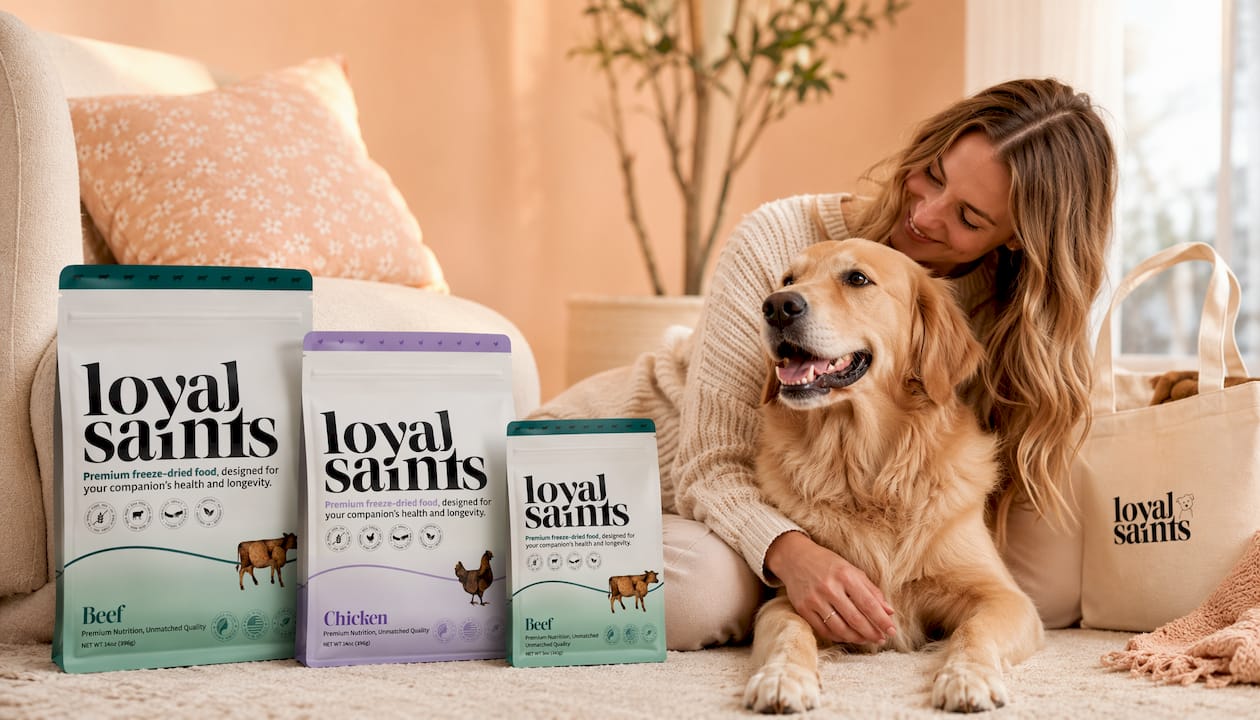
Three SKUs make it easy to start at the right size for your dog and your budget. The Freeze Dried Raw Beef — 5oz is the ideal trial size — low commitment, easy to use as a topper during the transition phase described above. When you are ready to commit, the Freeze Dried Raw Beef — 14oz and Freeze Dried Raw Chicken — 14oz offer single-protein options that work well for dogs with sensitivities or owners who want full ingredient transparency. The Halo Club membership brings down the per-order cost and includes free shipping, which makes the price-per-day comparison with premium kibble much closer than the sticker price suggests.
This section features Loyalsaintspets products. Always consult your veterinarian before making a full diet switch, especially for puppies, seniors, or dogs with health conditions.
Visit Loyalsaintspets to browse all options, check current availability, and find guidance on choosing the right product for your dog’s size and life stage.
Useful sources and further reading
- Raw foods for dogs: Evidence-based advice — Cornell University Riney Canine Health Center — Covers pathogen risks in frozen and freeze-dried raw products, ESBL bacteria findings, and safe handling protocols.
- Natural — AAFCO Consumer Guidance — Explains the AAFCO model definition of “natural,” the synthetic vitamin/mineral disclaimer requirement, and how labeling rules work in practice.
- Nutrition: Natural Approaches to Feeding — VCA Animal Hospitals — Veterinarian-reviewed overview of natural feeding approaches, the importance of AAFCO statements, and the absence of long-term clinical trial evidence.
- Home-prepared dog food: benefits and downsides — Frontiers in Animal Science (2025) — Peer-reviewed review covering nutrient imbalance risks, calcium/phosphorus ratio findings, and the context of commercial pet food recalls.
- Raw diets for dogs and cats: a review, with particular reference to microbiological hazards — PMC — Systematic review of pathogen prevalence and antimicrobial resistance in raw pet food compared to heat-treated alternatives.
- Animal Food Labeling and Pet Food Claims — FDA — FDA’s official guidance on pet food labeling requirements, ingredient listing rules, and the agency’s enforcement approach.
For a personalized diet plan, consult your veterinarian or a board-certified veterinary nutritionist (ACVN.org). General information in this article does not substitute for professional advice tailored to your dog’s specific health status and life stage.


